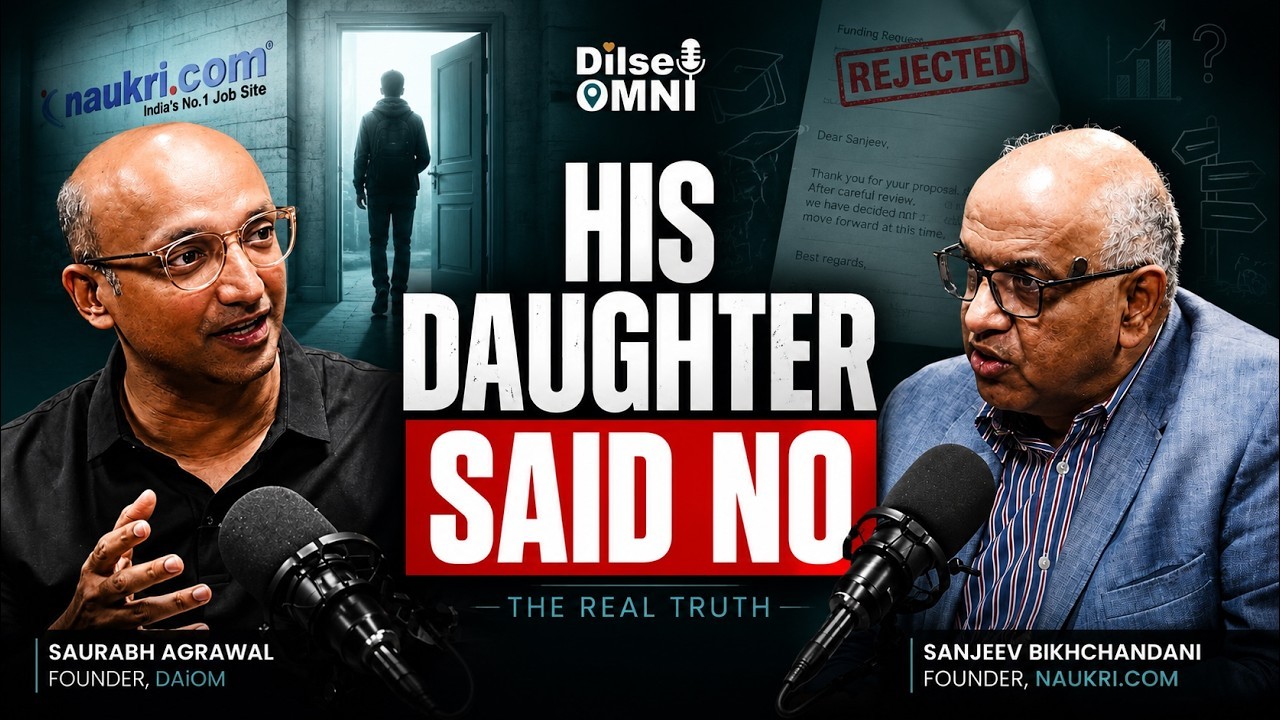
When I sat down with Padma Shri Sanjeev Bikhchandani on Dilse Omni Talks, I wanted to understand a deceptively simple question: what makes an experienced investor say yes to one startup and no to another?
Sanjeev is the founder of Info Edge, the company behind Naukri.com, 99acres, Jeevansathi, and Shiksha. He has also been a strategic investor in companies including Zomato and Policybazaar, and through Info Edge Ventures has backed more than 100 deep tech and AI startups. Widely known as one of the builders of India’s startup ecosystem, he brings a patient, practical lens to entrepreneurship.
What struck me was how little of his answer depended on a polished pitch deck. The real test is deeper. It is about the founder, the problem, the economics, and the company’s genuine ability to win.
Table of Contents
What investors really look for
Founder qualities that matter most
Why solving an unsolved problem wins
The "Right to Win" framework
Why investors ask so many questions
Getting to know the founder first
Would he invest in his own children?
Why his daughter refused his funding
What investors really look for
Founders often begin fundraising conversations by explaining their product, their market slide, or their projected revenue curve. Those things matter, but Sanjeev’s starting point is much more fundamental.
He evaluates several dimensions at once. The founder and team come first, followed by the problem being solved. Only then do business variables such as unit economics, market size, industry structure, market power, intellectual property, and network effects enter the discussion.
This order is important. A compelling market does not compensate for a founder who cannot build, adapt, or be trusted. Equally, a capable founder cannot force a weak problem into becoming a meaningful business.
“We look at several things when we meet a startup,” Sanjeev told me. It is a useful reminder that investment decisions should not be reduced to one metric or one moment of pitch-room chemistry.
For founders, this creates a better question than, “How do I impress an investor?” Ask instead: Have I built a business that holds up across all of these lenses?
That means being able to clearly articulate:
Why this problem matters now
Why the team is particularly equipped to solve it
Why customers will care enough to adopt or pay
Why the business can become economically sustainable
Why competitors will struggle to replicate the advantage
It is an exacting standard, but it is also liberating. It moves the startup conversation away from noise, trends, and vanity, and toward durable business building.
Founder qualities that matter most
The first screen is not merely the founder’s résumé. Sanjeev looks for the quality of the founder and team, including their commitment, capabilities, and integrity.
Commitment tells you whether someone will continue when the early excitement disappears and the work gets difficult. Capability speaks to whether the team can execute. Integrity is the non-negotiable part, because an investor is placing trust in someone who will make countless decisions when nobody else is in the room.
“Commitment, capabilities, integrity. That’s important, really important,” he said.
This is especially relevant in early-stage investing, where a business may not yet have years of operating history. Investors are often assessing potential before outcomes are obvious. They are trying to understand how a founder thinks, how they respond to pressure, whether they acknowledge uncertainty, and whether their ambition is matched by judgment.
As I reflected on this, I realised that founders should prepare for these questions long before a fundraise. Integrity is not a line on a slide. It shows up in how accurately you discuss traction, how transparently you explain challenges, how you treat a co-founder, and whether your assumptions survive scrutiny.
Strong founders do not pretend to have all the answers. They demonstrate that they can find the answers without losing their values in the process.
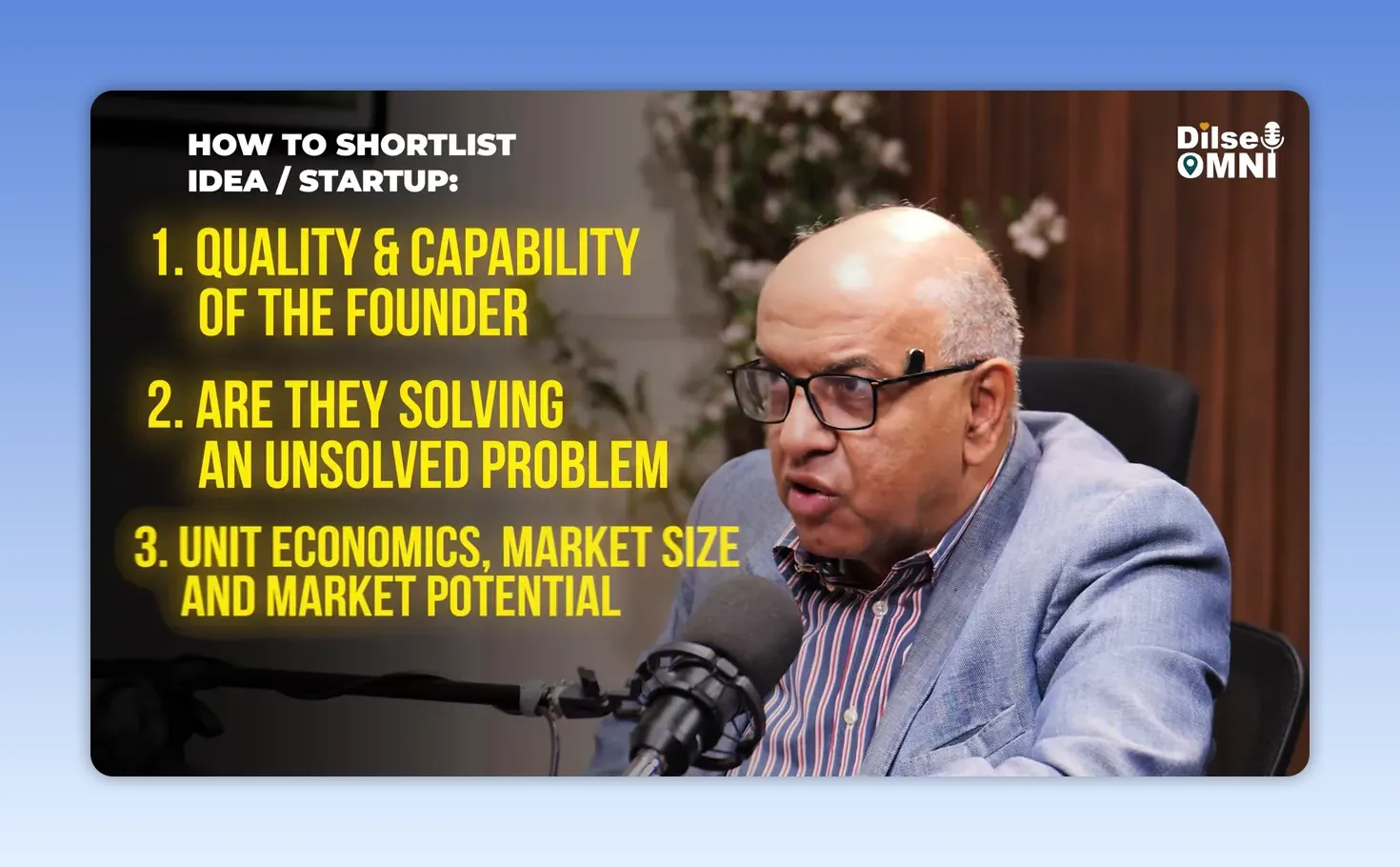
The first filter combines founder quality, an unsolved problem, and business fundamentals.
Why solving an unsolved problem wins
The next principle is one of the clearest in Sanjeev’s framework: are you solving an unsolved problem?
Many startup ideas emerge after founders spot a successful model and decide to create a version of it. That may be tempting, especially in a growing category. But if there are already many teams doing the same thing, the question becomes unavoidable: why should your company succeed more than the others?
“If there are 20 people doing the same thing, there is no reason why you should succeed more than the others,” Sanjeev said.
That does not mean every startup must invent an entirely new category. It means that copying the visible surface of another business is not enough. A founder needs a specific and defensible reason for believing their approach will be superior.
It could be a neglected user need, a better distribution advantage, a sharper understanding of a niche, a product insight, a cost advantage, or an operating model that changes the equation. The important point is that the differentiation must be real.
First movers have an advantage because they can be the first to solve a problem that has remained unresolved. But being early alone is not a strategy. The opportunity comes from pairing that timing with a real insight, committed execution, and the ability to create an advantage before the market becomes crowded.
This is a valuable discipline for anyone building in India’s fast-moving startup landscape. Before asking how large the market is, ask whether your business is addressing a pain point that remains meaningfully underserved.
The "Right to Win" framework
Sanjeev distilled the central issue into a simple but powerful phrase: “Do you have the right to win?”
This is the question every founder should place at the centre of their strategy. Not whether the idea sounds exciting. Not whether there is investor interest in the category. Not even whether competitors are raising capital. The question is whether your company has a credible basis for winning.
The Right to Win Checklist
Founder and team: Do we have the commitment, capabilities, and integrity to execute over time?
Problem: Are we solving an unsolved or materially underserved problem?
Market: Is the market large enough, and is the industry structure attractive enough, to build a meaningful business?
Economics: Can the company develop sound unit economics rather than simply chase growth?
Defensibility: Can intellectual property, network effects, market power, or another advantage strengthen our position?
Think of this as an investment framework and a founder’s operating framework. The best use of it is not to prepare clever answers for an investor. It is to expose gaps in the business before the market exposes them more harshly.
A useful exercise is to write one sentence under each point. If the answer to “Why us?” is vague, then the company may be competing on optimism rather than advantage. If the answer to “Why now?” is only that other startups are raising money, the opportunity is probably not yet understood deeply enough.
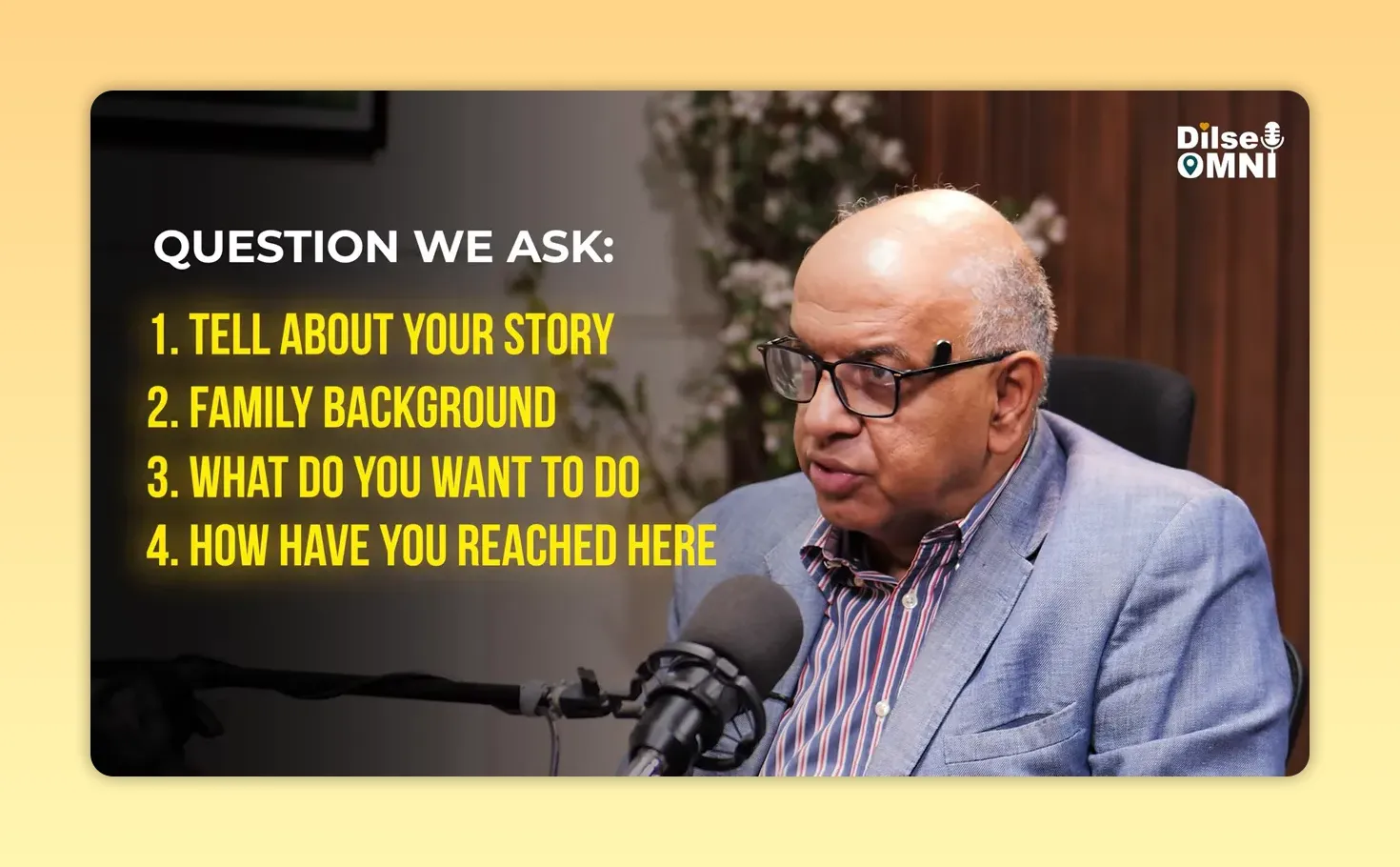
A founder’s story, motivation, journey, and sense of purpose provide signals that numbers alone cannot reveal.
Why investors ask so many questions
Founders can sometimes experience investor questions as a hurdle to clear. Sanjeev offered a better way to understand them. There are classical business questions, of course, but there are also intelligent questions designed to reveal whether this is the right person to back.
The goal is not interrogation for its own sake. It is pattern recognition. A thoughtful question can reveal how a founder processes ambiguity, how honestly they assess risk, and whether they understand the business beneath the headline.
This is why founders should not memorise rehearsed responses. The strongest conversations are those where the founder can reason in real time. They can distinguish fact from assumption, explain what they have learned, and remain composed when a question challenges their original framing.
Good questions also protect founders. They pressure-test an idea before capital, hiring, and ambition make it harder to change direction. In that sense, difficult investor conversations can become an early form of strategic advice.

Getting to know the founder first
One of my favourite parts of the conversation was Sanjeev’s approach to the first interaction. Before diving into detailed business questions, he wants to know the person.
He asks founders to tell their story: who they are, where they come from, what they want to do, how they arrived at this point, and what drives them. As the conversation unfolds, a mosaic begins to form. Only then does the discussion move deeper into the mechanics of the business.
“We like to get to know the person first. It’s important to know the person,” he explained.
This is not idle curiosity. A founder’s journey can provide context for their choices, resilience, ambition, and purpose. It helps distinguish a passing interest from a commitment that can endure the long, uncertain path of building a company.
For founders, the lesson is simple: your story should not be treated as a decorative introduction before the business plan. It is part of the investment case. Explain the experiences that gave you insight into the problem, the reason you care about it, and the choices that show you are prepared to pursue it seriously.
For more of Sanjeev’s perspective on company building and the Indian startup ecosystem, explore The Father of Indian Startup Ecosystem.
Would he invest in his own children?
I then put the framework to a very personal test. If his own children came to him with a startup idea, would the questions change?
Sanjeev’s answer was immediate: he would apply the same questions and the same lens he applies to every other founder. If they wanted to pursue it, he would offer moral and financial support, but support would not mean abandoning discipline.
This is an important idea because personal belief and investment judgment are not identical. Caring about a founder, whether they are family, a friend, or a former colleague, should not erase the need to assess the business honestly.
It also reflects respect. Asking difficult questions is not necessarily a sign of disbelief. It can be a sign that you take the founder’s ambition seriously enough to test it properly.
Why his daughter refused his funding
The conversation ended with a wonderfully human twist. Sanjeev’s daughter is building her own startup, but she has consistently refused funding not only from venture capitalists, but from him too.
Her reason was memorable: she did not want her investors sitting at the dining table every day.
“You keep telling me what to do. And for my investor, I’m obliged to listen,” she told him.
It was a humorous moment, but it carries a serious founder lesson. Capital always creates a relationship. An investor can bring money, perspective, accountability, and access, but a founder must also consider the expectations, influence, and proximity that come with that capital.
Choosing not to raise money, or choosing carefully whom to raise it from, can be as strategic as raising a large round. The right investor should challenge a founder without taking away the founder’s ability to build with conviction. And sometimes, keeping the investor out of the dining room is a perfectly reasonable governance decision.
I am Saurabh Agrawal and we come with a new episode on Dilse omni talks every fortnight and cover different aspect of omnichannel with amazing speakers.
This article was created from the learnings from the video Sanjeev Bikhchandani: Even My Daughter Refused My Investment—Here's Why.