Some founder stories are about persistence. This one is about the equally difficult discipline of recognising when persistence is becoming expensive denial.
When I sat down with Arjun Vaidya on Dilse Omni Talks, his opening thought was sharp, counterintuitive, and unforgettable: “The best decision I made was giving up on offline.”
Arjun is the founder of Dr. Vaidya’s, the Ayurvedic wellness brand he built and scaled before its exit. Since then, he has mentored more than 1,500 entrepreneurs through GrowthSchool and his Founders for Founders initiative, appeared as a judge on Idea Baaz, and become Managing Partner at V3 Ventures, investing in consumer brands and consumer technology across wellness, beauty, sports, and D2C.
But before the ₹100 crore online D2C success, there was a launch in traditional general trade, a painful return of stock, and a decision that went directly against the usual founder advice to never give up.
Table of Contents
The Offline Launch That Looked Like Progress
How General Trade Actually Works
The ₹9 Lakh Lesson: Measure Sell-Through, Not Dispatches
Knowing When a Channel Is Beyond Your Current Capability
The D2C Pivot: Control the Customer Journey
Assisted Sales Turned Ayurveda Into a Scalable Service
₹100 Crore Online, Then a Thoughtful Exit
The Founder Takeaway: Quit the Wrong Battle, Not the Mission
The Offline Launch That Looked Like Progress
Dr. Vaidya’s began in 2016 with an entirely conventional ambition: enter offline retail, get distributors on board, and place Ayurvedic products in chemist shops and grocery stores.
Arjun launched the brand at Taj Lands End in Mumbai. Six distributors came on board, including a super stockist for the Mumbai market, and the business launched three products into offline distribution: HerboFit, Livitup, and Coughraja.
On paper, it looked like momentum. Product was dispatched. Purchase orders were in place. The brand had ₹10 lakh worth of inventory moving into the market. For an early stage founder, it is easy to read that as validation.
But distribution is not the same as demand.
That distinction is the centre of this story. A distributor accepting inventory only means the product has reached the channel. It does not mean it has moved from the shelf into a customer’s hand.
Getting stock into distribution is only the beginning. Sell-through is the number that tells the real story.
How General Trade Actually Works
Arjun explained the classic general trade model with the clarity that only comes from learning it the hard way. The brand appoints distributors, its sales representatives work their beats store by store, take orders from retailers, and pass those orders to the distributor for fulfilment.
In Dr. Vaidya’s case, there were 22 sales representatives in the field. They would cover roughly 30 stores a day. The system was built to create physical reach through chemists and grocery stores.
The financial reality, however, comes later. The brand gets paid when the distributor collects from the retail ecosystem. And that collection depends on one thing above all: products actually selling.
A new Ayurvedic brand had a difficult discovery problem in this environment. A customer entering a chemist shop usually comes with a specific need or a known brand in mind. Dr. Vaidya’s products were not sitting in an easy, self-discovery zone. They often had to be retrieved from behind the counter. Without strong awareness, no one was walking in and asking for them.
Arjun’s social media campaigns did not solve that channel mismatch. When he showed distributors digital marketing material, their question was blunt: where are the newspaper ads, radio ads, and TV ads? In their world, those were the signals that created enough consumer pull to move a new product at scale.
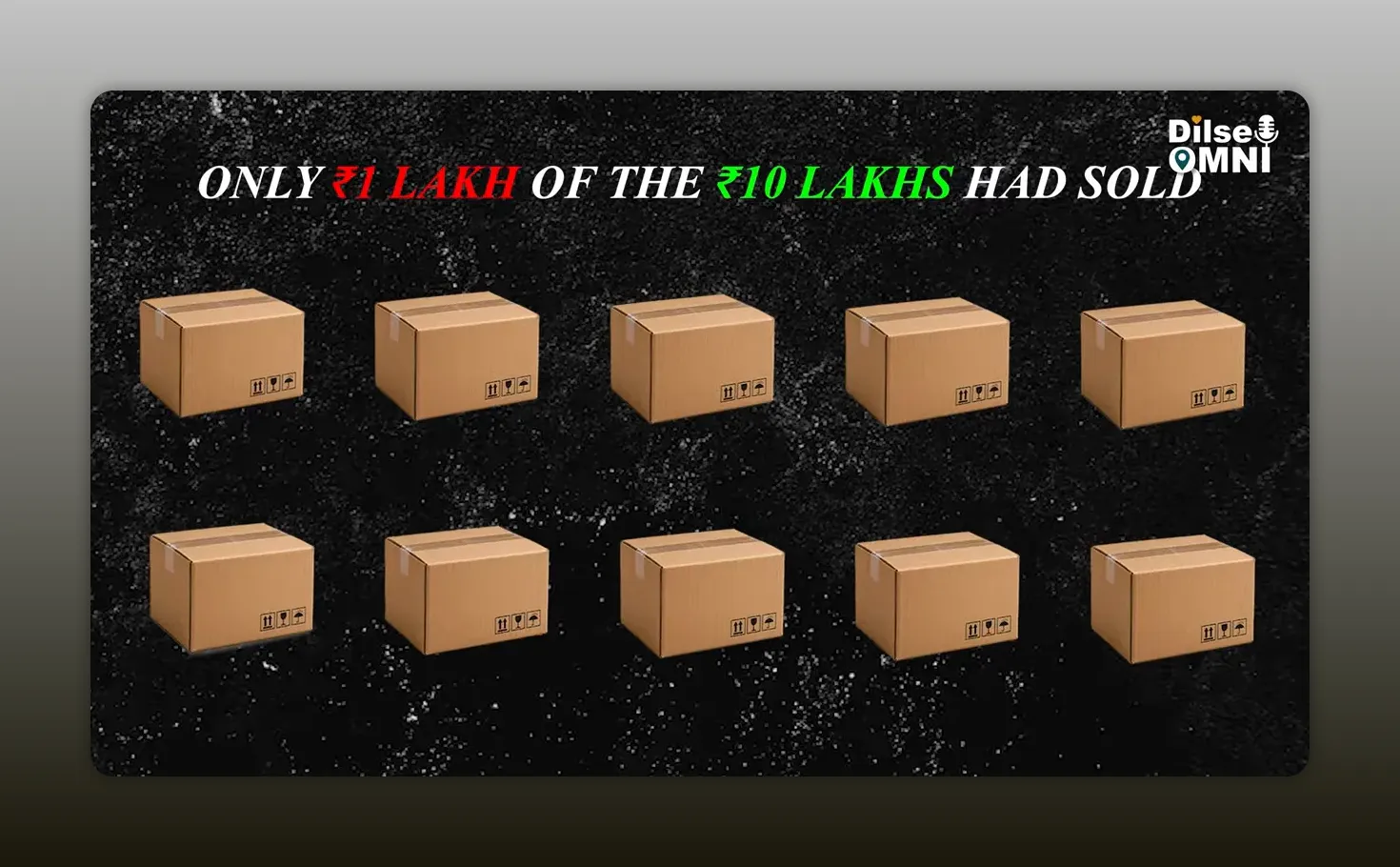
“I had ₹10 lakh worth of stock that had gone to market. Two months later, I got only ₹1 lakh.”
The ₹9 Lakh Lesson: Measure Sell-Through, Not Dispatches
Two to three months after inventory entered the market, Arjun went to collect the money. Of the ₹10 lakh stock dispatched, only ₹1 lakh had sold. The remaining ₹9 lakh worth of stock came back.
It was not simply a revenue miss. The company had incurred the cost of a field sales team, plus the mental cost of believing that the business was gaining traction because inventory had been placed.
This is an important lesson for any emerging consumer brand. Channel inventory can create a false sense of growth. A founder may see retailer orders, distributor invoices, and stock moving out of a warehouse. But unless there is a reliable read on consumer sell-through, returns and blocked working capital can quickly expose the gap.
The Sell-Through Reality Check
What can look like growth | What proves real demand |
|---|---|
Stock dispatched to distributors | Stock sold to end customers |
Retailer purchase orders | Repeat consumer purchases |
Large store coverage | Discovery, trust, and conversion in each store |
Invoices generated | Cash collected after sell-through |
For a young brand, this distinction is fundamental. Offline is not bad. It is just unforgiving when the brand lacks the awareness, capital, execution muscle, and category fit that the channel demands.
That is why the broader omnichannel conversation cannot be reduced to simply being present everywhere. The right question is whether every channel can perform its specific job. I explore this further in our guide to why Indian brands are moving toward omnichannel growth.
Knowing When a Channel Is Beyond Your Current Capability
The usual entrepreneurial slogan is to keep trying until you succeed. Arjun offers a more nuanced version: keep trying when you have a credible path to winning.
After the offline failure, he went through a phase of introspection. Could Dr. Vaidya’s really compete against established players such as Dabur, Emami, Baidyanath, and Himalaya in traditional retail?
His answer was honest. He did not have the money for television advertising. He did not have the brand recognition those companies had. He did not have the capabilities needed to build a large offline distribution engine. Continuing would not have been bravery. It would have been a very expensive battle against organisations designed for that battlefield.
“I gave up on offline. I did not give up with a backup plan. I gave up to just give up.”
That is a powerful founder principle. Quitting a channel is not the same as quitting the company. It can be an act of focus.
The Channel Fit Framework
Arjun’s journey gives us a simple framework before investing aggressively in any sales channel:
Consumer discovery: Can the buyer find and understand the product where it is being sold?
Trust requirement: Does the category need education, consultation, or reassurance before purchase?
Brand pull: Do customers already ask for the brand, or must the business create demand from scratch?
Capability match: Does the company have the capital, team, and operating expertise the channel requires?
Economics: Can working capital, margins, and collections survive the time it takes to generate sell-through?
If multiple answers are “no,” more distribution is rarely the solution. The smarter move may be to pause, learn, and find a channel where the company has an unfair advantage.
The D2C Pivot: Control the Customer Journey
The opening came from Arjun’s wife, Trisha, who was then part of the founding team. She saw ecommerce growing and a clear white space: few brands were doing Ayurveda in a truly digital-first way.
Arjun had seen ecommerce businesses in his previous role as a private equity investor, but he had never operated one. Still, the insight was compelling enough to act on. In November 2017, Dr. Vaidya’s launched its own single-brand Ayurvedic products website.
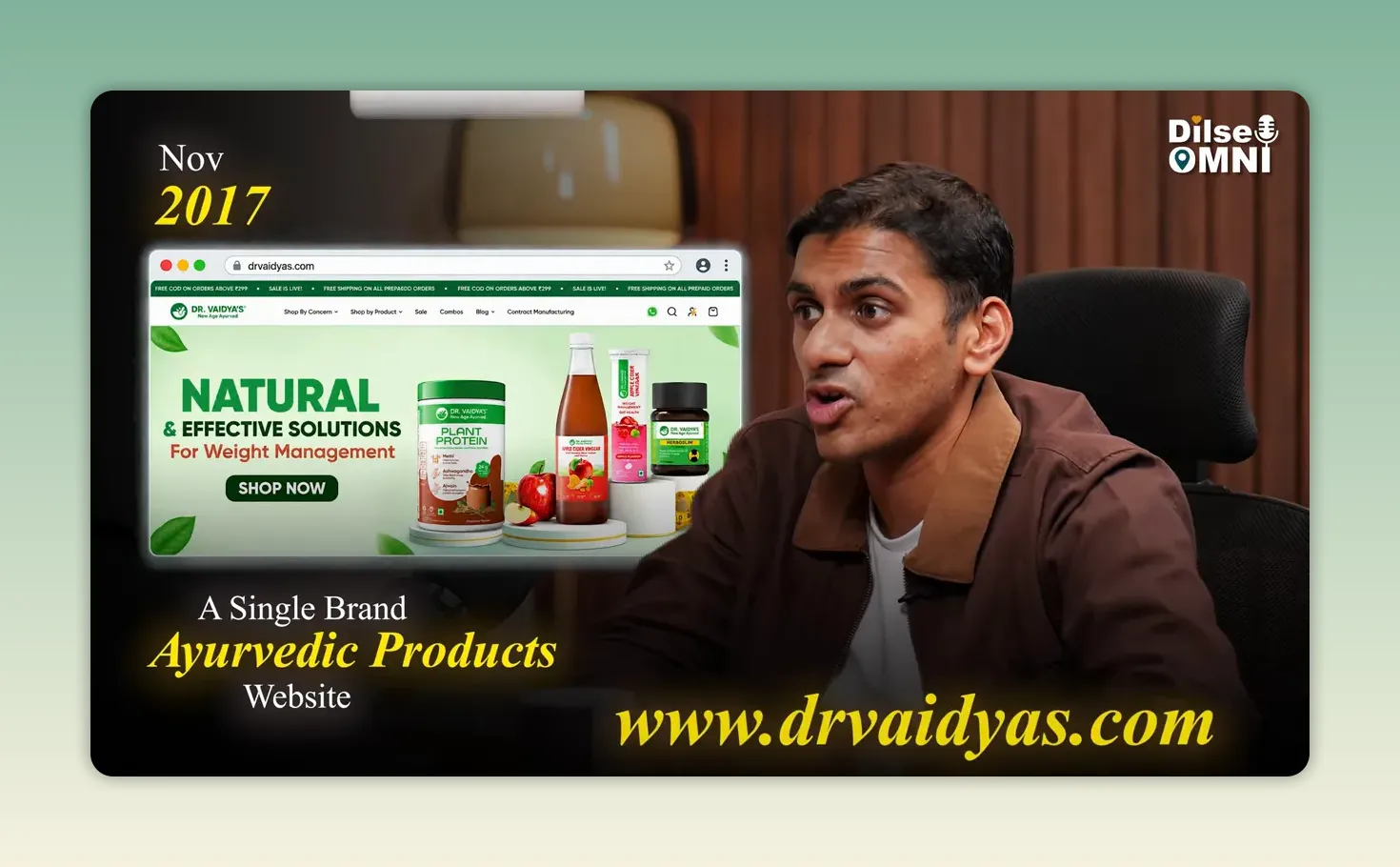
The direct website gave Dr. Vaidya’s ownership of product education and the complete customer journey.
The strategic decision was to start with the website rather than marketplaces. Ayurvedic wellness products often require regular usage over several months. A customer buying a 30-day course for a concern such as diabetes might stop too early if expectations, usage, and progress were not properly understood.
On a marketplace, the customer journey is fragmented. On a brand website, Dr. Vaidya’s could educate customers, explain the intended course of consumption, and create a relationship beyond a single transaction.
That control mattered. More than 60 percent of sales eventually came through the company’s own website, with the rest coming from marketplaces. The business did some offline activity through investor-linked retail presence, including Spencer’s and Nature’s Basket, but offline never became the scale engine.
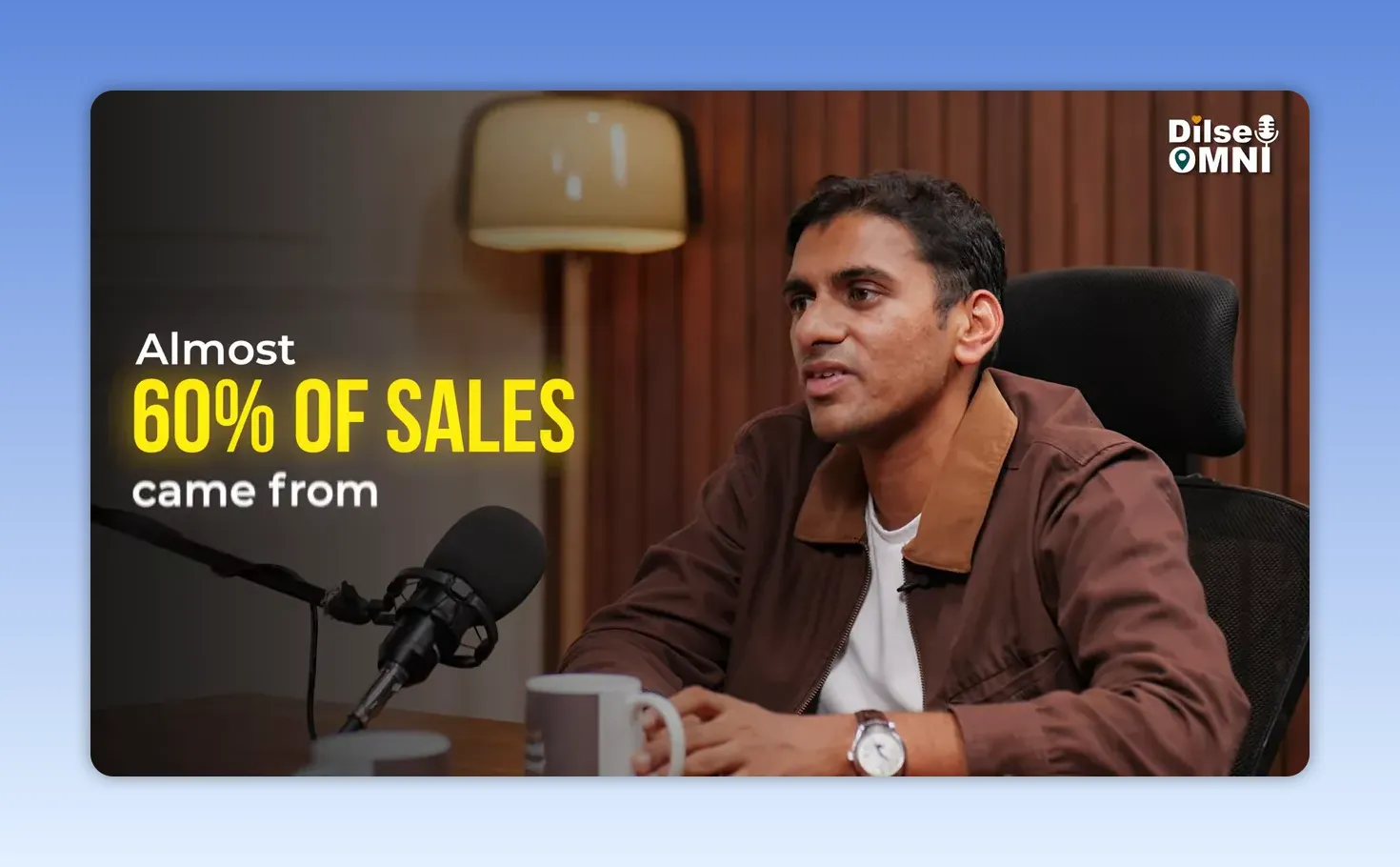
A first-party website became the primary engine because it supported education, trust, and repeat consumption.
Assisted Sales Turned Ayurveda Into a Scalable Service
The real innovation was not just taking Ayurveda online. It was recreating an important offline experience in a digital format.
Arjun’s grandfather offered free consultations at his clinic for people who walked in. Dr. Vaidya’s extended that approach online by offering free consultations with Ayurvedic doctors. This created assisted sales, but more importantly, it created trust.
For people in cities such as Muzaffarnagar, Imphal, Anantnag, or Tiruchirappalli, access to a high-quality Ayurvedic doctor may not have been readily available. A digital consultation gave customers the chance to explain their needs, understand their options, and then decide what product to purchase.
This is what omnichannel can mean at its best. It is not merely connecting a website to a store. It is connecting the customer to the help they need, in the format that works for them. Digital reach, human consultation, product fulfilment, and repeat consumption came together as one experience.
The lesson is especially relevant for wellness, beauty, health, and high-consideration categories. When education is part of conversion, a brand must design for education. When trust is part of conversion, a brand must deliberately build trust into the purchase journey.
For more examples of how digital demand and physical retail can complement each other rather than compete, read From Clicks to Footfall: The Strategy Most Brands Miss.
₹100 Crore Online, Then a Thoughtful Exit
Dr. Vaidya’s went on to build a ₹100 crore online business. Interestingly, reaching that scale did not convince Arjun that online was the only answer forever. It clarified the next answer.
He realised that, beyond a certain stage, the brand’s future required offline expansion. But he also recognised that he was not the right person to build that capability. The company that acquired Dr. Vaidya’s already had distribution across about 150,000 stores and had deep offline expertise.
So the exit was not merely about a transaction. It was also about placing the brand with an operator better equipped for its next phase.
“For the brand to move forward, we should go offline. They were the offline experts. I could not do it.”
This is the final nuance in Arjun’s masterclass. Offline was the wrong move in 2016, but it could be the right move for the brand later under the right ownership and with the right capabilities.
Timing, capability, and channel fit matter more than ideology. The goal is not to be online-first or offline-first. The goal is to build the right operating system for the stage the business is in. Our Omnichannel Guide by DAiOM explores this through insights from more than 50 brands.
The Founder Takeaway: Quit the Wrong Battle, Not the Mission
Arjun’s story is not permission to abandon difficult work too quickly. It is a reminder that resilience needs to be paired with judgment.
Sometimes the best decision is to continue. Sometimes it is to change the product. And sometimes, as Dr. Vaidya’s proves, it is to walk away from a channel that is draining money and attention, then commit fully to one where the business can serve customers better.
Giving up on offline did not limit Dr. Vaidya’s. It made room for the D2C model, doctor-led consultations, direct customer relationships, and a path to ₹100 crore scale.
I am Saurabh Agrawal and we come with a new episode on Dilse omni talks every fortnight and cover different aspect of omnichannel with amazing speakers.