Fast fashion in India is no longer only an online game or an offline game. It is a real-time consumer understanding game.
In my conversation on Dilse Omni Talks with Sumit Jasoria, Co-founder and CEO of NEWME, we explored how one of India’s fast-growing Gen Z fashion brands is connecting digital demand with physical retail. Sumit’s approach is particularly compelling because it does not treat stores as a distribution extension of e-commerce. Instead, NEWME uses online and offline as two distinct, connected intelligence systems.
NEWME is building a tech-enabled, customer-centric fashion business where every pin code, size, category, store interaction, and customer preference can shape the next decision. For anyone building a D2C, fashion, retail, or omnichannel brand, this is a masterclass in how the future of retail will actually be built.
Table of Contents
Fast Fashion Has Moved From Monthly Cycles to Seven-Day Cycles
Use Online as the First Data Set
India Is a Country of Countries, Even at Pin Code Level
Why the Traditional Full Size Set Can Create Waste
Data Is Not a Dashboard: It Is the Company’s DNA
What the Fast Fashion Customer Really Wants
Offline Will Be Delayed, but It Can Convert Better
The Store Performance Inputs That Matter
What Stores Teach the Online Team
The Omnichannel Lesson: Do Not Build Two Separate Businesses
Fast Fashion Has Moved From Monthly Cycles to Seven-Day Cycles
We began with the obvious but difficult question: how has NEWME’s online-to-offline journey evolved?
Sumit explained that when the team started, there were several unanswered questions. How do you build the right product assortment for stores? How do you test offline demand? How do you know what to send to each location when offline retail does not offer the same easy testing environment as e-commerce?
That challenge becomes even sharper in fast fashion because fashion cycles have compressed dramatically. Zara’s famous model once changed the industry by bringing a roughly two-month cycle into a world where fashion planning could take six months to a year. But the market has moved again.
“Fashion trends now change in seven days.”
This changes everything. A long planning cycle cannot keep pace with a consumer whose inspiration, social feeds, occasions, and purchase intent can change every week. If a fashion brand has to operate at this speed, its decision-making must become close to real time.
That is why a simple replication model, where the brand launches online and later pushes the same broad inventory into stores, is unlikely to work. Offline retail needs a different operating logic.
Use Online as the First Data Set
NEWME’s core principle is clear: online is the first data set.
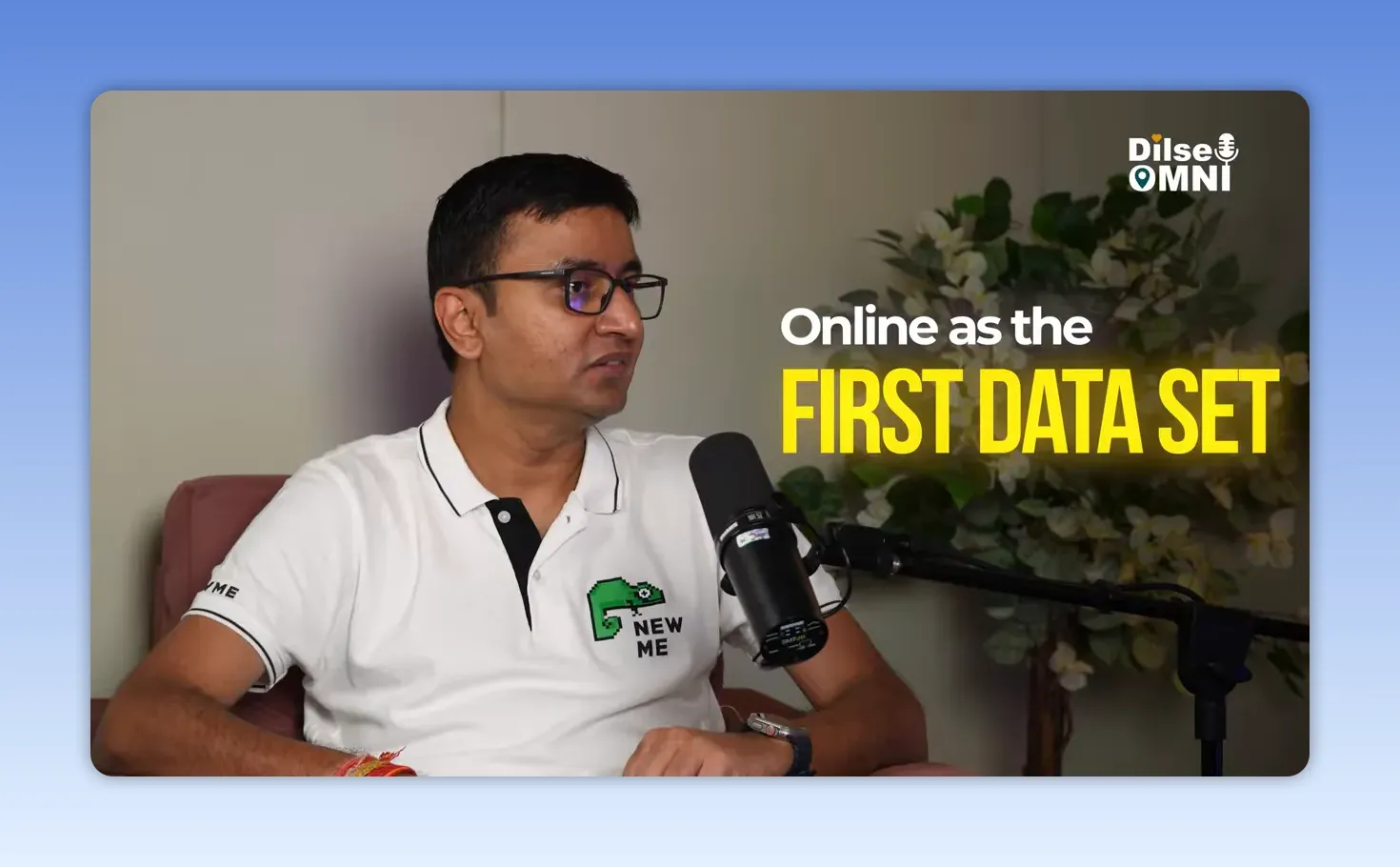
Online demand becomes the earliest signal for deciding what deserves an offline presence.
Digital commerce provides the fastest feedback loop. It shows what designs are being discovered, which trends convert, where demand emerges, and how customer preferences vary across locations. Instead of guessing what might work in stores, the team uses online performance to identify signals worth acting on offline.
But the learning does not travel only in one direction. The store also creates insights that digital commerce cannot always reveal. This is the essence of an omnichannel business: online informs offline, and offline teaches online.
The NEWME Demand Loop
1. Online discovery
Observe what products and trends customers engage with and buy online.
↓
2. Pin code demand mapping
Understand which consumer profile and product attributes work in each local market.
↓
3. Localised store assortment
Send relevant styles and sizes to the store instead of standardised inventory.
↓
4. Offline learning
Use trial, fit, touch, staff feedback, and in-store conversion to improve category and digital decisions.
This is not channel expansion for the sake of expansion. It is a feedback loop designed to make each channel more intelligent.
India Is a Country of Countries, Even at Pin Code Level
One of Sumit’s most useful observations was that India cannot be approached as one uniform consumer market.
“India is a country of countries. Data changes at a pin code level.”
Two markets in the same city can have very different customer profiles. Their preferred styles, size demand, price sensitivities, and shopping behaviour may not be the same. A generic store allocation model ignores this reality. A pin code-based inventory model embraces it.
NEWME maps inventory at the pin code level to understand what sells in a specific catchment. The question is not merely, “What is selling nationally?” It is, “What is selling here?”
That distinction is incredibly important in fashion. A trend may have broad awareness, but its local conversion depends on the actual consumer walking into a specific store.
Why the Traditional Full Size Set Can Create Waste
The most practical application of local demand intelligence is the size-set strategy. In traditional fashion retail, a style is often shipped in a full standard set, from XS through XL. It is a familiar industry convention, but Sumit made a sharp point: a convention is not automatically an efficient customer solution.
If data shows that a particular catchment primarily buys small and medium, why send every size in the standard size run? Unsold inventory occupies space, locks working capital, and may eventually need to be moved elsewhere, creating additional logistics cost.
NEWME’s approach is to create store-level size sets based on customer profiling and observed demand. If a market is predominantly S and M, the assortment can be built around that reality rather than around a standard inventory template.
“If I know how consumers behave in a market, I will use online data to predict that demand.”
This looks simple from the outside, but it requires a business to challenge industry assumptions. It also requires confidence in data, operational flexibility, and teams willing to ask why something has always been done a certain way.
Data Is Not a Dashboard: It Is the Company’s DNA
Sumit describes this capability as a kind of DNA builder. A company cannot suddenly become data-driven on day 50 or day 100. It is more like planting a seed. The habits, questions, systems, and people must be present from the beginning.
At NEWME, the founding team came from an engineering background and brought a natural inclination to question assumptions. Fashion was not approached with blind reverence for existing retail practices. The recurring question was simple: why does this need to be done this way?
That mindset is crucial. Data-led retail does not mean replacing judgment with spreadsheets. It means continually testing whether operational habits are serving the customer or merely preserving an old process.
For NEWME, the deeper orientation is not product obsession for its own sake. It is consumer obsession.
“We are much more consumer-obsessed founders and product-obsessed founders.”
The wording matters. A fashion brand can become overly focused on its own product, fabric story, production process, or internal quality benchmark. But customers do not purchase a garment to admire the brand’s operational effort. They buy to feel current, confident, and appropriately dressed for the moment.
What the Fast Fashion Customer Really Wants
Sumit’s framing of the Gen Z fast fashion customer is refreshingly direct. At an approximately ₹1,000 price point, the customer is seeking value for money. The product has to look good, reflect the trend, and boost confidence.
Design and trend relevance are the primary draw. Quality remains essential, but it is a table stake. It cannot be poor, yet trying to make every item exceptional on every quality parameter can make the product unaffordable for the intended customer.
The important insight is about use case. A customer may not expect to wear every fast-fashion item dozens of times. They may want to wear it five or six times, feel good in it, and move on to the next trend or occasion.
That is not a license to compromise carelessly. It is a reminder to build for the actual expectation of the customer, at the right price point, rather than designing for an imaginary customer with very different priorities.
Offline Will Be Delayed, but It Can Convert Better
Offline retail, by its nature, will usually run behind online. Sumit estimates that stores will remain roughly 15 to 17 days delayed relative to the fastest online trend movement. The store involves inventory movement, physical setup, and a less immediate feedback cycle.
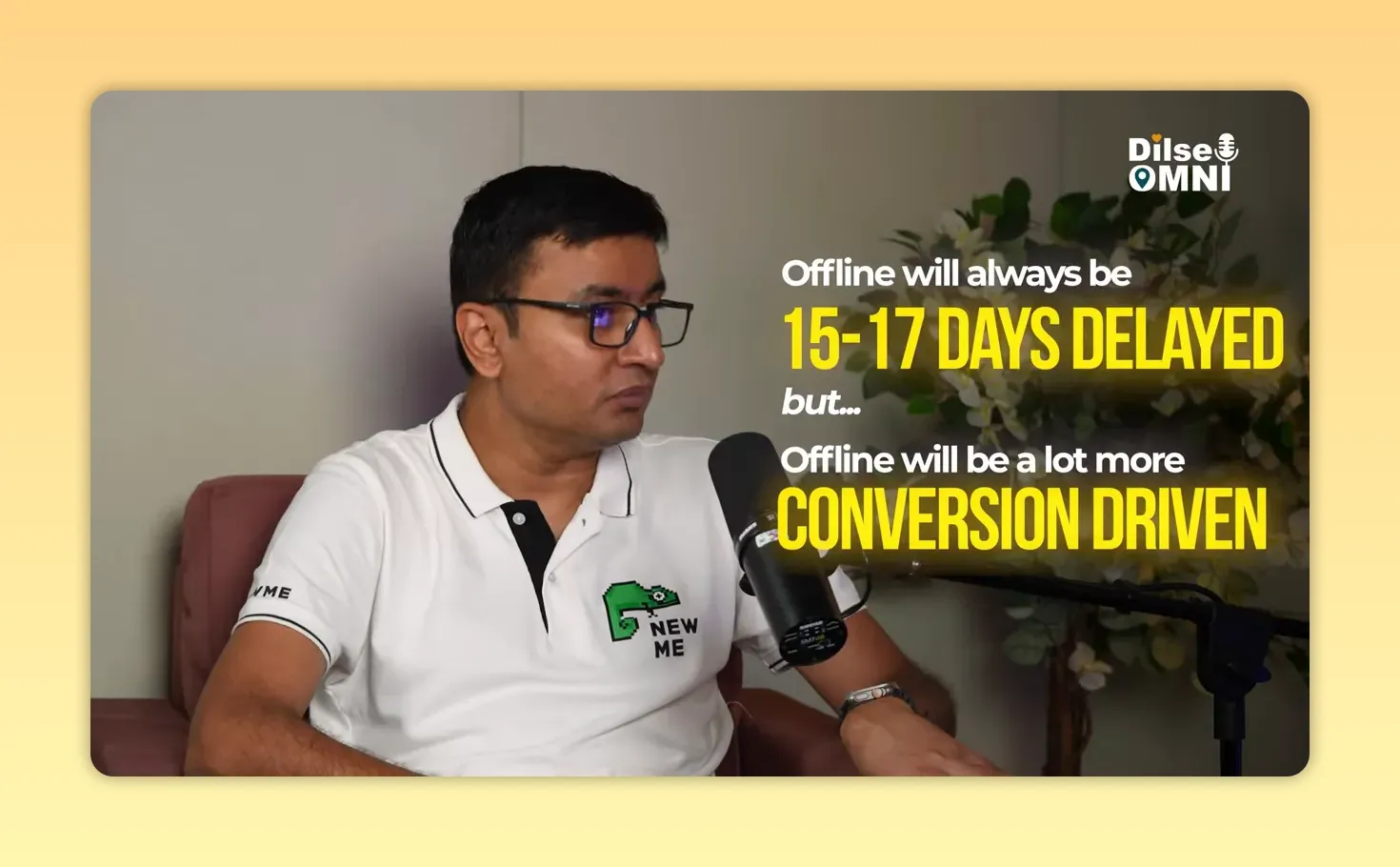
Physical retail may be slower than online trend discovery, but it can create a more conversion-led experience.
But slower does not mean weaker. The role of the store is different. Offline is more conversion-driven and more experience-driven.
Digital commerce is largely self-commerce. A customer scrolls, searches, compares, and checks out independently. A physical store can become assisted commerce. The customer can spend time in the space, discover combinations, receive help, try products on, and make a more confident purchase.
That is the hidden advantage of a store. It does not have to show every one of the brand’s thousands of styles. It has to create a better experience around the right styles.
The Store Performance Inputs That Matter
When Sumit spoke about in-store execution, he highlighted a set of inputs that determine whether a store becomes an effective conversion engine. The key elements he detailed were the store’s vibe, staff training, and staff presentation.
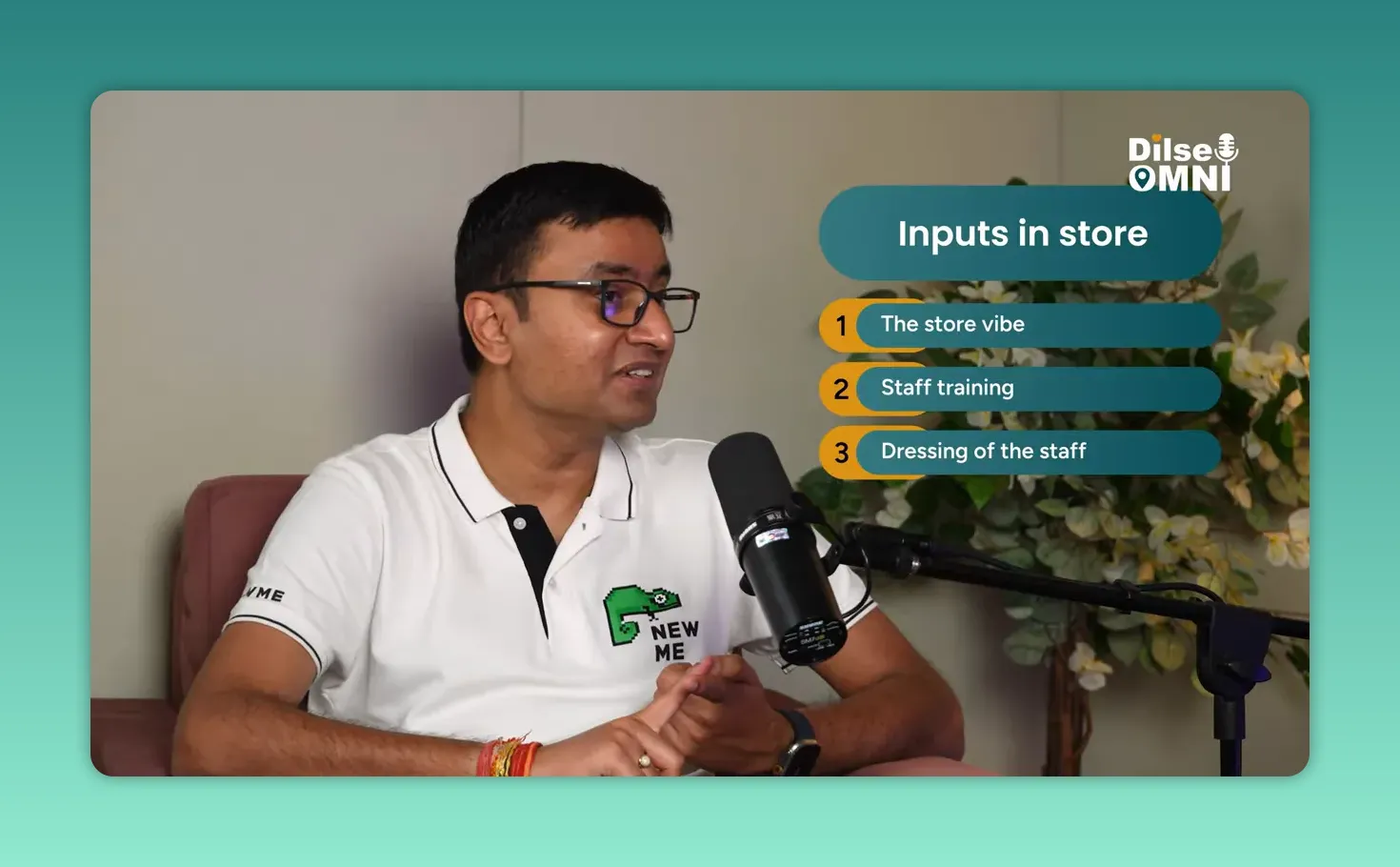
The physical environment and the people in it are active parts of the retail conversion system.
1. The Store Vibe
The first moment matters. When someone enters a store, the environment immediately communicates whether the brand understands them. The visual energy, layout, merchandising, and overall feel shape discovery before any product is tried on.
2. Staff Training
Store staff are not merely there to complete transactions. Their greeting, product understanding, and ability to guide discovery can change the customer’s experience. In assisted commerce, human interaction is part of the product.
3. How Staff Dress
Sumit also emphasised how staff members dress themselves. This is a subtle but powerful signal. In fashion retail, staff can make the brand’s styling language tangible. They help customers imagine how a product can be worn, combined, and carried with confidence.
For a brand, this means store operations cannot be separated from brand building. Every interaction and every visible detail influences conversion.
What Stores Teach the Online Team
The relationship between online and offline becomes powerful when the store is treated as a source of qualitative and behavioural data.
For example, certain product categories may not perform well online, even if they become strong sellers in stores. This is not necessarily a failure of the category. It may simply mean the category needs touch, fit validation, styling help, or a longer discovery moment than a small digital screen can provide.
Athleisure: A Touch-and-Feel Category
At NEWME, athleisure has performed much better offline than online. Online, it can become difficult to differentiate when customers have too many choices and the shopping decision starts to resemble a price comparison exercise.
In-store, athleisure has a different advantage. It is comfort-driven and occasion-driven. Customers can feel the fabric, assess the comfort, understand the fit, and visualise its use more easily. The physical environment supports the category in a way that a crowded product listing may not.
Bottomwear: Fit Is the Product
Bottomwear is another clear offline winner. For bottoms, fit is deeply personal. Customers want to know how the garment sits on their body, how it feels in motion, and whether the silhouette works for them.
Dresses and tops can still be heavily online-led categories. But bottoms benefit significantly from trial. NEWME has used that insight to build models that push more offline effort into categories where stores offer a genuine structural advantage.
Jewellery and Shapewear: Discovery Needs Context
Jewellery and shapewear also perform very strongly offline. In e-commerce, the customer may face an overwhelming catalogue. NEWME has around 15,000 styles online, and no one can realistically process that level of choice through a small screen in a short time.
In-store, the customer gets a more curated experience. They can see a complete outfit, discover matching jewellery, ask for suggestions, and use the trial room setup to make a decision. Thirty minutes in a store can create a richer discovery experience than a quick, self-directed online session.
This is why categories should not be forced into the same channel strategy. A brand should ask: does this category win through breadth, search, and speed? Or does it win through trial, touch, context, and assistance?
The Omnichannel Lesson: Do Not Build Two Separate Businesses
The biggest lesson from Sumit’s thinking is that omnichannel is not about launching stores after succeeding online. Nor is it about listing the same products in two places.
It is about building one customer intelligence system with two different strengths.
Online offers speed, broad discovery, rapid demand signals, and scalable testing.
Offline offers fit validation, sensory experience, human assistance, stronger category discovery, and conversion insights.
Data connects both channels, enabling the brand to decide what belongs where, in which size set, and in which local market.
NEWME’s strategy is a reminder that retail innovation is rarely just about technology or just about beautiful stores. It is about using technology to understand people better, then designing an experience that makes sense for how they actually shop.
The future of fast fashion in India will belong to brands that can move at trend speed, localise at pin code level, challenge standard retail rules, and stay relentlessly close to the consumer.
I am Saurabh Agrawal and we come with a new episode on Dilse omni talks every fortnight and cover different aspect of omnichannel with amazing speakers.