Some of the most enduring products do not begin with a grand market thesis. They begin with a problem that becomes impossible to ignore.
When I spoke with Anand Jain, Co-founder and Chief Product Officer of CleverTap, the story behind one of the world’s leading customer engagement platforms came down to exactly that kind of frustration. Anand has spent more than a decade building technology that helps brands understand customers, personalize engagement, and improve retention at scale. But the original spark for CleverTap came much earlier, while working inside Network18 and Infomedia18.
What struck me most was that Anand did not merely see disconnected software tools. He saw the business cost of a disconnected customer journey, and then he and his co-founders chose to build the missing layer themselves.
Table of Contents
The Early Problem: Modernizing Yellow Pages
When the Customer Journey Is Split, the Business Can Only React in Pieces
The Insight-to-Action Framework
Searching for a Product That Did Not Exist
From Frustration to Founder Conviction
Building the Foundation: TeslaDB
The Deeper Product Lesson: Do Not Build for Data Alone
What Founders and Growth Leaders Can Take Away
The Early Problem: Modernizing Yellow Pages
In 2009, Anand joined Network18 through Infomedia18, its local-business venture. Infomedia18 was essentially a Yellow Pages business at the time, and the mandate was to modernize it. The ambition was not only to list local businesses, but to bring in the social proof that makes digital platforms more useful: reviews, recommendations, and signals that help people make decisions with confidence.
That was a meaningful product problem in itself. A directory tells people what exists. Reviews and recommendations help them decide what to trust. The move from static listings to richer, customer-informed experiences was already a move toward a more modern digital journey.
But as Anand took on more of Network18’s web properties, he encountered a broader challenge. The organization had customer information, but it was scattered across many systems.
There was web analytics in one place. Some mobile analytics in another. Product A/B testing was handled by a different vendor. SMS solutions were separate from email systems. Each tool addressed a particular function, but none connected the full story of a customer.
That is the central lesson in Anand’s story: a collection of tools is not the same thing as a connected customer experience.
When the Customer Journey Is Split, the Business Can Only React in Pieces
Anand described the situation with a clarity that every product, marketing, and growth team will recognize. The customer journey was broken into multiple components, while the data and actions associated with those components lived in separate platforms.
“The customer journey is kind of broken up into multiple components and parts, nothing that put it all together.”
This is more than an operational inconvenience. When customer intelligence is fragmented, teams struggle to move from insight to timely action.

Consider a customer who is struggling on a homepage. An analytics tool may show that they are hesitating or dropping off. But if that insight does not connect to an activation layer, it remains an observation in a dashboard. The brand cannot immediately offer help, simplify the path, or show a useful prompt.
Or consider someone who has found a product they want, added it to their consideration set, and then left because something else demanded their attention. A separate email platform may be capable of sending a message, and an SMS tool may be capable of sending a text. But neither channel alone solves the real problem: knowing who the person is, what they cared about, when they disengaged, and which response would be most relevant.
Anand’s example is wonderfully practical: if inventory is limited and the customer has already shown clear intent, a friendly reminder about availability can be useful. It is not simply a campaign blast. It is a contextual response based on the customer’s actual behavior.
“Why is there not something that puts it all in one place, but not just for analysis, for actionability?”
That distinction between analysis and actionability is where the CleverTap origin story truly begins.
The Insight-to-Action Framework
One way to understand Anand’s original insight is through a simple four-part framework. It is a practical test for any customer engagement stack.
1. Capture: See the customer signals
Start with the signals customers create across their journey: web behavior, mobile activity, product interactions, experiments, purchases, and responses to communications. If these signals are isolated, no team has a dependable view of the customer.
2. Connect: Build one customer context
The next step is to bring data together. A homepage visit, a product interaction, a mobile session, and a message response should not be treated as unrelated events. They are parts of one evolving relationship with one customer.
3. Understand: Turn data into insight
Once data is connected, the business can understand intent, friction, engagement, and opportunity. Which customers are struggling? Which ones are likely to convert? Which ones need assistance? Which ones might benefit from a recommendation?
4. Activate: Respond in the moment
The final step is the one Anand felt was missing from the market. Insights must lead to action. That could mean help on a homepage, a relevant reminder, a personalized recommendation, or a timely message through the right channel.
Stage | Core Question | Example Outcome |
|---|---|---|
Capture | What is the customer doing? | Identify browsing, drop-off, and product-interest signals. |
Connect | Can we see one journey? | Unify interactions across product, web, mobile, email, and SMS. |
Understand | What does the behavior mean? | Recognize friction, intent, and engagement patterns. |
Activate | What should we do now? | Deliver a relevant, timely customer response. |
This is the real omnichannel lesson. Channels are important, but they are only delivery mechanisms. The real value comes from a connected system that understands a customer and enables a meaningful response.
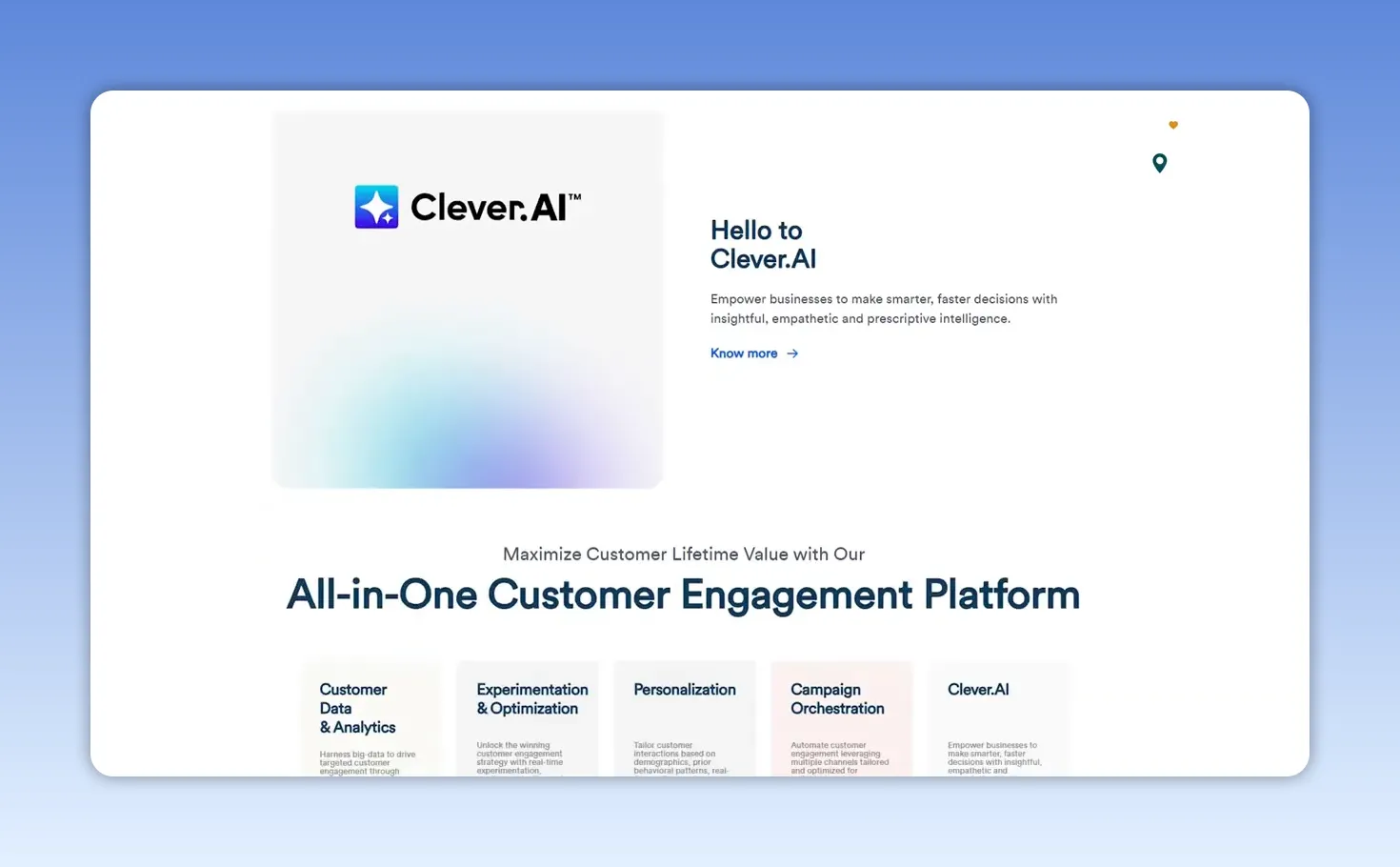
The all-in-one model reflects the original idea: connect customer understanding with the ability to act.
Searching for a Product That Did Not Exist
Once Anand and his colleagues recognized the gap, they did what thoughtful product builders should do before creating something new: they looked for an existing solution.
They searched for a product that could bring customer data together and make it usable across the journey. But the tools they found were mostly designed for narrow use cases. Email vendors solved email. Other vendors addressed their own specific category. The market was full of point solutions, but there was no unified product that combined customer data, analysis, and real-time activation in the way they imagined.
This is an important founder discipline. A missing feature is not necessarily a company. But a recurring, structural problem that persists across products, teams, and channels can point to something much larger.
In Anand’s case, the conviction came from lived experience. The frustration was not theoretical. He had seen the fragmented stack firsthand across Network18’s web properties. He knew the customer journey could be far more responsive if the underlying data and engagement capabilities were brought together.
The engineering mind, as Anand put it, went into overdrive.
From Frustration to Founder Conviction
Anand, along with Sunil and Suresh, had worked together and began brainstorming a straightforward but audacious question: Why not build it ourselves?
They took the idea to Network18, but it was not a fit for the company. That response makes sense in context. Network18 was a media company, and a sophisticated customer data and engagement platform was not its central focus.
For Anand and his co-founders, however, the idea had become too compelling to leave behind. They felt strongly that this was a real problem worth solving. After four years at Infomedia18 and Network18, they made the decision that changes a problem statement into a startup story.
In 2013, they left their jobs to bring the idea to life. That was the starting point of CleverTap.
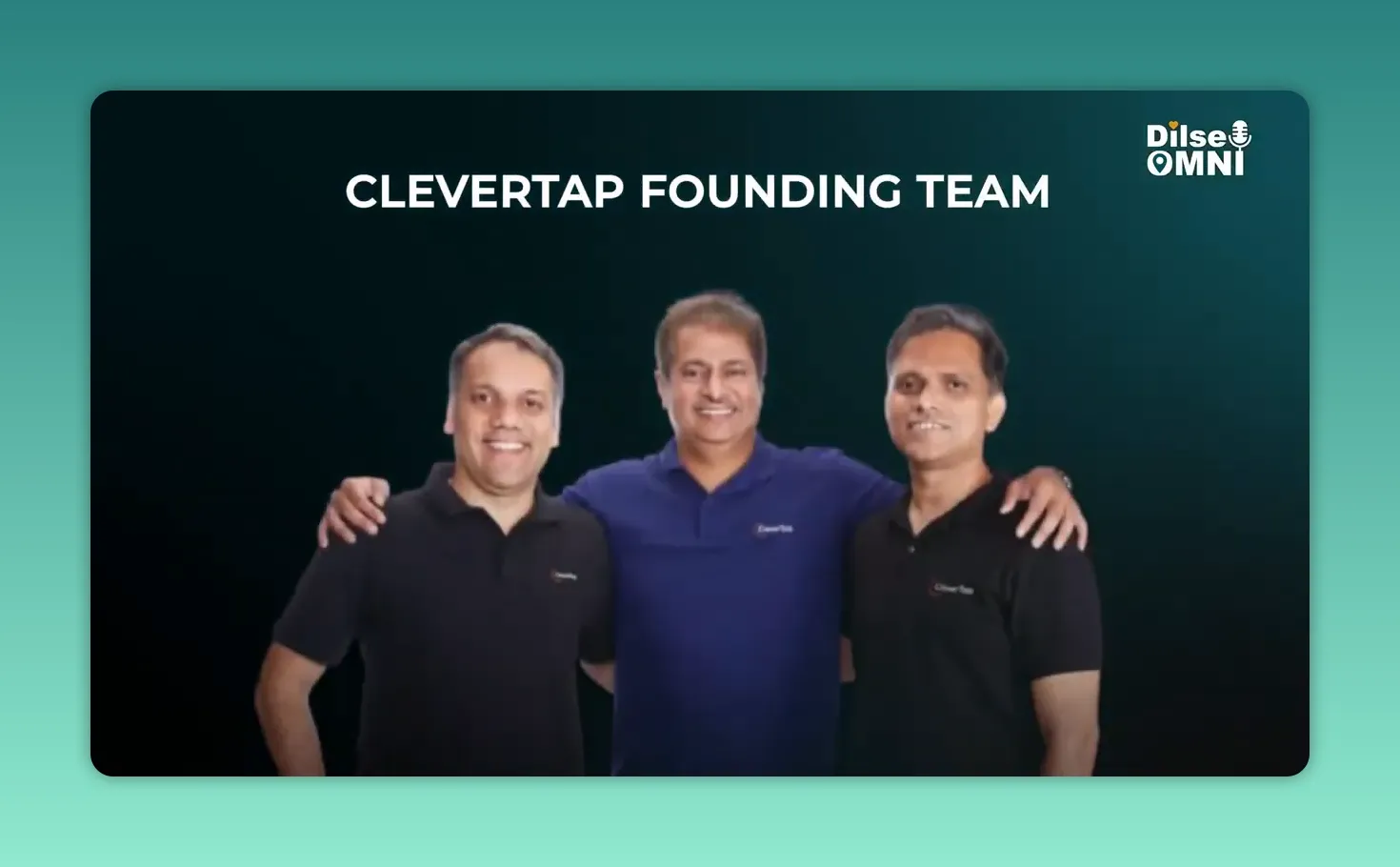
A shared conviction turned an internal pain point into the founding mission of CleverTap.
Building the Foundation: TeslaDB
The decision to start was only the beginning. Anand explained that the next three years were spent inventing the technology they needed, called TeslaDB.
The purpose was ambitious and specific: store all customer data in one place and make it instantly available for use. Not only for reports or retrospective analytics, but for the full set of customer engagement activities that businesses need to deliver better experiences.
That includes:
Insights and analytics to understand what customers are doing.
Recommendations to help surface the most relevant next option.
Predictions to anticipate customer behavior and opportunity.
Personalization to make interactions more useful and relevant.
Activation to turn customer understanding into timely engagement.
At its heart, this was a product architecture decision. If data is slow, disconnected, or difficult to access, real-time engagement becomes hard to deliver. A platform built to unify and activate customer data can support a very different kind of operating model.
“It can store all customer data in one place and instantly activate it for insights, analytics, recommendations, predictions, personalization, and so forth.”
The word that stands out here is instantly. In customer engagement, relevance has a shelf life. A helpful action delayed too long often becomes noise. The opportunity is strongest when the brand can respond while the context still matters.
The Deeper Product Lesson: Do Not Build for Data Alone
Anand’s journey offers a useful warning for teams building customer data, marketing technology, and product analytics capabilities. It is easy to celebrate visibility. Dashboards look impressive. Reports create confidence. But data only creates business value when it helps someone make a better decision or deliver a better customer experience.
The question is not simply, “Can we measure this?” The more useful questions are:
Can we recognize the customer’s journey across touchpoints?
Can we identify where they need help or where intent is emerging?
Can we respond with relevance rather than volume?
Can we connect insight to action without forcing teams to stitch together multiple disconnected systems?
That is why CleverTap’s origin story is more than a founder story. It is a lesson in product thinking. Anand and his co-founders did not begin with a desire to create another standalone tool. They began with the realization that the customer journey had been divided artificially by the software stack.
Their answer was to build a platform that treated understanding and engagement as connected responsibilities.
What Founders and Growth Leaders Can Take Away
There are three principles I take away from Anand’s story.
First, pay attention to recurring friction. The most important product opportunity may be hiding inside a workflow everyone has accepted as normal. Fragmentation had become familiar, but that did not make it acceptable.
Second, distinguish between point solutions and the underlying problem. The market already had vendors for email, SMS, testing, and analytics. Yet the deeper customer problem remained unsolved because each solution saw only one part of the journey.
Third, build for action, not just observation. Customer insight is valuable only when it can change the next interaction. The strongest platforms help teams move from knowing to doing.
The CleverTap story started with Yellow Pages modernization, moved through the complexity of customer data silos, and ultimately became a mission to make customer intelligence actionable. That progression is a powerful reminder that great products often emerge when someone refuses to accept disconnected experiences as inevitable.
I am Saurabh Agrawal and we come with a new episode on Dilse omni talks every fortnight and cover different aspect of omnichannel with amazing speakers.