A loyalty program does not create loyalty simply because it exists. This is one of the most expensive misconceptions in retail, D2C, and customer retention today.
In my conversation with Mahadevann Iyerr, retail and customer loyalty expert and Director at Maavrus, we explored why some programs become powerful business growth engines while others become little more than points, discounts, and operational complexity. Mahadevan has worked with leading brands to build loyalty programs, deepen customer relationships, and drive sustainable growth through data-led retail strategies.
The masterclass begins with a truth that is easy to say but difficult for many businesses to accept: loyalty is not a product feature. It is the outcome of a consistently valuable customer experience.
Table of Contents
The Biggest Loyalty Mistake: Treating Loyalty as a Separate Business
Look at Loyalty Through the Business P&L
A Simple Framework: Identify What Type of Loyalty Program You Are Building
The Group Loyalty Challenge: Every Brand Has Different Customers and Economics
Why Tiering Can Accidentally Alienate Your Best Customers
Do You Need a Separate Loyalty Brand?
The Real Loyalty Program Masterclass: Build Value Before Rewards
The Biggest Loyalty Mistake: Treating Loyalty as a Separate Business
The first warning sign appears when a brand thinks, “We will launch a loyalty program, and it will automatically improve the business.” That is backwards.
A program can amplify a good business. It can help a strong brand understand its customers better, recognize them more effectively, and encourage deeper engagement. But it cannot repair a weak proposition, poor customer experience, or an inconsistent retail operation.
“A loyalty program can only amplify the business. It cannot exist separately from it.”
This distinction matters because many teams begin evaluating loyalty through a narrow program P&L. They ask questions such as:
How much money is the program making?
Can we earn from partners?
Should we monetize points?
Can a co-branded card generate acquisition revenue?
How do we reduce the cost of rewards?
These are not irrelevant questions. But they become dangerous when they replace the larger question: how is loyalty improving the core business?
Mahadevann’s own experience of building Landmark Rewards offers a valuable lesson. In the early years, the program became highly metric driven. It was easy to start behaving like the head of a standalone profit centre, concerned with whether the program itself was making money and where to spend or recover every rupee.
That often leads loyalty teams toward partnerships, card revenues, and quick monetization models. Those approaches are common in coalition programs, where the loyalty platform is itself a commercial business. But they are not necessarily the right operating principle for a brand-owned or group-owned loyalty program.
If you operate a brand loyalty program, your purpose is not to make the loyalty unit successful in isolation. Your purpose is to make the brand more successful. If you operate a group loyalty program, you exist to make the group’s businesses stronger.
Look at Loyalty Through the Business P&L
The correct lens is not a loyalty program P&L. It is the overall business P&L.
That means loyalty should be evaluated by its ability to support better customer relationships across the entire commercial model. A program should help a business recognize who its customers are, understand their shopping patterns, create relevant engagement, and encourage repeat behavior where the customer sees genuine value.
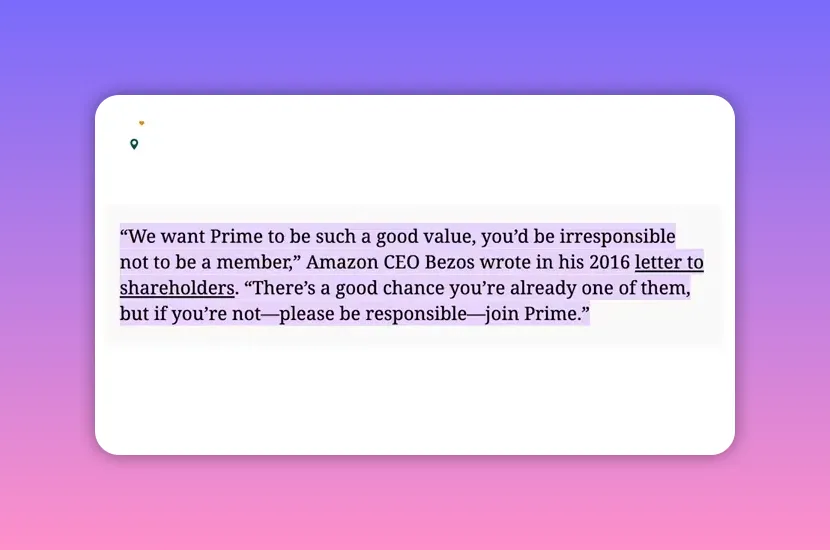
Amazon Prime is an important example because it was not built as a points scheme seeking short-term program profitability. It was built patiently and passionately as part of a much larger customer and business proposition.
Prime works because it connects deeply with the Amazon ecosystem. The value is clear, repeated, and woven into how customers interact with the business. It is not merely a parallel reward construct sitting outside the brand experience.
“Do not start a loyalty program tomorrow assuming that the program itself will create benefits.”
This is the strategic shift brands need to make. Loyalty is not a shortcut to customer retention. It is a mechanism for strengthening an already meaningful relationship.
A Simple Framework: Identify What Type of Loyalty Program You Are Building
Before deciding on points, tiers, rewards, or partnerships, first define the job your program must do. Mahadevan’s experience points to three distinct loyalty models.
The Loyalty Program Architecture
Program Type | Primary Purpose | What Must Win | Biggest Risk |
|---|---|---|---|
Brand loyalty program | Build stronger relationships with customers of one brand | The brand experience and customer value | Treating points as more important than the brand |
Group loyalty program | Connect customers across multiple brands and categories | Cross-brand recognition, data, and engagement | Conflicting business objectives and poor tier design |
Coalition loyalty program | Create a loyalty business across independent partners | Partner economics, scale, and program monetization | Prioritizing commercial mechanics over customer relevance |
A coalition program may need to monetize through participating partners because the program is fundamentally a business in its own right. In contrast, a brand program or group program should begin with the business it serves.
This sounds obvious, but the confusion between these models has led many companies to design the wrong economics, the wrong branding approach, and the wrong customer experience.
The Group Loyalty Challenge: Every Brand Has Different Customers and Economics
A group loyalty program is particularly difficult because a group can include businesses with completely different customer personas, shopping missions, margin structures, and purchase frequencies.
One CEO may ask, “What am I getting from this?” Another may worry that they are losing control over the money spent on their own customers. If a business runs its own program, the logic feels direct: money invested in loyalty supports that brand’s customers and that brand’s growth.
In a group program, that clarity can get blurred. A customer may earn through one brand and redeem through another. The concern becomes understandable: who bears the cost, and who receives the benefit?
The concept of a loyalty bank has helped address part of this issue. When points earned at one brand are not redeemed at another brand, much of that value can flow back to the originating brand. In some models, close to 90 percent can return. This makes cross-brand participation more manageable than it was a decade ago.
But solving settlement economics does not solve the bigger customer problem. The program still needs to feel coherent and valuable across radically different categories.
Why Tiering Can Accidentally Alienate Your Best Customers
Tiering is one of the hardest design challenges in group loyalty. It is very easy to create a system that appears fair on a spreadsheet but feels deeply unfair to real customers.
Consider the Landmark example. A customer purchasing furniture could spend ₹75,000 over a rolling 12-month period and become a Platinum member. A single sofa purchase worth ₹1 lakh could push someone into the top tier immediately, even if the product had already been bought at a 30 percent discount.
Now compare that with a highly valuable fashion customer at Max. Their typical bill may be ₹1,500 to ₹2,000. Even if they shop 20 times, representing an exceptionally strong relationship with the brand, they may still struggle to qualify for the same tier.
That is not a minor program flaw. It changes the meaning of recognition.
“A customer can be extremely valuable to one brand and still look ordinary in a group-wide tier structure.”
The lesson is that tiering cannot be designed only around aggregate spend. Businesses need to account for category economics, normal purchase frequency, customer missions, and the relative value of behavior within each brand.
Tata Neu illustrates both the opportunity and complexity of group loyalty. The Tata ecosystem has powerful individual brands, including Titan Encircle and Taj InnerCircle. A frequent Taj guest may connect deeply with Taj rewards because Taj itself is a meaningful brand relationship.
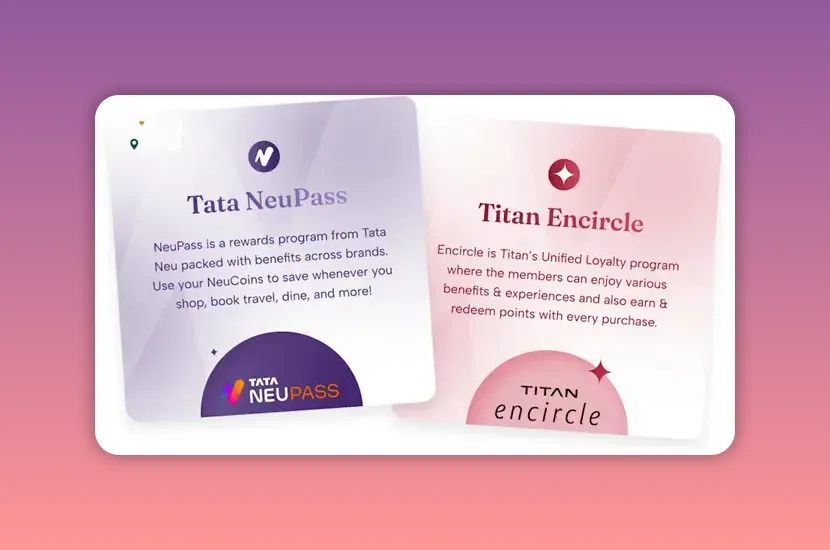
At the same time, a customer who visits Taj only occasionally may value the ability to use earned points elsewhere, perhaps on BigBasket. This is where a group program can create genuine utility. Infrequent purchases from multiple businesses can accumulate into a reward that feels more accessible and useful.
The cross-brand redemption opportunity is powerful. Yet a high-status label alone does not create value. Calling someone a “Legend” matters only if the experience and benefits make that recognition believable.
Do You Need a Separate Loyalty Brand?
Another costly mistake is over-investing in building a loyalty program brand when the underlying brand is already strong.
Brand building is expensive. It requires sustained communication, visibility, customer education, and time. In India especially, building mass awareness for a separate loyalty identity can require enormous investment. Tata Neu, for example, has invested heavily to build awareness at scale.
The question is not whether a separate loyalty brand can work. It can. The question is whether it is necessary for the model you are trying to build.
Mahadevann’s learning from Landmark Rewards is clear. Customers already knew Lifestyle, Max, and Home Centre, but they did not necessarily know Landmark as a consumer-facing brand. Creating and establishing “Landmark Rewards” therefore required investment in a parallel identity.
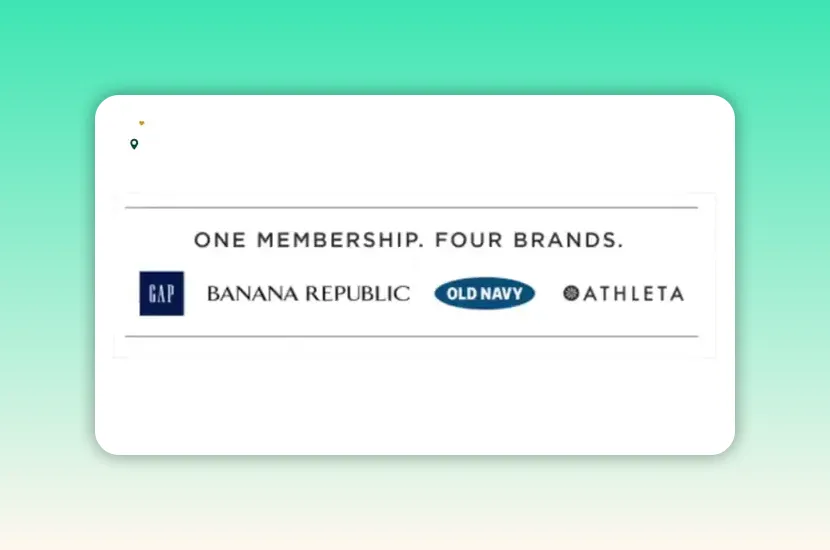
By contrast, Gap offers a useful model. The group includes Gap, Old Navy, Athleta, and Banana Republic. Each customer-facing experience carries the relevant retail brand. In the background, the reward infrastructure is unified through Gap Rewards.
This approach preserves the brand relationship at the front end while enabling group-wide capabilities behind the scenes.
The Brand-First Decision Guide
If you are a brand program: build on the strength of the existing brand. The reward can be branded simply and clearly, such as “Brand Points.”
If you are a group program: invest first in strengthening the individual customer brands, then use the loyalty layer to understand and engage customers across them.
If you are a coalition program: a distinct loyalty brand may be essential because the program itself is the common proposition connecting multiple partners.
Shukran is an example of a group loyalty identity that has received meaningful brand investment. That may be appropriate given its strategy and the number of formats involved. But it should never become an automatic template for every retail group.
A familiar name usually has more customer equity than a newly created loyalty label. If a strong brand can carry the program, it is often wiser to work on the back of that existing trust rather than build a costly parallel brand.
The Real Loyalty Program Masterclass: Build Value Before Rewards
The core lesson from this conversation is simple. Loyalty programs are not primarily point engines. They are customer relationship systems.
They should help businesses create recognition, relevance, and convenience. They should make it easier to understand customers across channels and, where appropriate, across brands. They should reward meaningful behavior without making high-value customers feel invisible because they happen to shop in a lower-ticket category.
Most importantly, they must be designed in service of the business, not as an independent commercial project searching for a reason to exist.
Before launching or redesigning a program, ask these questions:
Is our core brand and customer experience strong enough for loyalty to amplify?
Are we measuring success through the business P&L, not only the program P&L?
Are we clear whether this is a brand, group, or coalition model?
Does our tiering recognize customer value fairly across different categories?
Can customers feel real value from cross-brand earning or redemption?
Are we spending too much on a separate loyalty identity rather than strengthening our existing brands?
The best loyalty strategy is not the one with the most complicated points structure. It is the one that makes customers feel that the business understands them, values their relationship, and gives them compelling reasons to return.
I am Saurabh Agrawal and we come with a new episode on Dilse omni talks every fortnight and cover different aspect of omnichannel with amazing speakers.