I have often found that the most useful marketing conversations are not about the next campaign idea. They are about the harder question: where should a business place its next marketing bet?
In my conversation on Dilse Omni Talks with Dr. Ashish Bajaj, that question came alive in a very practical way. Ashish is a marketing leader with experience across Narayana Healthcare, Ola, Nokia, and Microsoft, with deep expertise in consumer understanding, touchpoint planning, media optimisation, and consumer-facing communication. He is also the author of The Martech Playbook, published by Zebralearn.
His core argument is refreshingly direct. Bigger budgets do not automatically create better marketing outcomes. Better outcomes come from disciplined allocation, consumer understanding, creative distinction, and a clear expectation of returns.
Table of Contents
The Ola Lesson: Set a Growth Challenge That Changes the Thinking
Visibility Is Not the Same as Constant Spending
ROI Changes With the Industry and the Consumer Context
The Shift From Brand Metrics to Marketing as a Growth Lever
A Practical Marketing Budget Framework
Follow the Consumer Instead of Following Channel Fashion
What It Really Means to Own a Channel
Data and Gut: Both Have a Role
Keep Some Budget for High-Reach Opportunities
The Marketing Head Is an Investment Banker
Why Virality Is Not a Marketing Strategy
The Real Playbook: Spend With Intent
The Ola Lesson: Set a Growth Challenge That Changes the Thinking
Ashish began with an experience from Ola, where the ambition was not conventional annual growth. The team was chasing something far more demanding: 20% growth week on week.

An aggressive weekly growth target forces a completely different marketing mindset.
That distinction matters. A target of 20% year-on-year growth can allow for familiar planning cycles and safe campaign choices. But when the expectation is 20% every week, marketers have to question everything: the media mix, the pace of communication, the customer moments being targeted, and the creative approach.
“It’s not about 20% growth year on year. It was about 20% growth week on week.”
The lesson is not that every company should set impossible targets. It is that the target itself determines the quality of thinking. If the business needs rapid growth, a routine communications calendar will not do. The marketing team needs to identify high-potential moments, build relevance into them, and move with speed.
Visibility Is Not the Same as Constant Spending
One of the biggest mistakes in budget planning is to assume that visibility requires uninterrupted spending across every channel. It does not.
Take outdoor advertising. Very few brands can afford to run a large outdoor campaign continuously for six months. More importantly, not every brand needs to. The smarter question is whether the brand can create high-impact bursts, at moments when visibility has the strongest chance of translating into attention and action.
Ashish described the importance of identifying micro-moments or specific cultural and calendar occasions that a brand can own. At Ola, April Fools’ Day became one such occasion. Repeatedly showing up with relevance on selected occasions can make a brand feel active and present over a long period, even without running the same large campaign every day.
This is a powerful omnichannel principle. Continuity does not always mean identical activity. It can mean a consistent brand presence across well-chosen moments, channels, and contexts.
Think in Bursts, Moments, and Memory
Bursts: Create concentrated visibility when a message has the best chance of standing out.
Micro-moments: Identify occasions, needs, or conversations that naturally fit the brand.
Memory: Repeat the brand’s presence often enough that people feel it is alive, relevant, and culturally aware.
The discipline is to avoid spending simply because money is available. Spend because the moment, the audience, and the message have come together.
ROI Changes With the Industry and the Consumer Context
Marketing ROI cannot be measured through one universal lens because customer behaviour changes from category to category. Ashish made this especially clear by contrasting mobility and healthcare.
In mobility, the customer is often comfortable coming to the brand through an app or a digital interface. The service is accessed at a distance, through a screen. In healthcare, the relationship is more personal, physical, and trust-led. The customer may expect the brand to come closer, provide reassurance, and be present in more tangible ways.
What makes this contrast especially interesting is that the audience can look broadly similar on paper. A 28 to 40-year-old consumer may be relevant to both categories. Yet their expectation from the brand can be completely different.
“The same audience can behave differently because the category changes the expectation.”
For a healthcare business, an ROI metric may be tied to OPD visits. For a mobility platform, it may be rides, app engagement, or repeat usage. The right channel allocation follows the customer journey, not a demographic slide.
This is where marketing becomes more than reach planning. It becomes an exercise in understanding the role the brand plays in a person’s life, and how close the brand must get before trust and action are possible.
The Shift From Brand Metrics to Marketing as a Growth Lever
There has been a clear shift in how organisations think about marketing. Earlier, many larger brands measured marketing predominantly through brand metrics. Awareness, preference, consideration, and recall were important indicators, particularly for large advertisers with long planning horizons.
Today, companies of every size are asking tougher questions about return on investment. Startups and smaller brands may be spending meaningfully, but they are also accountable for growth. As Ashish put it, marketing is increasingly being asked to give revenue back to the business.
“Marketing is becoming the growth lever.”
This does not mean brand building has become irrelevant. It means brand building and growth can no longer operate in isolation. A strong brand should make growth more efficient over time. Growth activity should, wherever possible, reinforce the brand rather than exhaust it.
A Practical Marketing Budget Framework
One of the most practical ideas Ashish shared was how to think about the split between content and media. Media costs have risen sharply. But content costs have risen too, and weak content will reduce the effectiveness of every rupee spent on distribution.
His recommendation is simple: if media gets the larger share, content still needs a meaningful allocation. A useful working benchmark is a 1:3 content-to-media ratio. In other words, for every 70% allocated to media, roughly 30% should be considered for creating the content needed to make that media work across the year.
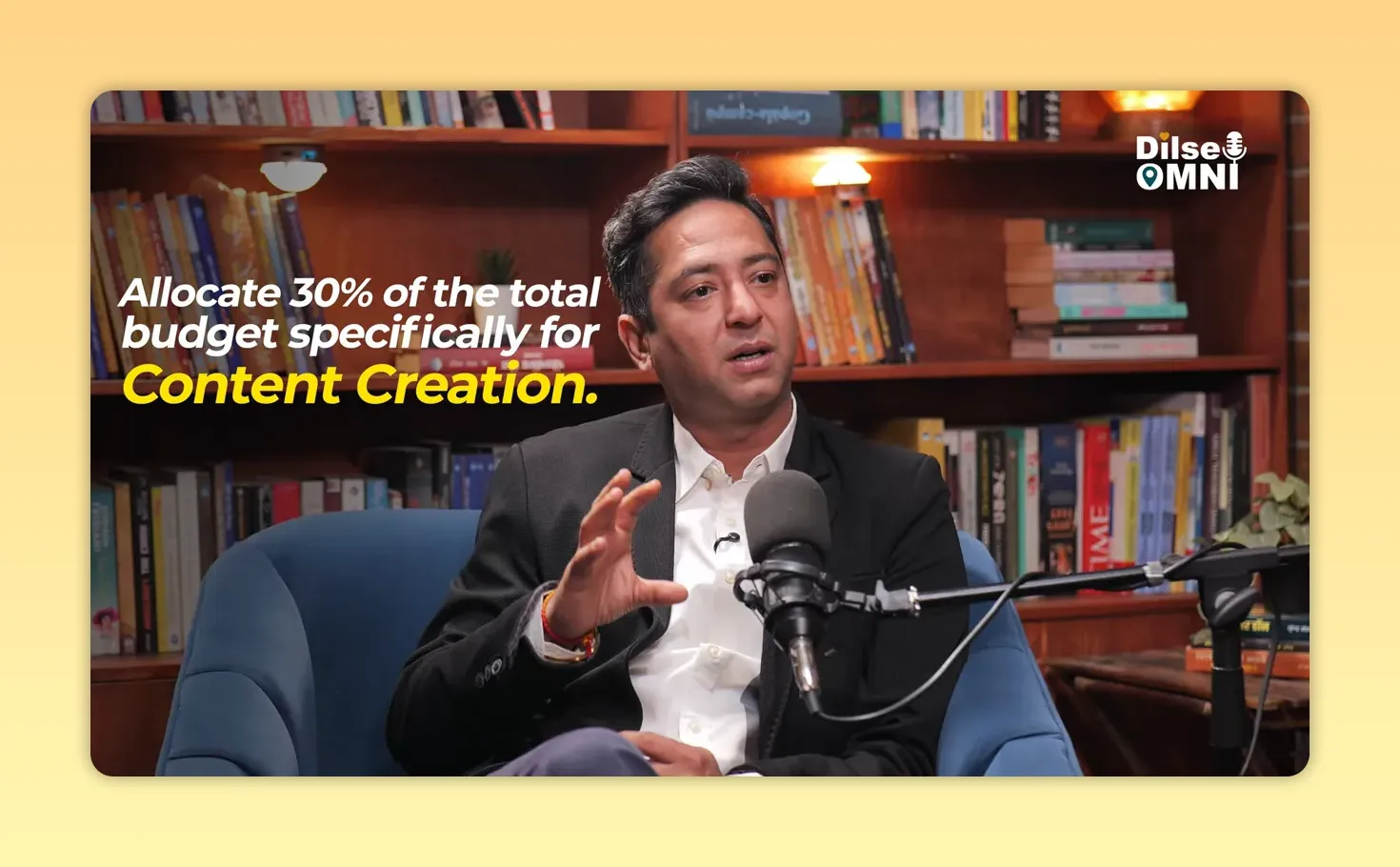
Media can amplify a message, but it cannot rescue content that is not designed to earn attention.
That content is not just one television commercial or one hero campaign asset. It includes the ideas, adaptations, formats, and channel-specific executions needed to keep the brand effective throughout the year.
The Ashish Bajaj Marketing Investment Framework
I would simplify Ashish’s approach into a five-part operating framework:
Set the business outcome: Define the growth objective first, whether it is OPD footfall, rides, leads, transactions, or another measurable outcome.
Fund content and distribution together: Do not treat content as an afterthought. Reserve meaningful investment for creation alongside media.
Find the consumer’s real environment: Identify where the consumer already is, physically, digitally, culturally, and emotionally.
Own one or two channels: Avoid spreading the budget too thinly across every available option.
Keep a reserve for opportunities: Leave room to act when high-reach moments or relevant occasions appear.
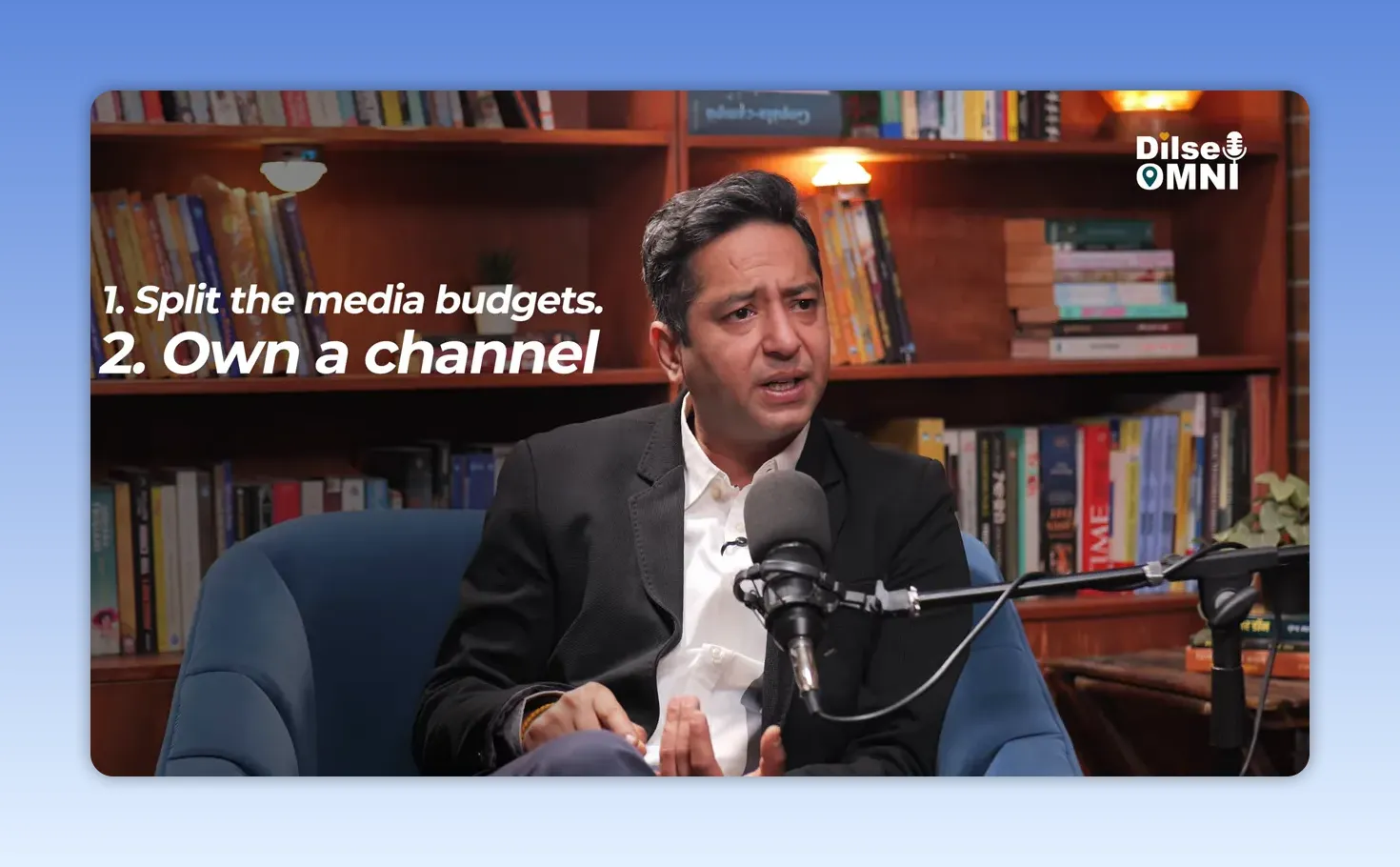
The goal is not to appear everywhere. The goal is to build dependable presence where it matters most.
Follow the Consumer Instead of Following Channel Fashion
After creating the content allocation, the next job is to decide where the media money should go. Here, Ashish’s advice is clear: start with the consumer, not the channel.
A large FMCG brand does not necessarily need to invest in every residential welfare association. But if the product is being sold in a mall environment, visibility and activation around the mall could be far more relevant. The principle is straightforward: go where the customer is going.
In contrast, a bank or financial services brand may need to make a larger trust-building investment. People are more cautious when the category involves money. Print and outdoor media may still play an important role in building acceptance and legitimacy, particularly when consumers need reassurance before making a financial decision.
Digital and social media can certainly build brands, but Ashish cautioned against treating them as an automatic answer for every business. The digital environment is crowded. Print and outdoor may have less clutter in certain contexts, and their physical visibility can support trust.
What It Really Means to Own a Channel
Channel ownership is not about running one isolated campaign and claiming success. It is about showing up with enough consistency that the audience begins to associate the channel with the brand.
Ashish’s benchmark was striking: out of 52 weeks in a year, a brand should aim to be present for around 40 to 45 weeks in the one or two channels it chooses to own.
This is why spreading a limited budget across too many channels can be counterproductive. The brand gets a little visibility everywhere, but it never develops meaningful memory anywhere.
For me, this is one of the most important takeaways from the conversation. Omnichannel does not mean being equally active across all channels. It means selecting the right touchpoints and ensuring they work together with enough continuity to influence behaviour.
Data and Gut: Both Have a Role
When a brand chooses to focus its investment on one or two channels, the natural question is whether that decision will work. Ashish’s answer was not data versus intuition. It was data and gut.
Data helps answer where consumers are moving, which touchpoints matter, and where performance is emerging. Gut is the creative judgement required to do something different enough to break clutter.
Data can reveal the opportunity. It cannot automatically create a memorable execution. Equally, creative instinct without consumer understanding can become expensive noise. Strong marketing leaders need both.
Keep Some Budget for High-Reach Opportunities
Not every marketing rupee should be committed at the beginning of the year. A smart budget leaves space for moments that may emerge later.
These could be category-relevant high days, cultural occasions, major sporting properties, or other high-reach events. Not every brand can afford to own the IPL, for example. But there may be adjacent ways to participate, use the broader conversation, or identify another large-scale moment that better fits the business and available budget.
The point is not to chase every trend. It is to keep optionality. If all money is locked into a rigid annual plan, the brand loses the ability to respond when a genuinely useful opportunity appears.
The Marketing Head Is an Investment Banker
My favourite line from this conversation was Ashish’s definition of the modern marketing leader.
“You are the investment banker in the marketing space.”
This is exactly right. A marketing head has been entrusted with company capital. The role is to assess risk, decide where to invest, build a portfolio of bets, measure what works, and generate returns.
Ten years ago, that expectation may have been softer for many businesses. Today, the accountability is sharper. The marketing leader must balance short-term performance, long-term brand equity, content quality, media effectiveness, and the confidence to make selective bets rather than indiscriminate spends.
Why Virality Is Not a Marketing Strategy
Social media has changed the distribution equation. A compelling offer, an entertaining execution, or an unexpected cultural moment can spread without the same level of paid amplification that was once required.
But virality should not become the plan.
Ashish was clear that viral success is rare and cannot be reliably engineered. It may be a one-in-a-million event. Even when a brand believes strongly in a product, offer, or creative idea, there still needs to be planning behind it. The brand needs to prepare, test, distribute intelligently, and continue making attempts.
Some ideas will work. Some will not. The answer is not to wait for accidental fame. The answer is to create a disciplined system that gives strong ideas a genuine chance to travel.
“Even a viral move needs a lot of planning behind it.”
The Real Playbook: Spend With Intent
The best marketing teams do not merely manage campaigns. They manage investments. They understand that a budget is not a scorecard of ambition. It is a set of choices.
Choose the growth outcome. Invest in content as seriously as media. Find the customer in the right context. Build trust where the category demands it. Own fewer channels for longer. Use data to locate the opportunity and judgement to create distinction. Keep some capital ready for the moments that matter.
That is how a marketing budget becomes a growth engine, not just a spending plan.
I am Saurabh Agrawal and we come with a new episode on Dilse omni talks every fortnight and cover different aspect of omnichannel with amazing speakers.