Nitin Jain
Nitin Jain
Episode 22
Episode 22
80 min
80 min
The Future of Gifting is Omnichannel
The Future of Gifting is Omnichannel
The Future of Gifting is Omnichannel
Why Does This Episode Matter?
Why Does This Episode Matter?
Some entrepreneurs build a business. Some build an ecosystem.
My conversation with Nitin Jain on Dilse Omni Talks was a reminder that the most interesting founders are doing both - simultaneously, quietly, and with a clarity about purpose that most growth decks never mention.
Nitin Jain is the founder of Indigifts - one of India's earliest and most distinctive gifting brands, built on the belief that emotion, not commodity, is what gifting is really about. From a small design house in Jaipur to processing 2.5 million orders, Nitin has spent 20 years building IP, enabling creators, and now co-piloting ventures through his community platform, Copreneurs.
He calls himself a copilot - someone who sits beside the driver, not to take the wheel, but to hold the direction. That framing, simple as it sounds, explains everything about how he builds.
Some entrepreneurs build a business. Some build an ecosystem.
My conversation with Nitin Jain on Dilse Omni Talks was a reminder that the most interesting founders are doing both - simultaneously, quietly, and with a clarity about purpose that most growth decks never mention.
Nitin Jain is the founder of Indigifts - one of India's earliest and most distinctive gifting brands, built on the belief that emotion, not commodity, is what gifting is really about. From a small design house in Jaipur to processing 2.5 million orders, Nitin has spent 20 years building IP, enabling creators, and now co-piloting ventures through his community platform, Copreneurs.
He calls himself a copilot - someone who sits beside the driver, not to take the wheel, but to hold the direction. That framing, simple as it sounds, explains everything about how he builds.

Nitin Jain
Nitin Jain
Nitin Jain: Five Reinventions in Building India's Gifting Economy
Nitin Jain: Five Reinventions in Building India's Gifting Economy
Nitin Jain's journey isn't a straight line, it's five distinct reinventions, each one building on the last. He moved from Creator to Service Provider to Brand Founder to Enabler to Copilot, and along the way built a piece of India's ₹2.5 lakh crore gifting economy, most of which, he argues, is still being built wrong.
Know What You Are Before You Build a Team:
Nitin's first career move wasn't planned, it was a newspaper ad reading "If you are creative, imaginative and ambitious, animate your career." He left his hometown in Rajasthan, enrolled in one of India's first animation degree programmes, and started working before he'd even graduated, charging ₹500 for a logo. By the time he was running his own design house in Jaipur, that number had grown 100x.
But the real lesson he took from those early years wasn't about pricing. It was about knowing exactly what he was, and wasn't. "God gave me a head, not hands," he says. "I can think, I can observe, I can create a roadmap. But I cannot drive it." Most founder problems, culture, scale, conflict, trace back to one person trying to occupy all three roles in the Creator-Executor-Transformer trinity at once. Knowing your role before you build a team is the first playbook lesson here.
Nitin Jain's journey isn't a straight line, it's five distinct reinventions, each one building on the last. He moved from Creator to Service Provider to Brand Founder to Enabler to Copilot, and along the way built a piece of India's ₹2.5 lakh crore gifting economy, most of which, he argues, is still being built wrong.
Know What You Are Before You Build a Team:
Nitin's first career move wasn't planned, it was a newspaper ad reading "If you are creative, imaginative and ambitious, animate your career." He left his hometown in Rajasthan, enrolled in one of India's first animation degree programmes, and started working before he'd even graduated, charging ₹500 for a logo. By the time he was running his own design house in Jaipur, that number had grown 100x.
But the real lesson he took from those early years wasn't about pricing. It was about knowing exactly what he was, and wasn't. "God gave me a head, not hands," he says. "I can think, I can observe, I can create a roadmap. But I cannot drive it." Most founder problems, culture, scale, conflict, trace back to one person trying to occupy all three roles in the Creator-Executor-Transformer trinity at once. Knowing your role before you build a team is the first playbook lesson here.

Sell the Emotion, Not the Commodity
Indigifts didn't start as a gifting company. It started as a design house that stumbled into its niche once Nitin realised India runs on love and emotion, and gifting was the natural playground for that. Its first product, a kitchen door sign called "Mummy ka Dhaba," was copied so widely that the phrase is now trademarked, a lesson that shaped everything after it: protect the IP first, launch second.
"Selling a commodity is easy. Selling emotion is not," Nitin says. "If the person making the product doesn't have that giving spirit in them, it becomes a commodity." Indigifts now carries nearly 5,000 SKUs, has processed 2.5 million orders, and sources entirely from self-help groups and artisan communities, with no products from China.
The playbook lesson: add Purpose as a fifth P alongside Product, Price, Position, and Promotion. Without it, even a beautifully made product eventually becomes just another soan papdi box circling every Diwali.
Sell the Emotion, Not the Commodity
Indigifts didn't start as a gifting company. It started as a design house that stumbled into its niche once Nitin realised India runs on love and emotion, and gifting was the natural playground for that. Its first product, a kitchen door sign called "Mummy ka Dhaba," was copied so widely that the phrase is now trademarked, a lesson that shaped everything after it: protect the IP first, launch second.
"Selling a commodity is easy. Selling emotion is not," Nitin says. "If the person making the product doesn't have that giving spirit in them, it becomes a commodity." Indigifts now carries nearly 5,000 SKUs, has processed 2.5 million orders, and sources entirely from self-help groups and artisan communities, with no products from China.
The playbook lesson: add Purpose as a fifth P alongside Product, Price, Position, and Promotion. Without it, even a beautifully made product eventually becomes just another soan papdi box circling every Diwali.
Sell the Emotion, Not the Commodity
Indigifts didn't start as a gifting company. It started as a design house that stumbled into its niche once Nitin realised India runs on love and emotion, and gifting was the natural playground for that. Its first product, a kitchen door sign called "Mummy ka Dhaba," was copied so widely that the phrase is now trademarked, a lesson that shaped everything after it: protect the IP first, launch second.
"Selling a commodity is easy. Selling emotion is not," Nitin says. "If the person making the product doesn't have that giving spirit in them, it becomes a commodity." Indigifts now carries nearly 5,000 SKUs, has processed 2.5 million orders, and sources entirely from self-help groups and artisan communities, with no products from China.
The playbook lesson: add Purpose as a fifth P alongside Product, Price, Position, and Promotion. Without it, even a beautifully made product eventually becomes just another soan papdi box circling every Diwali.

Build Your Core Circle Before You Need It
The shift from brand founder to enabler happened when Nitin realised that despite processing millions of orders, he had no direct relationship with his own customers, the marketplace owned that. That gap pushed him to rethink distribution, community, and what actually makes a business last.
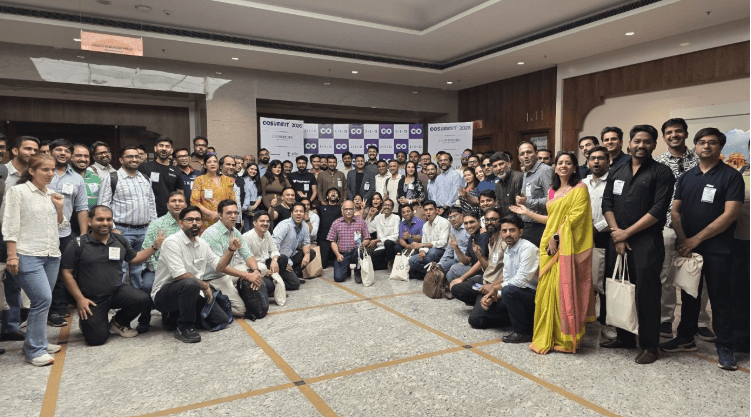
That thinking became Copreneurs, his community platform for growth-stage entrepreneurs, now home to 350 hand-picked members collectively generating an estimated ₹8,000–10,000 crore in revenue, where the real currency is time, not money. "1 + 1 = 11," he says. "If we can be someone's plus one, we will find our plus one. This is 100%, it's a science."
The final playbook lesson: the loneliest phase of any business isn't zero-to-one, it's one-to-ten, when accelerators stop being useful and the race feels entirely solo. Find your Core Circle before you get there.
Build Your Core Circle Before You Need It
The shift from brand founder to enabler happened when Nitin realised that despite processing millions of orders, he had no direct relationship with his own customers, the marketplace owned that. That gap pushed him to rethink distribution, community, and what actually makes a business last.
That thinking became Copreneurs, his community platform for growth-stage entrepreneurs, now home to 350 hand-picked members collectively generating an estimated ₹8,000–10,000 crore in revenue, where the real currency is time, not money. "1 + 1 = 11," he says. "If we can be someone's plus one, we will find our plus one. This is 100%, it's a science."
The final playbook lesson: the loneliest phase of any business isn't zero-to-one, it's one-to-ten, when accelerators stop being useful and the race feels entirely solo. Find your Core Circle before you get there.
What Is the Orange Economy, And Why Does It Matter for Brands?
The Orange Economy is creativity, culture, and craft - converted into capital, with strong IP at its centre. Korea's K-pop, Japan's anime, the US's Marvel universe - these are Orange Economy success stories. India has the raw material: craft, heritage, diversity, festivals, regional languages. What it hasn't had is the right infrastructure to monetise it.
India's Finance Minister referenced it in the Union Budget. Nitin has been building inside it for 20 years.
"Orange Economy in one line: something which uses creativity and culture, translates into capital, and has a very strong ethos of IP building, where India owns the IP and doesn't just do the job work."
The playbook lesson: Every regional brand - food, craft, gifting, fashion - is an Orange Economy play waiting to be activated. The question is whether you treat it as a commodity or a story. The Kathputli Toys venture Nitin is co-piloting is a live example: 100-day-old brand, 3-4 crore views, built entirely on Rajasthani cultural IP.
What Is the Orange Economy, And Why Does It Matter for Brands?
The Orange Economy is creativity, culture, and craft - converted into capital, with strong IP at its centre. Korea's K-pop, Japan's anime, the US's Marvel universe - these are Orange Economy success stories. India has the raw material: craft, heritage, diversity, festivals, regional languages. What it hasn't had is the right infrastructure to monetise it.
India's Finance Minister referenced it in the Union Budget. Nitin has been building inside it for 20 years.
"Orange Economy in one line: something which uses creativity and culture, translates into capital, and has a very strong ethos of IP building, where India owns the IP and doesn't just do the job work."
The playbook lesson: Every regional brand - food, craft, gifting, fashion - is an Orange Economy play waiting to be activated. The question is whether you treat it as a commodity or a story. The Kathputli Toys venture Nitin is co-piloting is a live example: 100-day-old brand, 3-4 crore views, built entirely on Rajasthani cultural IP.
What Is the Orange Economy, And Why Does It Matter for Brands?
The Orange Economy is creativity, culture, and craft - converted into capital, with strong IP at its centre. Korea's K-pop, Japan's anime, the US's Marvel universe - these are Orange Economy success stories. India has the raw material: craft, heritage, diversity, festivals, regional languages. What it hasn't had is the right infrastructure to monetise it.
India's Finance Minister referenced it in the Union Budget. Nitin has been building inside it for 20 years.
"Orange Economy in one line: something which uses creativity and culture, translates into capital, and has a very strong ethos of IP building, where India owns the IP and doesn't just do the job work."
The playbook lesson: Every regional brand - food, craft, gifting, fashion - is an Orange Economy play waiting to be activated. The question is whether you treat it as a commodity or a story. The Kathputli Toys venture Nitin is co-piloting is a live example: 100-day-old brand, 3-4 crore views, built entirely on Rajasthani cultural IP.

The Distribution Trap, And How to Escape It
The Distribution Trap, And How to Escape It
Nitin's most honest admission in our conversation had nothing to do with gifting. It was about what most consumer brand founders get badly wrong.
He used the image of a racecourse: the jockey, the horse, the bettor - everyone in the race knows their role. But there's a fourth person who always makes money regardless of who wins: the one who owns the racecourse. In the digital economy, that's the marketplace.
"Whoever controls distribution controls the game. You think you're building your brand - but you're building on rented land, where the rent changes every day."
Quick commerce has changed the speed of gifting, Nitin estimates close to 800-900 units ordered per minute on platforms like Blinkit and Zepto during Rakhi. But speed doesn't equal ownership. The brand that gets discovered on Blinkit is still Blinkit's customer, not yours.
His answer: build community first, then content, then commerce - in that order. Content drives discovery. Community drives loyalty. Commerce becomes the natural output.
The playbook lesson: Your distribution strategy is not your sales channel list. It is your belonging architecture - the reason people come back to you by name, not by keyword.
Nitin's most honest admission in our conversation had nothing to do with gifting. It was about what most consumer brand founders get badly wrong.
He used the image of a racecourse: the jockey, the horse, the bettor - everyone in the race knows their role. But there's a fourth person who always makes money regardless of who wins: the one who owns the racecourse. In the digital economy, that's the marketplace.
"Whoever controls distribution controls the game. You think you're building your brand - but you're building on rented land, where the rent changes every day."
Quick commerce has changed the speed of gifting, Nitin estimates close to 800-900 units ordered per minute on platforms like Blinkit and Zepto during Rakhi. But speed doesn't equal ownership. The brand that gets discovered on Blinkit is still Blinkit's customer, not yours.
His answer: build community first, then content, then commerce - in that order. Content drives discovery. Community drives loyalty. Commerce becomes the natural output.
The playbook lesson: Your distribution strategy is not your sales channel list. It is your belonging architecture - the reason people come back to you by name, not by keyword.
The biggest takeaway from this episode?
The biggest takeaway from this episode?
Purpose isn't a nice-to-have, it's the fifth P, and without it, every product eventually becomes a commodity.
Purpose isn't a nice-to-have, it's the fifth P, and without it, every product eventually becomes a commodity.
Protect before you scale: trademark your IP before launch, not after you've already built something worth stealing.
Protect before you scale: trademark your IP before launch, not after you've already built something worth stealing.
Self-awareness beats skill: Nitin's edge isn't doing everything, it's knowing precisely what he can't do and building around it.
Self-awareness beats skill: Nitin's edge isn't doing everything, it's knowing precisely what he can't do and building around it.
This is just the beginning. If you’re ready to understand how AI and Omnichannel thinking work together, and hear real stories from people building the future
This is just the beginning. If you’re ready to understand how AI and Omnichannel thinking work together, and hear real stories from people building the future
Nitin Jain


Talks with Saurabh Agrawal
Latest Episodes

Future of Marketing is Conversational
Gupshup founder Beerud Sheth on why the click is dying, how conversational AI is rewriting marketing, and why context, not intelligence, is the real moat.

Inside Arjun Vaidya's D2C Playbook
Arjun Vaidya on building, exiting, teaching, and investing, when to go offline, founder branding, and life as an operator turned VC.

Growth Playbook by Sanjeev Bikhchandani
There are very few people who have genuinely shaped the way India works, loves, and learns — all from one desk, one insight, and one stubborn belief that the internet would change everything before most people even knew what a server was. Sanjeev Bikhchandani is one of those people.

Scaling Omnichannel Fast Fashion Brand | Sumit Jasoria
Most fashion brands start with a mood board. NEWME started with a data pipeline. In a candid conversation on DilSe Omni, Sumit Jasoria, co-founder and CEO of NEWME, which is a brand that didn't exist three years ago, is now one of India's fastest-growing Gen Z fashion labels, jumping from ₹3.4 crore in FY23 to ₹180 crore in FY25. A 52x revenue jump. In under three years.

Is Agentic the future of Marketing? | Siddharth Gopalkrishnan
Discover how Netcore COO Siddharth Gopalakrishnan explains Agentic Marketing, AI-powered customer engagement, retention, omnichannel strategy, and the future of Martech.
View More
Latest Episodes
Future of Marketing is Conversational
Gupshup founder Beerud Sheth on why the click is dying, how conversational AI is rewriting marketing, and why context, not intelligence, is the real moat.
Inside Arjun Vaidya's D2C Playbook
Arjun Vaidya on building, exiting, teaching, and investing, when to go offline, founder branding, and life as an operator turned VC.
Growth Playbook by Sanjeev Bikhchandani
There are very few people who have genuinely shaped the way India works, loves, and learns — all from one desk, one insight, and one stubborn belief that the internet would change everything before most people even knew what a server was. Sanjeev Bikhchandani is one of those people.
Scaling Omnichannel Fast Fashion Brand | Sumit Jasoria
Most fashion brands start with a mood board. NEWME started with a data pipeline. In a candid conversation on DilSe Omni, Sumit Jasoria, co-founder and CEO of NEWME, which is a brand that didn't exist three years ago, is now one of India's fastest-growing Gen Z fashion labels, jumping from ₹3.4 crore in FY23 to ₹180 crore in FY25. A 52x revenue jump. In under three years.
Is Agentic the future of Marketing? | Siddharth Gopalkrishnan
Discover how Netcore COO Siddharth Gopalakrishnan explains Agentic Marketing, AI-powered customer engagement, retention, omnichannel strategy, and the future of Martech.
View More
Latest Episodes
Future of Marketing is Conversational
Gupshup founder Beerud Sheth on why the click is dying, how conversational AI is rewriting marketing, and why context, not intelligence, is the real moat.
Inside Arjun Vaidya's D2C Playbook
Arjun Vaidya on building, exiting, teaching, and investing, when to go offline, founder branding, and life as an operator turned VC.
Growth Playbook by Sanjeev Bikhchandani
There are very few people who have genuinely shaped the way India works, loves, and learns — all from one desk, one insight, and one stubborn belief that the internet would change everything before most people even knew what a server was. Sanjeev Bikhchandani is one of those people.
Scaling Omnichannel Fast Fashion Brand | Sumit Jasoria
Most fashion brands start with a mood board. NEWME started with a data pipeline. In a candid conversation on DilSe Omni, Sumit Jasoria, co-founder and CEO of NEWME, which is a brand that didn't exist three years ago, is now one of India's fastest-growing Gen Z fashion labels, jumping from ₹3.4 crore in FY23 to ₹180 crore in FY25. A 52x revenue jump. In under three years.
Is Agentic the future of Marketing? | Siddharth Gopalkrishnan
Discover how Netcore COO Siddharth Gopalakrishnan explains Agentic Marketing, AI-powered customer engagement, retention, omnichannel strategy, and the future of Martech.
View More
Subscribe on your favourite platform




Subscribe on your favourite platform



Subscribe on your favourite platform

Subscribe for
insider insights
Subscribe for
insider insights
Subscribe
for insider insights