Some brand campaigns entertain for a week. A rare few become part of culture. Hari Sadu belongs to that second category.
When I spoke with Sanjeev Bikhchandani on Dilse Omni, what stayed with me was not just the nostalgia of a legendary Naukri campaign. It was the discipline behind it. The patience. The respect for insight. And the clarity that great marketing is not built by spending fast, but by waiting until the idea is worth backing.
Naukri’s journey offers a propermasterclass for founders, marketers, and brand builders. Not only in advertising, but in how to think about consumer truth, brand recall, and long term top of mind awareness.
Table of Contents
The ad everyone remembers, but few unpack properly
Do funny ads really sell?
Naukri did not chase celebrities. It chased recall.
The ₹5 crore lesson: do not spend until the creative deserves it
The real insight behind Hari Sadu
A simple framework for memorable advertising
Why the boss-employee relationship was such a powerful territory
How Hari Sadu was born
Great campaigns are rarely born perfect
What founders and marketers can learn from Naukri
The ad everyone remembers, but few unpack properly
I have always found Naukri’s marketing fascinating. Even now, their communication often has that nudge which makes you smile and then quietly reflect on your own job situation. That is powerful territory for a brand to occupy.
The Hari Sadu campaign did exactly that. It was funny on the surface, but underneath it, there was a very human tension. The frustration of dealing with a difficult boss. The fantasy of saying what you really feel, but cannot say at work.

A simple office nameplate became the anchor for one of India’s most memorable brand moments.
That is why the campaign stayed. It was not random humour. It was humour attached to lived experience.
One of the biggest lessons I took away: memorable advertising usually works because it gives language and shape to something people already feel.
Do funny ads really sell?
This is where Sanjeev’s perspective was especially sharp.
He made an important distinction. People do not make serious career decisions just because they saw a funny commercial. Job switching is too important and too personal for that. But the ad can still do an enormous amount of work for the brand.
It can build awareness. It can create top of mind recall. It can bring traffic. And when the real need arises, the brand that comes to mind first has a huge advantage.
That is exactly how Naukri used the campaign.
Highlighted insight: “People do not switch jobs because of an ad. But a great ad makes sure your brand is remembered when they finally decide to move.”
This is an omnichannel lesson too. Many brands over-obsess on immediate conversion and underinvest in memory. Naukri understood that the category itself had a trigger based purchase cycle. You do not search for jobs every day with the same intensity. So the brand had to stay lodged in the mind until the moment of intent arrived.
Naukri did not chase celebrities. It chased recall.
One thing I have admired about Naukri is that it built without leaning on celebrity shortcuts. The brand’s communication had its own character. It trusted craft more than borrowed fame.
That matters because in categories like jobs, property, matrimony, or education, trust and relevance often beat glamour. If the message is rooted in a truth that feels personal, the brand does not need a famous face to force attention.
That is one reason Naukri’s communication felt so native to the everyday office experience. It was less performance, more recognition.
The ₹5 crore lesson: do not spend until the creative deserves it
This part of the conversation felt like pure founder wisdom.
Naukri had a limited TV budget. Around ₹5 crore for media was a huge amount for them, especially in those years, but it was still finite. So instead of rushing to launch something because a calendar said so, they took a different route.
They hired a serious agency, FCB Ulka, paid the retainer, and kept reviewing ideas. Again and again. If the creative did not feel right, they rejected it. No artificial deadline. No pressure to release a weak campaign just because money had been allocated.
Highlighted insight: “We have one shot. We will wait for the right creative before we spend the big media money.”
This is an underrated lesson in capital allocation. Bad creative with large distribution only amplifies mediocrity. Good creative multiplies every rupee behind it.
I see this all the time across growth and omnichannel brands. Teams are often fast on budget deployment but slow on clarity. Naukri did the reverse. It was patient on spending and demanding on quality.
The real insight behind Hari Sadu
The breakthrough came from research.
Sanjeev recalled a study done in collaboration with a global executive search firm. The finding was simple and powerful. Most people do not begin a job search primarily because of salary or title. They start because of a bad relationship at work, especially with a boss.
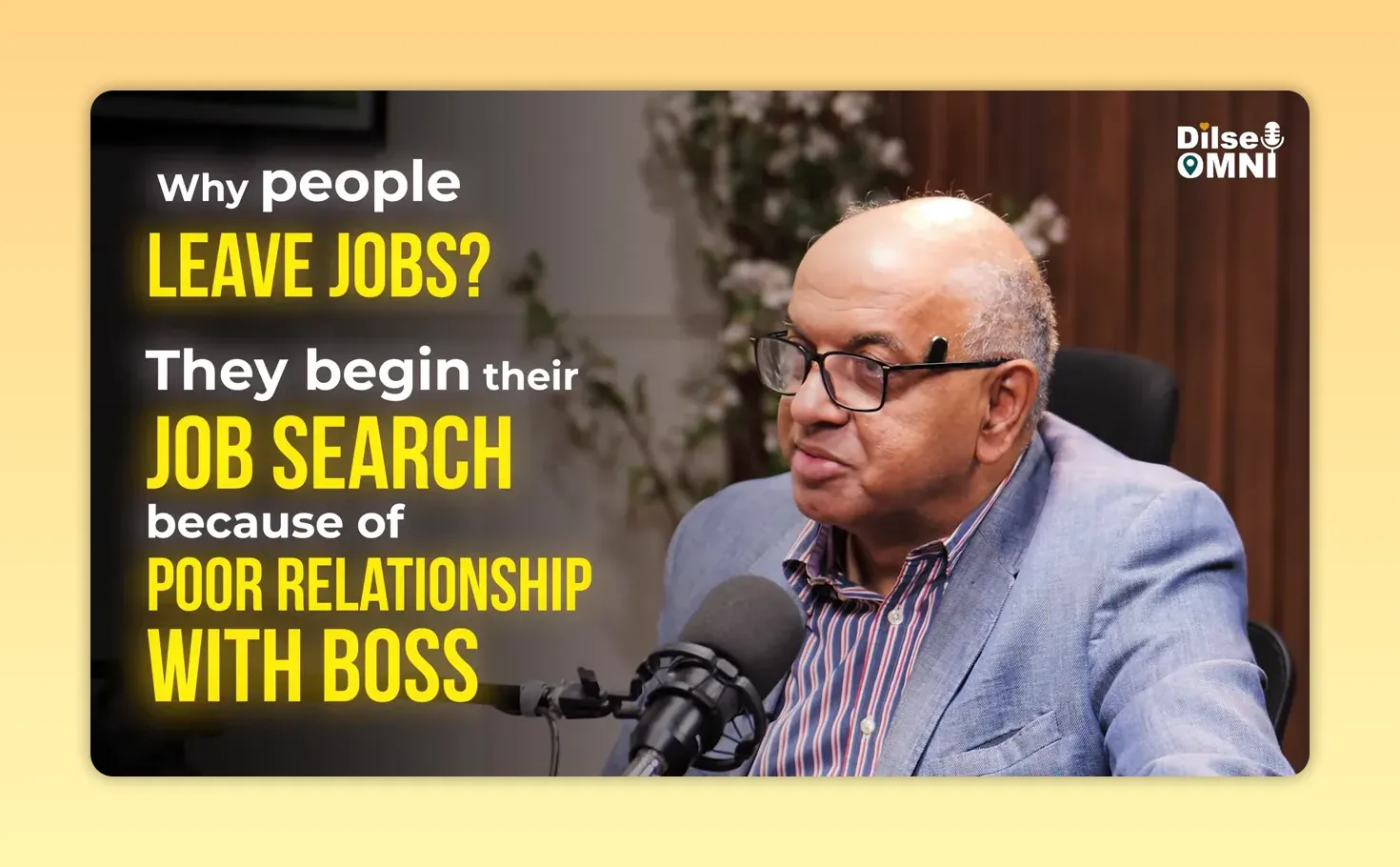
The campaign worked because it was built on a truth almost every working professional recognises instantly.
That is such a sharp category insight.
You may join a company because the brand, role, or opportunity looks attractive. But many people start planning their exit because the day to day experience becomes unbearable.
Highlighted insight: “You join a company for the company. You leave a company for a lousy boss.”
That one line explains why the campaign hit so hard. It was not trying to dramatise ambition. It was dramatising relief.
A simple framework for memorable advertising
One of my favourite parts of the conversation was the framework behind the campaign. Sanjeev shared the three ingredients the team believed were necessary if a TV commercial had to cut through clutter.
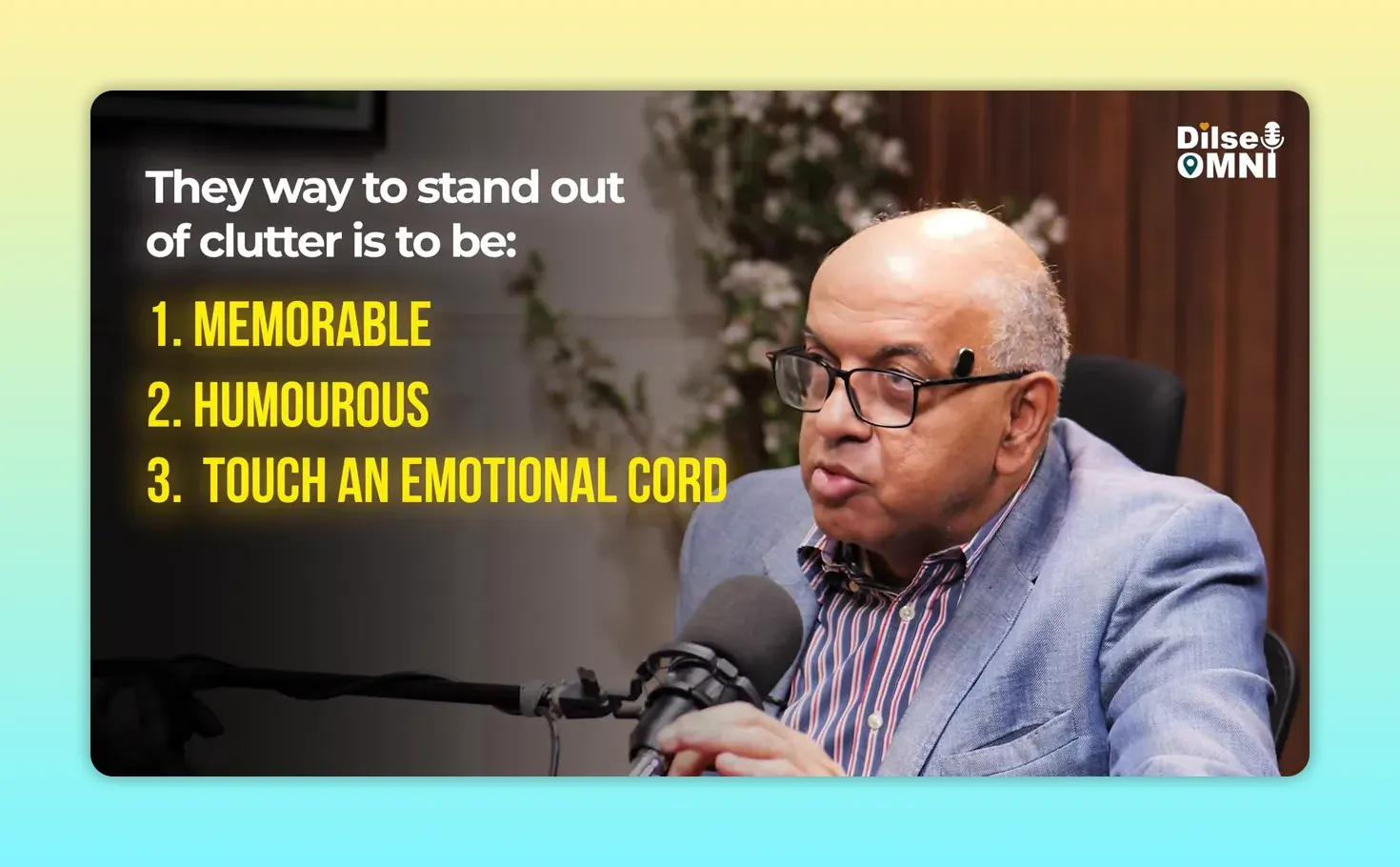
This is a useful filter for any marketer before scaling media behind a campaign.
The Naukri three-part framework
Memorable so people can recall it later
Humorous so it earns attention and sharing
Emotionally resonant so it connects with something real
That is a superb framework because it balances entertainment with psychology.
Humour alone is not enough. Plenty of funny ads are forgotten because they are disconnected from the brand or the category. Emotion alone is not enough either if the creative gets drowned in clutter. Naukri found the intersection.
If I translate this into a practical test for marketers, it would be:
Will people remember this tomorrow?
Will they enjoy it enough to talk about it?
Does it connect to a real tension in the customer’s life?
If the answer is yes to all three, you may have something worth putting serious media behind.
Why the boss-employee relationship was such a powerful territory
Another clever piece of thinking sat beneath the creative direction.
The team recognised that India had certain relationships that had already dominated storytelling for decades. Mother and son. Mother in law and daughter in law. These had been explored endlessly in films and television.
But there was another major relationship that almost everyone experiences and very few brands had truly owned: boss and employee.
That gave Naukri a distinctive lane.
Instead of selling jobs in an abstract way, they entered the emotional world of office life. Deadlines, hierarchy, suppression, irritation, and the quiet dream of escape. This made the brand feel closer to reality than polished corporate messaging ever could.
That is also what made the ad drive brand awareness so effectively. It was highly relatable across industries, age groups, and cities. You did not need to be actively searching for a new job to instantly get the joke. The audience pool became far wider than active job seekers.
And that is how strong awareness campaigns often work. They speak directly to the core user problem, but in a way that even non-buyers understand and remember.
How Hari Sadu was born
The origin story is brilliant because it shows how creative sparks often come from ordinary moments.
Inside the agency, someone was apparently struggling to spell out a name over the phone. That tiny everyday frustration triggered an idea. What if a boss had to explain his own name, and the subordinate used insulting words to spell it out, while staying just within the cover of the situation?
That became the hook.
The name, the phone call, the office setting, the subordinate’s hidden rebellion, all of it came together into a piece of communication that was instantly shareable long before social sharing became the norm.
Highlighted insight: “Can we let an employee live out the fantasy of getting back at a bad boss, but do it in a funny way?”
That question is the heart of the campaign. Once that was clear, everything else followed naturally.
Great campaigns are rarely born perfect
Another useful learning from Naukri’s journey is that experimentation mattered.
There was a series of films. One worked strongly. One did not do as well. Hari Sadu became the breakout. Even the earlier washroom film was not an obvious yes at first. It involved meaningful production cost, and for a relatively small company at the time, that was a serious decision.
Someone on the team pushed for it hard. That conviction mattered.
This is worth remembering because legendary work often looks inevitable only in hindsight. At the moment of decision, it is uncertain, expensive, and uncomfortable. Teams debate. Leaders hesitate. Someone has to back the work.
Sanjeev was very generous in giving credit to the people who shaped the campaign, both on the agency side and within Naukri. That humility itself is a lesson. Great brands are built by teams, not by mythology.
If you want more founder stories like this, especially around Indian internet businesses and category creation, the conversation on The Father of Indian Startup Ecosystem is also worth exploring.
What founders and marketers can learn from Naukri
If I had to condense the Naukri and Hari Sadu journey into a practical playbook, it would be this:
Start with a deep human truth. Consumer insight is the engine.
Respect memory, not just conversion. Top of mind awareness matters in low frequency categories.
Use humour with purpose. Make people laugh about something they already recognise.
Be patient with budget. Do not scale weak creative.
Own a relatable emotional territory. Naukri owned the bad boss problem.
Accept that breakthrough work is rare. A true 10x creative does not come every quarter.
Sanjeev described Hari Sadu as the kind of creative that comes once in 10 or 20 years. I think that is exactly right. Not every campaign can become a cult ad. But every serious brand can still learn from the process that produced it.
Patient thinking. Sharp insight. Courage to reject average work. And confidence to invest only when the idea has the power to travel.
That is not just an advertising lesson. That is a business building lesson.
If you enjoy these kinds of breakdowns on branding, growth, and omnichannel thinking, you can explore more conversations across Dilse Omni Talks.
I am Saurabh Agrawal, and we come with a new episode on Dilse Omni Talks every fortnight and cover different aspects of omnichannel with amazing speakers.
This article was created from the learnings from the video How Hari Sadu Became India's Most Iconic Ad | Sanjeev Bikhchandani | Dilse Omni Talks.