Aditya Singh
Aditya Singh
Episode 25
Episode 25
140 min
140 min
Funding The Next Unicorns
Funding The Next Unicorns
Funding The Next Unicorns
Why Does This Episode Matter?
Why Does This Episode Matter?
If you are building a D2C brand in India, thinking about raising your first cheque, or trying to get into rooms that feel closed to you, this conversation will make you uncomfortable in the right way.
Aditya's argument is not that India is full of opportunity. It is that most people are looking at the opportunity wrong. They are chasing the India One customer who is already overwhelmed with choices, building distribution on platforms that will eventually squeeze them, and raising money before they understand what they are actually raising it for.
If you are building a D2C brand in India, thinking about raising your first cheque, or trying to get into rooms that feel closed to you, this conversation will make you uncomfortable in the right way.
Aditya's argument is not that India is full of opportunity. It is that most people are looking at the opportunity wrong. They are chasing the India One customer who is already overwhelmed with choices, building distribution on platforms that will eventually squeeze them, and raising money before they understand what they are actually raising it for.

Aditya Singh
Co-founder at All in Capital
What a Pre-Seed Investor Looks for Before Your Metrics Matter
What a Pre-Seed Investor Looks for Before Your Metrics Matter
There is a type of investor who has so internalised first-principles thinking that they end up giving you a masterclass on three different subjects without you ever asking. Aditya Singh is one of those investors.
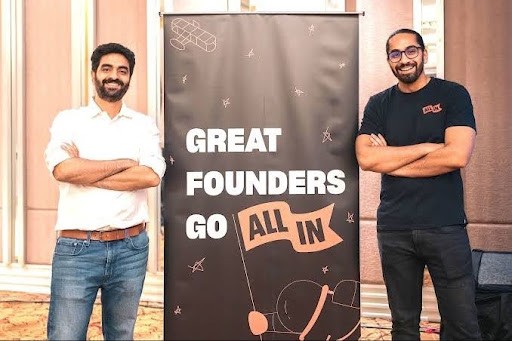
Aditya Singh is the co-founder of All In Capital, one of India's most active pre-seed funds. His path here was not straight: a forex startup, then Amazon AWS, venture debt at Stride, and finally the fund he co-built with Kushal. He has backed Newme (fast fashion for Gen Z), Mom's Maid (a regional Bihar snack brand built by a mother-son duo), and Broccoli (an AI copilot for blue-collar tradespeople). He is also a creator, and a lot of what he said about building an audience turned out to be the same thing he said about building a portfolio.
On this episode of Dilse Omni Talks, we covered three things I did not expect to find so connected: how to read India's consumer market, what actually happens in a pre-seed pitch room, and why networking is the one compounding skill most founders radically underinvest in.
There is a type of investor who has so internalised first-principles thinking that they end up giving you a masterclass on three different subjects without you ever asking. Aditya Singh is one of those investors.
Aditya Singh is the co-founder of All In Capital, one of India's most active pre-seed funds. His path here was not straight: a forex startup, then Amazon AWS, venture debt at Stride, and finally the fund he co-built with Kushal. He has backed Newme (fast fashion for Gen Z), Mom's Maid (a regional Bihar snack brand built by a mother-son duo), and Broccoli (an AI copilot for blue-collar tradespeople). He is also a creator, and a lot of what he said about building an audience turned out to be the same thing he said about building a portfolio.
On this episode of Dilse Omni Talks, we covered three things I did not expect to find so connected: how to read India's consumer market, what actually happens in a pre-seed pitch room, and why networking is the one compounding skill most founders radically underinvest in.

The Quick Commerce Trap
Quick commerce felt like a miracle for D2C brands a few years ago. No distributor, no shelf placement, no working capital tied up in a retail chain. A 500 rupee product could reach a customer in ten minutes, and brands could scale without the traditional pain of offline.
The problem is that the economics have quietly flipped, and most founders have not noticed yet.
"Today, 100 distributors are cheaper than being on 100 quick commerce platforms. Holding fees, listing fees, ad credits you now have to buy. What looked like the cheapest route to the customer has become one of the most expensive."
The deeper issue is ownership. On quick commerce, the customer belongs to the platform. The moment Blinkit decides to promote a competing brand or launch its own private label in your category, you have no relationship to fall back on. You built the demand but the platform owns the customer.
Aditya's prescription is clear: use quick commerce as a discovery and validation channel. Build offline before you need to, not after the platform squeezes you. The founders who make that move early will be in a fundamentally different position from the ones who do not.
The Quick Commerce Trap
Quick commerce felt like a miracle for D2C brands a few years ago. No distributor, no shelf placement, no working capital tied up in a retail chain. A 500 rupee product could reach a customer in ten minutes, and brands could scale without the traditional pain of offline.
The problem is that the economics have quietly flipped, and most founders have not noticed yet.
"Today, 100 distributors are cheaper than being on 100 quick commerce platforms. Holding fees, listing fees, ad credits you now have to buy. What looked like the cheapest route to the customer has become one of the most expensive."
The deeper issue is ownership. On quick commerce, the customer belongs to the platform. The moment Blinkit decides to promote a competing brand or launch its own private label in your category, you have no relationship to fall back on. You built the demand but the platform owns the customer.
Aditya's prescription is clear: use quick commerce as a discovery and validation channel. Build offline before you need to, not after the platform squeezes you. The founders who make that move early will be in a fundamentally different position from the ones who do not.
India One Is Crowded. India Two and Three Is Where It Gets Interesting.
Almost every founder pitching a consumer brand today is pitching to India One: urban, English-speaking, on Instagram, has tried twelve supplement brands, and switches loyalty the moment a better option appears in the feed. That market is genuinely cluttered. Meta ROAS keeps dropping. The audience is finite and the customer is bored.
The more interesting insight Aditya shared was about India Two and Three. Real wages in the mass market have not kept pace with inflation for years and that squeeze is compounding. Almost no founder is building for that customer, because most founders are from India One and have never lived that problem from the inside.
The Quick Commerce Trap
Quick commerce felt like a miracle for D2C brands a few years ago. No distributor, no shelf placement, no working capital tied up in a retail chain. A 500 rupee product could reach a customer in ten minutes, and brands could scale without the traditional pain of offline.
The problem is that the economics have quietly flipped, and most founders have not noticed yet.
"Today, 100 distributors are cheaper than being on 100 quick commerce platforms. Holding fees, listing fees, ad credits you now have to buy. What looked like the cheapest route to the customer has become one of the most expensive."
The deeper issue is ownership. On quick commerce, the customer belongs to the platform. The moment Blinkit decides to promote a competing brand or launch its own private label in your category, you have no relationship to fall back on. You built the demand but the platform owns the customer.
Aditya's prescription is clear: use quick commerce as a discovery and validation channel. Build offline before you need to, not after the platform squeezes you. The founders who make that move early will be in a fundamentally different position from the ones who do not.
India One Is Crowded. India Two and Three Is Where It Gets Interesting.
Almost every founder pitching a consumer brand today is pitching to India One: urban, English-speaking, on Instagram, has tried twelve supplement brands, and switches loyalty the moment a better option appears in the feed. That market is genuinely cluttered. Meta ROAS keeps dropping. The audience is finite and the customer is bored.
The more interesting insight Aditya shared was about India Two and Three. Real wages in the mass market have not kept pace with inflation for years and that squeeze is compounding. Almost no founder is building for that customer, because most founders are from India One and have never lived that problem from the inside.
India One Is Crowded. India Two and Three Is Where It Gets Interesting.
Almost every founder pitching a consumer brand today is pitching to India One: urban, English-speaking, on Instagram, has tried twelve supplement brands, and switches loyalty the moment a better option appears in the feed. That market is genuinely cluttered. Meta ROAS keeps dropping. The audience is finite and the customer is bored.
The more interesting insight Aditya shared was about India Two and Three. Real wages in the mass market have not kept pace with inflation for years and that squeeze is compounding. Almost no founder is building for that customer, because most founders are from India One and have never lived that problem from the inside.

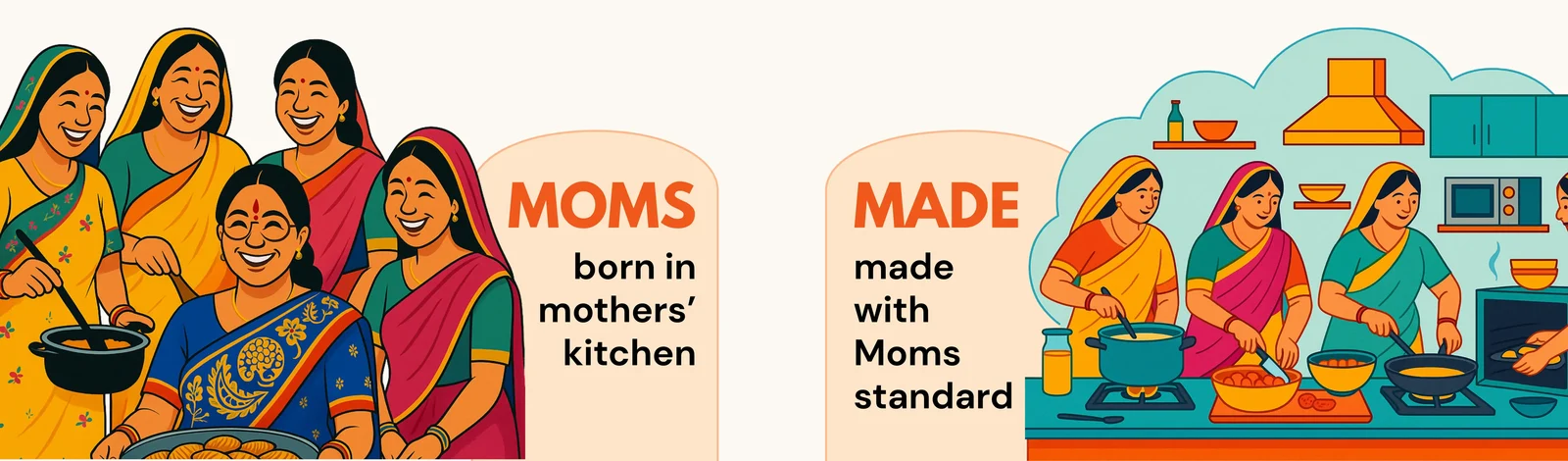
His best example was Mom's Maid. A mother-son duo where the son never went to college. He went to Bangalore, found a startup job, and used it to understand demand patterns. His mother was already making thekua at home, a nostalgic Bihar snack that was impossible to find outside the community. They made it healthy, set up a small factory, and within a year were doing 2 crore a month, EBITDA-profitable from day one. They raised at a 75 crore valuation.
"He came from that background. He understood the customer. He understood the product. Product wins."
The opportunity in India Two and Three is real and largely uncaptured. But you cannot build for it from a distance. You have to understand that customer from the inside, not from a market research deck.
His best example was Mom's Maid. A mother-son duo where the son never went to college. He went to Bangalore, found a startup job, and used it to understand demand patterns. His mother was already making thekua at home, a nostalgic Bihar snack that was impossible to find outside the community. They made it healthy, set up a small factory, and within a year were doing 2 crore a month, EBITDA-profitable from day one. They raised at a 75 crore valuation.
"He came from that background. He understood the customer. He understood the product. Product wins."
The opportunity in India Two and Three is real and largely uncaptured. But you cannot build for it from a distance. You have to understand that customer from the inside, not from a market research deck.
The Pre-Seed Pitch Room: What Actually Happens
At pre-seed, the numbers barely exist. The product might be a prototype. The market thesis is still half-formed. What the investor is actually doing is underwriting a person, not a plan. And the signal that moves a founder from 30 percent odds to 80 percent odds is not the quality of the TAM slide.
"At the end, people are investing in vibe. Same idea, same business, same numbers. But one founder keeps you engaged for 30 minutes. The other one, you are on WhatsApp by minute three."
The pitch deck has six things to do. What you are building in one line. What the problem is. What the solution is. Why you are the right person to build it. What the market looks like. And how an investor makes money. None of that is surprising. What surprised me was Aditya's advice on timing.
Go to your lower-priority VCs first. Use those conversations to absorb rejection and sharpen the story. Then show up to your top-three list with a version of yourself that has already been through the fire. The deck stays the same. The founder in the room is three iterations better.
The Pre-Seed Pitch Room: What Actually Happens
At pre-seed, the numbers barely exist. The product might be a prototype. The market thesis is still half-formed. What the investor is actually doing is underwriting a person, not a plan. And the signal that moves a founder from 30 percent odds to 80 percent odds is not the quality of the TAM slide.
"At the end, people are investing in vibe. Same idea, same business, same numbers. But one founder keeps you engaged for 30 minutes. The other one, you are on WhatsApp by minute three."
The pitch deck has six things to do. What you are building in one line. What the problem is. What the solution is. Why you are the right person to build it. What the market looks like. And how an investor makes money. None of that is surprising. What surprised me was Aditya's advice on timing.
Go to your lower-priority VCs first. Use those conversations to absorb rejection and sharpen the story. Then show up to your top-three list with a version of yourself that has already been through the fire. The deck stays the same. The founder in the room is three iterations better.
The Pre-Seed Pitch Room: What Actually Happens
At pre-seed, the numbers barely exist. The product might be a prototype. The market thesis is still half-formed. What the investor is actually doing is underwriting a person, not a plan. And the signal that moves a founder from 30 percent odds to 80 percent odds is not the quality of the TAM slide.
"At the end, people are investing in vibe. Same idea, same business, same numbers. But one founder keeps you engaged for 30 minutes. The other one, you are on WhatsApp by minute three."
The pitch deck has six things to do. What you are building in one line. What the problem is. What the solution is. Why you are the right person to build it. What the market looks like. And how an investor makes money. None of that is surprising. What surprised me was Aditya's advice on timing.
Go to your lower-priority VCs first. Use those conversations to absorb rejection and sharpen the story. Then show up to your top-three list with a version of yourself that has already been through the fire. The deck stays the same. The founder in the room is three iterations better.


The Networking Playbook That Built Everything
Every significant move in Aditya's career happened through a conversation. His job at Amazon AWS was to give credits to startups. He did more than his job: connecting VCs to founders, going to every event he could, building a network that opened every door that followed. The introduction to Stride, the cold email to Kushal, All In Capital itself. All of it started with a conversation.
When I asked him for the principles behind it, his first point was that networking is learnable. Not everyone has a natural gift for it but that does not matter. It is a skill that improves with repetition.
The second principle is to give before you take. Every conversation you enter, you should be asking yourself what you are bringing to the other person. That value does not have to be knowledge. It can be energy, an introduction, or genuine acknowledgment. But there has to be something there or the relationship has no foundation.
The third principle, and the one I found most useful, is to find your hook. Know what makes you memorable and make it consistent. When someone thinks of you a week after meeting you, there should be something specific they think of.
"We are wired as humans to run away from desperation and run towards FOMO. Apply that principle to every follow-up."
One meeting, then patience. Re-appear at the next event. Let the other person want to find you. The founders who build real networks are not the ones working the room hardest. They are the ones who made the room want to find them.
The Networking Playbook That Built Everything
Every significant move in Aditya's career happened through a conversation. His job at Amazon AWS was to give credits to startups. He did more than his job: connecting VCs to founders, going to every event he could, building a network that opened every door that followed. The introduction to Stride, the cold email to Kushal, All In Capital itself. All of it started with a conversation.
When I asked him for the principles behind it, his first point was that networking is learnable. Not everyone has a natural gift for it but that does not matter. It is a skill that improves with repetition.
The second principle is to give before you take. Every conversation you enter, you should be asking yourself what you are bringing to the other person. That value does not have to be knowledge. It can be energy, an introduction, or genuine acknowledgment. But there has to be something there or the relationship has no foundation.
The third principle, and the one I found most useful, is to find your hook. Know what makes you memorable and make it consistent. When someone thinks of you a week after meeting you, there should be something specific they think of.
"We are wired as humans to run away from desperation and run towards FOMO. Apply that principle to every follow-up."
One meeting, then patience. Re-appear at the next event. Let the other person want to find you. The founders who build real networks are not the ones working the room hardest. They are the ones who made the room want to find them.
The Networking Playbook That Built Everything
Every significant move in Aditya's career happened through a conversation. His job at Amazon AWS was to give credits to startups. He did more than his job: connecting VCs to founders, going to every event he could, building a network that opened every door that followed. The introduction to Stride, the cold email to Kushal, All In Capital itself. All of it started with a conversation.
When I asked him for the principles behind it, his first point was that networking is learnable. Not everyone has a natural gift for it but that does not matter. It is a skill that improves with repetition.
The second principle is to give before you take. Every conversation you enter, you should be asking yourself what you are bringing to the other person. That value does not have to be knowledge. It can be energy, an introduction, or genuine acknowledgment. But there has to be something there or the relationship has no foundation.
The third principle, and the one I found most useful, is to find your hook. Know what makes you memorable and make it consistent. When someone thinks of you a week after meeting you, there should be something specific they think of.
"We are wired as humans to run away from desperation and run towards FOMO. Apply that principle to every follow-up."
One meeting, then patience. Re-appear at the next event. Let the other person want to find you. The founders who build real networks are not the ones working the room hardest. They are the ones who made the room want to find them.
The biggest takeaway from this episode?
The biggest takeaway from this episode?
Quick commerce is a discovery channel, not a home. Build offline before the platform decides to squeeze you.
Quick commerce is a discovery channel, not a home. Build offline before the platform decides to squeeze you.
Networking compounds like investing. Start early, give first, and never follow up with desperation.
Networking compounds like investing. Start early, give first, and never follow up with desperation.
At pre-seed, the vibe check matters more than the numbers. Save your best pitch for the investors who matter.
At pre-seed, the vibe check matters more than the numbers. Save your best pitch for the investors who matter.
This is just the beginning. If you’re ready to understand how AI and Omnichannel thinking work together, and hear real stories from people building the future
This is just the beginning. If you’re ready to understand how AI and Omnichannel thinking work together, and hear real stories from people building the future


Talks with Saurabh Agrawal
Latest Episodes

Future of Marketing is Conversational
Gupshup founder Beerud Sheth on why the click is dying, how conversational AI is rewriting marketing, and why context, not intelligence, is the real moat.

Inside Arjun Vaidya's D2C Playbook
Arjun Vaidya on building, exiting, teaching, and investing, when to go offline, founder branding, and life as an operator turned VC.

Growth Playbook by Sanjeev Bikhchandani
There are very few people who have genuinely shaped the way India works, loves, and learns — all from one desk, one insight, and one stubborn belief that the internet would change everything before most people even knew what a server was. Sanjeev Bikhchandani is one of those people.

Scaling Omnichannel Fast Fashion Brand | Sumit Jasoria
Most fashion brands start with a mood board. NEWME started with a data pipeline. In a candid conversation on DilSe Omni, Sumit Jasoria, co-founder and CEO of NEWME, which is a brand that didn't exist three years ago, is now one of India's fastest-growing Gen Z fashion labels, jumping from ₹3.4 crore in FY23 to ₹180 crore in FY25. A 52x revenue jump. In under three years.

Is Agentic the future of Marketing? | Siddharth Gopalkrishnan
Discover how Netcore COO Siddharth Gopalakrishnan explains Agentic Marketing, AI-powered customer engagement, retention, omnichannel strategy, and the future of Martech.
View More
Latest Episodes
Future of Marketing is Conversational
Gupshup founder Beerud Sheth on why the click is dying, how conversational AI is rewriting marketing, and why context, not intelligence, is the real moat.
Inside Arjun Vaidya's D2C Playbook
Arjun Vaidya on building, exiting, teaching, and investing, when to go offline, founder branding, and life as an operator turned VC.
Growth Playbook by Sanjeev Bikhchandani
There are very few people who have genuinely shaped the way India works, loves, and learns — all from one desk, one insight, and one stubborn belief that the internet would change everything before most people even knew what a server was. Sanjeev Bikhchandani is one of those people.
Scaling Omnichannel Fast Fashion Brand | Sumit Jasoria
Most fashion brands start with a mood board. NEWME started with a data pipeline. In a candid conversation on DilSe Omni, Sumit Jasoria, co-founder and CEO of NEWME, which is a brand that didn't exist three years ago, is now one of India's fastest-growing Gen Z fashion labels, jumping from ₹3.4 crore in FY23 to ₹180 crore in FY25. A 52x revenue jump. In under three years.
Is Agentic the future of Marketing? | Siddharth Gopalkrishnan
Discover how Netcore COO Siddharth Gopalakrishnan explains Agentic Marketing, AI-powered customer engagement, retention, omnichannel strategy, and the future of Martech.
View More
Latest Episodes
Future of Marketing is Conversational
Gupshup founder Beerud Sheth on why the click is dying, how conversational AI is rewriting marketing, and why context, not intelligence, is the real moat.
Inside Arjun Vaidya's D2C Playbook
Arjun Vaidya on building, exiting, teaching, and investing, when to go offline, founder branding, and life as an operator turned VC.
Growth Playbook by Sanjeev Bikhchandani
There are very few people who have genuinely shaped the way India works, loves, and learns — all from one desk, one insight, and one stubborn belief that the internet would change everything before most people even knew what a server was. Sanjeev Bikhchandani is one of those people.
Scaling Omnichannel Fast Fashion Brand | Sumit Jasoria
Most fashion brands start with a mood board. NEWME started with a data pipeline. In a candid conversation on DilSe Omni, Sumit Jasoria, co-founder and CEO of NEWME, which is a brand that didn't exist three years ago, is now one of India's fastest-growing Gen Z fashion labels, jumping from ₹3.4 crore in FY23 to ₹180 crore in FY25. A 52x revenue jump. In under three years.
Is Agentic the future of Marketing? | Siddharth Gopalkrishnan
Discover how Netcore COO Siddharth Gopalakrishnan explains Agentic Marketing, AI-powered customer engagement, retention, omnichannel strategy, and the future of Martech.
View More
Subscribe on your favourite platform




Subscribe on your favourite platform



Subscribe on your favourite platform

Subscribe for
insider insights
Subscribe for
insider insights
Subscribe
for insider insights



Nitin is a Design Entrepreneur and the founder of Indibni® Group. His mission is to foster a self-reliant India through exceptional Indigenous products that impact individuals worldwide.