Swapnika Nag
Swapnika Nag
Episode 26
Episode 26
95 min
95 min
Decoding Personal AI Agents
Decoding Personal AI Agents
Decoding Personal AI Agents
Why Does This Episode Matter?
Why Does This Episode Matter?
If you run a business, manage a team, or coordinate anything across groups, whether that is clients, partners, vendors, or projects, and you do any of that on WhatsApp, this conversation will reframe how you think about the tool you are already using every single day.
Swapnika's argument is not that AI will replace how you work. It is that most people are using WhatsApp like it is 2015, and there is now a layer of intelligence that can sit on top of it to handle the mental load they are quietly carrying. The implications run deeper than productivity.
They reach into how businesses are built, how teams are managed, and why the real CRM for most of the world is not HubSpot or Salesforce but a combination of WhatsApp and Google Sheets.

Swapnika Nag
Co-founder & CEO of Perisclaw
Swapnika Nag is the Co-founder and CEO of Periskope and Perisclaw. An alumnus of IIM Bangalore and ex-McKinsey, she previously founded Hashmail.

Swapnika Nag is the Co-founder and CEO of Periskope and Perisclaw. An alumnus of IIM Bangalore and ex-McKinsey, she previously founded Hashmail.
Your WhatsApp Is a Mess. This Founder Built the AI That Fixes It.
Your WhatsApp Is a Mess. This Founder Built the AI That Fixes It.
There is a particular kind of guest who makes you want to go home and immediately rethink how you work. Swapnika, co-founder of Perisclaw and Periskope, is exactly that kind of guest.
She studied at IIT, trained at McKinsey for five years, spent time with Tata Group, pivoted through Web3 with Hashmail, and then, sometime in early 2025, woke up at three in the morning with a one-year-old baby, opened her phone, and had an idea. Three weeks later, Perisclaw was in private alpha. Today, Periskope, the business product it grew from, serves over 5,000 companies across more than 100 countries, and Perisclaw is the consumer arm, an AI executive assistant that lives entirely on your personal WhatsApp number.
That puts it in the fastest-moving race in tech right now: personal AI agents. Meta has launched Muse, Instinct is attracting billion-dollar bets, and everyone is chasing the same prize, an assistant that does things for you instead of just answering you. Swapnika’s bet is that the best place for that assistant to live is the app you already open a hundred times a day.
On this episode of Dilse Omni Talks, Saurabh sat down with Swapnika to talk about what happens when you stop treating WhatsApp as a messaging app and start treating it as the operating system your entire business already runs on.
WhatsApp Is Not an App. It Is the Operating System of the World.
WhatsApp Is Not an App. It Is the Operating System of the World.
One of the sharpest reframes in this conversation came from Swapnika describing how she and her co-founder originally found their market. They were not looking for a WhatsApp problem. They were looking for a problem worth solving. She searched her own WhatsApp, found a message from a McKinsey alum asking if anyone knew companies that solved for WhatsApp groups, saw two more similar messages from that same period that she had missed entirely, and realized: this was not a niche pain point. This was infrastructure-level chaos that nobody had addressed.
One of the sharpest reframes in this conversation came from Swapnika describing how she and her co-founder originally found their market. They were not looking for a WhatsApp problem. They were looking for a problem worth solving. She searched her own WhatsApp, found a message from a McKinsey alum asking if anyone knew companies that solved for WhatsApp groups, saw two more similar messages from that same period that she had missed entirely, and realized: this was not a niche pain point. This was infrastructure-level chaos that nobody had addressed.

What struck me when she laid this out is the scale she attached to it. Three billion monthly active users. Two billion daily. About 200 million businesses. Active in 70 percent of countries worldwide. As Swapnika put it, most people think WhatsApp is the most used communication layer in the world, but they do not realise it is the operating system the world runs on.
When I left my last job, she reminded me, I had to exit 300 WhatsApp groups. That landed.
And the CRM point is the one that should stop every marketer in the room. Across India, Latin America, the Middle East, Southeast Asia, the combination of WhatsApp and Google Sheets is how millions of businesses track leads, manage sales, coordinate teams, and run operations. Not Salesforce. Not Zoho. WhatsApp plus a spreadsheet. The moment you accept that as the baseline reality, the product Swapnika is building starts to look less like a nice-to-have and more like a long-overdue fix.
The 3 AM Dhaba Conversation That Started Everything
I want to spend a moment on how Perisclaw actually began, because it is the kind of founding story that gets to the heart of how good ideas actually happen.
Swapnika had a one-year-old. She was awake at three in the morning. She was scrolling through Open-source agent frameworks and something clicked. She woke her co-founder and husband Bharat up and asked whether they could run an AI agent on a personal WhatsApp number. He said he thought so. Within the hour they were at a 24/7 dhaba nearby, sketching the full architecture on paper. Three weeks later, Perisclaw was in closed alpha.
That story matters because it shows the compounding advantage of having already built Periskope. They were not starting from scratch. They had the platform, they had the context, they had the technical infrastructure, and when the moment arrived, they could move in days rather than months. Speed compounded on preparation.
The 3 days to MVP story behind Periskope itself is equally instructive. They had a basic product, knocked on the door of a luxury real estate firm, quoted a number high enough to test whether the pain was real, and got a yes. Someone willing to pay for a product that barely existed was validation enough. They spent the next several months building the version people actually wanted.

The Number That Tells You Everything About Agentic AI
Of everything Swapnika shared in this conversation, one data point stood out for me above all others.
Perisclaw tracks three internal metrics: magic, habit, and autonomy. Magic is whether users hit a wow moment in their first seven days. Habit is the daily-to-weekly usage ratio, which currently sits between 60 and 65 percent, comparable to WhatsApp itself. Autonomy is whether users trust the product to run jobs on their behalf without constant intervention.
That last metric is where the number lives. For users who interact with Perisclaw but never hand it an autonomous job, the paid conversion rate is around 17 percent. For users who let it take over even one autonomous task, the conversion jumps to 58 percent. That is more than a three-times difference driven entirely by one behavioral shift.
"People who trust the agent to run jobs for them convert at over three times the rate of people who just talk to it."
This is not a product insight. It is a wider statement about how people relate to agentic AI. The moment someone lets an agent do something for them, rather than just answer a question, the relationship changes. Trust builds. Value becomes concrete. And that changes behaviour in ways that no amount of onboarding copy or feature explanation can replicate.
Five Moats in the Age of AI
Swapnika shared a framework she encountered at a Google partnership event that has stayed with me since I heard it. In an era when models get cheaper every month and anyone can build a passable product in weeks, how do you stay relevant?
She laid out five modes of building a defensible position: distribution (being where everyone already is, the way Meta launched Muse into its own network), vertical depth (deep domain knowledge that a general-purpose model cannot replicate, the way Harvey does for legal), sovereign positioning (building for specific countries with their own languages, payment rails, and data rules), proprietary data (training advantages from datasets nobody else has), and being Switzerland (the neutral infrastructure layer that everyone needs regardless of which model wins, think Supabase or Resend).
Perisclaw and Periskope are betting on the vertical path. Deep understanding of how WhatsApp-based operations actually work, accumulated over two years of building for over 5,000 businesses, is not something a general-purpose assistant can replicate quickly. That depth is the moat.
And Swapnika made one point that I think is underappreciated in most AI conversations: relevance can no longer be achieved simply by building a good product fast. The era when that was enough lasted until about last year. Now anyone can build a good product fast. The question is what sits underneath the product that is genuinely hard to copy.
Five Moats in the Age of AI
Swapnika shared a framework she encountered at a Google partnership event that has stayed with me since I heard it. In an era when models get cheaper every month and anyone can build a passable product in weeks, how do you stay relevant?
She laid out five modes of building a defensible position: distribution (being where everyone already is, the way Meta launched Muse into its own network), vertical depth (deep domain knowledge that a general-purpose model cannot replicate, the way Harvey does for legal), sovereign positioning (building for specific countries with their own languages, payment rails, and data rules), proprietary data (training advantages from datasets nobody else has), and being Switzerland (the neutral infrastructure layer that everyone needs regardless of which model wins, think Supabase or Resend).

Perisclaw and Periskope are betting on the vertical path. Deep understanding of how WhatsApp-based operations actually work, accumulated over two years of building for over 5,000 businesses, is not something a general-purpose assistant can replicate quickly. That depth is the moat.
That distinction matters more as personal AI agents multiply. Muse has distribution on its side, sitting inside apps billions already use. Instinct has focus and very deep pockets. Perisclaw’s edge is depth: it lives on your own number, inside your own groups, and understands the messy, 300-group reality of how work actually gets done on WhatsApp.
And Swapnika made one point that I think is underappreciated in most AI conversations: relevance can no longer be achieved simply by building a good product fast. The era when that was enough lasted until about last year. Now anyone can build a good product fast. The question is what sits underneath the product that is genuinely hard to copy.
The biggest takeaway from this episode?
The biggest takeaway from this episode?
WhatsApp is already your operating system. The question is who’s running it, you or it.
WhatsApp is already your operating system. The question is who’s running it, you or it.
The difference between a user who talks to AI and one who trusts it to act? 17% vs 58% conversion.
The difference between a user who talks to AI and one who trusts it to act? 17% vs 58% conversion.
Speed isn’t about moving fast. It’s about being so prepared that a 3AM idea becomes a product in weeks.
Speed isn’t about moving fast. It’s about being so prepared that a 3AM idea becomes a product in weeks.
This is just the beginning. If you’re ready to understand how AI and Omnichannel thinking work together, and hear real stories from people building the future
This is just the beginning. If you’re ready to understand how AI and Omnichannel thinking work together, and hear real stories from people building the future
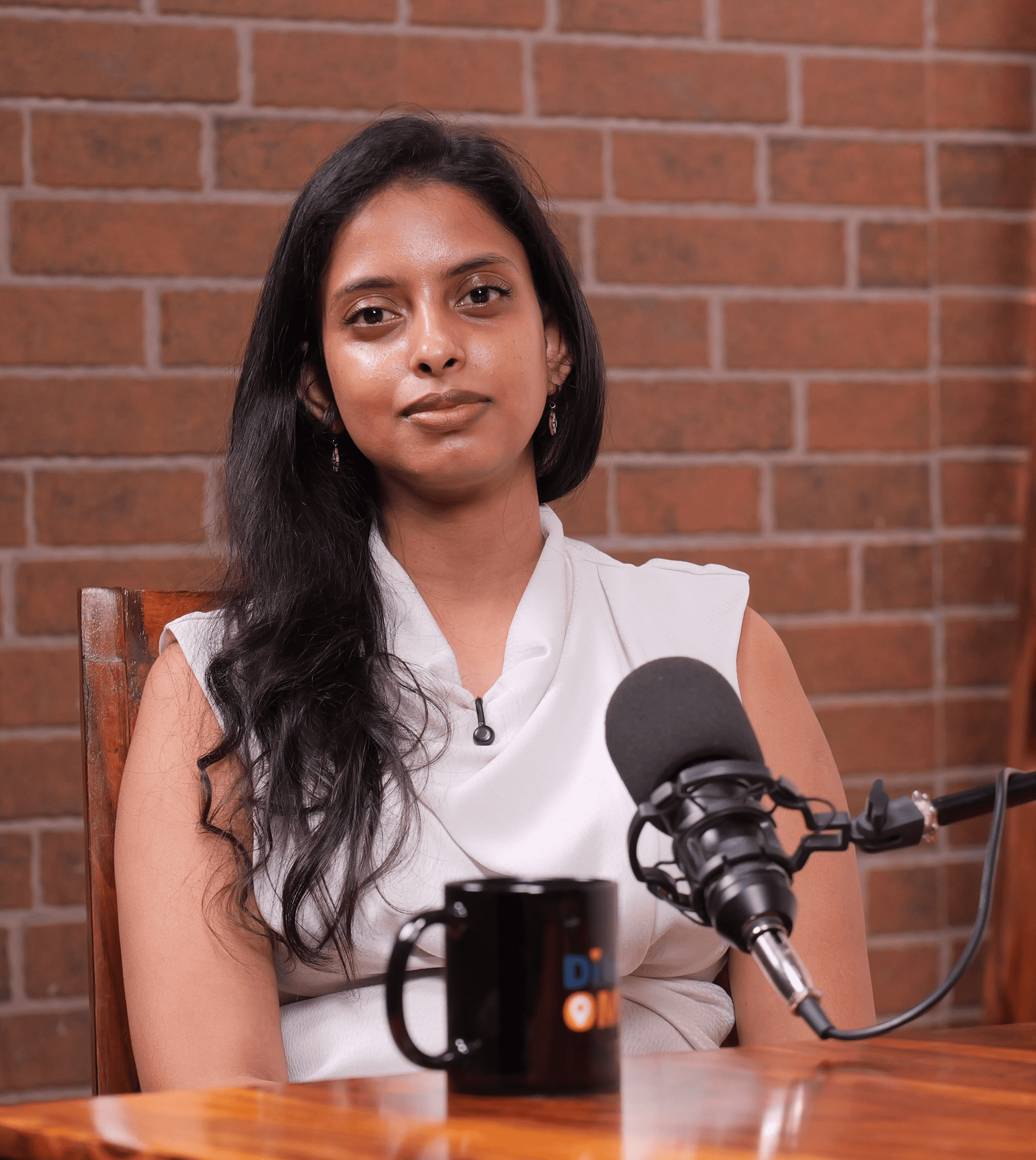
Swapnika Nag is the Co-founder and CEO of Periskope and Perisclaw. An alumnus of IIM Bangalore and ex-McKinsey, she previously founded Hashmail.


Talks with Saurabh Agrawal
Latest Episodes

Decoding Personal AI Agents
On this episode of Dilse Omni Talks, Saurabh sat down with Swapnika to talk about what happens when you stop treating WhatsApp as a messaging app and start treating it as the operating system your entire business already runs on.
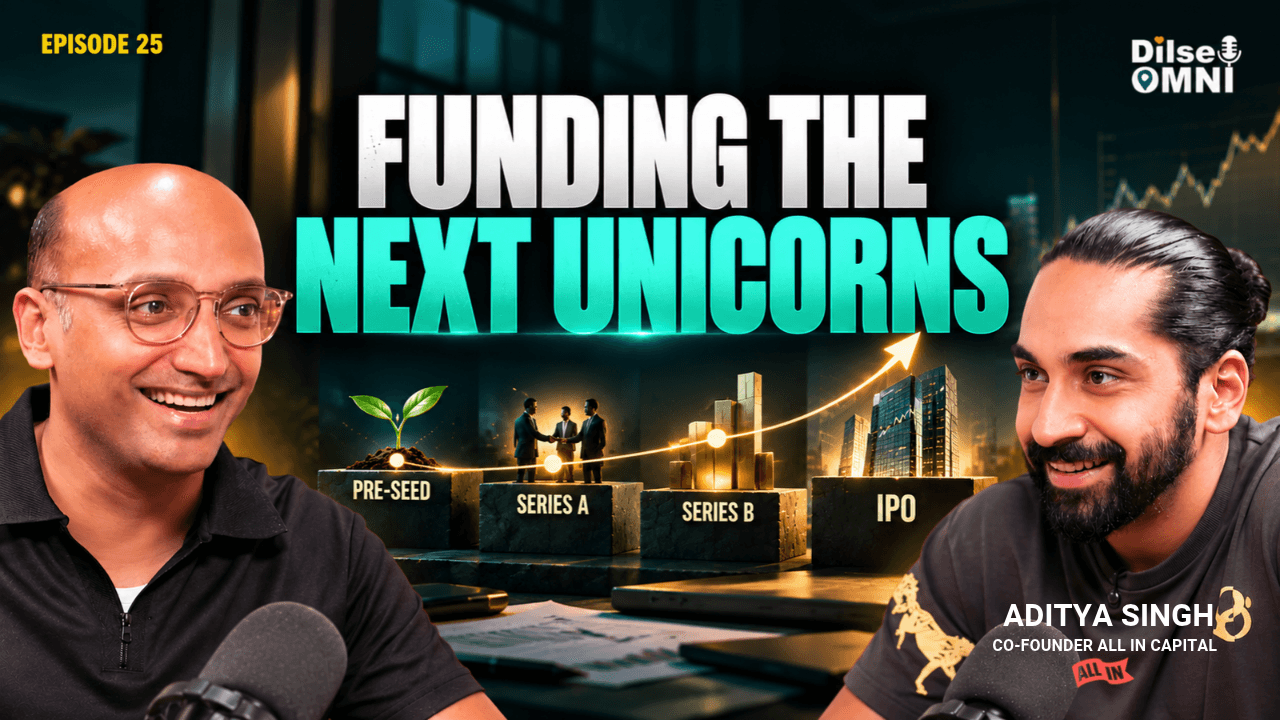
Funding The Next Unicorns
On this episode of Dilse Omni Talks, we covered how to read India's consumer market, what actually happens in a pre-seed pitch room, and why networking is the one compounding skill most founders radically underinvest in.

Future of Marketing is Conversational
Gupshup founder Beerud Sheth on why the click is dying, how conversational AI is rewriting marketing, and why context, not intelligence, is the real moat.

Inside Arjun Vaidya's D2C Playbook
Arjun Vaidya on building, exiting, teaching, and investing, when to go offline, founder branding, and life as an operator turned VC.

Growth Playbook by Sanjeev Bikhchandani
There are very few people who have genuinely shaped the way India works, loves, and learns — all from one desk, one insight, and one stubborn belief that the internet would change everything before most people even knew what a server was. Sanjeev Bikhchandani is one of those people.
View More
Latest Episodes
Decoding Personal AI Agents
On this episode of Dilse Omni Talks, Saurabh sat down with Swapnika to talk about what happens when you stop treating WhatsApp as a messaging app and start treating it as the operating system your entire business already runs on.
Funding The Next Unicorns
On this episode of Dilse Omni Talks, we covered how to read India's consumer market, what actually happens in a pre-seed pitch room, and why networking is the one compounding skill most founders radically underinvest in.
Future of Marketing is Conversational
Gupshup founder Beerud Sheth on why the click is dying, how conversational AI is rewriting marketing, and why context, not intelligence, is the real moat.
Inside Arjun Vaidya's D2C Playbook
Arjun Vaidya on building, exiting, teaching, and investing, when to go offline, founder branding, and life as an operator turned VC.
Growth Playbook by Sanjeev Bikhchandani
There are very few people who have genuinely shaped the way India works, loves, and learns — all from one desk, one insight, and one stubborn belief that the internet would change everything before most people even knew what a server was. Sanjeev Bikhchandani is one of those people.
View More
Subscribe on your favourite platform



Subscribe on your favourite platform



Subscribe on your favourite platform

Subscribe for
insider insights
Subscribe for
insider insights
Subscribe
for insider insights



Nitin is a Design Entrepreneur and the founder of Indibni® Group. His mission is to foster a self-reliant India through exceptional Indigenous products that impact individuals worldwide.