Some career decisions arrive with spreadsheets, entrance exams, and carefully weighed options. Others begin with a conversation that stays quietly alive in the mind for years.
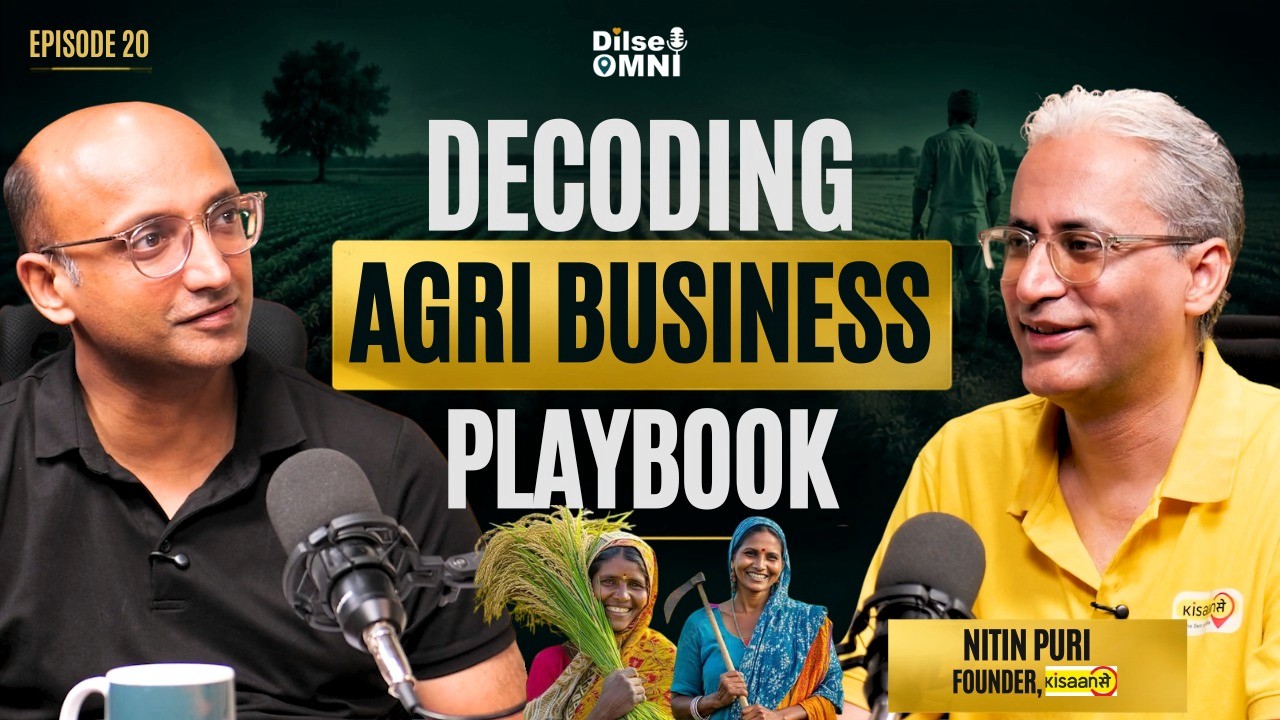
In this episode of Dilse Omni Talks, I spoke with Nitin Puri, Founder of KisaanSay, a farmer-first food brand working closely with farming communities to bring authentic, high-quality products directly to consumers. Nitin is an IRMA alumnus, a passionate believer in stronger agricultural value chains, and someone whose journey shows how purpose can take time to find its final form.
What struck me was the unlikely chain of events behind KisaanSay: a mechanical engineering student in Kurukshetra, an early mentor named Sanjeev Bikhchandani, a recommendation to apply to IRMA, and the enduring influence of Dr. Verghese Kurien.
This is not only a founder story. It is a masterclass in mentorship, patient decision-making, and allowing a small personal fascination to become a meaningful life direction.
Table of Contents
A personal story about Sanjeev Bikhchandani
The fascination with agriculture
The advice that changed everything
Discovering IRMA
Dr. Verghese Kurien's influence
The seed behind KisaanSay
A personal story about Sanjeev Bikhchandani
Nitin began by telling me that he had recently come across my conversation with Sanjeev Bikhchandani, the founder of Naukri.com. That episode, The Father of Indian Startup Ecosystem, explores Sanjeev’s journey as a builder and investor. But Nitin knew Sanjeev much before he became known to millions as the founder of one of India’s most iconic internet businesses.
In 1998 and 1999, Nitin was preparing for MBA admissions. Sanjeev was teaching and coaching students for group discussions and personal interviews. Nitin would call his Delhi landline number, take an appointment near his home in GK, and attend one-hour sessions over the weekend after work.
There is something wonderfully human about the detail Nitin remembers most clearly: a small notebook containing Sanjeev’s six-digit Delhi landline number and the coaching address. At that point, it was simply a student preparing for the next stage of life. No one could have known that those coaching sessions would shape the founder he would eventually become.
“It is because of Sanjeev that I am here today,” Nitin told me.
That sentence carries far more weight than gratitude alone. It is a reminder that a mentor’s impact is not always visible immediately. A useful piece of advice can enter someone’s life as a practical recommendation, then remain in the background until the right moment arrives.
For founders and leaders, this is an important lesson. Mentoring is not only about delivering an answer. It is about noticing the unusual interest, instinct, or question a person brings to the table, especially when they cannot yet explain where it may lead.
The fascination with agriculture
Nitin had no conventional reason to pursue agriculture. He studied mechanical engineering at Kurukshetra, then known as REC Kurukshetra and now NIT Kurukshetra. Agriculture was not his family profession, and it was not an obvious extension of mechanical engineering.
But Kurukshetra and the surrounding region had a way of leaving an impression on him. Three decades ago, it was a much smaller town with limited entertainment options. Nitin and his friends spent time roaming through the surrounding fields. Over time, those ordinary experiences became something more meaningful.
“Somehow I developed a fascination for agriculture,” Nitin said.
This is where many people make a mistake in their own decision-making. They dismiss an interest because it does not yet come with a business model, a job description, or a prestigious label. Nitin did not have a defined agricultural career plan. He simply recognised that the pull was real.
When he began applying for an MBA, he had the usual institutions in mind, including the IIMs and XLRI. Yet he also carried a distinct thought: he wanted to study something connected to agriculture. It was not a fully formed ambition, but it was strong enough to influence his choices.
There is a powerful leadership lesson here. Before there is a strategy, there is often an observation. Before there is a company, there is often a question that refuses to disappear.
The curiosity to purpose framework
Nitin’s journey can be understood through a simple four-stage framework. It is useful for anyone trying to make sense of a career interest that may seem unconventional at first.
1. Notice the pull: Pay attention to subjects, environments, and problems that repeatedly draw your attention.
2. Voice it clearly: Share that interest with someone who has perspective, even if the idea is still unpolished.
3. Find the right institution: Choose an environment that gives structure, vocabulary, and exposure to the field.
4. Let the idea mature: Do not force immediate outcomes. Some ideas need years of experience before they become ventures.
The key is that none of these stages can be skipped. Curiosity alone is not enough. But neither is a career decision made without curiosity. Nitin’s story moves from fields around Kurukshetra to a conversation in Delhi, then to a rural management institution, and finally toward building KisaanSay.
The advice that changed everything
During one of his coaching interactions, Nitin told Sanjeev about his interest in food and agriculture. He had applied to the IIMs, but he was clear about one thing: if that did not work out, he did not want to settle for an MBA institute merely because it was the next available option.
He asked a straightforward question: was there a strong institution where he could study something related to agriculture and perhaps build a career around it?
Sanjeev thought about it and remembered a recommendation he had received years earlier. At his own graduation, Dr. Verghese Kurien had been the chief guest. Sanjeev’s answer to Nitin was simple and decisive.
“If you get into IIM, that is good. But if you do not, do not go anywhere else. Go here.”
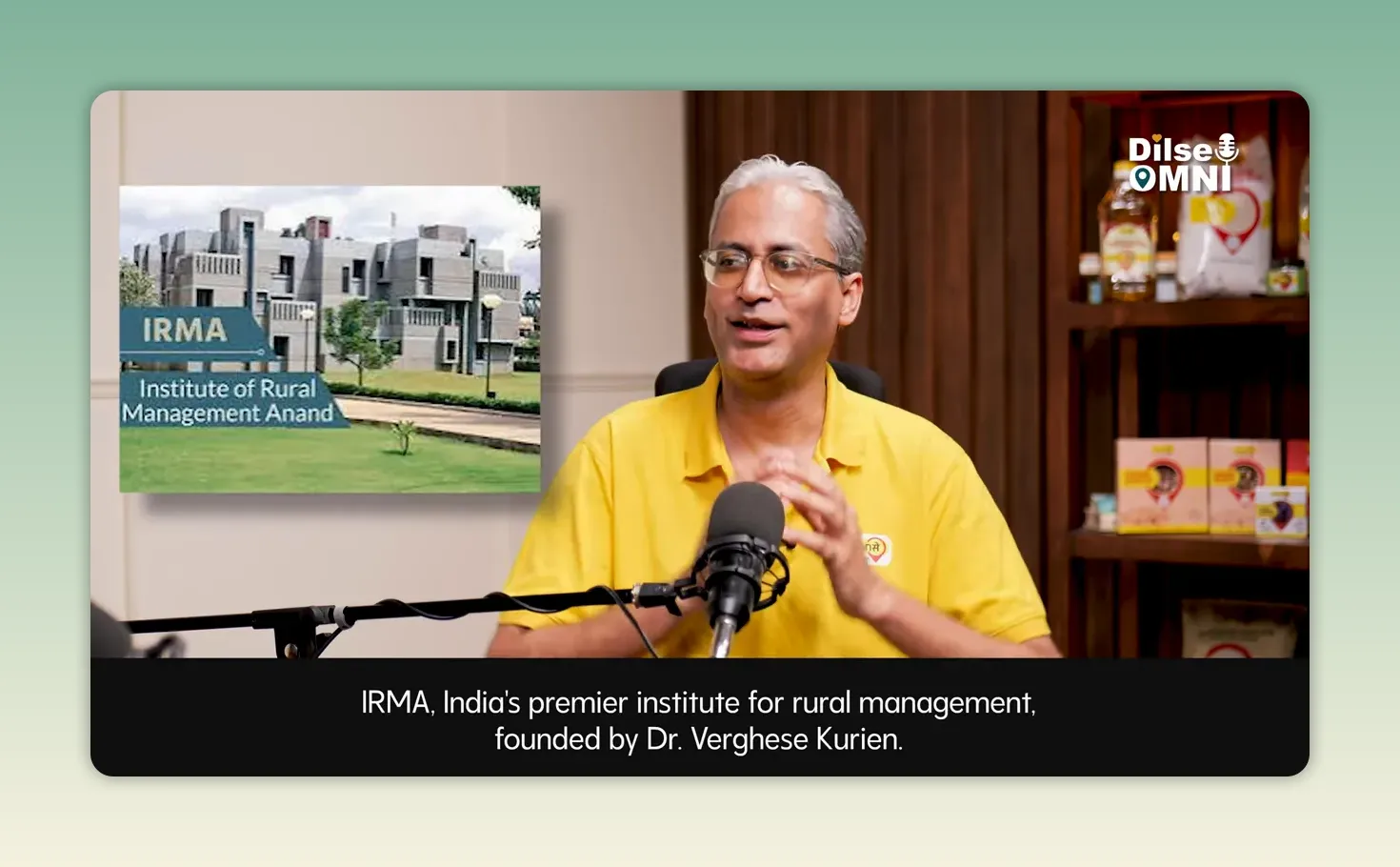
The institution was IRMA, the Institute of Rural Management Anand.
Great advice is rarely generic. It does not simply tell someone to work hard or follow their passion. It understands the person’s specific starting point and points them toward a credible next step.
Sanjeev did exactly that. He did not push Nitin toward an arbitrary alternative. He connected Nitin’s interest in agriculture with an institution created for rural management and development.
That is why mentors matter. They often have a wider map. They can see options that are invisible when we are focused only on the most obvious routes.
The right institution can turn an early interest into a disciplined direction.
Discovering IRMA
IRMA gave Nitin an entry point into a world that connected management education with India’s rural and agricultural realities. It was not simply a fallback option in the MBA admissions process. It became a turning point.
The institution itself was founded by Dr. Verghese Kurien, whose work with Amul and the White Revolution demonstrated what becomes possible when farmers are treated as central participants in a value chain rather than distant suppliers.
For Nitin, IRMA was where the earlier fascination with agriculture started gaining deeper meaning. The path was becoming clearer, even though KisaanSay itself was still far away.
This distinction matters. We often expect one educational decision to instantly reveal a career destination. But the more realistic value of a meaningful institution is that it changes how we see problems. It gives us new reference points, new stories, and a more informed sense of what is possible.
IRMA was that place for Nitin. It gave context to his interest in agriculture and introduced him to Dr. Kurien’s legacy in a much more direct way.
Dr. Verghese Kurien's influence
Dr. Verghese Kurien was already a towering figure when Nitin was at IRMA. His accomplishments, including the Padma Shri and Padma Bhushan, were known. Yet Nitin’s memory is not of a distant icon. He remembers being young and listening to Dr. Kurien’s stories with the attention of a child.
At that stage, Nitin says, much of the significance probably went over his head. That is natural. Sometimes we encounter an idea early in life, but lack the experience to fully understand it.
Years later, around 15 years after leaving IRMA, Nitin read Dr. Kurien’s autobiography, I Too Had a Dream. This time, the book landed differently. The stories and principles that had once been background knowledge began to connect with his own experience and aspirations.
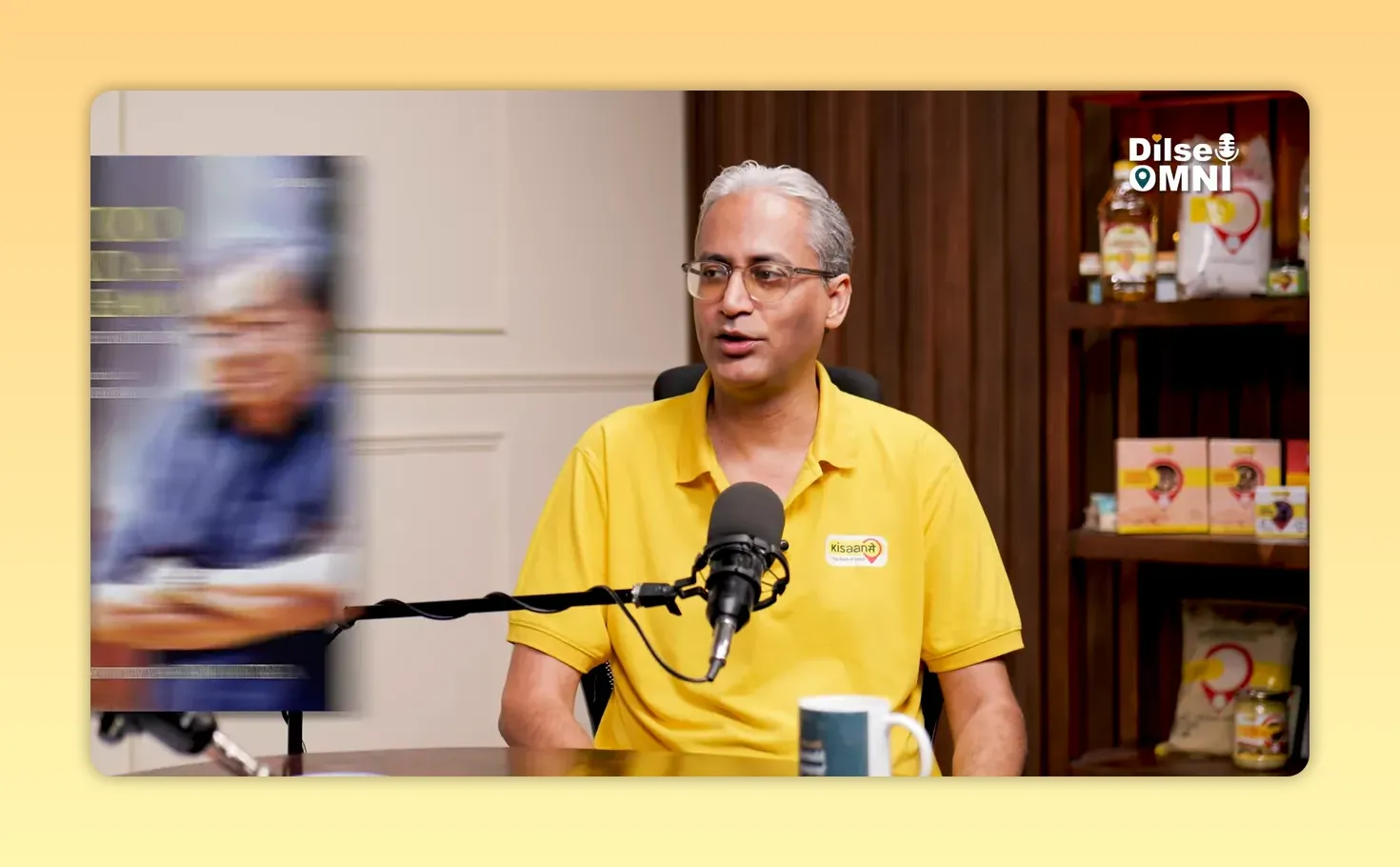
Some leadership lessons reveal their meaning only after life gives us the context to understand them.
Dr. Kurien’s influence on Nitin was not about copying a legacy. It was about absorbing a philosophy: build better systems around farmers, respect the people closest to production, and create models that connect value with dignity.
That legacy is particularly relevant for modern consumer brands. Authenticity in food branding cannot be manufactured only through packaging or marketing language. It must begin with a genuine relationship to sourcing, communities, and quality.
The strongest brands are not merely selling products. They are making a meaningful connection between the person who produces and the person who consumes.
“The seed of KisaanSay was sown right there.”
That seed did not become a business overnight. It stayed in Nitin’s subconscious, germinating through experience, reflection, and the gradual return of a purpose that had first emerged in the fields of Kurukshetra.
The seed behind KisaanSay
KisaanSay is the expression of a long journey rather than a sudden entrepreneurial impulse. Nitin’s early fascination with agriculture, his time at IRMA, and the eventual depth of Dr. Kurien’s ideas came together to shape a farmer-first food brand.
The name itself reflects the heart of the mission. KisaanSay works to bring authentic, high-quality products to consumers while remaining closely connected to farming communities. The larger idea is to build better value chains and reduce the distance between farmers and consumers, not only physically but also emotionally.
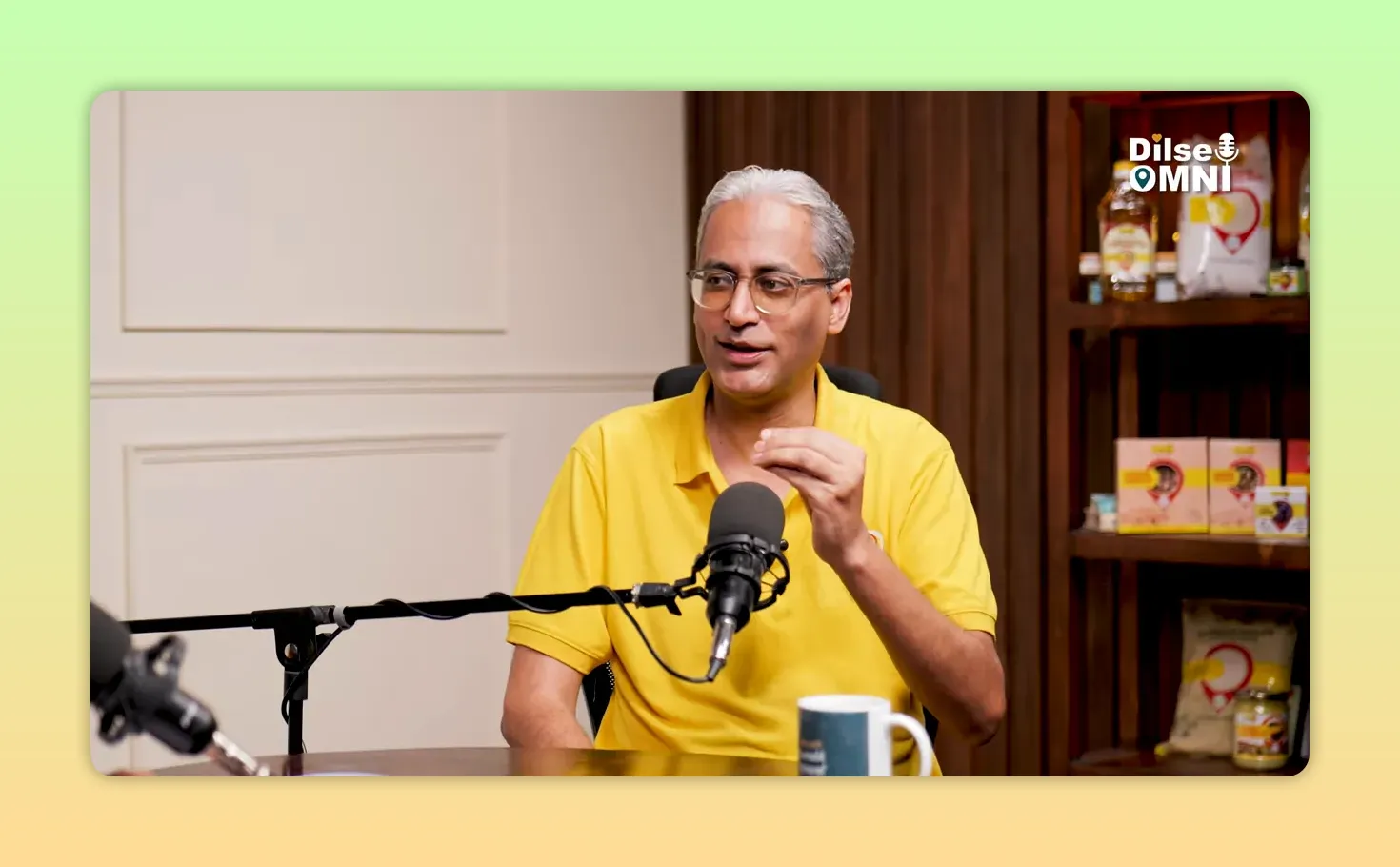
KisaanSay carries forward a farmer-first approach to food, quality, and consumer connection.
For me, the most important lesson from Nitin’s story is that entrepreneurship can be deeply personal without being narrow. The business may begin with a problem in the market, but its staying power often comes from a belief formed much earlier.
Here is the complete chain:
Kurukshetra created the fascination with agriculture.
Sanjeev Bikhchandani recognised that interest and offered a precise recommendation.
IRMA gave Nitin a framework for understanding rural management.
Dr. Verghese Kurien offered a lasting model of farmer-centred value creation.
KisaanSay became the entrepreneurial expression of those accumulated lessons.
That is how purpose often works. It is not a lightning bolt. It is a sequence of experiences that finally begins to make sense when we look back.
As leaders, we should take this seriously. Ask better questions when someone shares an unusual interest. Offer direction, not just encouragement. Build businesses that respect every participant in the value chain. And be patient with the ideas that keep returning to us over time.
Nitin’s journey is proof that a short conversation can change the direction of a life, and that a dream can take years to find the form it was meant to take.
I am Saurabh Agrawal and we come with a new episode on Dilse Omni Talks every fortnight and cover different aspect of omnichannel with amazing speakers.