What if the next big shift in omnichannel marketing is not another channel, but conversation itself? That was the question I took away from my conversation with Beerud Sheth on Dilse Omni Talks.
Beerud is the Co-Founder and CEO of Gupshup, a global conversational AI platform for marketing, commerce, and customer support. An IIT Bombay and MIT alumnus, he previously co-founded Elance, which later became Upwork. At Gupshup, he has built a messaging platform into a global conversational AI company.
When I asked him what omnichannel meant to him, his answer moved beyond the familiar discussion of websites, apps, stores, and messaging platforms. He focused on how customers will communicate with brands, and how AI could make those interactions feel more natural.
My biggest learning: the future of customer engagement may be less about navigating a brand’s interfaces and more about having a conversation with the brand.
Table of Contents
1. Redefining Omnichannel Around Conversation
2. Messaging, Voice, and Video: Three Modes, Many Platforms
3. The Brain-and-Surfaces Framework
4. Ambient Devices Could Change the Interface Again
5. Could Conversation Become the Primary Brand Interface?
6. A Practical Framework for Marketing Leaders
My Final Learning: Build for the Conversation
1. Redefining Omnichannel Around Conversation
We often approach omnichannel as a question of presence. Is the brand available on WhatsApp? Does it have an app? Are its digital and physical touchpoints connected?
Those questions remain useful. But Beerud challenged me to consider a different organising principle: conversational interaction.
“I would suggest marketers to focus on omnichannel as saying, you know, omni-conversational channel.”
Beerud Sheth
He offered this as a useful lens, not a complete definition of every omnichannel experience. The distinction matters. His argument was that conversational channels will become increasingly important because they let customers engage through a behaviour they already understand: communicating.
Rather than starting with a list of platforms, we can start with the customer’s preferred mode of interaction. Do they want to type, speak, or show something? The channel then becomes the place where that interaction happens.
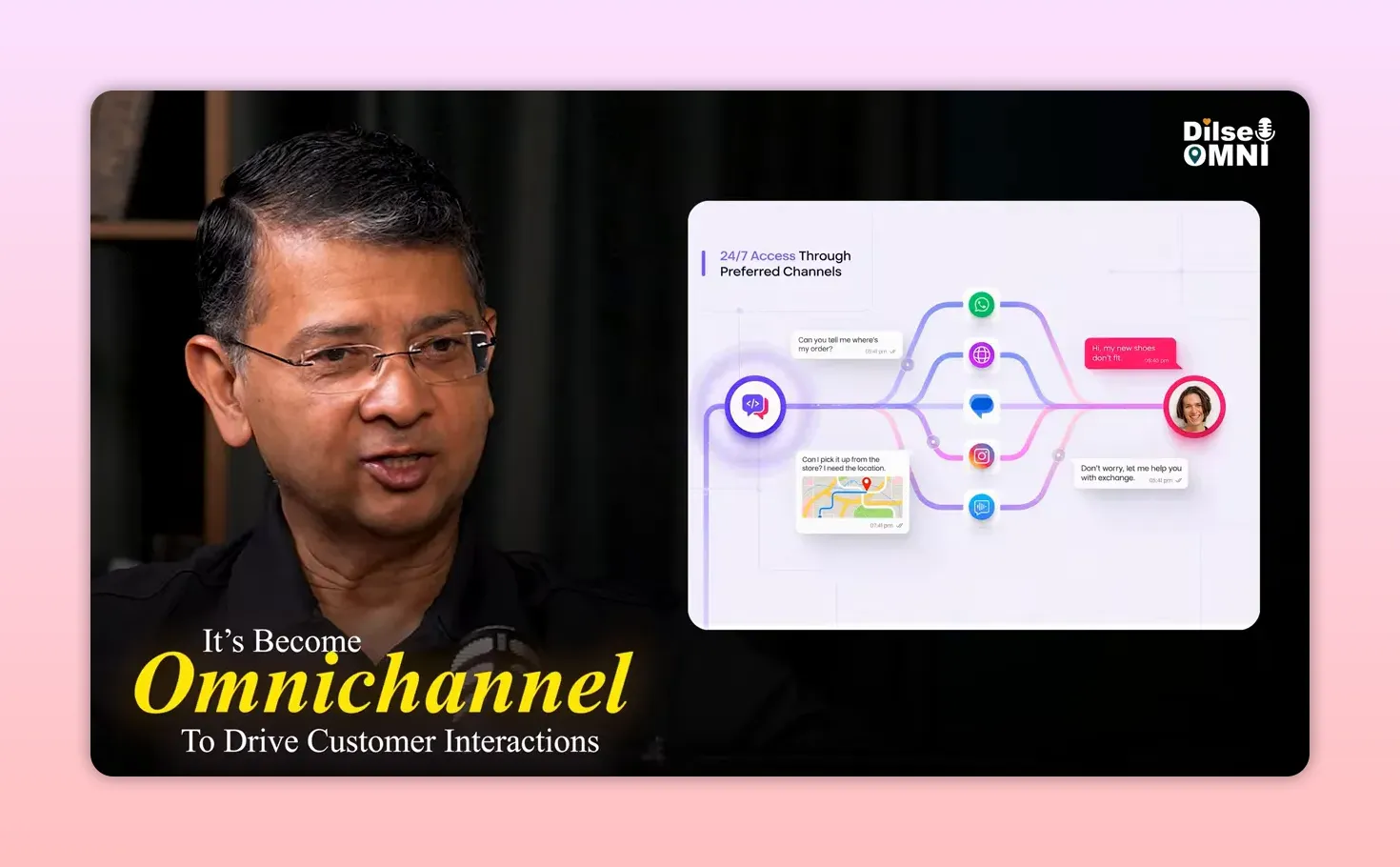
For me, this shifts the strategic question from “Where should our brand be present?” to “How should our brand respond wherever a customer chooses to engage?”
It also changes the role of messaging. Being able to send a message is not the same as being able to hold a conversation. The opportunity is not simply another distribution point for brand communication. It is an experience in which the customer can participate.
2. Messaging, Voice, and Video: Three Modes, Many Platforms
Beerud grouped the conversational landscape into three broad modes: messaging, voice, and video. This is a simple way to make sense of an otherwise expanding list of platforms.
Messaging
Messaging includes WhatsApp, RCS, SMS, Instagram, and other platforms. Beerud also mentioned TikTok, LINE, and Kakao, emphasising that the relevant channels depend on geography.
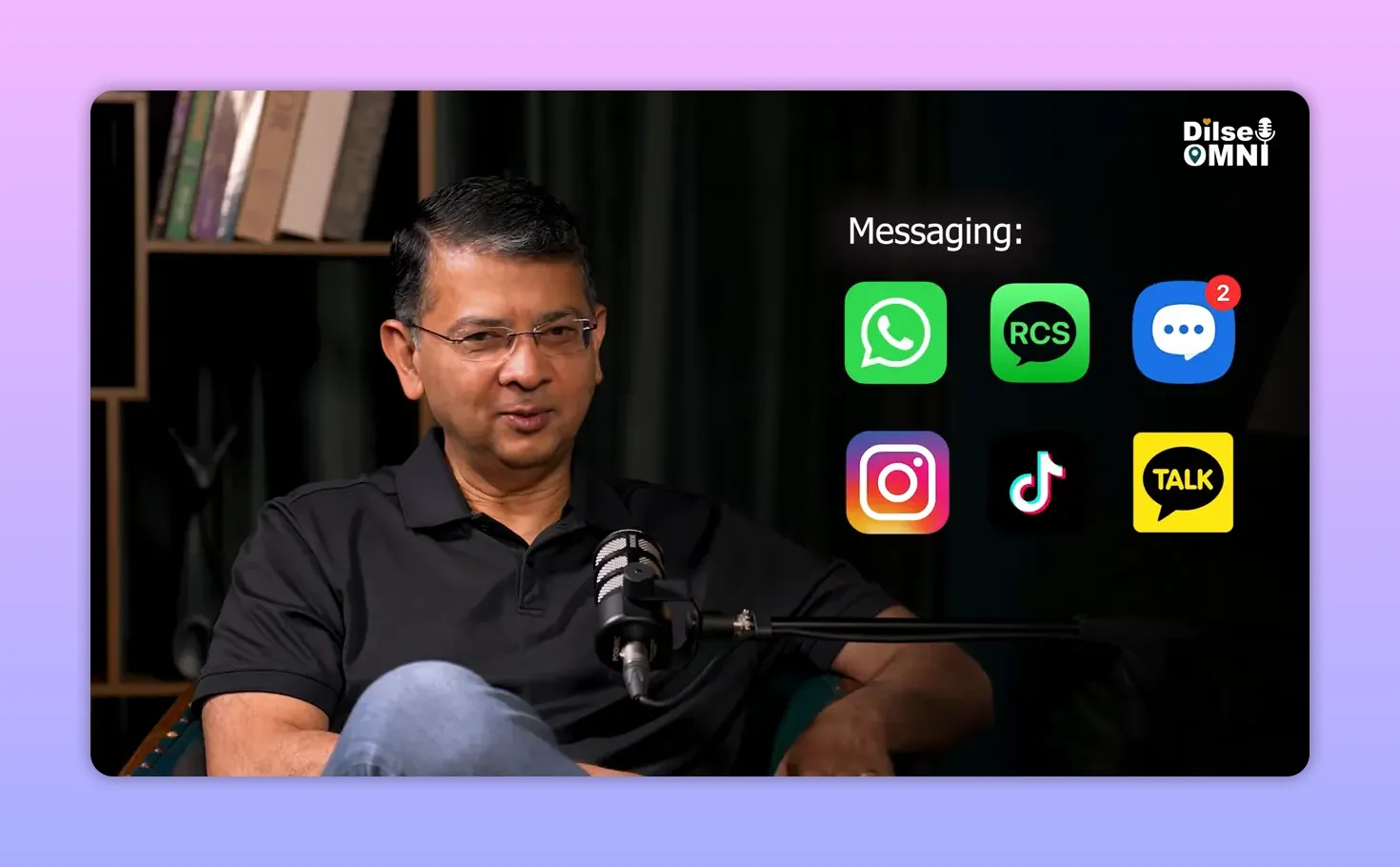
The lesson is not that every brand needs to launch everywhere. It is that conversational strategy must account for where its customers already communicate. The platform mix will vary, while the underlying need to engage remains.
Voice
Voice includes regular phone calls over the traditional telephone network, WhatsApp voice, and services such as Botim in the Middle East.
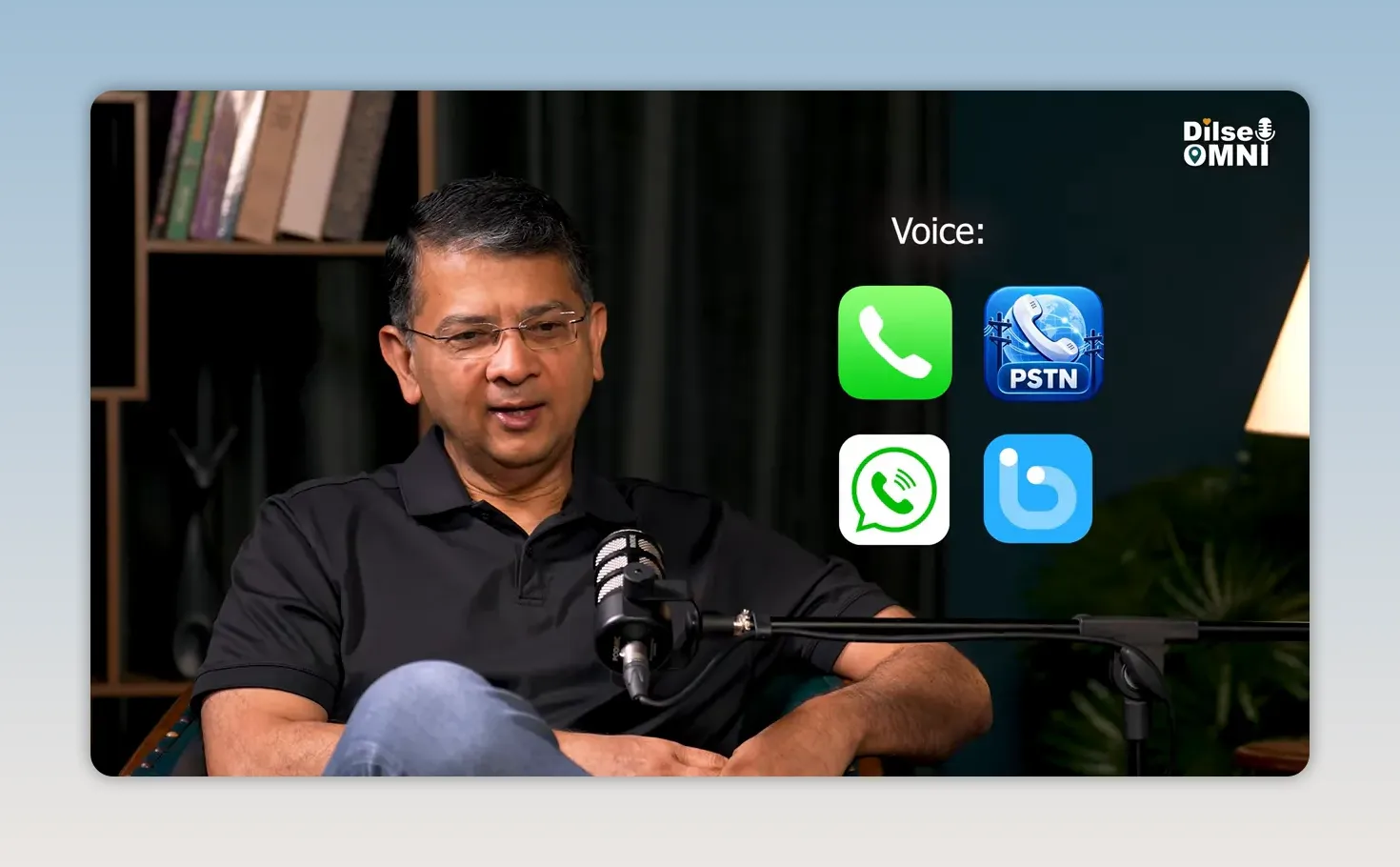
This was an important reminder for me. Conversational AI is not synonymous with a text-based chatbot. Speaking is also a conversational interface, whether it happens through an established phone network or a newer service.
Video
Video adds another mode through platforms such as Zoom, Google Meet, and WhatsApp video calls. It allows communication to include what people can show, not only what they can say or type.
Beerud described all these channels as surfaces: places where an experience is presented. That word becomes especially useful when we separate the intelligence behind an interaction from the format through which a customer accesses it.
This broader perspective also connects with our discussion on conversational commerce with Sonakshi Nathani, where the role of AI chatbots extends beyond support into commerce.
3. The Brain-and-Surfaces Framework
The clearest explanation in our conversation was Beerud’s analogy of an AI agent as the brain of the experience. The channels are the different surfaces through which that experience takes shape.
“You build an AI agent. It’s the brain of the experience.”
Beerud Sheth
To make this practical, I would organise his explanation into three layers. This is my synthesis of his analogy, rather than a named framework he presented.
Layer | Role | Strategic question |
|---|---|---|
1. Brain | The AI agent behind the experience | What should the brand be able to understand and respond to? |
2. Surface | Messaging, voice, video, or an emerging device | How should the interaction fit this mode of communication? |
3. Relationship | The customer’s experience of engaging with the same brand | Does the interaction feel consistent with whom the customer expects to reach? |
One brain → multiple surfaces → one recognisable brand relationship.
The key is that consistency does not require identical presentation. A WhatsApp interaction should not necessarily look or feel like a voice call. Text, speech, and video each have their own characteristics.
Beerud used a very human comparison. I can speak to someone in person, call them, or send them a text. The format changes, but the person remains the same.
That is the expectation he sees customers bringing to brands. They want to reach the brand, their preferred salesperson, or their relationship manager in whichever format suits them.
My takeaway is that the channel should change the expression of the experience, not make the customer feel they are dealing with an entirely different entity. That is a more demanding goal than simply launching separate interfaces.
4. Ambient Devices Could Change the Interface Again
Just as marketers become comfortable with today’s channel mix, new interaction surfaces are emerging. Beerud pointed to smart glasses and other AI hardware as examples.
His larger observation was about ambient interaction: communication that may become less dependent on carrying a screen, using a keyboard, or clicking through an interface.
When people communicate with each other, they usually talk. Sometimes they show something. They do not need a menu system to begin the exchange.
Beerud sees an opportunity for technology to move closer to that pattern. It is a direction of travel, not a claim that screens have already become unnecessary.
For marketers, the implication is significant. If we define the customer experience entirely around a particular screen, we may struggle when the preferred interface changes. If we define the experience around conversation, new hardware can become another surface for delivering it.
The durable idea is the interaction, not necessarily the device. That was the principle I found most useful. We cannot confidently predict every future surface, but we can think more carefully about what the brand should be capable of doing across them.
5. Could Conversation Become the Primary Brand Interface?
Beerud’s boldest prediction was that conversational AI experiences could become the primary way consumers interact with brands, ahead of websites, apps, and even offline stores.
This is his forecast, not a description of a transition that every brand has already completed. He acknowledged that stores and malls remain popular and that customers still call contact centres.
But those familiar behaviours should not make us dismiss what could come next.
“They happen slowly and then suddenly.”
Beerud Sheth, on major shifts in customer interaction
He drew a parallel with the arrival of the web. Businesses could point to store traffic and incoming calls as reasons they did not need a digital strategy. Then digital expectations changed, and that position became difficult to defend.
I did not hear this as an instruction to abandon existing channels. I heard it as a warning against treating their current popularity as proof that customer behaviour will remain unchanged.
A brand can continue serving customers through established touchpoints while building the capabilities needed for a different future. The danger is assuming that preparation can wait until the shift is obvious.
6. A Practical Framework for Marketing Leaders
Beerud’s recommendation was clear: invest in the conversational AI experience and treat it as a first-class way of interacting with customers. Not a minor addition. Not simply a chatbot placed beside the main experience.
I would translate that recommendation into four questions for a leadership team:
Define the experience: What should customers be able to communicate to the brand, and what should the brand be able to do in response?
Choose relevant surfaces: Which messaging, voice, and video channels matter for the customers and markets you serve?
Connect intelligence and expression: How can the underlying experience remain recognisable while adapting to each surface?
Plan for migration: Which interactions currently handled through websites, apps, stores, or contact centres could move into conversation?
This is a planning framework I take from his argument, not a deployment checklist he prescribed. Its value is in preventing the technology discussion from starting and ending with platform selection.
It also fits the wider question explored in our Omnichannel Guide: how brands build the operating systems behind connected customer experiences.
My Final Learning: Build for the Conversation
I began with a familiar question about omnichannel. Beerud gave me a different way to think about the answer.
Messaging, voice, video, and future devices may all become surfaces for engaging with the same brand. The AI agent is the brain behind that experience. The customer chooses how to communicate.
The next interface may not ask customers to learn how a brand’s system works. It may allow them to express what they need.
That possibility deserves serious strategic attention today, even while existing channels continue to matter. For me, that is the masterclass: prepare for the shift by building the experience, not merely adding another channel.
I am Saurabh Agrawal and we come with a new episode on Dilse omni talks every fortnight and cover different aspect of omnichannel with amazing speakers.