Marketing has changed more in the past 15 years than it did in the decades before it. In my conversation with Dr. Ashish Bajaj on Dilse Omni Talks, one idea stayed with me: this is not simply a story of new channels. It is a story of how consumer behaviour, attention, technology and marketing execution have changed together.
Dr. Ashish Bajaj is a marketing leader with deep experience across consumer communication, consumer understanding, media, touchpoint planning and optimisation. He has led marketing roles at Narayana Healthcare, Ola, Nokia and Microsoft, and is the author of The Martech Playbook, published by Zebralearn.
Our discussion became a compact masterclass on the three pivotal waves of modern marketing: search, social media and AI. Each wave changed what marketers could do. More importantly, each one changed what consumers expected from brands.
Table of Contents
The Three-Wave Marketing Framework
Wave One: Search Changed How Brands Captured Intent
Wave Two: Social Media Moved Marketing From Intent to Influence
Wave Three: Why AI Will Move Faster Than Search and Social
The Real Constraint Is Attention
The Omnichannel Imperative: Be Visible and Be Native
Why Reusing the Same Creative Everywhere Wastes Money
The Marketer’s Job Now
The Three-Wave Marketing Framework
Dr. Bajaj broke the evolution down into three major shifts. I find this framework useful because it explains why the current AI moment feels so disruptive. We are not starting from scratch. We are building on the behaviour that search and social media already created.
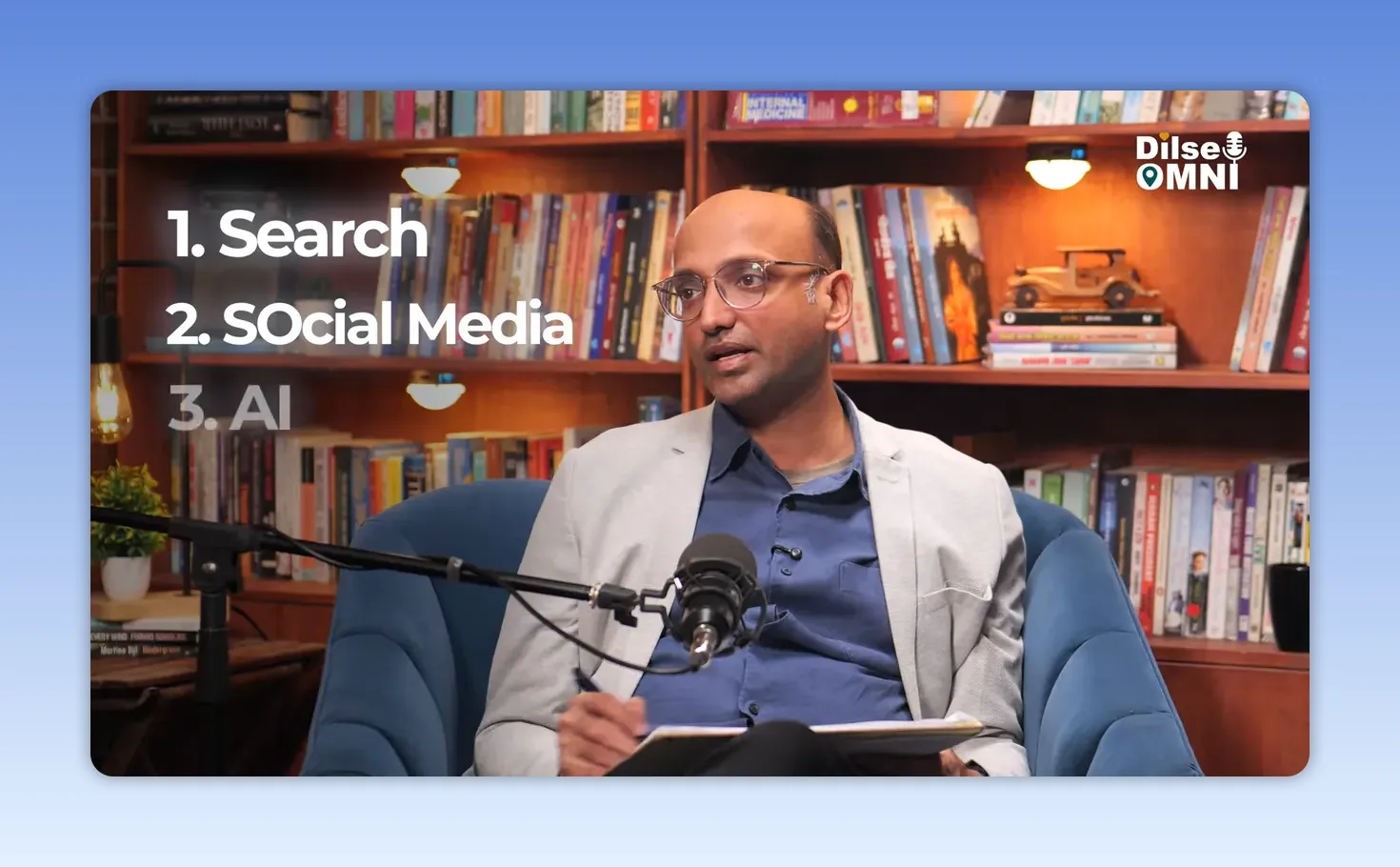
Search, social media and AI form the three waves that have steadily rewritten the marketer's role.
A simple way to understand the shifts
Wave 1: Search
Consumers actively looked for answers, products and solutions. Brands learned how to capture existing demand.Wave 2: Social media
Brands could create discovery, influence consideration and build ongoing engagement before a person began searching.Wave 3: AI
Marketing is entering an era in which the speed of creation, analysis, personalisation and execution can move much faster.
The framework is sequential, but the channels do not replace each other. Search still matters. Social still matters. AI will increasingly shape how both are planned, created and optimised.
“AI has arrived. Only thing is, it is unevenly distributed.”
That line captures the reality of the moment. Some teams are already applying AI in meaningful ways. Others are still trying to understand what it means for their work, their customers and their brands. The gap is not merely about access to tools. It is about clarity, capability and the willingness to redesign how marketing work gets done.
Wave One: Search Changed How Brands Captured Intent
The first pivotal change came with the search bar. Dr. Bajaj took us back to around 2008 to 2010, when search was changing the habits of consumers and the lives of marketers.
It is easy to forget how novel that behaviour was. A person could type a question, a need or a product category into a search engine, wait a few seconds, and receive a set of possible answers. That simple action introduced an incredibly powerful marketing signal: intent.
When someone searches, they are not passively receiving a message. They are raising their hand. They might be researching, comparing, solving a problem or preparing to buy. For marketers, that meant demand could be identified and addressed in a far more immediate way.
Search also began to bring marketing and technology closer together. The marketer’s job was no longer only about broad communication. It also involved understanding keywords, consumer questions, digital experiences and the systems that helped a brand become discoverable at the moment of need.
“The life of the marketer was changing.”
That change has continued. Search taught us an enduring lesson: relevance matters most when the consumer has clear intent. A great brand message is valuable, but it becomes even more valuable when it shows up at the right moment with an answer that is genuinely useful.
Wave Two: Social Media Moved Marketing From Intent to Influence
The second big shift was social media. Search was largely about responding to demand that already existed. Social media expanded the marketer’s role because it made it possible to influence discovery earlier in the customer journey.
People did not need to begin with a search for a brand to enter their consideration set. They could encounter ideas, products, recommendations, stories and communities through social platforms. This created a much broader field for marketers.
Social media was never only about engagement. It became a channel for shaping awareness, creating need, enabling discovery and supporting retargeting. A consumer could see a product in a piece of content, hear about it from an influencer, engage with a brand, leave the platform, search later and eventually convert through another channel.
That journey is not linear, and that is precisely the point. The modern customer journey is made up of multiple small moments. Social media made the number of those moments much larger.
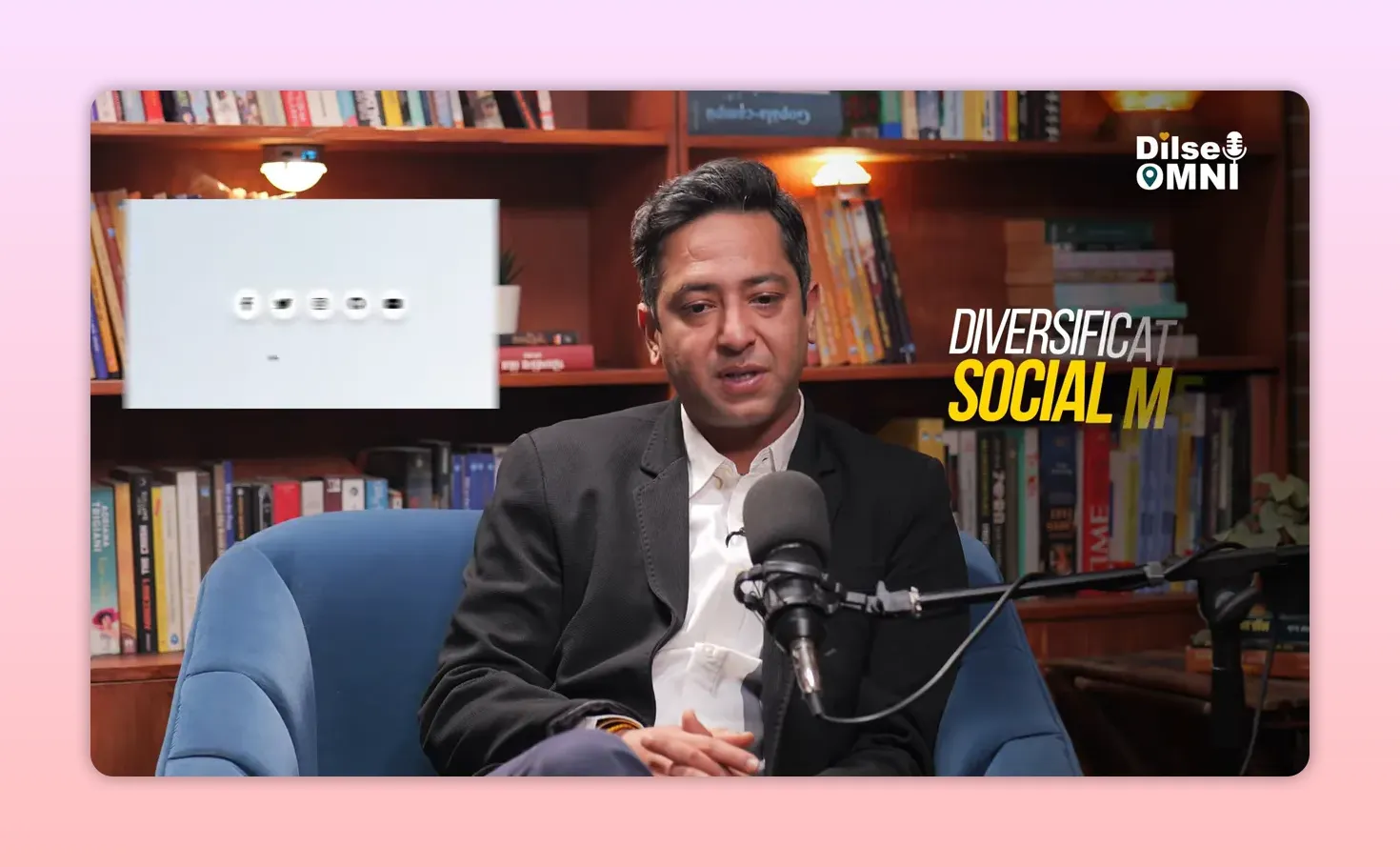
Social media expanded marketing beyond engagement into discovery, influence and repeated consideration.
For a brand, this means channel presence cannot be treated as a checklist. The question is not, “Are we on social media?” The better question is, “What role does each platform play in our customer’s decision process?”
Wave Three: Why AI Will Move Faster Than Search and Social
We are now living through the third wave, AI. Dr. Bajaj’s point was not that the previous waves were small. Search and social media transformed marketing profoundly. But their adoption and maturation took time.
The search era took roughly five to eight years to mature. The social media age found maturity in around five years. AI is unlikely to follow the same timeline.
Its pace is different. In just a couple of years, AI can spread rapidly across workflows because it is not confined to one channel. It can affect content creation, personalisation, analytics, customer journeys, research and marketing execution at the same time.
This is where the anxiety comes from. Marketers are not panicking because AI is one more platform to manage. They are concerned because it changes the operating system of marketing itself.
The AI readiness question is not only about tools
When AI enters a marketing organisation, the key question is not simply whether a team has access to a particular tool. The more important questions are:
Can the team identify where AI improves speed without weakening consumer understanding?
Can it produce more relevant content without defaulting to generic content at scale?
Can it use data and analytics to make better decisions rather than merely create more reports?
Can it redesign customer experiences around real needs and moments?
Can it preserve brand judgment while accelerating execution?
AI will not eliminate the need for strong marketing fundamentals. In fact, it makes those fundamentals more important. If a brand does not understand its consumer, its value proposition or the role of each touchpoint, faster execution will only create faster confusion.
The Real Constraint Is Attention
While technology has given marketers more ways to communicate, consumers have not gained more attention. If anything, their focus has reduced.
Dr. Bajaj used a powerful comparison. Earlier, many households would sit down and watch a programme such as Chitrahaar for half an hour. Attention was concentrated. There were fewer places to go, fewer messages to process and fewer screens competing for that same moment.
Then television expanded into hundreds of channels. The laptop became another screen. Then the smartphone arrived, and it became the primary screen for many of us.
Today, the smartphone is not just another media device. It is a consumer’s gateway to work, shopping, entertainment, banking, communication, navigation, content and community. And within that one screen, the average consumer may have more than 280 apps installed.
“Between those 280 apps, I’m jumping between the apps so fast that my focus is very limited.”
This is why marketing feels more complex. The problem is not merely that there are more channels. The problem is that attention is fragmented across an overwhelming number of choices.
Consumers move quickly between apps and formats. Their expectations also change depending on the environment. A message that might work in a long-form television context may be ignored instantly in a fast-scrolling social environment. A search result must answer a need. An influencer-led message may need social proof. A brand-owned experience must reduce friction.
The Omnichannel Imperative: Be Visible and Be Native
Dr. Bajaj gave two practical rules for dealing with this complexity. They sound simple, but they demand discipline.
Be visible on the platforms where your consumers are moving.
Tailor content to the platform rather than forcing one creative asset everywhere.
The first rule is about availability. If attention is fragmented, a brand cannot rely on being memorable in only one place. It needs a thoughtful presence across the touchpoints that matter in the customer journey.
This does not mean being everywhere blindly. It means understanding where consumers discover, evaluate, seek reassurance, compare and act. Visibility should follow behaviour, not internal channel preferences.
The second rule is about respect for context. Every platform has its own consumption pattern, creative language and expectation. A person uses search differently from social media. They use a short-form content feed differently from a product page. They respond to a trusted creator differently from a broad-reach brand advertisement.
The platform-native content framework
I would summarise the lesson in this practical format:
Consumer moment: What is the person trying to do here: discover, learn, compare, validate or buy?
Platform context: How is content naturally consumed on this platform?
Creative adaptation: What format, message and proof point fit that environment?
Brand consistency: What must remain recognisably true to the brand across every execution?
Measurement: What outcome should this touchpoint influence?
This is a useful discipline for teams producing large amounts of content. The goal is not simply content volume. The goal is to create the right content for the right environment and the right consumer moment.
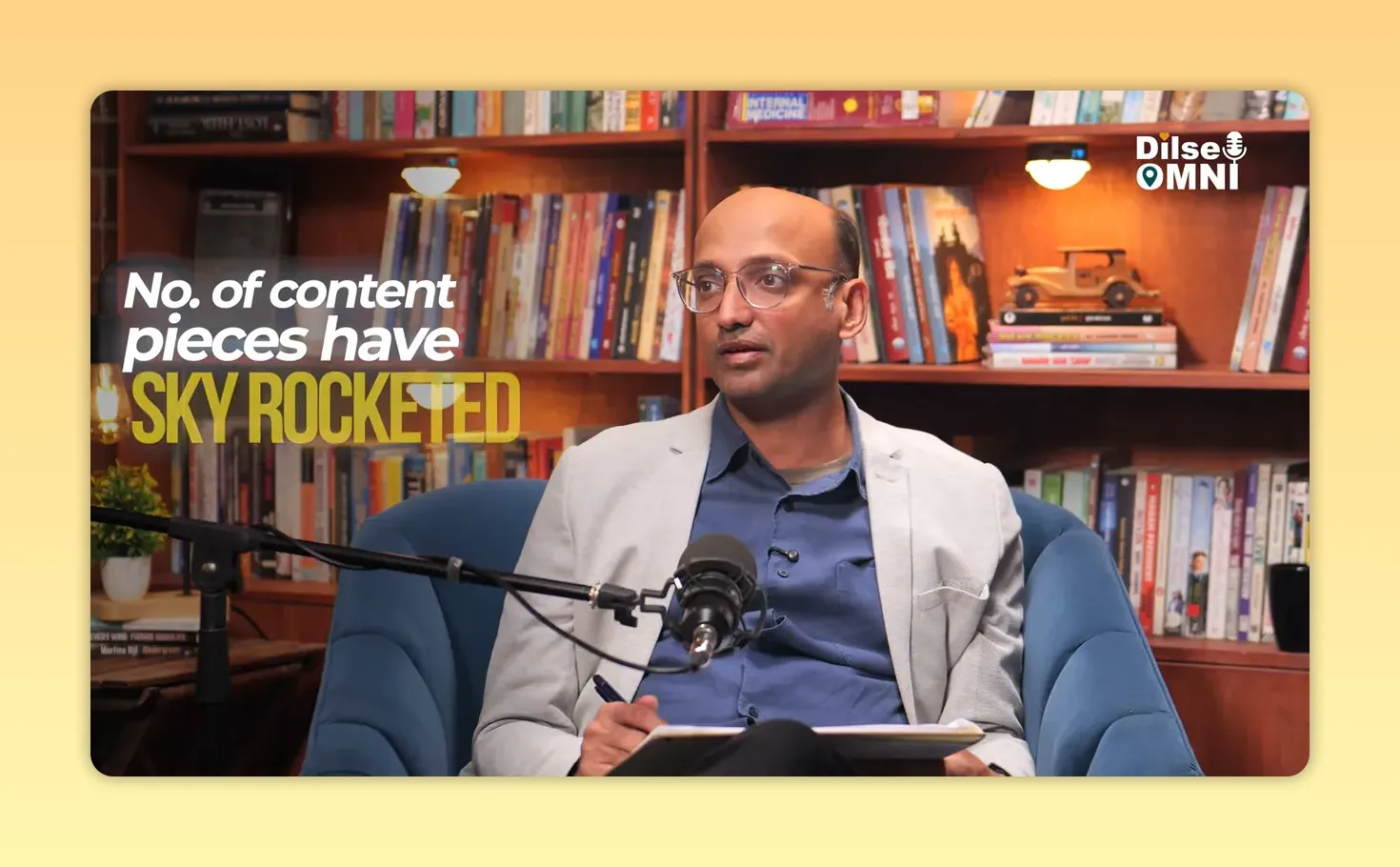
Content volume has exploded, which makes relevance and platform fit more important than ever.
Why Reusing the Same Creative Everywhere Wastes Money
The pressure to produce more content often leads brands into a familiar trap. A team creates one large campaign asset, then distributes versions of it across every app, website and social platform. It is efficient from a production standpoint, but it is not necessarily effective for the consumer.
Dr. Bajaj was direct on this point. If a brand takes the same asset created for a television context and places it across every targeted app, website and social platform, it is not doing justice to consumers. It is also wasting money.
The reason is straightforward. Repurposing is not the same as adapting. A master campaign idea can remain consistent, but its execution must change according to the channel.
A useful operating distinction is this:
One brand idea: The central promise, emotion or proposition remains consistent.
Multiple expressions: The format, length, opening hook, call to action and proof vary by platform.
One connected journey: Each touchpoint should help the consumer move naturally toward the next relevant action.
That is omnichannel marketing at its most practical. It is not about broadcasting the same message across a long list of channels. It is about creating a connected experience while respecting the role of each channel.
The Marketer’s Job Now
Search taught us to capture intent. Social media taught us to create discovery and influence. AI is pushing us toward a new level of speed and complexity. Meanwhile, fragmented attention forces us to be more deliberate about every touchpoint.
The answer is not to chase every trend or produce content for its own sake. It is to build a marketing system grounded in consumer understanding, platform relevance and connected execution.
For me, the most important takeaway from Dr. Bajaj’s perspective is that the future belongs to marketers who can combine three capabilities: human insight, technological fluency and channel-specific storytelling.
AI may accelerate the work. But the marketer still has to make the judgment: where should the brand show up, what should it say, and why should a consumer care in that precise moment?
I am Saurabh Agrawal and we come with a new episode on Dilse omni talks every fortnight and cover different aspect of omnichannel with amazing speakers.