When I spoke with Suren Gounder, Founder and CEO of Tango Eye, one idea kept coming back to me: the future of retail is not really about adding more technology. It is about removing more friction.
Suren works at the intersection of AI, computer vision, retail intelligence, and store-floor execution. Through Tango Eye, he helps brands understand what is actually happening inside their stores, then turn those observations into better operational and business decisions.
Our conversation moved from a surprising pizza quality problem to Zara’s digital trial booking, Uniqlo’s self-assisted journeys, Decathlon’s RFID-led checkout, smart grocery carts, and finally IKEA, perhaps one of the best retail case studies in the world.
What connects all these examples is simple. Great retail technology does not exist to impress customers. It exists to make every part of the journey easier, more consistent, and more purposeful.
Table of Contents
Retail Technology Begins Behind the Counter
A Simple Framework: The Friction-to-Flow Retail Model
Zara’s Book a Trial Experience: Online Research, Offline Try
Uniqlo: Make the Customer Self-Sufficient, Not Alone
Decathlon, RFID, and the Evolution of Checkout
Why IKEA Is a Retail Masterclass
The Big Lesson: Design for Intent, Then Scale the Experience
Retail Technology Begins Behind the Counter
When people hear retail technology, they often think first of self-checkout kiosks, mobile apps, digital shelves, or AI styling tools. These are exciting because they are visible. But as Suren pointed out, the larger opportunity often begins with the operational layer, the technology customers never see.
Consider a large telecom provider operating roughly 2,000 customer-service outlets across India. The challenge is not merely opening branches. The challenge is ensuring that every outlet delivers the same service quality and follows the same standard operating procedures.
At scale, consistency becomes a business problem. A brand may have excellent training manuals and defined processes, but there is always a gap between what was designed at headquarters and what happens on the store floor.
Operational technology helps close that gap. It can help a retailer understand whether staff are following required processes, whether service steps are being completed, and whether customer experience is consistent across locations.
“There’s a lot that can be done to improve operational efficiency, consistency and all.”
This is important because the best retail experience cannot be built only at the customer-facing layer. It needs a dependable operating engine behind it.
The Pizza Smell Problem: Why Details Matter
Suren shared a fascinating example from a pizza company. For a day or two, customers began reporting an unusual smell in their pizzas. The company investigated deeply and found the issue was not the pizza ingredients, the oven, or the packaging.
The problem was the cloth used to clean the table on which the pizza base and dough were handled. The cloth had developed a smell, and that seemingly small operational lapse had affected the final product experience.
The solution being explored was sensor-based quality control. Before a pizza entered the oven, it could go through a sensory smell check. If the product passed, it received a green signal. If not, it would be flagged before reaching the customer.
This example may sound unusual, but it carries a big retail lesson. Technology is expanding beyond vision. We think about cameras and computer vision, but sensing can include smell, weight, touch, movement, temperature, and much more.
A retailer does not need to digitize everything. It needs to identify the moments where a missed detail can create a broken customer experience.
A Simple Framework: The Friction-to-Flow Retail Model
From our discussion, I see a useful way for retailers to think about technology investments. I call it the Friction-to-Flow Retail Model.
1. Detect: Identify the points where customers or teams face delays, confusion, inconsistency, or quality risks.
2. Design: Build a journey around the real customer intent, not just the retailer’s internal process.
3. Delegate: Allow technology to handle routine tasks so people can focus on exceptions and meaningful help.
4. Deliver consistently: Make the experience dependable across stores, formats, cities, and channels.
This is the difference between adopting a piece of technology and building a retail system. The technology is only one component. The journey design is what creates value.
Zara’s Book a Trial Experience: Online Research, Offline Try
Zara offers a powerful example of what omnichannel retail can look like when it is designed around customer intent.
A customer can browse products through Zara’s website or app, select items, add them to a cart, and choose the option to try them at a nearby store. The store keeps those selected garments ready in a separate section. The customer arrives, picks them up, goes directly to the trial room, tries them on, and decides whether to buy.
If the items are not right, they can simply be dropped into the bins provided. No searching through racks. No uncertainty around whether a size will be available. No pressure to buy.
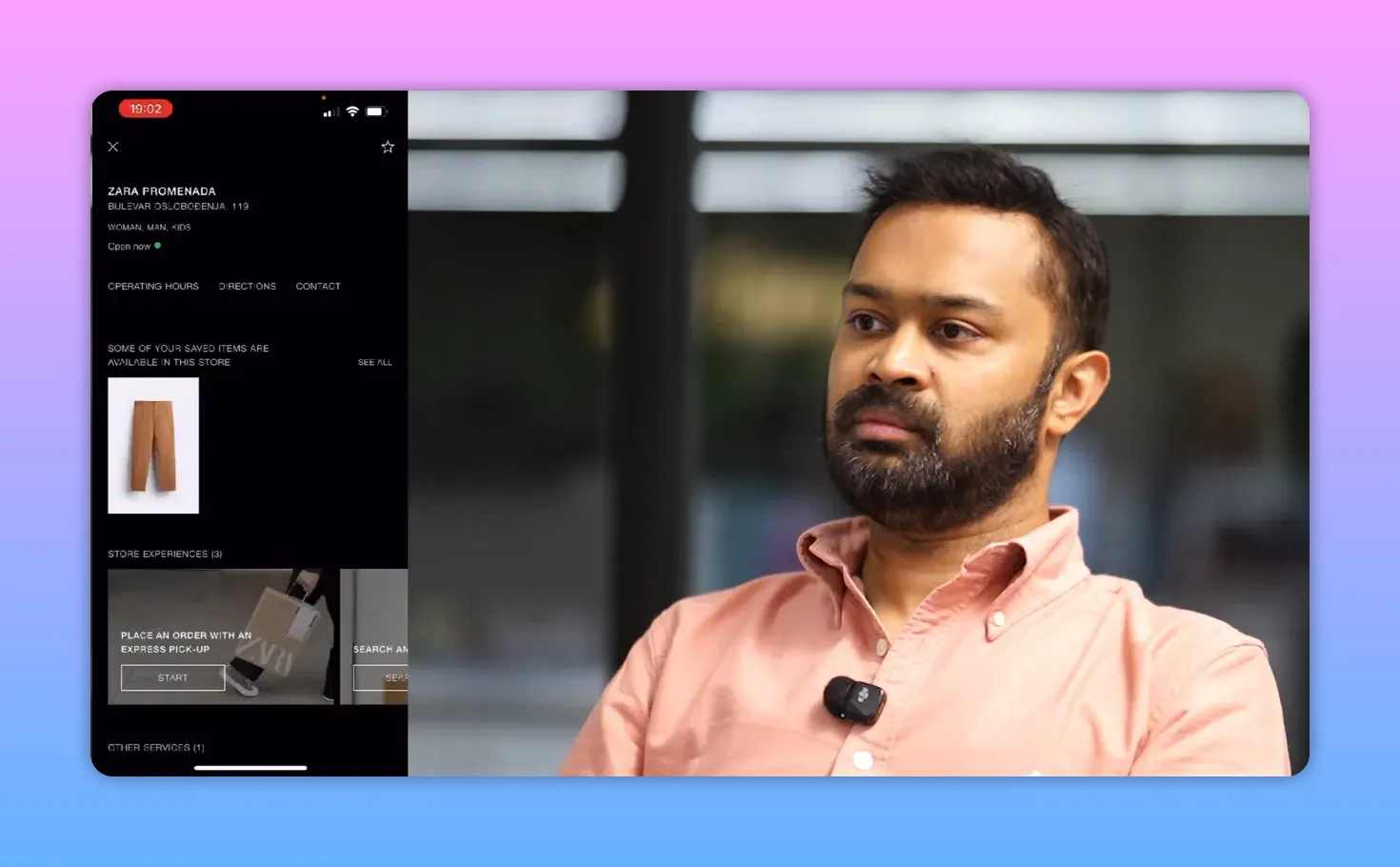
Zara turns digital browsing into a more intentional store visit by reserving products for trial.
The important insight is that Zara recognizes different shopping missions. Some people visit a store to browse casually. Others already know what they want, have researched options, and want to try before purchasing.
“Online research, offline try.”
That single phrase captures a large part of the modern omnichannel journey. Physical retail is not disappearing because customers still value touch, fit, confidence, and immediate decision-making. But the store visit should not force them to repeat the discovery work they have already done online.
I mentioned that this model could work beautifully for categories such as wedding wear, suits, and occasion wear. It is almost like booking an appointment with a specialist, except the specialist is now a carefully prepared shopping experience.
The key question for retailers is this: What intent does the customer arrive with, and how can we remove unnecessary steps from that journey?
Uniqlo: Make the Customer Self-Sufficient, Not Alone
Suren also highlighted the Uniqlo experience. In a Uniqlo store, a customer can browse, pick products, and complete checkout without needing to interact with store staff at every step.
That does not mean staff become irrelevant. It means their role becomes more valuable.
Instead of being tied to routine checkout activity, employees can focus on solving actual problems: helping find the right size, locating a product, answering a specific question, or assisting when something goes wrong.
This is a major shift in retail workforce design. The goal is not to remove human support. The goal is to deploy human support where it matters most.
“The staff then become problem solvers.”
Self-assisted shopping works when the journey is intuitive. The customer should feel independent, not abandoned. If the store design, signage, payment flow, product information, and exception handling are unclear, technology merely moves the frustration from the cashier queue to another part of the journey.

A self-assisted journey works when customers can complete routine tasks while staff remain available for real problems.
Decathlon, RFID, and the Evolution of Checkout
Decathlon is another strong example of this shift. At self-checkout, customers can scan and pay using their phone, then leave with their goods. RFID enables products to be identified quickly, reducing the repetitive effort traditionally associated with billing.
The value is not simply speed. It is capacity.
When technology handles scanning and payment, one person can oversee multiple checkout points and assist only when needed. This lets the store use its team more effectively while improving convenience for customers.
Of course, this transition takes time. Customers need to get comfortable with self-checkout. Employees need to learn how to support exceptions. The technology itself must become easier and more reliable.
But the direction is clear. Checkout is moving from a mandatory end-of-store bottleneck toward a flexible, low-friction moment.
Smart Carts and the Grocery Opportunity
In large grocery formats, the checkout queue is often where retailers lose customers. A long line can turn an otherwise successful shopping trip into a frustrating final memory.
Suren described smart carts that also function as checkout bins. Customers can place products in the cart, complete payment directly there, and leave without joining a conventional billing line.
For high-basket, large-format grocery stores, this can be powerful. The cart is no longer just a container. It becomes part of the transaction experience.
Retailers should look at checkout not as a standalone department, but as a critical part of customer retention. If the final five minutes are painful, the customer may remember only those five minutes.
Why IKEA Is a Retail Masterclass
When we came to IKEA, the conversation became much bigger than a store format. IKEA is a case study in how every element of a retail journey can be deliberately designed.
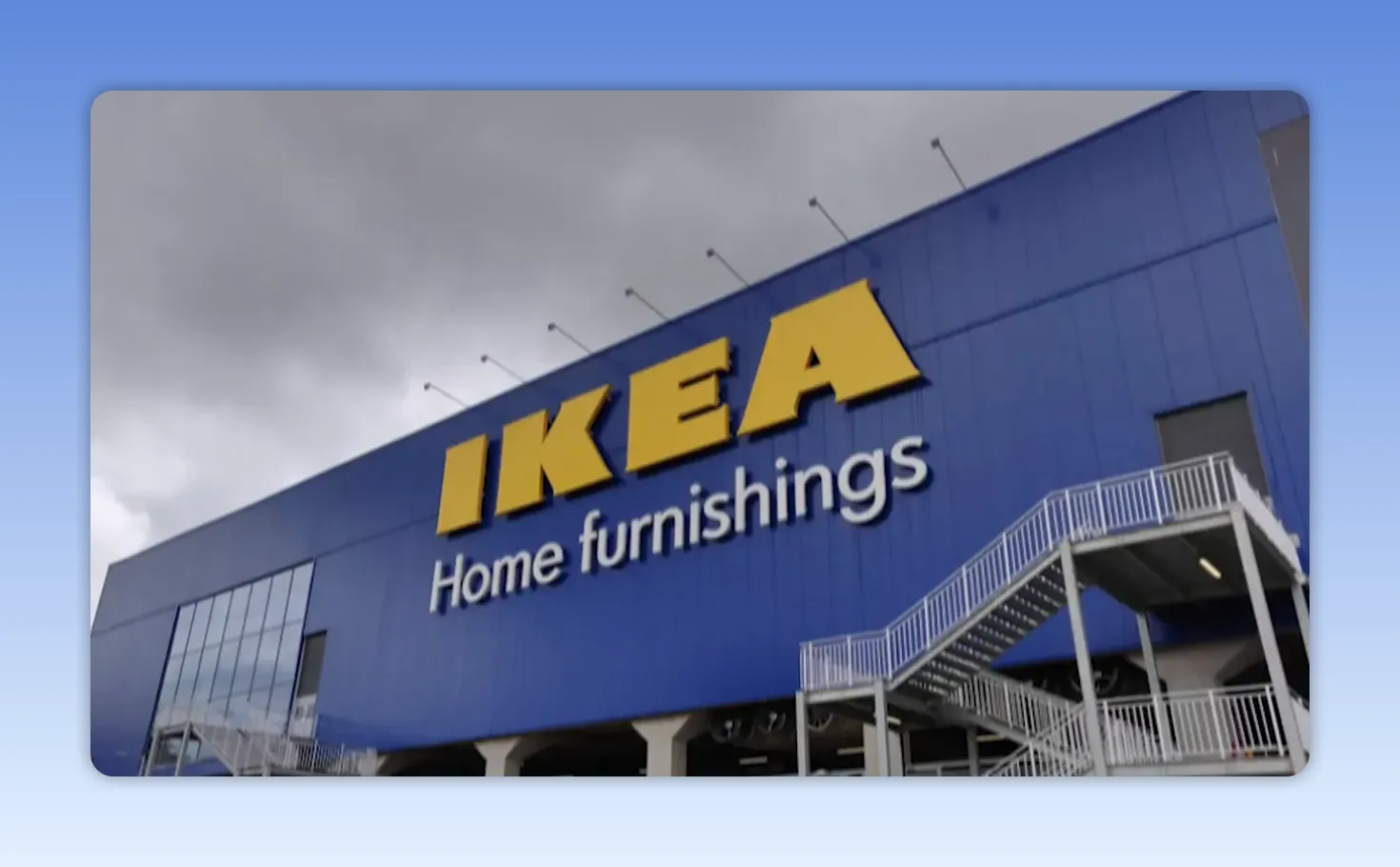
IKEA demonstrates how a distinctive store format can become a repeatable global customer experience.
From how customers move through the store, to where products are picked up, to the placement of the food court, IKEA has designed a journey rather than simply arranged merchandise inside a large box.
The store guides customers through an experience. It encourages exploration, presents furnished-room inspiration, moves product collection toward the end of the journey, and adds food as part of the broader visit. These decisions are not random. They shape how long people stay, what they discover, and how they remember the brand.
I also found the food counter experience in IKEA Hyderabad interesting. Products can be billed by weight, another example of using a different operational model to simplify a specific store interaction.
What makes IKEA particularly remarkable is its consistency. The broad experience in Hyderabad can feel familiar to someone visiting an IKEA in Boston or New York. That consistency does not happen by accident. It comes from a carefully designed playbook, supported by operations, technology, store planning, and disciplined execution.
“Their entire retail journey, they’ve innovated in so many places.”
IKEA’s app is also part of this ecosystem. It extends product discovery beyond the store, helping customers browse, explore categories, and connect their digital research with the physical retail experience.
The Big Lesson: Design for Intent, Then Scale the Experience
The Big Lesson: Design for Intent, Then Scale the Experience
Across telecom service outlets, pizza kitchens, fashion stores, sporting goods retailers, grocery formats, and IKEA, the lesson remains the same.
Retail technology succeeds when it solves a real operational or customer problem.
Zara reduces the effort of finding products in store. Uniqlo makes routine shopping self-assisted. Decathlon uses RFID to reduce checkout friction. Smart carts tackle grocery queues. IKEA orchestrates the entire store journey. Operational intelligence helps ensure that the brand promise is actually delivered, even across thousands of locations.
The opportunity is not to copy a particular retailer’s technology. A fashion retailer should not use smart carts simply because grocery stores use them. A large format store should not introduce self-checkout without considering its customer behavior, store team, product categories, and exception flows.
Instead, begin with friction. Where are customers waiting? Where are employees repeating low-value tasks? Where does quality become inconsistent? Where does the online journey fail to connect with the physical one?
Then build an experience where technology makes the next step obvious, easy, and dependable.
I am Saurabh Agrawal and we come with a new episode on Dilse omni talks every fortnight and cover different aspect of omnichannel with amazing speakers.