One of the most common questions I hear from young professionals is this: if I come from a maths, engineering, analytics, or data background, how do I build a meaningful career in growth marketing, startups, or entrepreneurship?
It is an important question because the startup ecosystem often makes certain roles look more glamorous than they really are. Everyone wants to be in the founder’s office, become a CEO’s sidekick, or carry a fancy title that sounds close to business leadership. But as Ganesh Balakrishnan reminded me in our conversation, titles do not create careers. The ability to understand customers, spot patterns, run experiments, and execute consistently does.
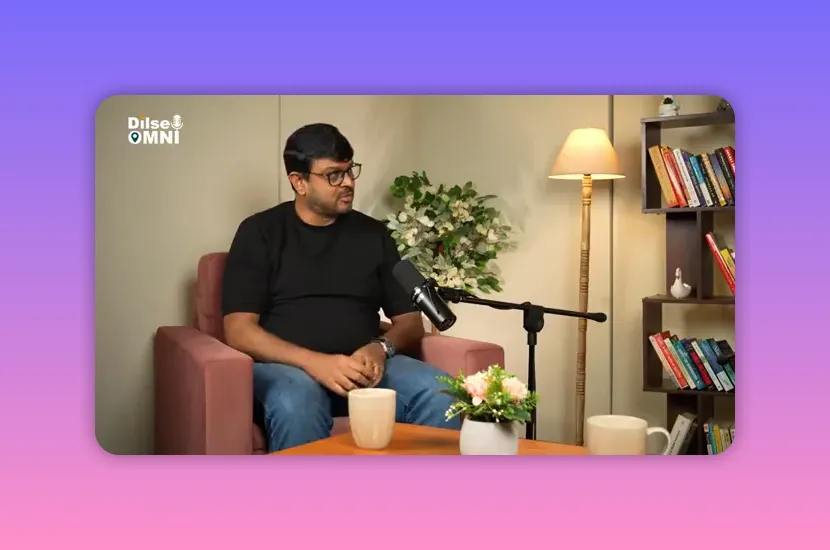
Ganesh is an entrepreneur with more than two decades of experience across product, marketing, consumer startups, and business building. An IIT Bombay and IIM Bangalore graduate, he has worked in leadership roles at companies such as ShopClues and has co founded ventures including Momoe, Flatheads, and Aurm. What I have always appreciated about Ganesh is his honest, practical view of entrepreneurship. He is not interested in startup theatre. He is interested in learning what works, accepting what fails, and building from there.
This conversation became a masterclass in moving from data to insight, insight to action, action to experimentation, and experimentation to growth. It also opened up a fascinating view of where AI powered commerce is headed.
Table of Contents
Do Not Chase Fancy Titles, Build Real Marketing Muscle
From Data Analyst to Marketer: The Shift That Changes Everything
A Practical Framework: The Insight to Growth Loop
Experiments Matter More Than Ideas
Build Your Own Distribution While You Learn
AI in E-commerce: From Search Boxes to Real Conversations
AI Can Become an Advisor, Not Just a Sales Tool
The Real Startup Superpower
Do Not Chase Fancy Titles, Build Real Marketing Muscle
There is a growing fascination among young professionals with roles such as founder’s office, strategy, business analyst, and growth. These roles can be valuable, but they can also become distractions if the objective is only a title.
As I mentioned during the conversation, founder’s office can be a glorified title. It can also be a high pressure role with high attrition because expectations are enormous, responsibilities are unclear, and the individual may enter with a very different expectation from what the company actually needs.
The better question is not, “Which title gets me closest to the founder?” The better question is, “Which experiences will make me better at understanding and influencing business growth?”
Ganesh put it very clearly:
“The joy is not in actually crunching the numbers, but in the insights that come out of it, the actionables that come out of it, and then seeing it work.”
This is the distinction that matters. Data is useful, but data by itself is not marketing. A dashboard is not a strategy. A spreadsheet is not customer understanding. The real work begins when you ask what the numbers mean and what decision they should change.
For someone beginning a career in data driven marketing, the goal should be to build a strong portfolio of real use cases. That could happen in an agency, a startup, a company with multiple product lines, or a focused category where customer behaviour can be understood deeply.
What a Strong Early Career Portfolio Looks Like
Understanding why customers drop off at a particular step in the funnel.
Identifying the difference between high intent and low intent traffic.
Using campaign data to refine targeting or creative decisions.
Recognising customer behaviour patterns within a specific product category.
Turning retention, purchase, browsing, or content data into an actionable marketing decision.
Learning how social media performance combines content quality with a numbers game of reach, frequency, and consistency.
The more use cases you solve, the more you begin to develop pattern recognition. And in marketing, pattern recognition compounds over time.
From Data Analyst to Marketer: The Shift That Changes Everything
Early in a career, it is natural to focus on analysis. You receive data, clean it, build reports, identify a trend, and communicate the insight. That is valuable work. But the next level comes when you do not stop at insight.
You begin to ask: what should we do because of this?
That is the shift from being a data analyst to becoming a marketer. It is the ability to proactively influence a decision rather than merely describe what has already happened.
Ganesh’s advice is particularly relevant for anyone in growth marketing or D2C commerce:
“The sooner you learn inciting and pattern recognition, the more important it is for you to get to the next stage in marketing.”
The word “inciting” here is powerful. An insight should provoke action. If an insight does not help the team choose, test, stop, improve, or prioritise something, it is probably just an observation.
A Practical Framework: The Insight to Growth Loop
The framework below captures the operating mindset Ganesh described. Think of it as a continuous loop, not a one time project.
Stage | Key Question | What It Looks Like in Practice |
|---|---|---|
1. Observe | What is happening? | Study customer behaviour, funnel movement, content performance, conversions, repeat orders, and drop offs. |
2. Find the insight | Why might this be happening? | Look beyond the metric and identify the customer need, friction, motivation, or behavioural pattern underneath it. |
3. Form a hypothesis | What could improve the outcome? | Create a clear belief such as, “If we help customers shop by occasion, product discovery may improve.” |
4. Run an experiment | How can we test it quickly? | Change an audience, offer, creative, message, user flow, chatbot prompt, or retention sequence. |
5. Decide | Should we scale, refine, or stop? | Double down on what works, improve what shows promise, and disengage from what does not. |
6. Repeat | What has changed now? | Re test because consumer behaviour, competition, platforms, and targeting conditions keep evolving. |
This is hypothesis driven thinking. It sounds simple, but it is one of the biggest differentiators between teams that merely report growth and teams that actually create it.
Experiments Matter More Than Ideas
Startups are full of ideas. Every meeting has them. Every founder has them. Every growth team has dozens of them sitting inside a Notion board or spreadsheet.
But ideas are cheap. Experiments create learning.
Ganesh made a point that every entrepreneur and marketer needs to internalise:
“Do not fall in love with your ideas because ideas are a dime a dozen, and ideas will kill you.”
Why can ideas kill you? Because attachment makes people slow to learn. They continue spending money on campaigns that do not work. They continue building features customers do not value. They rationalise weak results because they want the original idea to be right.
A hypothesis based approach creates discipline. You set up an experiment, define what you expect to happen, observe the outcome, and make a decision. Some experiments will work. Many will not. That is not failure. That is the process.
The key is to know when to disengage. If an experiment is clearly not producing a result, do not keep defending it. If something works, double down. But even then, stay alert. The same experiment that worked last month may not work this month because customer behaviour changes, competition changes, targeting changes, and platforms change.
Growth is not about finding one permanent hack. It is about building a permanent learning engine.
Build Your Own Distribution While You Learn
One of my strongest additions to this discussion was around personal distribution. Today, marketing is not something you only do for a company. You can practice marketing on yourself.
Write LinkedIn posts. Start a blog. Create short videos. Make reels. Share what you are learning. Pick one subject that genuinely interests you and begin putting ideas into the world.
This is not only about building a personal brand. It is about learning in public through action.
Ganesh agreed that learning by doing is a powerful way to improve. The first pieces of content may feel awkward. Five years later, you may look back at your earlier writing and feel it was cringe. That is normal. It means you have improved.
“Just putting things out there, no matter how awkward it is, is a journey. You keep doing it and you will improve.”
When you create consistently, you learn what gets attention, what people respond to, what language works, what stories connect, and which topics are genuinely useful. You also begin paying attention to others doing great work.
That does not mean copying them. It means learning from what is already in the market, understanding the behaviour behind it, and improving on it.
As Ganesh said, the right mindset is: “This has already been done. Make it better.”
AI in E-commerce: From Search Boxes to Real Conversations
Any discussion about marketing and commerce today eventually reaches AI. But rather than getting lost in the next model launch or the latest industry noise, the more useful question is: where are we seeing meaningful use cases in action?
One of the most exciting areas is AI powered chatbots and agents in e-commerce. These are not simply support tools answering delivery questions. They are becoming intelligent discovery assistants.
Ganesh shared an example from a wedding and occasion apparel brand, Kalasho. The brand uses an AI agent on its website that engages a visitor with small, contextual prompts. It may ask whether the person is looking for a lehenga or a kurta. Once the customer begins interacting, the conversation becomes more personalised.

Someone might say they need something for Diwali. The agent can recommend products, then ask what colours they prefer. It can even suggest a short quiz with a few questions to offer better recommendations.
This is a major shift from conventional e-commerce navigation.
Traditionally, a customer might open a large marketplace, select the men’s or women’s section, choose a category, type a product name, apply filters, and scroll through hundreds of options. But customers do not always think in product language. They think in needs.
They may not know they need a particular kind of kurta. They may simply know they need something for a festive gathering, a wedding event, or a family celebration.
AI can understand that need and guide discovery through conversation. It becomes similar to a helpful store associate asking, “What are you looking for today?”
The AI Commerce Discovery Framework
Start with the occasion: Understand the real need, such as Diwali, a wedding, a party, or daily wear.
Ask preference questions: Learn about colour, style, fit, budget, and category preferences.
Recommend with context: Show products that fit the customer’s stated need instead of relying only on keyword search.
Learn continuously: Remember earlier browsing or preferences to make the next interaction more relevant.
Guide toward a decision: Reduce overwhelm and move the customer naturally toward the right product.
The powerful part of this use case is that it can work with the browse audience, not only existing customers. In many e-commerce businesses, the vast majority of traffic is anonymous. Brands know very little about these people.
A smart conversational agent can begin learning from them immediately. It can turn passive browsing into an active exchange of preferences, intent, and context. Better customer understanding leads to better recommendations, stronger engagement, and a more effective top of funnel.
AI Can Become an Advisor, Not Just a Sales Tool
The future gets even more interesting when we move beyond apparel. Ganesh spoke about working with a wills client called Assured Right Now. A will is not an urgent purchase for most people. There is confusion, hesitation, and a lot of unanswered questions.
In such a category, an AI agent can work almost like a virtual legal consultant. It can educate users, understand their circumstances through the right questions, explain why a will may matter, and provide relevant guidance based on their situation.
The customer may eventually purchase, but the immediate value is advice.

This is a useful lesson for every consumer brand. The best AI experiences will not feel like a pushy sales funnel. They will feel like intelligent assistance. They will help people make better decisions in categories where discovery, education, and confidence are essential.
Virtual try ons will add another layer to this experience. When customers can combine conversational recommendations with visual product trials, the entire shopping journey becomes more personal and interactive. Large platforms such as Google have an advantage because they have access to extensive product catalogues and can connect discovery with technologies such as virtual try ons. But the most exciting opportunity may still lie in focused, category specific use cases built by smaller, sharper teams.
The Real Startup Superpower
Whether you are building a career in growth marketing, running a consumer brand, working in D2C, or exploring AI for e-commerce, the lesson remains the same.
Do not worship the data. Understand the human behaviour behind the data.
Do not worship ideas. Test them.
Do not wait until you feel ready to publish. Build your own distribution by doing.
Do not think of AI only as automation. Think of it as a way to create more useful, contextual, and human conversations at scale.
Hypothesis driven thinking is a startup superpower because it helps us move from opinion to evidence, from activity to learning, and from uncertainty to better decisions. The people and companies that compound fastest are not those who are always right. They are those who learn faster, let go faster, and keep experimenting.
I am Saurabh Agrawal and we come with a new episode on Dilse omni talks every fortnight and cover different aspect of omnichannel with amazing speakers.