For a long time, omnichannel was understood in one direction: a digital-first brand deciding to add physical stores. But in my conversation with Arjun Vaidya on Dilse Omni Talks, that definition felt far too narrow.
Arjun has lived the founder journey himself. He built and scaled Dr Vaidya’s, an Ayurvedic wellness brand, through to its exit. Since then, he has mentored more than 1,500 founders through GrowthSchool and Founders for Founders, appeared as a judge on Idea Baaz, and now invests in consumer brands and consumer technology as Managing Partner at V3 Ventures.
That combination of operator experience, founder mentorship, and consumer investing makes his perspective particularly useful. The question is not simply, “Should my D2C brand open stores?” The more important question is: what is the next channel that solves the next consumer and growth problem for my brand?
Table of Contents
Omnichannel Is No Longer Just Online Plus Offline
The Fragrance Lesson: Solve Discovery Before Scaling Distribution
Which Categories Need Offline Retail?
Offline Retail Is Adapting Too
The Real Signal That It Is Time to Go Offline
Quick Commerce Is Creating a New Omnichannel Map
Build Around the Consumer Problem, Not the Channel
Omnichannel Is No Longer Just Online Plus Offline
Arjun’s definition of omni has evolved with the consumer ecosystem. Earlier, it largely meant adding offline retail to an e-commerce-first business. Digital brands had figured out customer acquisition, websites, marketplaces, and delivery. The difficult frontier was physical retail, something legacy brands already understood.
Today, the market is more dynamic. D2C and new-age brands have reached meaningful scale. At the same time, traditional offline brands are building their own D2C businesses and digital capabilities. Even marketplace-led, food-delivery-led, and offline-first businesses are expanding beyond their original core channels.
“Omni today for me means multi-channel.” Arjun Vaidya
That is the real shift. Omnichannel is not a fixed recipe. It is the deliberate expansion beyond a core channel into one or two additional channels that create better discovery, conversion, trust, convenience, or scale.

The modern definition of omni begins when a brand intentionally expands beyond its core channel.
For an offline retailer, omni may mean strengthening D2C. For an online brand, it may mean opening stores. For a marketplace-led business, it may mean building its own destination. The objective is not to be present everywhere. It is to be present where the customer decision needs support.
The Fragrance Lesson: Solve Discovery Before Scaling Distribution
Fragrance is one of the clearest examples of a category with an online discovery challenge. With apparel, customers worry about size and fit. With eyewear, sizing and standardisation can be difficult. But fragrance is even harder because the product cannot be understood fully through an image, product description, or influencer video. A consumer needs to smell it.
Arjun credited Akash Anand and Bella Vita for an important innovation: testers. The logic was beautifully simple. Instead of asking a customer to commit to one full-sized bottle, offer smaller 10 ml variants of multiple fragrances. The consumer can try three or four, find a preferred scent, and then purchase the larger 30 ml or 50 ml version.
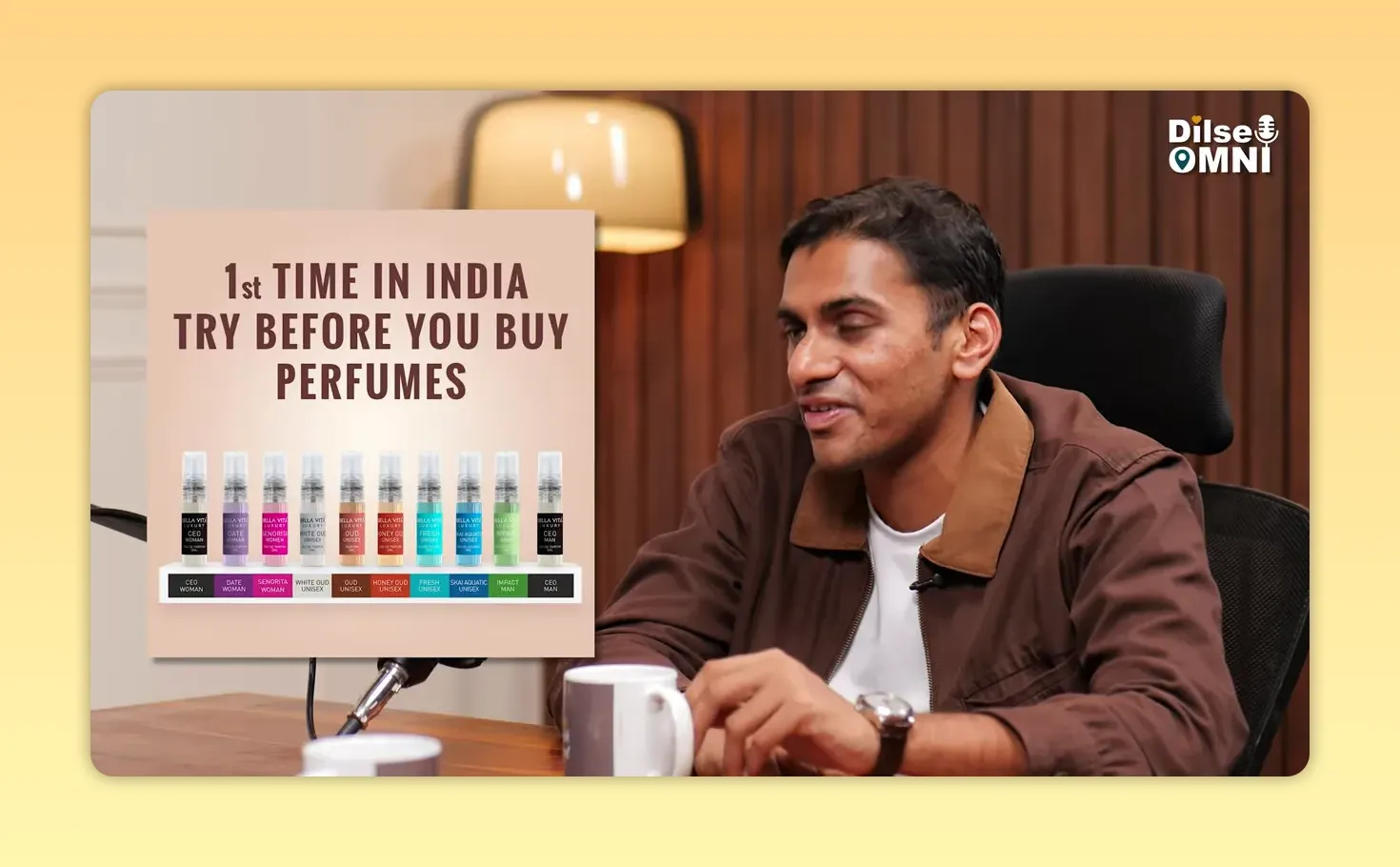
Small-format testers reduce the discovery risk before a consumer commits to a full-size fragrance.
This is a powerful omnichannel lesson even though the solution itself can happen online. Not every discovery problem requires a store first. Sometimes, the answer is a smarter product format, trial pack, sampling mechanism, or experience that removes consumer hesitation.
Adil Qadri offers another angle. The brand has built strong consumer love and an emotional connection with its audience. That connection is difficult to manufacture, but it is a meaningful advantage. When people trust a brand deeply, they are more willing to cross an online discovery barrier. Still, building tactile and physical touchpoints can widen the market further.
Which Categories Need Offline Retail?
There is no universal revenue number at which every D2C company must go offline. The decision is category-dependent. Some beauty and fashion businesses can become very large online, potentially reaching hundreds of crores. But several categories encounter a stronger need for physical validation as the ticket size rises or as sensory experience becomes central.
Arjun pointed to a simple truth: a plant is a plant. Consumers often want to see its condition, pot, size, and visual fit for their home before buying. The same applies to products that need touch, trial, trust, or visual reassurance.
The Touch, Trust and Ticket Framework
I came away with a practical framework that founders can use to assess whether offline should be the next growth lever.
Touch: Does the customer need to feel, smell, try, inspect, or compare the product physically?
Trust: Is a physical interaction important before a consumer commits, especially for an unfamiliar brand or a high-consideration purchase?
Ticket size: Does a higher average order value make reassurance, assisted selling, or a physical experience more valuable?
Scale: Has the core digital channel begun to show limits despite continued effort and spend?
When multiple answers are yes, offline retail becomes less of a branding vanity project and more of a strategic growth channel.
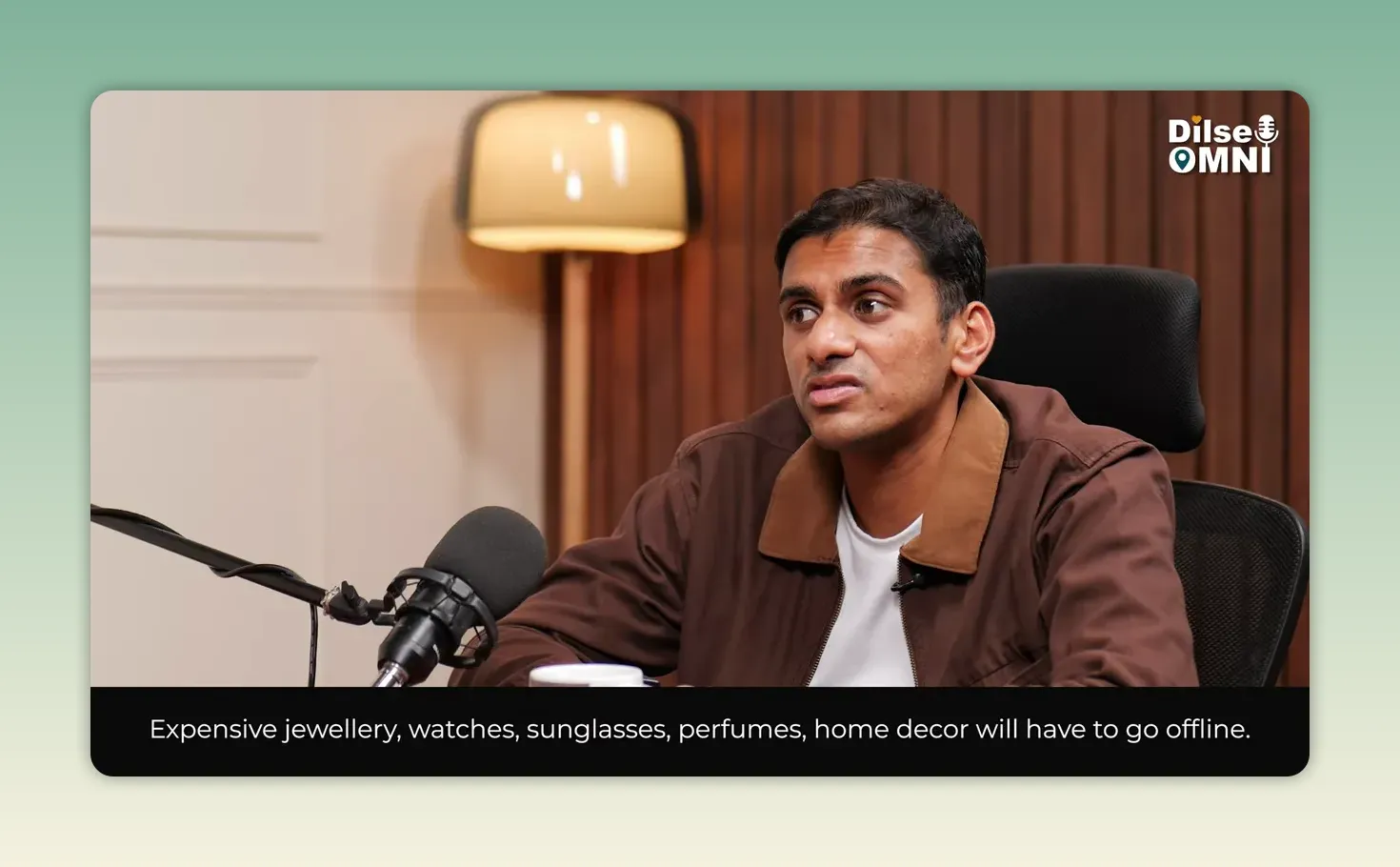
High-consideration categories often need physical retail to build trust and enable discovery.
Jewellery above roughly ₹30,000 is an obvious example. Online sales can happen, but scaled growth is likely to require stores. Watches, sunglasses, perfumes, and home décor also benefit from an offline presence. Fashion is another major example because fit, material, and styling can materially affect conversion.
Brands such as Zouk, Mokobara, and Sole Stores demonstrate how physical retail can become an important growth engine. Arjun also spoke about Ugaoo, which has built meaningful online scale while continuing to grow stores, and Cava, a leisure business that grew online before beginning a store rollout.
Wedding wear offers a particularly interesting consumer behaviour. The customer often discovers a look online, saves or screenshots it, and then arrives at the store asking for that exact colour or design. Digital discovery and offline conversion are not competing journeys. They are increasingly the same journey.
This connection between online interest and store footfall is central to the omnichannel opportunity. I have explored this further in the strategy that connects clicks to physical footfall. A store should not be evaluated only through its own four-wall sales. It can also improve trust, repeat purchase, local discovery, and conversion across the wider business.
Offline Retail Is Adapting Too
We often frame this discussion as digital brands disrupting physical retail, but traditional retailers are adapting quickly. Arjun gave the example of visiting Vijay Sales to buy a television. The price card carried the product price, discount, revised price, and even the Flipkart price. That is a direct acknowledgement of the price-comparison behaviour consumers bring into stores.
It reflects an important reality: every channel is now aware of every other channel. Retailers cannot pretend that a customer’s phone does not exist. They must compete through price, selection, advice, product demonstration, service, and immediacy.
In categories like electronics, India still has room to create a more discovery-led retail experience. The strongest stores do not merely push transactions. They make it easier to explore new products, understand use cases, and gain confidence before purchase.
The Real Signal That It Is Time to Go Offline
So, when exactly should a D2C brand expand beyond online? Arjun’s answer was precise: look for channel saturation and diminishing marginal utility in ROAS.
“Saturation of scale and law of diminishing marginal utility in ROAS will tell you this channel is saturated.” Arjun Vaidya
This does not mean offline is an automatic response to a weak month of performance marketing. It means the business has reached a point where spending more on the same online acquisition engine produces incrementally poorer returns. The brand may be exhausting its most responsive audiences, facing rising acquisition costs, or encountering a category ceiling that pure e-commerce cannot break.
Before opening a store, a founder should pressure-test four questions:
Is our online growth slowing because the channel is saturated, rather than because the product or positioning is weak?
Will a physical location solve a real consumer barrier such as trial, trust, or discovery?
Can we identify neighbourhoods where online demand, repeat customers, or local search already suggest store potential?
Do we have the operating discipline to make offline work, including inventory, store teams, unit economics, and consistent experience?
Nykaa is an important exception worth studying. It moved offline very early, even in its first year, and did so aggressively. In beauty, physical stores can accelerate trust, sampling, consultation, and habit formation. The lesson is not that every brand should move early. It is that the category and consumer journey determine the timing.
Quick Commerce Is Creating a New Omnichannel Map
The conversation then moved beyond the online versus offline debate to quick commerce. Arjun described it as an evolving beast and broke its development into three waves. This is useful because quick commerce is changing not only delivery speed, but also consumer expectations around availability and service.
Wave 1: Horizontal Quick Commerce for Essentials
The first wave is led by platforms such as Blinkit, Zepto, and Instamart. Their core job is solving for daily essentials: food, beverages, FMCG, home utilities, and increasingly daily-consumption categories such as beauty, personal care, and health.
Wave 2: Vertical Quick Commerce
The second wave resembles the evolution of e-commerce marketplaces into category specialists. Beauty, personal care, fashion, and medical marketplaces are now asking a sharper question: will the customer wait one or two days, or do they want the product today?
That is why established platforms such as Nykaa and Myntra are testing faster delivery propositions, including 60-minute and two-hour delivery. The long-term shape of vertical quick commerce is still being formed, but the customer expectation is clear: if the need is urgent enough, speed becomes part of the product.
Wave 3: Hyper-Convenience and At-Home Services
The third wave is where commerce begins to merge with services. Arjun used Urban Company’s rapid service initiatives as an example of this direction. The questions become fascinating: Can someone get makeup at home quickly? Skin services? Laundry? A domestic helper in 15 minutes? A nurse? A cook for a party? Can an electronics product be demonstrated at home before purchase?
This third wave is early, but it expands the definition of omnichannel once again. The channel is no longer just a store, website, or marketplace. It can be a service professional at the doorstep, a rapid-delivery network, or a home demonstration that enables purchase.
Build Around the Consumer Problem, Not the Channel
My biggest learning from Arjun is that omnichannel growth is not about chasing every shiny distribution opportunity. It is about recognising what the consumer cannot do easily today and deciding which channel solves it best.
For fragrance, it may be testers. For jewellery, it may be trust through stores. For plants, it may be physical discovery. For a mature D2C business, it may be a response to declining incremental ROAS. For daily essentials, it may be quick commerce. And for the next generation of consumer businesses, it may be hyper-convenient service at home.
Founders should therefore avoid asking, “Should we go offline?” Ask instead: “What friction is limiting our next phase of growth, and which channel can remove it?”
That is the more useful omnichannel question.
I am Saurabh Agrawal and we come with a new episode on Dilse omni talks every fortnight and cover different aspect of omnichannel with amazing speakers.