When I spoke with Aishvarya Murali on Dilse Omni Talks, I was struck by how clearly her career story reveals the real evolution of a modern marketer. Aishvarya is the Co-founder of Tuco Kids, a children-first personal care brand built around safe formulations, natural ingredients, and products parents can trust while kids genuinely enjoy using.
Her journey has moved through some of the most formative environments in consumer business: Cadbury, Unilever, Furlenco, Ola, and now Tuco Kids. But the most powerful lesson did not come from learning a new advertising platform or a clever growth hack. It came from becoming a founder and realizing that marketing, however strong, cannot solve every business problem.
“It was brutal,” Aishvarya told me, reflecting on the leap from marketer to founder. “We believe that marketing solves all problems.”
That is a belief many of us in growth, commerce, brand, and omnichannel roles can relate to. And it is precisely the belief this conversation challenged.
Table of Contents
The Early Foundation: Why Unilever Still Matters
The Furlenco Chapter: A Digital Growth Masterclass
Ola and the Reality of Omnichannel Growth
The Founder Reality: “I Knew Nothing About Everything Else”
Does the Founder’s Credit Card Change Marketing Discipline?
Performance Marketing vs Brand Building: The Right Question Is Timing
The Early Foundation: Why Unilever Still Matters
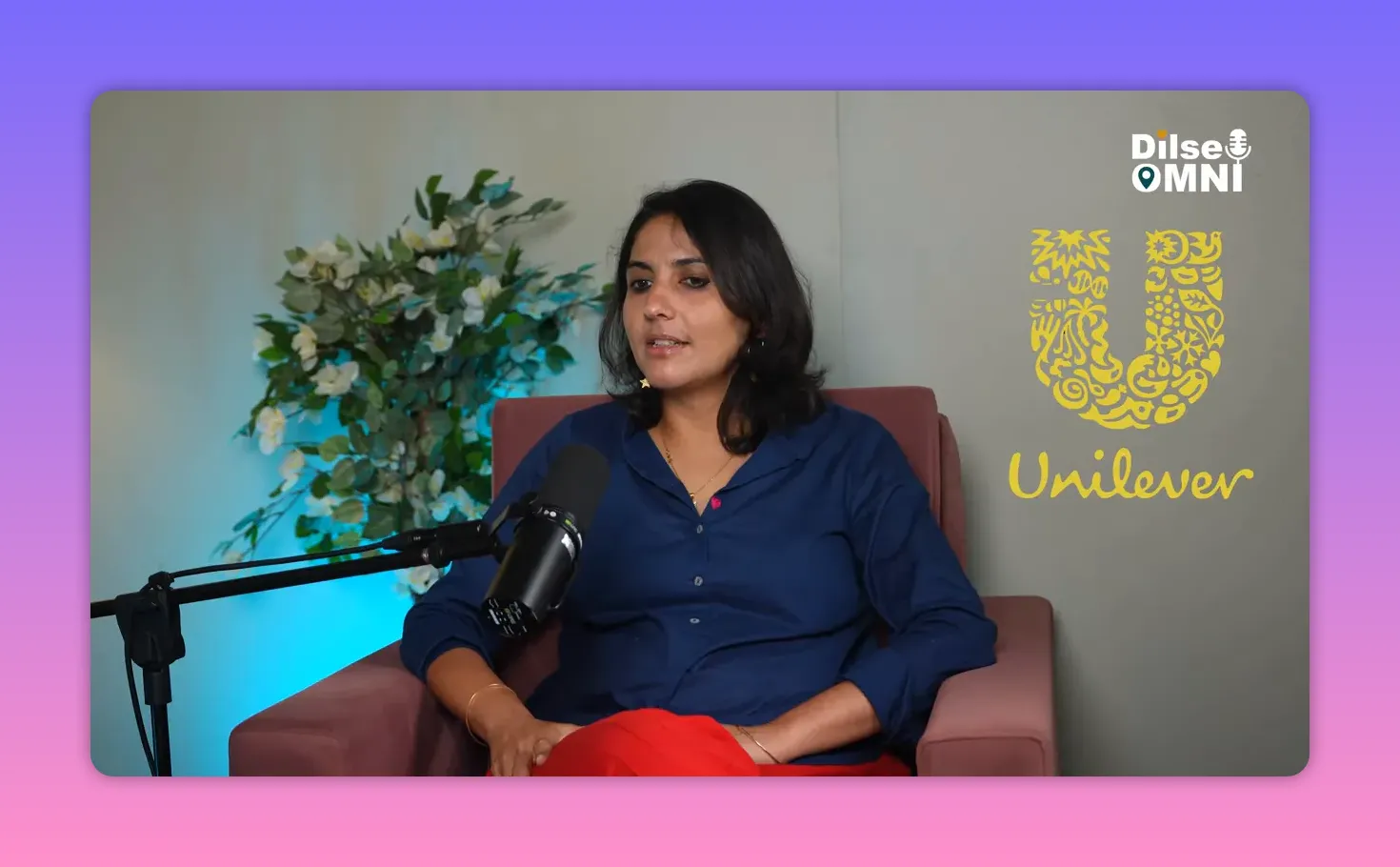
Aishvarya began her career after business school with a short stint at Cadbury before moving to Unilever. There, she spent close to 15 years, beginning with sales for roughly two and a half to three years, followed by about 12 years in marketing.
Unilever is often described as one of the world’s great marketing schools, and Aishvarya’s experience explains why. It is not merely about learning how to create campaigns. It is about building the fundamental blocks of marketing, the kind that apply whether you are selling a soap, motor oil, coffee, or a direct-to-consumer personal care product.
She handled a wide range of categories, including water purifiers, Bru coffee, Kissan, Toni&Guy, and other consumer businesses. That variety was important. Categories change, consumers change, channels change, but the marketing fundamentals remain remarkably durable.
“The tenets remain the same.”
Those tenets include understanding the consumer, defining a sharp proposition, building the right product story, ensuring distribution, and measuring whether the business is actually benefiting from the spend. The tools may have changed dramatically, but the discipline of good marketing has not.
Aishvarya also discovered something personal at Unilever. She loved physical products, products that people can see, touch, and feel. Personal care felt especially intuitive to her, more so than food. That instinct would eventually matter enormously at Tuco Kids, where trust, formulation, sensory experience, and repeat usage are all central to the brand.
The Furlenco Chapter: A Digital Growth Masterclass
If Unilever gave Aishvarya the foundations, Furlenco gave her a very different kind of education. At the time, digital was still a relatively small portion of the marketing mix in many large organizations. You could run a YouTube pre-roll, allocate a small share of the budget to online, and continue to rely heavily on offline media and general trade execution.
At Furlenco, digital was not a side project. It was much closer to the commercial engine.
Here, Aishvarya learned the operational language of startup growth: Google, Meta, performance advertising, ROAS, CAC, contribution metrics, and the depth of decision-making that comes when every marketing action is tied closely to business outcomes.

ROAS matters because performance marketing has to connect to a real business return.
She made an important observation about the learning curve in a startup. Much of this digital knowledge was taught by younger teammates who were often far deeper in the platforms and metrics than anyone around them. That is the humility of a high-growth environment: experience matters, but proximity to the problem matters just as much.
In a startup, you are not simply reviewing a marketing report. You are close to every consequence of the decision. You understand what acquisition costs, what converts, what repeats, and where the economics begin to weaken.
The Metrics That Change the Conversation
ROAS: Whether advertising spend is producing adequate revenue return.
CAC: What it costs to acquire a customer.
CM1 and CM2: Contribution metrics that bring operating realities closer to marketing choices.
Velocity: The scale at which a brand needs to rethink how it grows.
For leaders moving from established companies to D2C brands or consumer startups, this is the shift to understand. Marketing is no longer only about reach and recall. It becomes a system of choices that must work through unit economics, channel economics, and operational realities.
Ola and the Reality of Omnichannel Growth
Ola rounded out Aishvarya’s experience by bringing together the best of both worlds. There was an offline component, an app component, and a digital component. The task was no longer simply getting people to install an app, especially when millions had already done so. The challenge was getting them to take more rides.
That is a meaningful distinction for every omnichannel leader. Acquisition is only one part of growth. Usage, repeat behavior, frequency, and loyalty are where the deeper business value is created.
Aishvarya also worked across India, the UK, and ANZ. These markets offered distinct customer contexts and business realities, helping her develop a more rounded understanding of growth and marketing.
Here is the simple framework I took away from her journey:
The Three-Layer Growth Foundation
Layer 1: Marketing Fundamentals
Know the consumer, define the proposition, build the brand, and understand the category.Layer 2: Digital Measurement
Use platforms and metrics to connect campaigns with acquisition, conversion, and contribution.Layer 3: Omnichannel Behaviour
Move beyond acquisition to solve for usage, repeat purchases, retention, and the role of online and offline touchpoints together.

Unilever, Furlenco, and Ola each built a different layer of Aishvarya's growth foundation.
For me, this is an infographic-worthy career map. Unilever built the strategic base. Furlenco built digital muscle. Ola taught the integrated complexity of an app-led and offline-led business. Tuco Kids demanded that all of it come together.
The Founder Reality: “I Knew Nothing About Everything Else”
The biggest transition came when Aishvarya started Tuco Kids. She entered with deep marketing and growth expertise, but founding a company exposed the limits of functional excellence.
Her words were wonderfully direct: “I knew nothing about anything.”
She was referring not to marketing, but to everything around it. Supply chain. Business finance. Operational finance. GST. The rigor required to build a company brick by brick. These are not peripheral founder responsibilities. They are core to whether a business can survive and scale.
Finance, in particular, was a humbling learning curve. During due diligence with Fireside, the CFO stepped in to help carry the process. It reinforced an important founder lesson: a strong financial structure is not simply a reporting requirement. It is business infrastructure.
“I have huge respect for the finance function of any company and the rigor and the grunt that it takes to build this brick by brick.”
This is also a useful reminder about investors and leadership teams. The right partners do not merely point out what a founder is missing. They help augment the founder’s strengths and build capability around the gaps.
The Founder Operating System
Marketing can create demand, but a company needs a broader operating system to fulfil that demand profitably and consistently.
Demand: Brand, marketing, growth, and customer acquisition.
Delivery: Supply chain, inventory, operations, and customer experience.
Discipline: Finance, cash management, taxes, controls, and governance.
Decisions: Knowing what deserves investment now and what can wait.
Weakness in any one of these areas can become the constraint that stops growth. A great campaign cannot fix a stock-out. A strong product proposition cannot fix bad cash discipline. Efficient acquisition cannot compensate indefinitely for poor margins or operational leakage.
Does the Founder’s Credit Card Change Marketing Discipline?
I asked Aishvarya about a common startup observation. When marketers work for a large company, people sometimes say they are spending somebody else’s money. But when it is a startup, investor capital, or perhaps even a founder’s personal credit card on Meta and Google, surely the approach changes.
Aishvarya’s response was insightful: it should not be very different.
Good marketers should already care about the overall business metrics. It should never be acceptable to spend heavily without understanding return. Whether the card belongs to a founder or a large company, the right mindset is the same: think about the company’s top line and bottom line.
“Whosoever credit card it is, it’s the company’s top line and bottom line is my thinking.”
The real advantage of experience is not that it makes one more frugal by default. It gives one the latitude to make better contextual decisions. It helps answer the question that matters most: What does this business need at this stage?
Performance Marketing vs Brand Building: The Right Question Is Timing
Aishvarya’s final lesson is one every D2C and consumer brand should take seriously. Performance marketing remains a strong part of Tuco Kids’ growth mix. But performance does not scale infinitely with the same efficiency.
Once a brand reaches a certain velocity, she suggested roughly the range of ₹3 crore to ₹4 crore, the marginal utility of performance marketing begins to diminish. At that stage, a brand needs to bring in more brand-building investment.
This is not an argument against performance marketing. It is an argument against applying the same answer at every stage of growth.
The Marketing Allocation Framework
Early stage: Prioritize product-market fit, efficient acquisition, learning, and high-intent demand.
Growth stage: Strengthen performance channels while building retention, repeat behaviour, and channel depth.
Scale stage: Increase brand investment as performance begins to show diminishing marginal returns.
The wisdom, as Aishvarya puts it, is not in simply saying, “Do more frugal marketing.” The wisdom is knowing what is required now, what should be cut, and what deserves investment.
That is the lesson I will carry forward from this conversation. Marketing fundamentals matter. Digital fluency matters. Omnichannel execution matters. But building a business requires an even larger perspective, one that connects growth to cash, operations, supply chain, financial structure, and the timing of every important decision.
I am Saurabh Agrawal and we come with a new episode on Dilse omni talks every fortnight and cover different aspect of omnichannel with amazing speakers.