In this episode of DilSe Omni, Abhijeet Singh, Co-Founder of Appbrew, breaks down which categories see massive app adoption, why brands like Minimalist succeeded, and when building an app might actually be the wrong decision.
I went into this conversation with a question that many founders and operators quietly carry around. Does every brand really need an app? If you are in beauty, home furnishing, personal care, fashion, or a niche category, is an app truly a growth engine or just a shiny checkbox?
What I took away from Abhijeet was simple, but not simplistic. The real mistake is not saying yes or no to an app too quickly. The mistake is thinking of the app as a product decision in isolation.
Abhijeet reframed it beautifully: “I don’t see it as an app. It’s a channel.”
That one line changes the entire discussion.
Table of Contents
Start with the right question
A simple framework for deciding whether an app makes sense
Where apps clearly win
The Minimalist story is really a channel strategy story
How conviction shows up in practice
The categories that may surprise you
Where I would be careful before building an app
The exception: content and community can change the equation
The real masterclass takeaway
Start with the right question
Most D2C conversations around apps begin in the wrong place. People ask whether apps work for a category. That matters, of course. But before category, there is a more foundational question.
Can your team build and operate the app like a serious growth channel?
Abhijeet’s view was very clear. A channel wins when the marketing team believes in it, curates it deliberately for the customer, and keeps pushing it because it creates clear upside. If that conviction is missing, the app does not magically perform on its own.
This was one of the biggest lessons for me from the conversation. Too many brands launch an app and then wait for it to justify itself. But channels do not work like that. An app needs positioning, merchandising, storytelling, retention, and an operating rhythm.
Another line worth remembering: “Nothing works without belief.”
That applies far beyond apps. But it is especially true here because an app asks for coordination across product, marketing, content, and retention.
A simple framework for deciding whether an app makes sense
As I reflected on Abhijeet’s answers, a practical framework emerged. If you are evaluating whether to build an app for your brand, look at these four lenses.
1. Category behavior
Is the category naturally high intent, repeatable, browsable, impulse friendly, or rich in discovery?
2. Catalog depth
Do you have enough SKUs, enough choice, and enough personalization opportunities to justify repeat engagement?
3. Team conviction
Will your marketing and product teams actively shape this channel, or will it sit idle after launch?
4. Channel role
Is the app meant to drive conversion, improve retention, enable storytelling, support community, or all of the above?
When these four align, apps can become a major revenue channel very quickly. When they do not, the app becomes an expensive distraction.
Where apps clearly win
Abhijeet did not leave this at the level of theory. He called out categories where app adoption is repeatedly strong.
Fashion is no longer optional
His stance on fashion was blunt and memorable. If you are building a serious fashion brand and you still do not have an app, you are already behind.
That may sound extreme, but the logic is solid. Fashion is inherently browse heavy, newness driven, visual, and habit forming. It lends itself to repeat sessions, wishlisting, discovery, and impulse conversion. In many cases, the app becomes the main channel within one or two months.
That is not a small shift. That is a structural shift in how the brand grows.
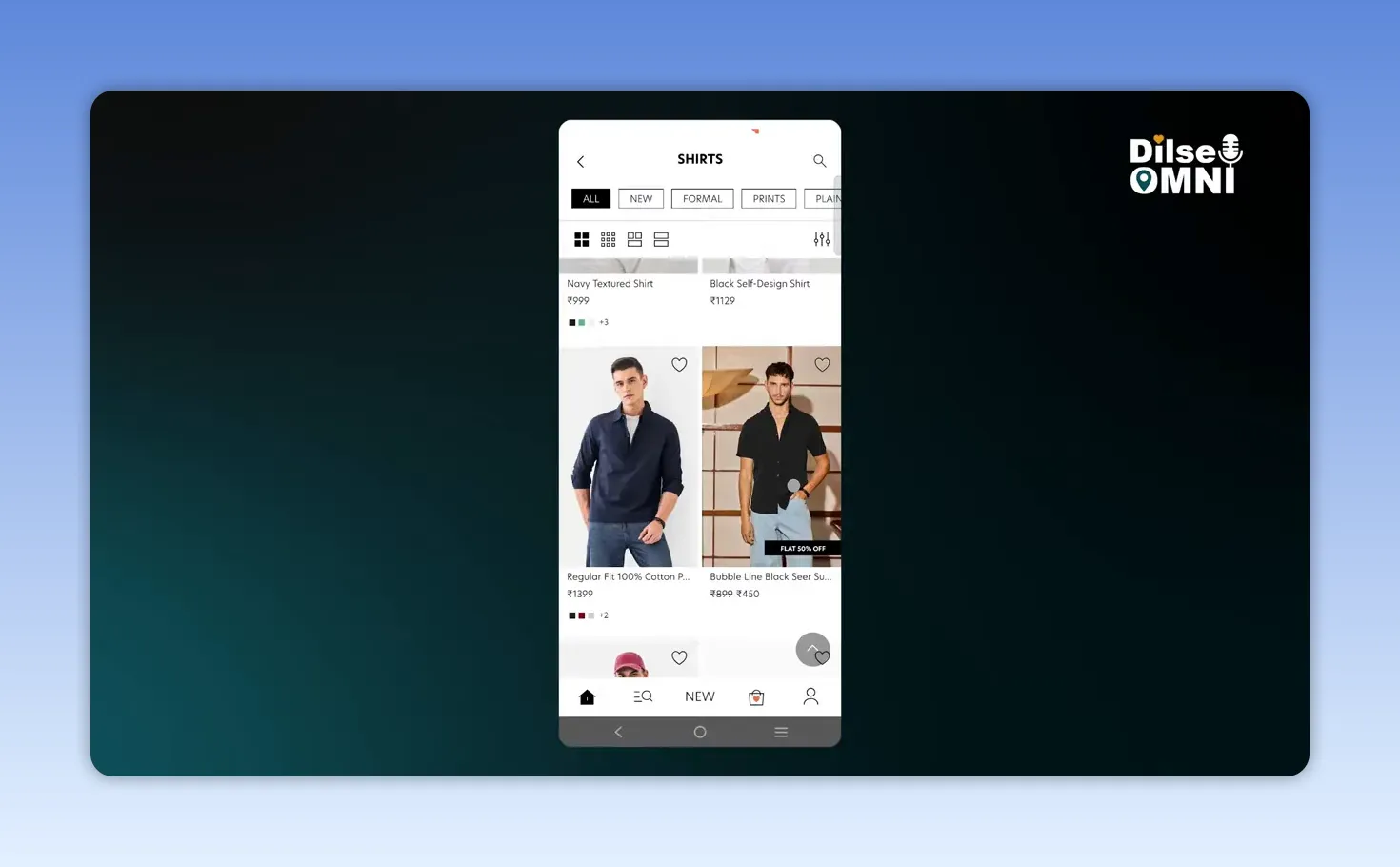
Fashion works on apps because discovery, browsing, and repeat intent all come together in one place.
Fast fashion, ethnic wear, jewelry, and adjacent impulse led categories fit this pattern especially well. The app is not just a checkout layer there. It becomes the storefront customers return to.
Personal care and beauty have huge upside
Personal care, cosmetics, and beauty also stood out in the conversation as strong app categories. Here the reason is slightly different from fashion.
Yes, repeat purchase matters. But what matters even more is storytelling. Personal care is a trust driven category. The customer is not just buying a product. They are buying ingredients, routines, claims, compatibility, and outcomes.
That means the product detail experience has to do more than list features. It has to educate and reassure.
Abhijeet mentioned that storytelling is very important in personal care, and that observation stayed with me. Great beauty apps are not only transactional. They feel consultative.
The Minimalist story is really a channel strategy story
The most instructive part of the discussion was the Minimalist example.
At the time, Minimalist already had an app, but it was not a meaningful contributor. The brand had around 50 SKUs on marketplaces, had built substantial D2C presence, and wanted to scale that channel further. The app existed, but it was not being unlocked.
What happened next is the part many teams overlook. Appbrew did not simply tweak screens. They worked with the product and marketing teams to rethink the experience and make the app channel stronger in sync with the website.
That sync matters. Abhijeet made the point that app and website need to work together. If your storytelling, merchandising, schema, and customer experience are fragmented, the app will not reach its potential.
They used meta objects to build a richer PDP experience, especially because product education mattered so much for the category. Then the launch happened.
The outcome was dramatic.
The app moved from contributing roughly 2 to 3 percent to becoming a major DTC revenue channel.
Within a month or two, it reached about 50 percent of DTC sales.
Conversion rates were around 2.5x higher.
Average order value was about 15 percent higher.
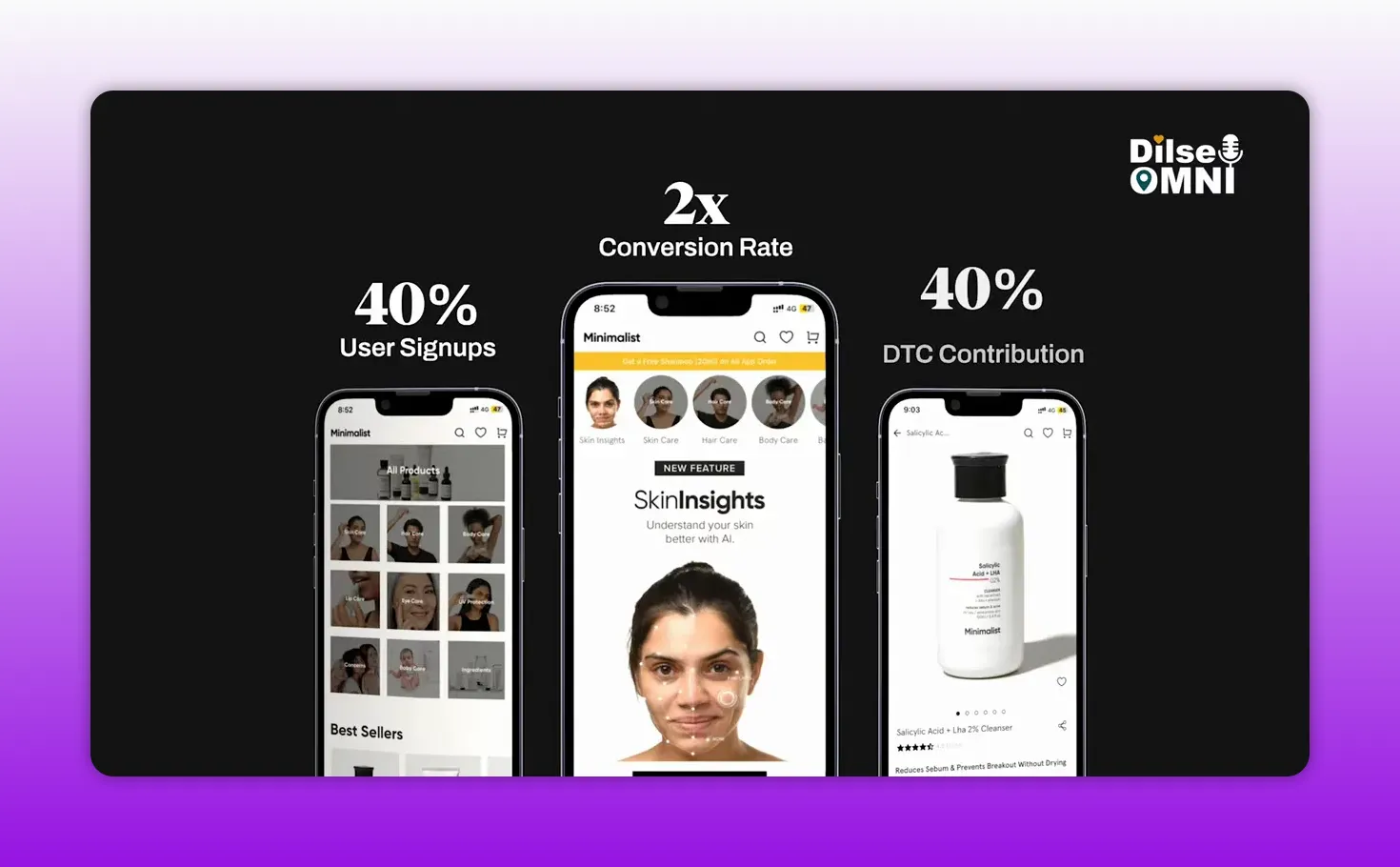
Minimalist is a great reminder that a well designed app channel can change the economics of DTC, not just the interface.
The quote that captures the heart of it: “App works, but it works only with the conviction of the marketing team.”
This is why I see the Minimalist story as more than a case study. It is a masterclass in execution. The app improved because the team treated it as a coordinated business channel, not as a side project.
How conviction shows up in practice
When people hear the word conviction, it can sound abstract. But in this context it is very operational. Conviction means your team is willing to do all of the following:
Treat app acquisition as a serious part of marketing
Design content and merchandising specifically for mobile behavior
Align website and app experiences rather than letting them drift apart
Continuously improve conversion, AOV, retention, and personalization
Push the channel because it creates visible wins
If the app is giving the marketing team a win, they will keep investing in it. If nobody owns the win, momentum dies.
The categories that may surprise you
One of the most interesting parts of my conversation with Abhijeet was where he himself had been surprised by adoption.
Home decor can work far better than expected
At first glance, home decor may not feel like an obvious app category. Purchase frequency is lower. Consideration can be higher. The path to conversion is not always impulse led in the same way as fashion.
And yet, according to Abhijeet, many home decor brands are doing anywhere from 15 to 40 percent of DTC sales through the app. That is significant.
Why does this happen? Because low frequency does not mean low engagement. Customers in these categories often browse, save, revisit, compare, and slowly build intent. Wishlisting behavior matters. Discovery still matters. Curation matters a lot.
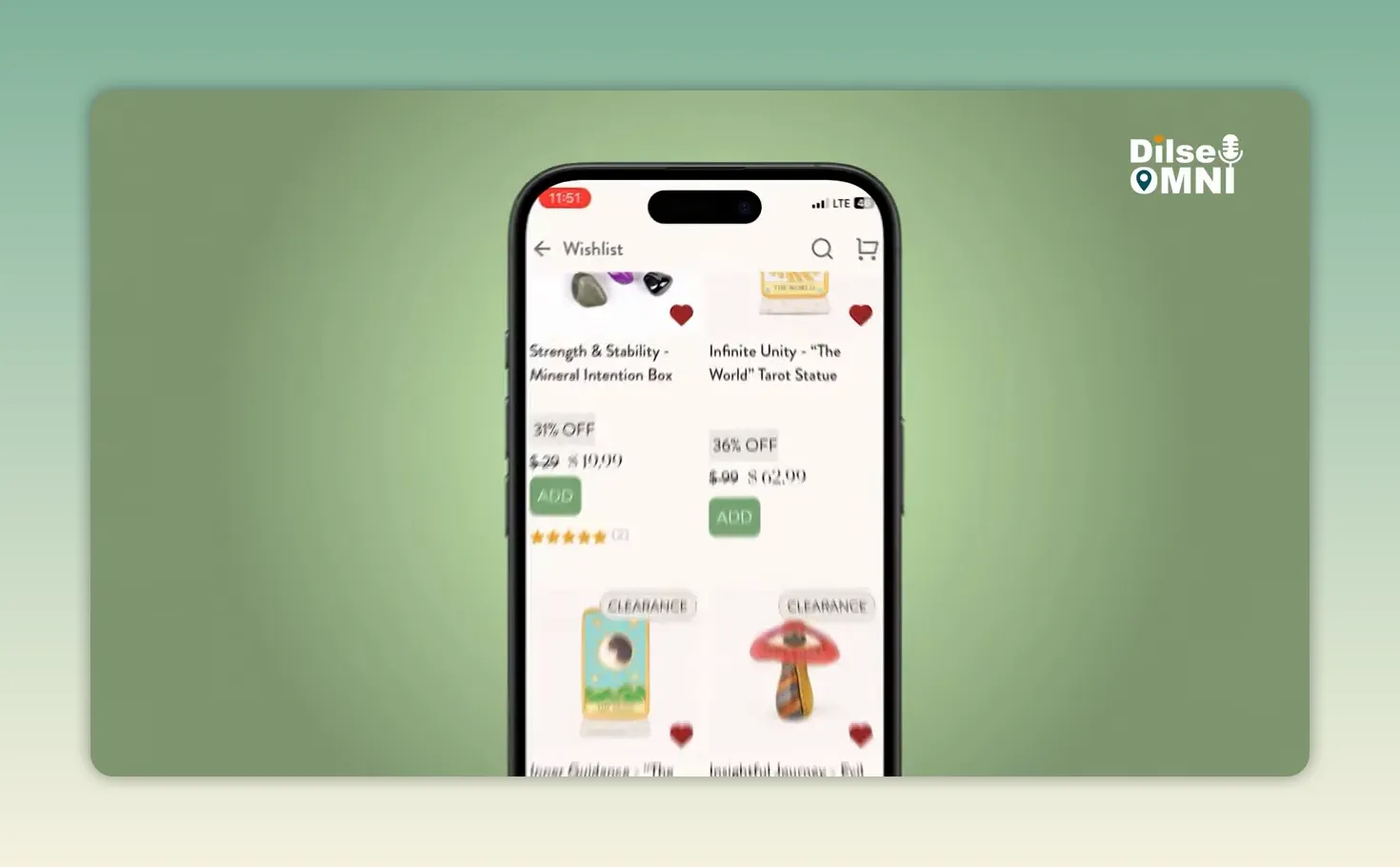
Home decor proves that lower frequency does not mean lower app potential when discovery and curation are strong.
That is a useful correction to a common assumption in omnichannel strategy. Not every app winner is a hyper frequent purchase category.
Even mattresses can work
Abhijeet also mentioned mattress brands, including a large US brand that had built scale on Amazon while its DTC channel was comparatively smaller. Even in that low frequency category, the app was driving roughly 30 to 40 percent of sales.
Again, the principle holds. Customers may take time. They may research, compare, and return multiple times before buying. In that situation, an app can become a powerful owned environment for education, retention, and conversion.
Where I would be careful before building an app
The most refreshing thing about this conversation was that Abhijeet did not try to force a pro app answer for every brand.
He was quite open about where he remains skeptical.
If your brand has only one or two SKUs, or even fewer than 15 to 20 SKUs, the case for an app becomes much weaker. That does not mean it is impossible. It means the bar is higher.
Why?
There may not be enough assortment to drive repeat browsing
Personalization opportunities are limited
The app can feel redundant if the customer journey is too narrow
Retention mechanics become harder to justify
This point on personalization is especially important. Apps and personalization tend to work in sync. The richer your catalog, customer behavior, and merchandising options, the stronger that synergy becomes.
So if you are a tight SKU subscription brand, the question is not just, can I build an app? The better question is, what problem will the app uniquely solve that the website, CRM, and community layers are not already solving well?
That is where discipline matters. An app should not exist just because the brand feels ready for one emotionally.
The exception: content and community can change the equation
There was one important nuance in Abhijeet’s skepticism.
Even if a brand has a very limited SKU base, an app might still make sense if it is being used to build content and community, not just commerce. That is a very different strategic posture.
If the app becomes a destination for education, rituals, routines, inspiration, or belonging, then the logic shifts. Now the app is not trying to justify itself only through catalog size. It is creating a habit through value beyond the transaction.
That said, he was still careful not to oversell that path. It can work, but it should be a deliberate decision, not a default recommendation.
The real masterclass takeaway
If I had to distill my learning from Abhijeet into one sentence, it would be this:
Do not ask whether apps work in general. Ask whether your brand can make the app channel win.
That means understanding category behavior, catalog depth, personalization potential, and internal conviction. It means being honest about whether your app will be actively curated or passively maintained. And it means recognizing that some categories, especially fashion and beauty, already have strong proof points, while others need more strategic thought.
Apps are not trophies. They are channels. Some channels compound. Some channels distract. The difference is rarely just technology.
It is strategy, merchandising, storytelling, and team belief working together.
If you are building a D2C or omnichannel brand, that is the app question worth answering.
I am Saurabh Agrawal and we come with a new episode on Dilse omni talks every fortnight and cover different aspect of omnichannel with amazing speakers.
This article was created from the video The App Question Every D2C Brand Gets Wrong