Building a startup can make every external signal feel urgent. A competitor raises money. Another company announces a new feature. A flashy brand gets attention. Suddenly, it feels as if the race is already lost.
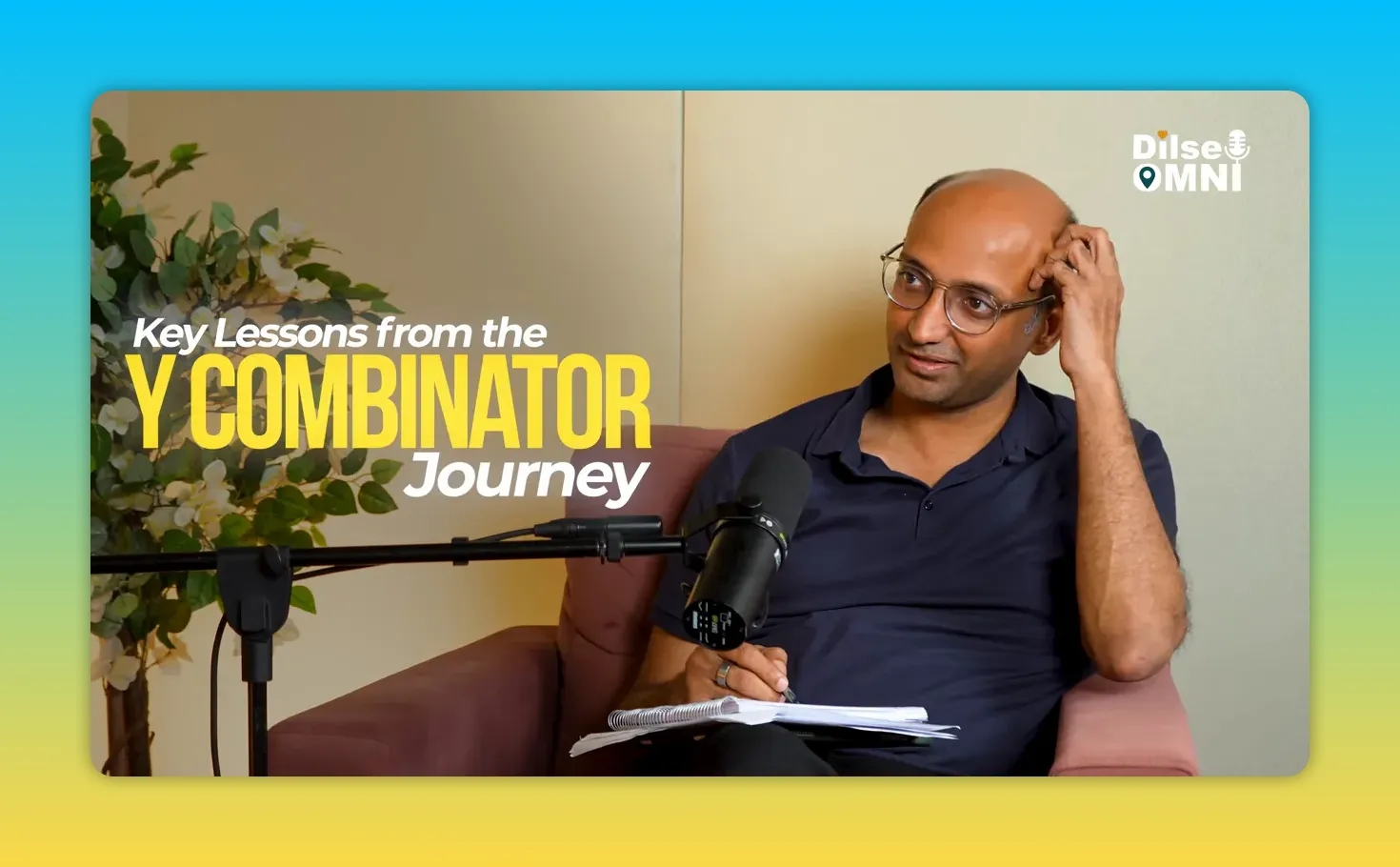
In my conversation with Sonakshi Nathani, Co founder and CEO of GetManifestAI and bikglobal, and previously part of the team behind Bik.ai, I was reminded that founders often worry about the wrong things. Sonakshi builds practical AI solutions that help brands turn conversational interactions into revenue, and her approach is grounded in customer problems, strong products, and patient execution.
Her lessons are especially relevant for SaaS founders trying to decide when to raise capital, how to hire salespeople, and how to grow without turning every conversation into a sales pitch.
Table of Contents
The First Rule: Do Not Be Afraid of Competition
The Product First Growth Framework
Focus on the Product, Not the Hype
Raise Money Only When You Need It
Sales Still Matters in an AI Driven World
Why Engineers and Customer Facing Product People Can Sell Better
How Founders Learn Sales: Solve, Teach, Then Help
Trust Beats Pricing
The Real Growth Playbook
The First Rule: Do Not Be Afraid of Competition
Sonakshi’s first learning from the startup journey is simple, but it deserves to be repeated: never be afraid of competition.
“A startup does not get killed because competition did well. It is usually an internal problem or running out of money.”
This changes the founder’s lens completely. Competition may reveal that a market exists, that customers have a real need, and that there is money to be made. It does not automatically mean there is no space left for your company.
Startups usually struggle because of issues they can influence:
They fail to build a product customers genuinely need.
They lose focus by chasing too many priorities.
They hire or scale ahead of their actual operating capacity.
They spend money before finding a repeatable growth engine.
They do not understand how to articulate value to the customer.
Competition is external. Product clarity, financial discipline, customer understanding, and execution are internal. Founders should spend much more energy improving the latter.
The Product First Growth Framework
The principles Sonakshi shared can be organized into a simple startup operating framework. It is not about hype. It is about building a company that can absorb growth without breaking.
Foundation | Founder Question | Practical Meaning |
|---|---|---|
1. Competitive calm | What can we control better than anyone else? | Do not react to every competitor. Fix internal execution and customer outcomes. |
2. Product depth | Does our product solve an important problem well? | Launch a focused minimum viable product, then improve it through real usage. |
3. Capital discipline | Do we truly need capital right now? | Raise money to fund a specific capability, not to create noise. |
4. Credible selling | Can our team explain the product in the customer’s language? | Put product aware people close to the sales conversation. |
5. Trust before price | Have we helped the buyer believe in the outcome? | Use useful content, proof, and positioning to reduce purchase risk. |
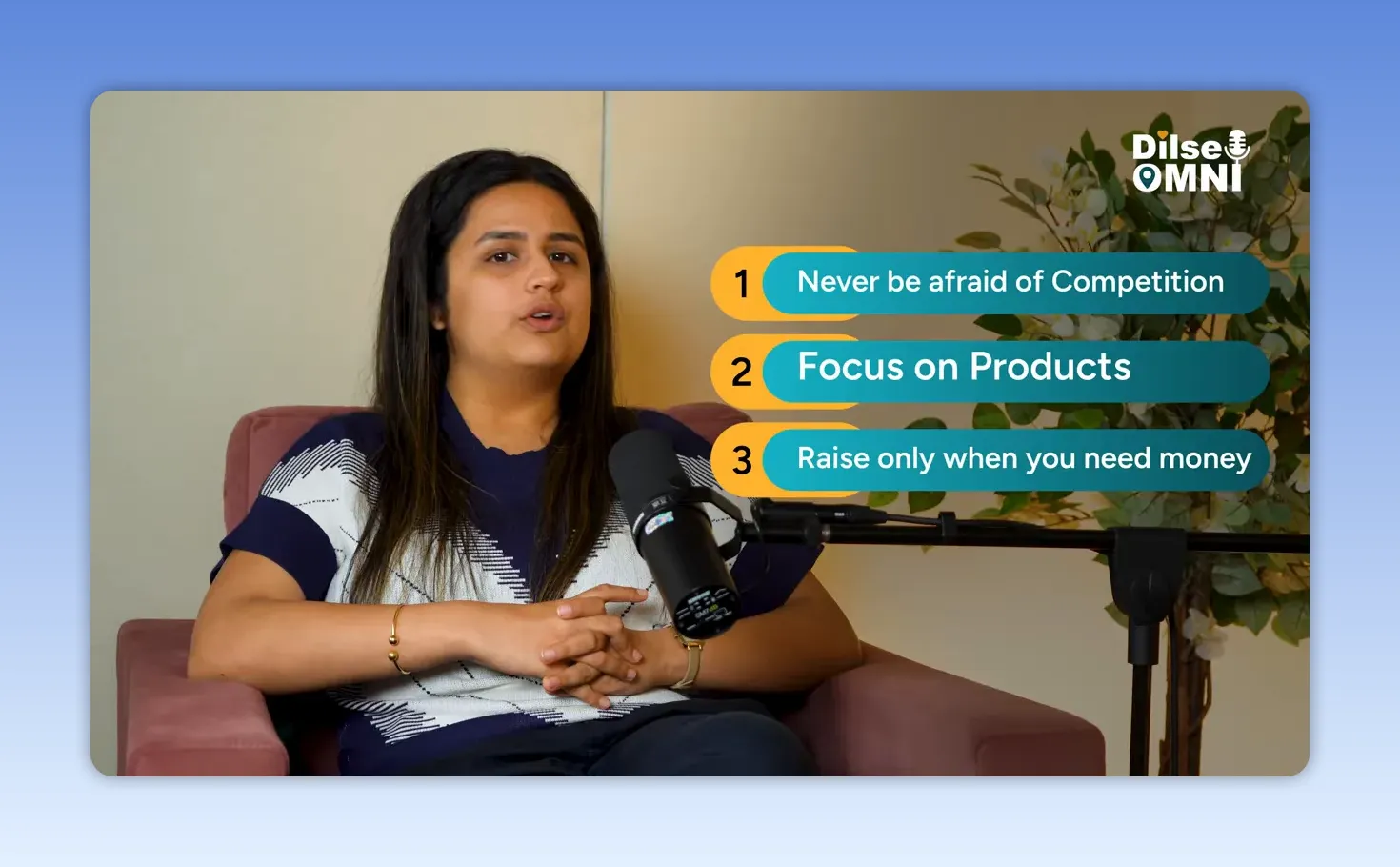
The operating principles are clear: stay calm about competition, build the product deeply, and raise only when there is a real need.
Focus on the Product, Not the Hype
The second lesson is product focus. Sonakshi believes that building a great product deserves total commitment, even when the first version is not complete.
A launch does not need every feature. It can begin as a minimum viable product. But the core experience must be useful, reliable, and meaningful to the people using it. A rushed launch with no product conviction does not become better merely because it has a bigger sales team behind it.
“Give 100 percent to building a great product. It does not necessarily have to be complete when you launch it, but product is the key.”
There is also a valuable founder lesson here. At least one founder should be deeply comfortable with technology and product. In Sonakshi’s case, both founders were technical, so product thinking was never an afterthought. That matters in SaaS because the product is not just what the company sells. It is how customers experience the company every day.
A product first company does not ignore sales. It makes sales more credible. When the product is strong, every demo has more weight, customer conversations become easier, and word of mouth has a chance to build.
Raise Money Only When You Need It
Fundraising can become a distracting performance. Founders may feel pressure to raise because everyone else is raising, because it creates headlines, or because the market rewards companies that look hot. Sonakshi’s advice is refreshingly direct: do not raise for the sake of raising.
“Raise only when you need money. Do not raise just because you want to get into the news or become the hot company.”
There is no universal answer to how much money is enough. A profitable company that is growing steadily may not need to raise immediately. More capital is only useful when there is a clear opportunity and the organization can responsibly digest the growth it creates.
This idea of digestion is important. You cannot move from zero salespeople to a hundred in a few months and assume scale will happen automatically. New hires need onboarding, product knowledge, positioning, management, process, and customer context. Growth without capability can create more chaos than progress.
Before fundraising, a founder should be able to answer three questions:
What specific constraint will this capital remove? For example, product development, customer support, or a proven sales motion.
What evidence shows that spending more will create better outcomes? A repeatable process matters more than optimism.
Can the team absorb the next stage of growth? More people and more money add complexity, not just speed.
Capital is fuel, but fuel does not choose the destination or build the engine.
Sales Still Matters in an AI Driven World
I asked Sonakshi whether a sales team still adds value in a world full of automation and AI. The answer is yes. Automation can speed up workflows, qualify leads, provide information, and support conversion. But sales remains deeply important when the purchase involves context, product complexity, and stakeholder confidence.
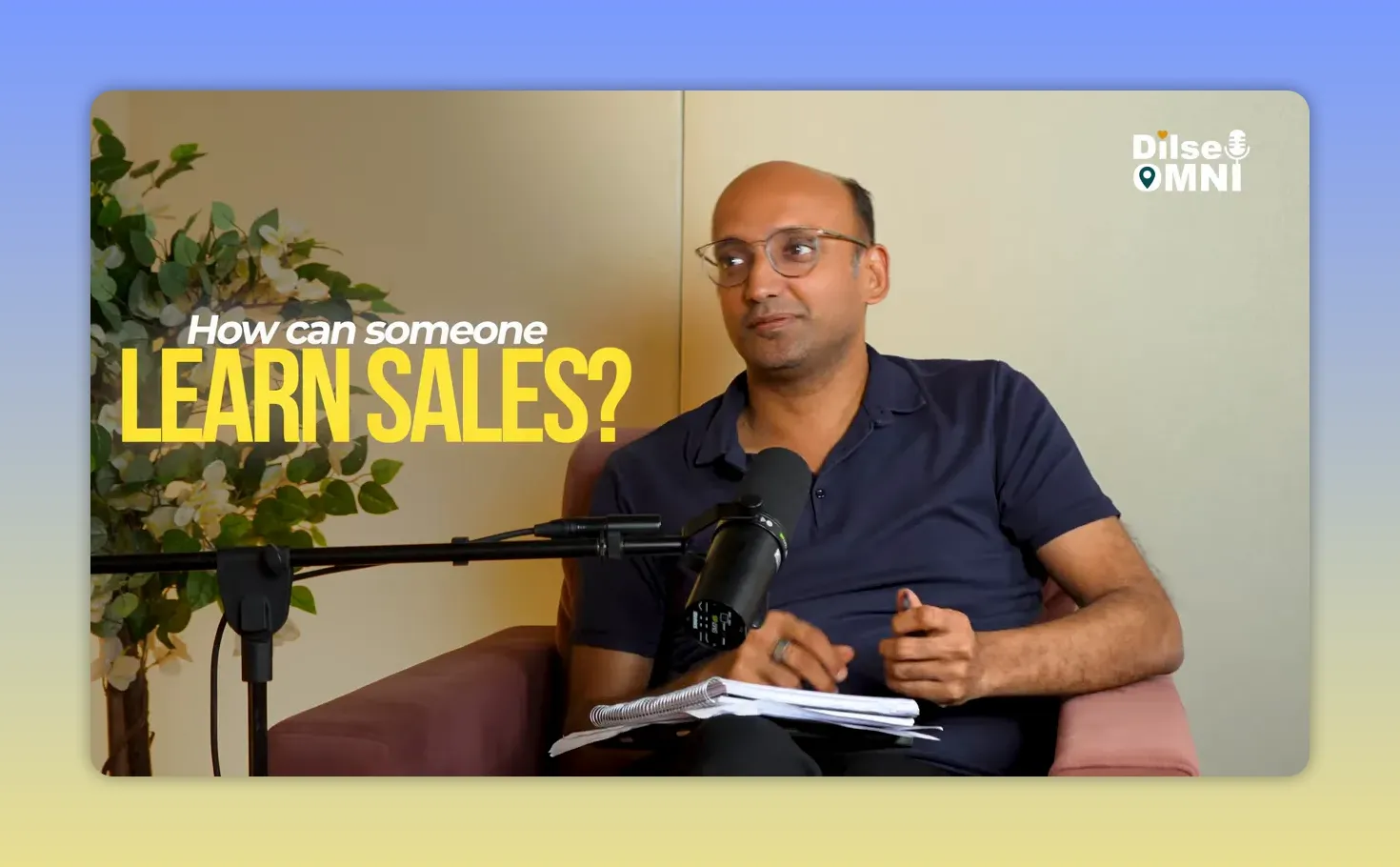
Can an automated system provide a product demo exactly as a founder does? Not yet. A thoughtful conversation connects the product to the customer’s unique workflow, concerns, priorities, and internal decision making.
That is why scaling sales is not just a hiring exercise. It is a trust transfer exercise. The founder needs people who can carry the product understanding, judgment, and confidence that initially lived only with the founding team.
Why Engineers and Customer Facing Product People Can Sell Better
One of the strongest insights from our conversation was that the best salesperson is not always someone with a conventional sales background.
In B2B SaaS, buyers are often not speaking only to a marketing leader. They may be speaking to a Chief Digital Officer, Chief Product Officer, Chief Technology Officer, or another technical decision maker. The person selling needs to understand their language, their constraints, and the tradeoffs behind the product.
A traditional salesperson may be excellent at opening a door and arranging a meeting. But a person who understands the product, technology, and customer experience can often drive the conversation much further.
Sonakshi shared how this became clear in an important Livspace deal. Early professional sales hires did not work out. Then Ayush, who was working from the founders’ office and had a technical background, offered to conduct the demonstration. He prepared a Notion document covering the technical aspects, led the conversation, and helped close the deal.
That became a turning point. His ability to explain the product was not a sales trick. It came from genuinely understanding what the product did and why it mattered. Today, he leads sales.
“People who understand the product and customer experience are the ones who can really speak the customer’s language.”
This does not mean every engineer should become a salesperson. It means SaaS companies should stop treating sales and product knowledge as separate worlds. The strongest commercial teams combine curiosity, strategic thinking, product fluency, and empathy for the customer.
How Founders Learn Sales: Solve, Teach, Then Help
I shared my own approach to sales, which is less about pushing and more about educating. I write extensively, with my team helping turn voice notes, initial drafts, and discussions into finished blogs. The goal is to share solutions to real problems.
That content creates discovery. A potential customer may find a LinkedIn post, read a blog, and arrive at a conversation with context already in place. In one client meeting, seven people had read different pieces of content and each mentioned a different article. That is powerful. The learning had already travelled through the organization before the formal sales discussion.
The philosophy is straightforward: if someone can solve the problem using what we have freely shared, that is great. They can use the ideas, tools, or even AI to take action themselves. But when they need someone to help them apply that thinking in their specific context, that is where the relationship begins.
Sonakshi agreed that great content does a significant portion of the sales work. By the time a prospect reaches out, they are often looking for confirmation:
Is there a real team behind this thinking?
Does the product actually work?
Will the pricing make sense for our use case?
Can this company help us execute?
Content is not merely a top of funnel activity. It is a way to demonstrate problem solving ability before asking for a meeting.
Trust Beats Pricing
Eventually, most B2B buying decisions come down to trust. People are not necessarily unwilling to pay. They are skeptical about whether they are making the right investment.
Once there is enough validation, price tends to become less dominant. The buyer wants confidence that the product will work, that the team understands their problem, and that the company will be there after the contract is signed.
The Apple versus Oppo comparison captures this well. A customer may see more features in one product, yet still choose another brand because of trust and positioning. Features matter, but they do not automatically create confidence.
“People are not apprehensive to pay. They are always skeptical about whether they are investing in the right place.”
For founders, this means positioning is not cosmetic branding. It is the cumulative effect of product quality, customer understanding, useful content, consistent communication, and the experience people have at every touchpoint.
The Real Growth Playbook
The masterclass from Sonakshi is not a shortcut. It is a more durable way to build. Do not panic when competitors appear. Build a product worth believing in. Raise capital when it serves a concrete purpose. Bring product intelligent people into sales. Teach before you sell. And build the kind of trust that makes customers confident in the decision.
That is how a startup moves beyond hype and creates real revenue, real relationships, and real staying power.
I am Saurabh Agrawal and we come with a new episode on Dilse omni talks every fortnight and cover different aspect of omnichannel with amazing speakers.