For a long time, SEO was treated as an online growth lever. Rank for a keyword, earn traffic, get conversions. But for brands that operate stores, clinics, service centres, or local outlets, that definition is far too narrow.
SEO can influence the decision that happens before a customer ever walks through the door.
In my conversation with Amit Tiwari, SEO strategist, educator, and founder of AmitTiwari.net, we explored the practical side of local SEO and why it matters for every omnichannel business. Amit has built a reputation for making SEO less intimidating and more useful, especially for businesses that need sustainable organic growth rather than short bursts of paid traffic.
The central lesson from our discussion was simple: your digital presence is often the first experience of your physical business. If that experience is unclear, incomplete, or untrustworthy, the customer may never reach your store.
Table of Contents
Local SEO Is an Opportunity for Businesses of Every Size
Google Business Profile: The Familiar Tool Many Brands Still Ignore
The Local Discovery Framework: Find, Trust, Visit
Why the Store Locator Is Often the Weakest Page on an Omnichannel Website
Ratings, Reviews, Pictures, and Pages Must Work Together
The Shark Tank Brand Mistake: Losing the First Impression
Local SEO Is Not a Side Project
Local SEO Is an Opportunity for Businesses of Every Size
I began with a project Amit and I worked on for Dr. Khushbu’s clinic. The goal was not to build a giant marketing machine. It was to help more relevant local patients discover her clinic and its diagnostic services, including MRI and CT scan related needs.
Within roughly six months, the clinic saw around 20% to 30% more traffic, driven by straightforward local SEO improvements. That result matters because it proves a critical point: local search is not reserved for national chains with massive budgets.
Amit explained that local SEO can work even for a single store or a one location business. In fact, smaller businesses often have an advantage because their competitors may not be doing the basics properly.
“As long as you are beating your competitor, you are good.”
This is the most practical way to think about local SEO. You do not need to defeat every company on the internet. You need to become more discoverable, credible, and useful than the alternatives near you.
For many local businesses, putting in one or two focused hours every week can create a visible difference. If competitors have incomplete listings, no recent photos, poor review management, or inaccurate details, even basic consistency can become a competitive advantage.
Google Business Profile: The Familiar Tool Many Brands Still Ignore
One of Amit’s early videos was about Google My Business, now known as Google Business Profile. He made a wonderfully accurate observation about it: it is like a relative you recognise by face but do not know by name.
Most people have encountered a Google Business Profile. It is the business card that appears in Google Search or Google Maps with information such as:
Business name and category
Address and map location
Phone number and website
Hours of operation
Photos and videos
Customer ratings and reviews
Directions, calls, and other actions
Yet many businesses still treat this profile as a one time setup task. They create it, add a phone number, and forget about it. That is a mistake because customers do not see it as an administrative listing. They see it as proof that the business exists, is active, and can be trusted.
Who can benefit from local SEO?
Any business whose product or service can be consumed locally can benefit. That includes:
Doctors, diagnostic centres, clinics, and hospitals
Restaurants, cafés, food outlets, and cloud kitchens with local discovery needs
Retail stores and multi location chains
Salons, fitness studios, repair services, and professional service providers
D2C brands expanding from online commerce into physical retail
Ecommerce businesses building credibility for a relatively unknown brand
Even ecommerce companies should not dismiss local SEO. They may not rely on a nearby customer walking into a store, but a well maintained Google Business Profile can still build brand confidence when someone searches for the company name.
Amit described these profiles as mini knowledge graphs. A customer searching for a recognised brand often sees a rich panel of information in the results. When an emerging ecommerce brand has no comparable presence, it can feel less established. A complete Google Business Profile narrows that trust gap.
“The normal searcher does not know the difference between a knowledge panel and a Google Business Profile. It is going to help your brand.”
The point is not to mimic a large brand. The point is to avoid looking invisible at the exact moment a customer is checking whether to trust you.
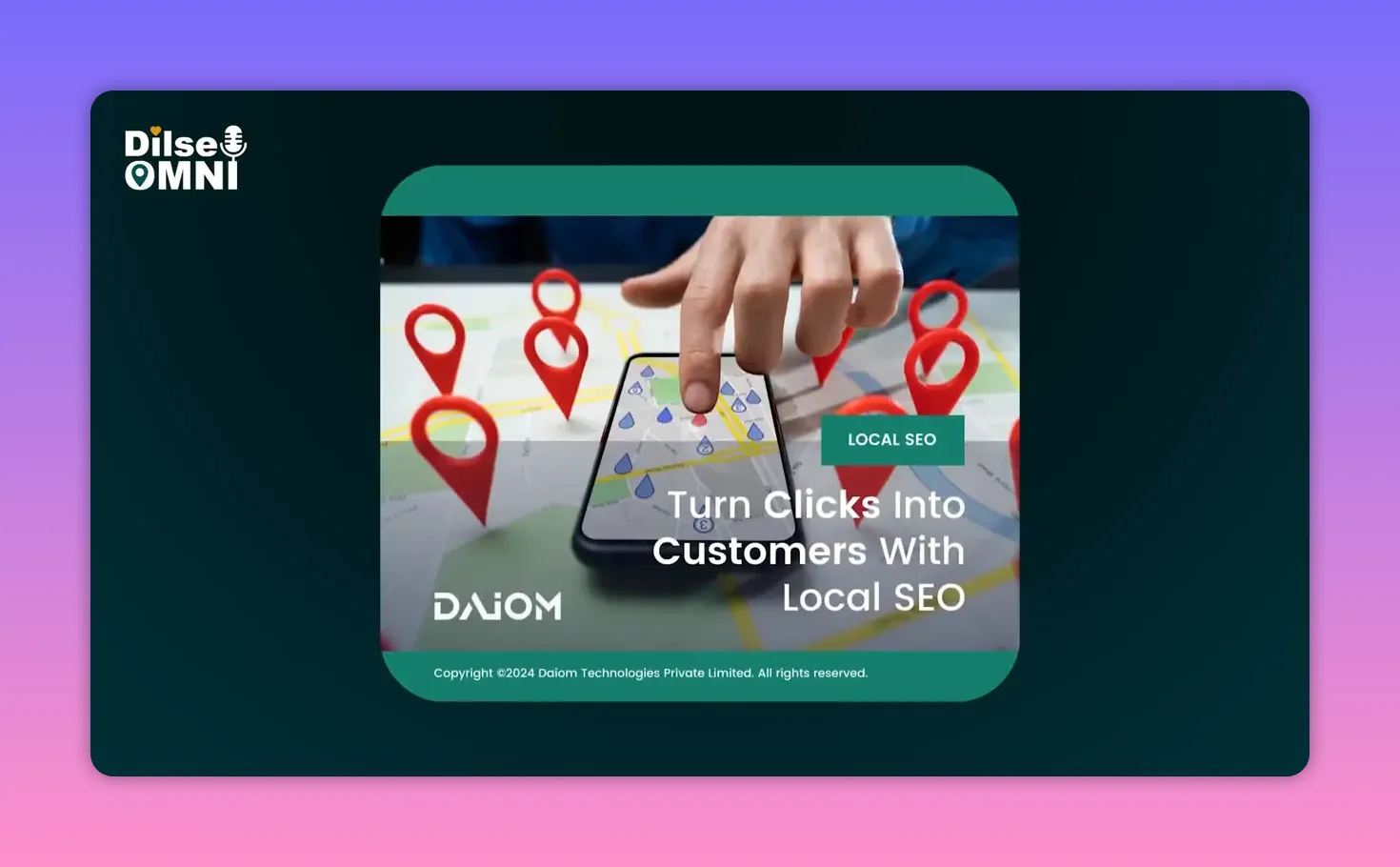
The Local Discovery Framework: Find, Trust, Visit
The conversation made me think of local SEO as a simple three stage omnichannel framework. It is not just a listing exercise. It is a journey from discovery to physical action.
1. Find: Make the business discoverable
A customer searches for a brand, a category, a service, or a “near me” query. This is where Google Business Profile, store pages, accurate categories, location details, and local search visibility matter.
2. Trust: Make the result credible
Once found, the customer evaluates what appears on the screen. Are the photographs relevant? Are reviews present? Is the name correct? Does the business look current and legitimate? A profile with poor visuals, inaccurate information, or unanswered negative sentiment weakens the decision.
3. Visit: Remove friction from the next step
The final job is to help customers call, get directions, browse store information, or reach the right location. This is where a strong store locator and dedicated store pages make the online to offline journey seamless.
FIND
Google Search, Maps, location pages, local intent
↓
TRUST
Accurate profile, ratings, reviews, images, consistent brand details
↓
VISIT
Directions, phone calls, store pages, local availability, footfall
When any one of these stages breaks, local demand leaks away. A customer may find a business but not trust it. Or trust the brand but struggle to identify the nearest store. Omnichannel growth depends on connecting all three.
Why the Store Locator Is Often the Weakest Page on an Omnichannel Website
I work with many omnichannel brands that began online and are now opening stores at speed. Most of these brands invest heavily in a beautiful homepage, engaging product pages, and paid acquisition. Yet very often, the weakest page on the website is the store locator.
That is surprising because the store locator is the bridge between digital discovery and offline footfall.
In a previous role at a large ecommerce company, we invested heavily in improving the store locator. We created a dedicated page for every store, added reviews and ratings, and made location discovery more useful. This helped push local discovery significantly higher.
But building an effective store locator is not a trivial project. When I started DAIOM, we repeatedly heard the same need from brands. Building the solution manually had taken a team of three or four people nearly six months in my earlier organisation.
That is why we created Omni Store Locator, a Shopify app designed for the many D2C businesses operating on Shopify. It helps brands connect their online storefront to their physical locations in a more searchable and discoverable way.

A useful store locator combines location details with a map so customers can identify the nearest outlet quickly.
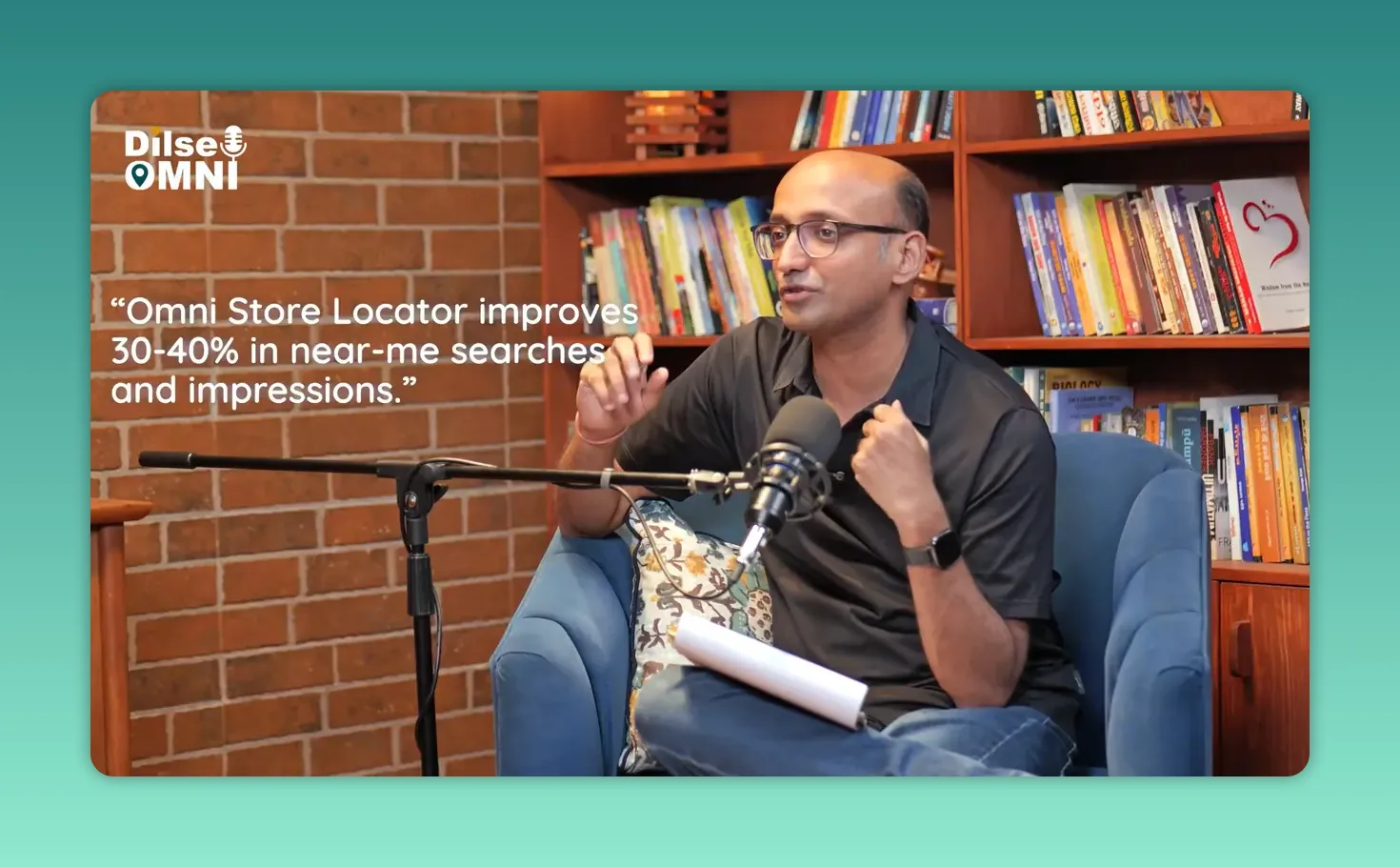
For the brands using this approach, we saw nearly 30% to 40% more near me searches. That is not merely a traffic metric. It signals that more people are discovering a relevant local route to the brand.
A strong store locator should not be treated as a plain list of addresses. It should be designed as a discovery system.
What a high performing store locator needs
A dedicated page for every store: Each location deserves its own indexable presence, not just a pin inside a map.
Clear store information: Include the store name, address, phone number, operating hours, and directions.
Useful local context: Help people understand which area, city, or locality the store serves.
Ratings and reviews: Social proof makes a location more credible and gives customers a reason to choose it.
Relevant photographs: Images should accurately reflect the store, experience, and brand.
Connection with Google Business Profile: The profile and the website should reinforce each other rather than exist as disconnected assets.
Ratings, Reviews, Pictures, and Pages Must Work Together
Amit and I both came back to the same principle: local visibility does not come from a single action.
Creating a Google Business Profile is important. Optimising it with ratings, reviews, and pictures is important. But the full impact arrives when that profile is connected to useful pages on the website and the online experience supports the offline journey.
This is where omnichannel brands have a unique responsibility. If someone discovers a store through search and lands on a poor location page, the journey breaks. If someone visits the website but cannot find the nearest outlet, the journey breaks. If they search the brand name and see irrelevant imagery or weak reviews, the journey breaks.
The work is not about chasing a vanity ranking. It is about building a coherent experience wherever the customer encounters the brand.
Local discovery improves when store information is structured for both search engines and real customer decisions.
The Shark Tank Brand Mistake: Losing the First Impression
One of the most striking examples Amit shared was about brands that have appeared on Shark Tank or received funding. These businesses may suddenly have attention, investor backing, and an advertising budget. Yet when someone searches for their brand name, the search result can still look neglected.
You may find an Instamart listing ranking prominently. You may find a Google Business Profile with an irrelevant cover image, missing brand information, poor review signals, or a generally unmanaged appearance.
Imagine the gap here. A customer hears about the brand through a high visibility platform, gets curious, searches for it, and lands on a search result that creates doubt rather than confidence.
“First impression is the last impression.”
It is easy for a newly funded company to become overly reliant on ads. Paid campaigns can create reach quickly, but they cannot repair a weak first brand encounter in search. If people are spending money to find your brand and the search result looks unreliable, that budget is working harder than it should.
Before scaling acquisition, brands should audit the moment of first discovery:
Search your own brand name.
Check what appears in Google Search and Maps.
Review the images, listing details, ratings, and customer feedback.
Test whether the store locator makes the nearest location easy to find.
Ensure the website, profiles, and physical outlets present the same brand story.
Local SEO Is Not a Side Project
The biggest takeaway from my conversation with Amit is that local SEO is not an isolated task for the marketing team. It is part of how an omnichannel brand serves intent.
When someone searches for a clinic, a restaurant, a product, a service, or a nearby store, they are already signalling interest. The business that makes itself easiest to find, easiest to trust, and easiest to visit has a meaningful advantage.
Start with the fundamentals. Claim and maintain your Google Business Profile. Keep information accurate. Request and manage reviews. Use relevant images. Build location specific store pages. Improve the store locator. Connect your online discovery layer to your offline customer experience.
For a single local business, these actions can create a clear edge over inactive competitors. For a fast growing D2C or retail brand, they can turn digital intent into measurable store footfall.
I am Saurabh Agrawal and we come with a new episode on Dilse omni talks every fortnight and cover different aspect of omnichannel with amazing speakers.