A book is usually treated as the final product. You write it, print it, distribute it, sell it, and move on to the next title. But after my conversation with Anurag Sundarka, Co-founder of ZebraLearn, I came away with a very different lens.
Anurag is building ZebraLearn as a platform that is redefining business publishing in India through visually immersive, actionable books. His central idea is deceptively simple: a book is not the destination. It is the beginning of a learner's journey.
That distinction changes everything. It changes how you think about distribution, D2C, digital products, customer data, content formats, author access, retention, and even what a publishing company is actually building.
Table of Contents
The real business: a two-sided learning platform
The broken publishing experience
Why physical books still matter
The connected learning journey framework
From disconnected content to a connected experience
What D2C really means: knowing the learner
The 7 Books framework for understanding intent
Build for the problem, not the product
The real business: a two-sided learning platform
I began with a straightforward question: is ZebraLearn building a book business, a D2C business, or an edtech company?
Anurag's answer was clear. ZebraLearn sees itself as a two-sided platform. On one side are authors, subject-matter experts, brands, and creators of knowledge. On the other side are readers and learners looking to solve real problems in their lives and work.
“A book is a milestone. A book is never the end goal.”
Traditional publishers usually manage the author relationship. The relationship with the end customer is often owned by retailers, marketplaces, or distributors. Amazon, Flipkart, and other platforms become the interface with the person buying and reading the book.
ZebraLearn does not want to give away that second relationship. It wants to know the learner, understand what they are trying to solve, and remain useful after the package has been delivered.
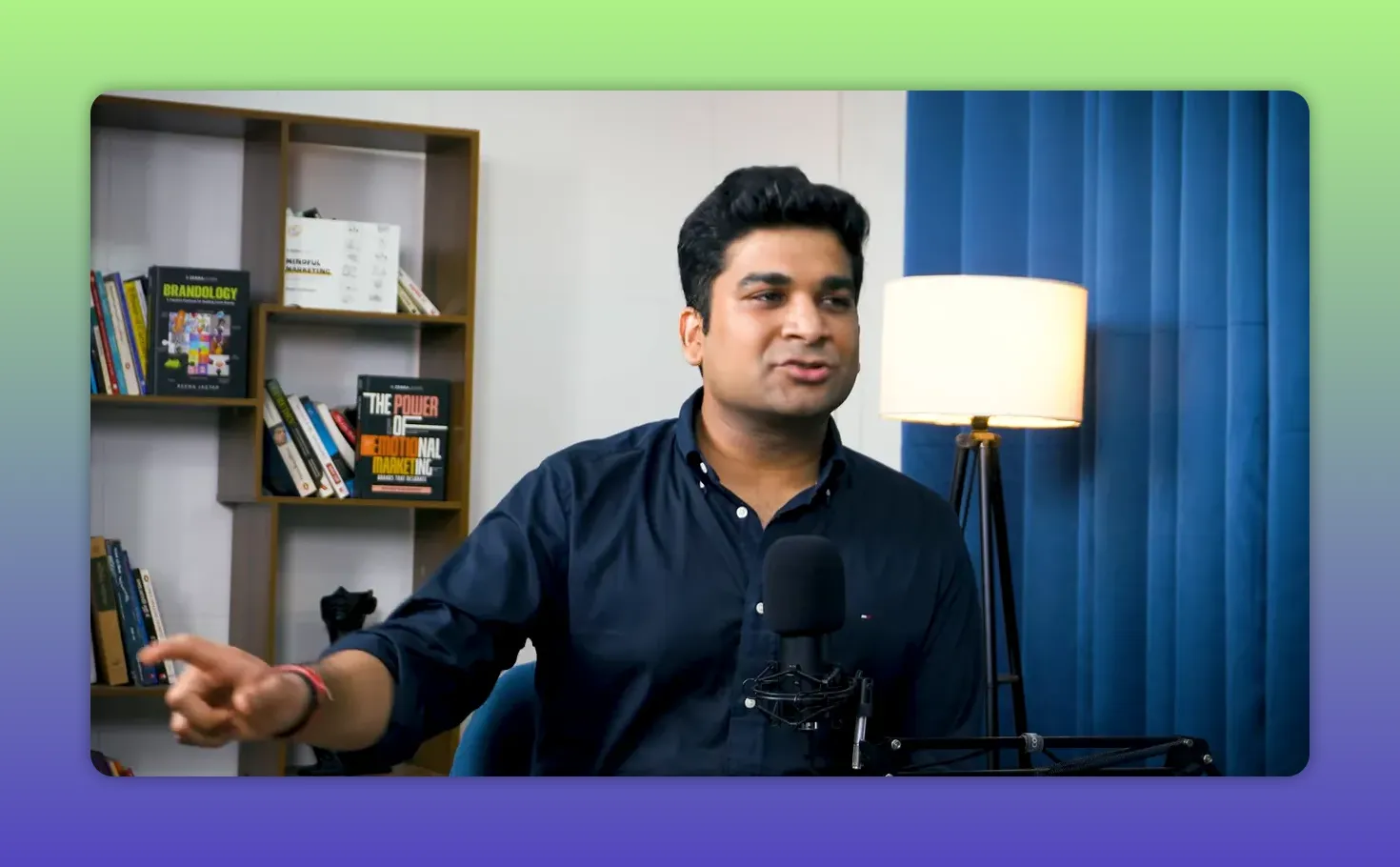
ZebraLearn's model connects the people creating knowledge with the people applying it.
This is why D2C is not merely a sales channel for ZebraLearn. It is a means of maintaining continuity with the learner. Anurag explained that the company gets more than 90 percent of its sales through its own platform and marketplaces, while keeping the learner relationship at the centre.
The business may sell books today, but the larger intention is to participate in the sequence that follows: book one, book two, a course, a classroom, a community, or another format that helps the learner move forward.
The broken publishing experience
The current publishing experience is deeply fragmented. A physical book is created in one place, a digital edition is uploaded elsewhere, and the reader consumes it through another disconnected channel. Every piece exists, but the experience does not feel unified.
That is the gap I was trying to decode with Anurag. In omnichannel terms, it is not enough to be present across multiple channels. The value comes when those channels work together around one customer journey.
ZebraLearn did not begin with a grand master plan to solve every channel problem. As Anurag shared, the model evolved through obvious next steps. First D2C, then marketplaces, then quick commerce opportunities, followed by retail stores and multi-brand outlets.
The important thing is that the expansion is not distribution for distribution's sake. Each channel exists because it can make the book more available in the learner's life.
“We want to be part of that journey. We do not want to be part of a single step.”
Why physical books still matter
There is a temptation to assume that a learning ecosystem must become entirely digital. ZebraLearn's experience challenges that assumption. Roughly 90 percent of its books are still sold as physical copies.
And the physical product matters. ZebraLearn books are designed to feel visually rich and practical, with infographics, illustrations, colour, and layouts that make complex business ideas easier to consume. This is not the conventional black-and-white textbook experience.
For deep learning, a physical book continues to have a distinctive role. It can sit on a desk, be underlined, revisited, and read slowly without the distractions of a device. But it has one major limitation: once it is shipped, the publisher cannot understand what happens next.
Did the reader begin? Which chapter did they find useful? Did they stop halfway? What problem are they now trying to solve? A physical product alone does not provide many touchpoints after purchase.
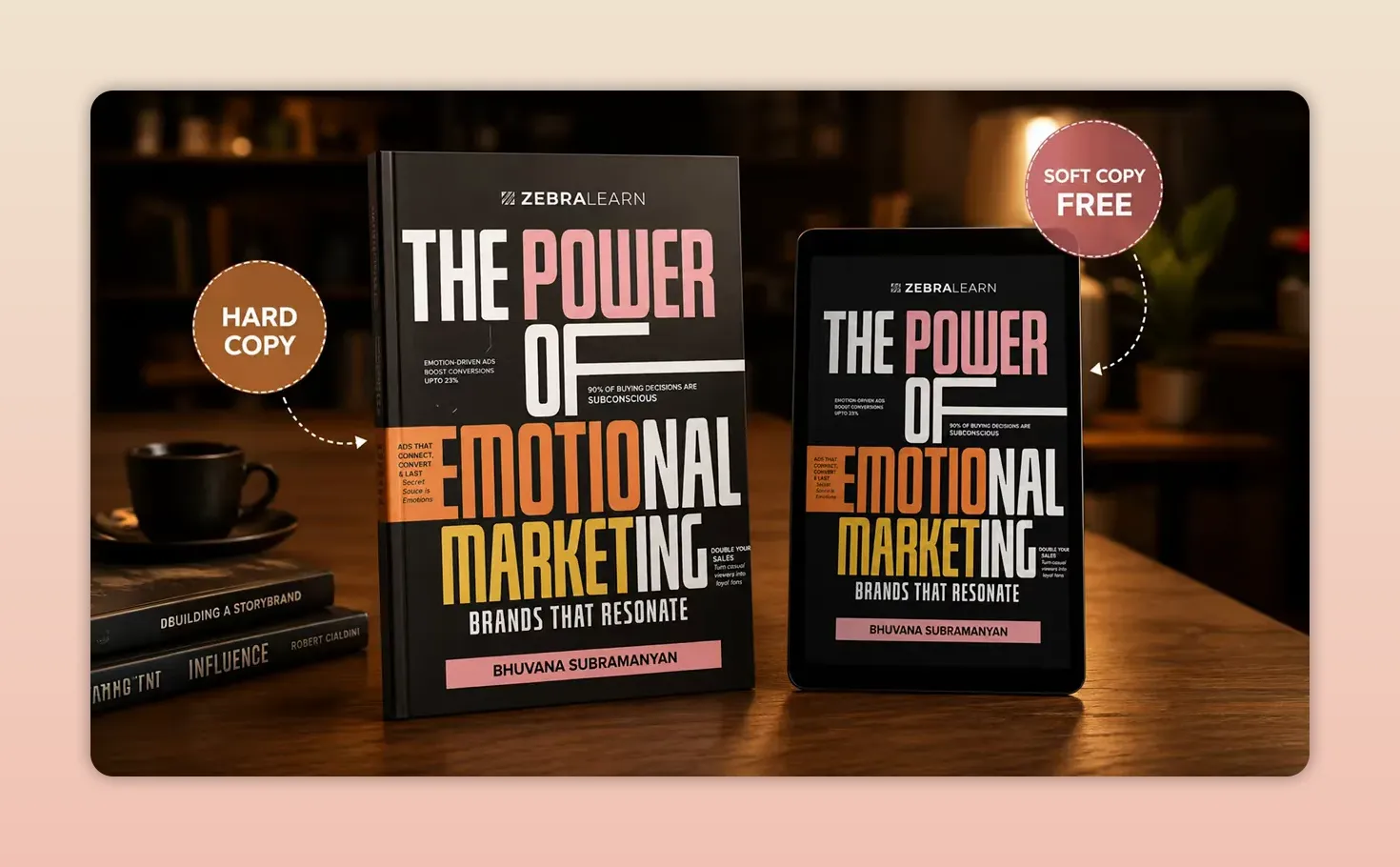
The physical book can remain the anchor while the digital copy removes the wait to begin learning.
The connected learning journey framework
The ZebraLearn app is designed primarily for people who have already entered the ecosystem by purchasing or consuming something from ZebraLearn. It is not positioned simply as another acquisition app. It is a relationship layer.
Every hard-copy purchase on ZebraLearn's website comes with a free digital copy of the same book. That simple bundle solves a practical problem. A learner does not have to wait for the physical delivery before getting started.
I experienced the logic personally while exploring books on writing and publishing. I ordered a physical book and could begin reading the digital version immediately. The physical copy could come later for the more immersive, deeper experience.
“Digital helps the person get hooked instantly.”
But the digital layer becomes much more valuable when it does not merely replicate pages. ZebraLearn is turning a book into a connected set of learning touchpoints:
Physical book: the immersive, visual, long-form learning experience.
Ebook: instant access to the same content, available wherever the learner is.
Audiobook: an alternative way to consume ideas when reading is not convenient.
Video book: short chapter summaries, typically around 10 minutes each, to help learners quickly identify what matters to them.
ZebraLearn AI: a simpler, book-grounded conversational layer that helps retrieve ideas and apply them to a specific problem.
Meet the Author: a direct bridge from the learner to the person with lived experience behind the book.
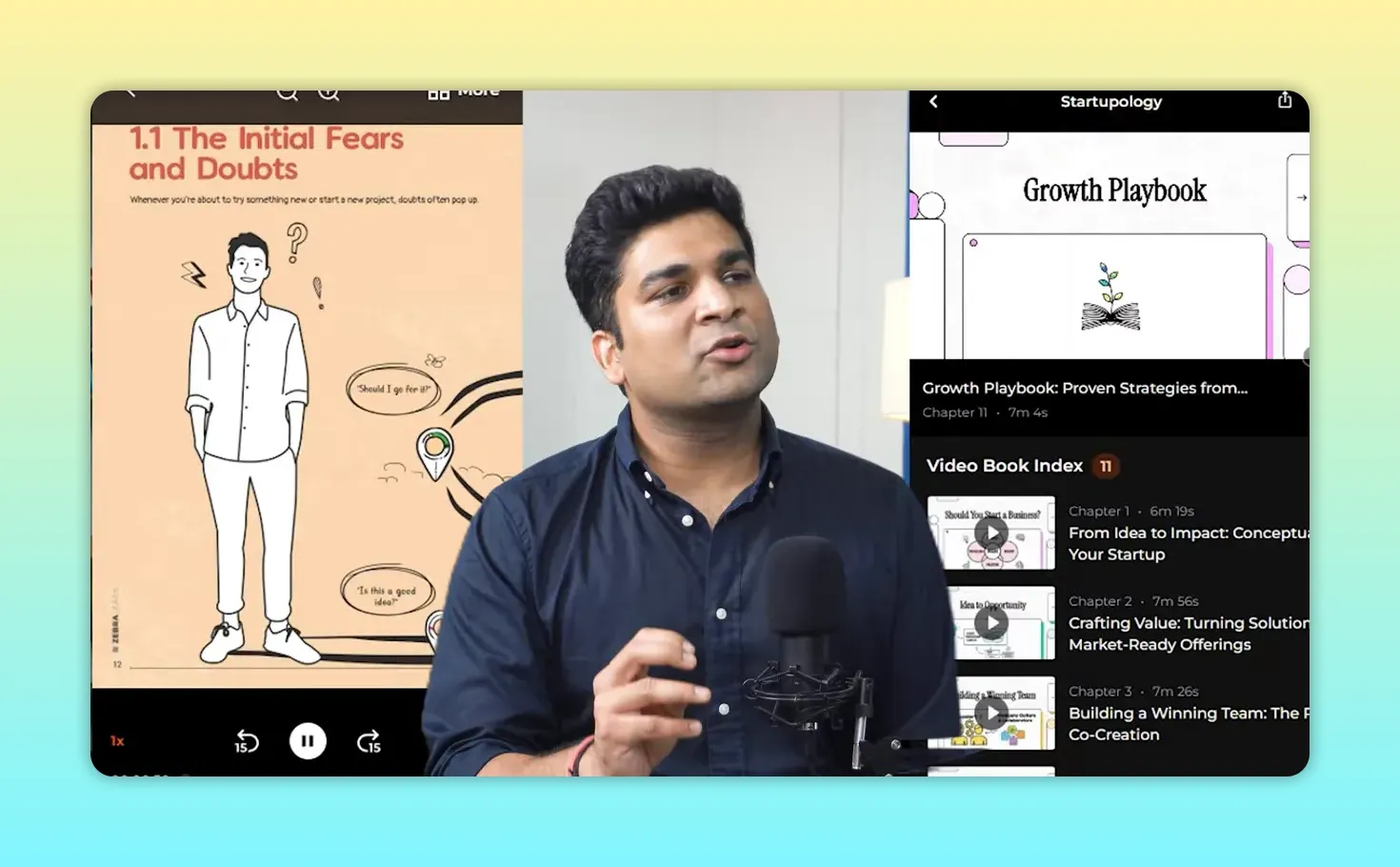
The same ideas can move from illustrated reading into a chapter-level video learning path.
I call this the Connected Learning Journey:
Discover → Buy → Start immediately → Learn in the preferred format → Retrieve knowledge when needed → Ask the author → Continue the journey.
Most brands are busy adding channels. ZebraLearn's more useful lesson is to add continuity. The learner should not have to independently search for the audiobook, hunt for the author, remember a lesson from chapter eight, or discover related resources through luck.
When the experience is connected, every format supports the same outcome: helping someone make progress.
Why AI is useful only when it improves retrieval
Anurag was particularly thoughtful about the role of AI. The point is not to add ChatGPT-like functionality because AI is fashionable. The point is retrievability.
People read books, learn valuable ideas, and then forget where they encountered the concept. Months later, they face a business problem and cannot find the relevant framework. A book-based AI layer lets them ask a direct question and retrieve applicable ideas from the content they have already purchased.
That is a meaningful distinction. The AI is not replacing the author. It is making the author's thinking easier to access at the moment it is needed.
Then comes the human layer. ZebraLearn encourages learners to meet authors and connect with them directly, often through LinkedIn. Anurag's observation was spot on: authors love hearing from people who have genuinely engaged with their work. A thoughtful message about a real problem can create an interaction far more valuable than another isolated piece of content.
From disconnected content to a connected experience
One of the strongest examples in our conversation came through K. Ganesh, author of Mastering Disruption. His work examines new-age business models, and he has been involved in building companies such as BigBasket and BlueStone.
I had read his book before meeting him and remembered specific ideas from it, including his view on vanity metrics. That preparation led to a rich conversation and eventually a podcast episode.
But that journey required effort. The book existed in one place. The podcast lived somewhere else. The author was accessible through another route. The links between all these touchpoints had to be discovered and created manually.
That is exactly the fragmentation ZebraLearn wants to reduce. A powerful learning ecosystem does not leave the learner to stitch together the book, the summary, the author, the context, and the next action.
What D2C really means: knowing the learner
There is a narrow definition of D2C: people buy directly from your website. Anurag offered a more useful one. D2C means having a relationship with the end customer.
A website is only a means. The actual goal is to know who the learner is, communicate with them, and understand the problem that brought them to you.
“Knowing the customer and knowing what they are solving is extremely important.”
This creates a real difference between a connected ecosystem and a marketplace-only transaction. On a marketplace, a book may sell successfully, but the publisher often has limited visibility into the exact person, their context, and what should come next for them.
That is why ZebraLearn sees customer understanding as central, not as a reporting exercise after a sale.
The 7 Books framework for understanding intent
One practical idea from Anurag that stayed with me is the 7 Books framework. The thought is that the first seven books a person picks up or purchases can be a strong indicator of the problems currently shaping their life.
Unlike short-form content, books require money, time, and effort. Choosing one is usually intentional. If somebody's recent reading includes books on B2B marketing, building an audience, asking better questions, going viral, and customer centricity, it tells a coherent story. They are likely trying to improve a particular part of their professional life.
That does not mean a learner should be reduced to a static profile. Anurag made an important distinction between broad interests and immediate needs. A person may be interested in cricket, but if they have injured their foot today, their urgent problem is different. They need a solution for the pain in front of them.
This gives us a simple intent framework:
Past behaviour: What has the learner bought, read, or explored?
Pattern: Which themes repeat across those choices?
Current problem: What is the urgent need right now?
Next best help: Which book, format, author, or resource can move them ahead?
At scale, these patterns become powerful. If 20,000 people read a particular book, subsets of them will likely share similar goals and use cases. ZebraLearn can understand these clusters not merely as audiences to upsell, but as groups moving through a common learning journey.
Some will complete that journey. Many will stop because reading demands commitment and the value is not always immediate. The opportunity is to make progress easier through the right format, the right moment, and the right next touchpoint.
Build for the problem, not the product
The biggest lesson from Anurag is applicable well beyond publishing. Do not become obsessed with the thing you sell. Become obsessed with the problem a person is trying to solve through that thing.
A book is content. An audiobook is content. A video summary is content. AI is a tool. Author access is a relationship. None of these, independently, is the entire answer.
The answer is the system that connects them around the learner.
For any D2C business, creator brand, edtech platform, media company, or omnichannel retailer, this is the masterclass: own the relationship, recognise intent, remove friction between touchpoints, and help customers progress beyond the first purchase.
The product may be the entry point. The relationship is the business.
I am Saurabh Agrawal and we come with a new episode on Dilse omni talks every fortnight and cover different aspect of omnichannel with amazing speakers.