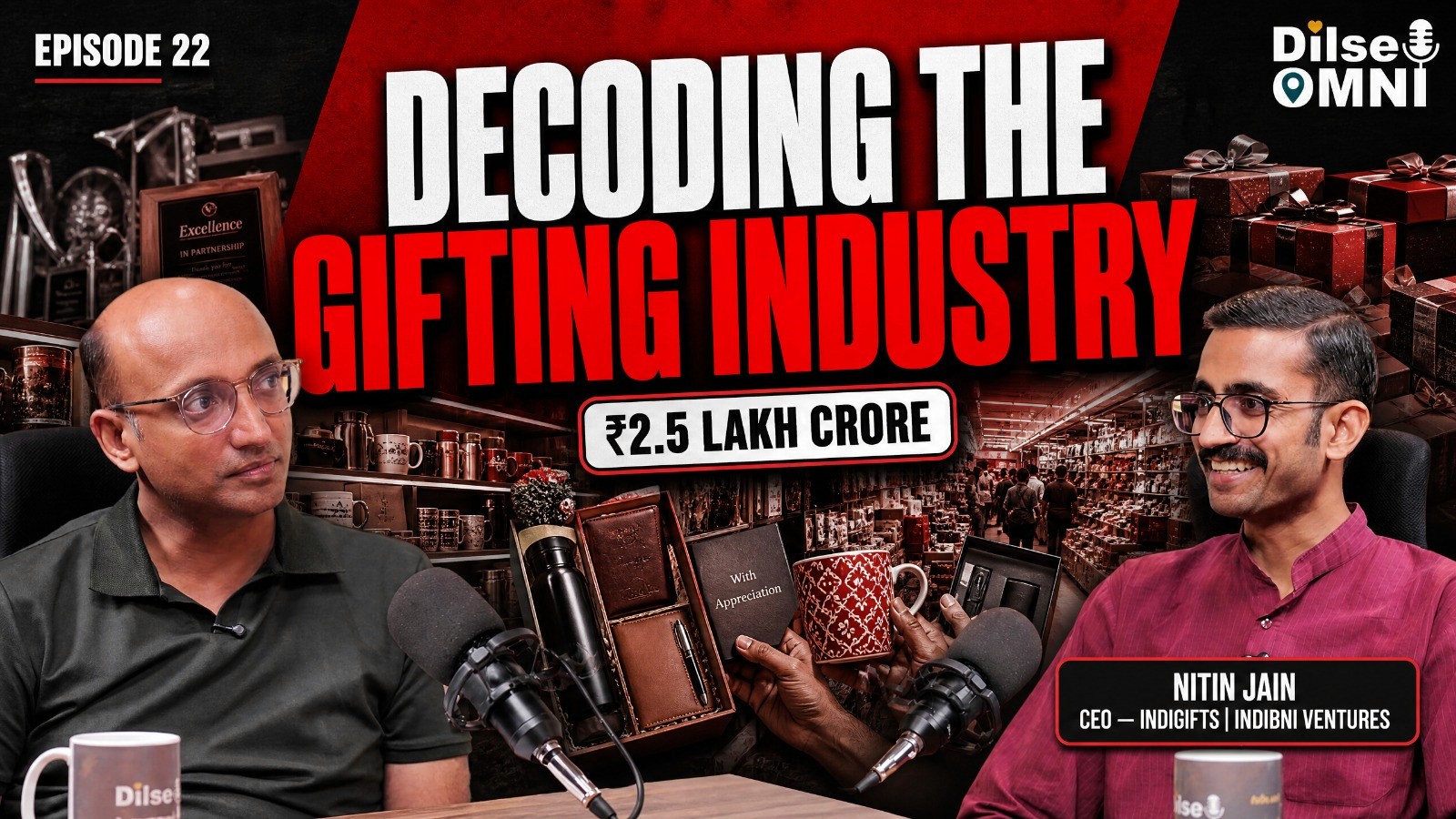
Gifting is often mistaken for a simple commerce category. Pick a product, pack it well, deliver it on time. But in my conversation with Nitin Jain, I was reminded that gifting is really about something deeper: emotion, memory, culture, identity and timing.
Nitin is an animator, creator and entrepreneur, the Founder of Indibni Ventures and CEO of IndiGifts. He is building at the intersection of creativity, technology, culture and commerce, while also strengthening Rajasthan’s startup ecosystem. His idea of an omnichannel gift-tech platform is not about merely selling gifts across a website, marketplace and store. It is about making every part of the gifting journey more personal, relevant and meaningful.
That is where this conversation became a masterclass in distribution, brand-building, phygital retail and the future of India’s Orange Economy.
Table of Contents
Distribution Is Not Just Selling
Move from a Linear Funnel to a Spherical Ecosystem
The Fifth P of Business: Purpose
What an Omnichannel Gift-Tech Platform Really Means
Phygital Is the Convergence, Not Just More Channels
The Five-Step Communication Framework for Commerce
Transmedia, AI and the Personal Future of Gifting
The Real Takeaway: Build What People Can Belong To
Distribution Is Not Just Selling
I began with a question that sits at the heart of every consumer business: what does distribution actually mean?
Nitin broke it down very simply. There are two core jobs:
Making the product
Selling the product
Most innovators, founders and creators put enormous energy into the first one. They build the product, sharpen the brand identity, develop packaging, create IP and hope the market will notice. But the difficult work starts after creation. How does the product reach the right person, at the right moment, with the right emotional context?
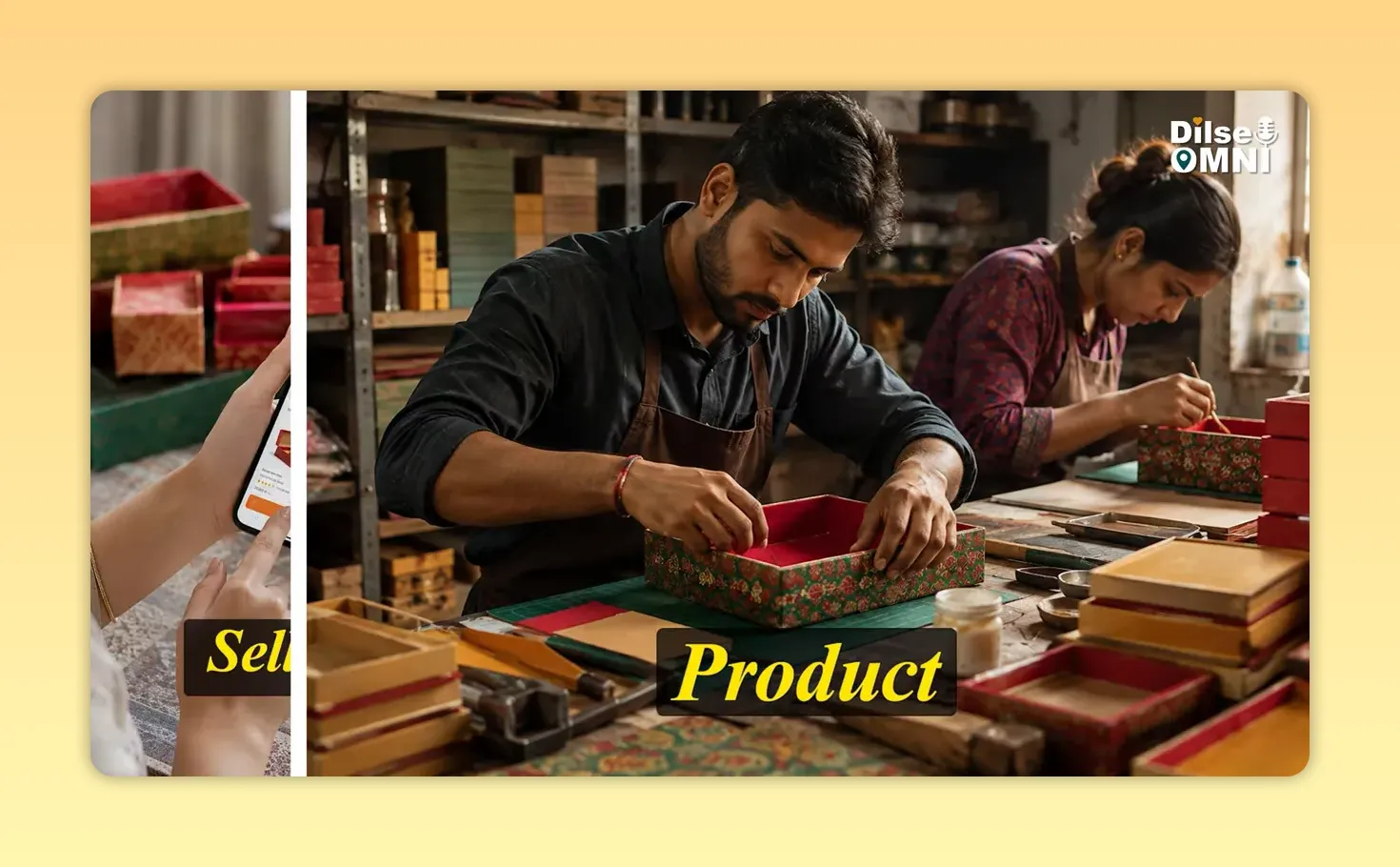
A business has to solve both sides of distribution: making something valuable and getting it meaningfully into the market.
Nitin’s observation was sharp. A brand can build a category, lead search demand and become popular on a marketplace. Yet, when the category proves valuable, the marketplace can encourage more sellers to enter it. Competition intensifies, advertising becomes more expensive and logistics revenue grows for the platform.
“In the end, we are just people running in a race, while we think we are building our brand.”
The analogy he used was a racecourse. There is the jockey, the horse and the bettor. But there is also someone else who tends to make money consistently: the person running the racecourse. The message is not that brands should avoid Amazon, quick commerce, Google, Meta or marketplaces. These channels matter. The message is that no brand should confuse access to a distribution channel with ownership of distribution.
When every brand is bidding on the same keywords, chasing the same attention and competing for the same delivery slots, the real differentiator cannot be only performance marketing. The answer is a stronger ecosystem around the product.
Move from a Linear Funnel to a Spherical Ecosystem
Many businesses are still designed around a linear model: manufacture, advertise, sell, repeat. Nitin encouraged a more complete way of thinking. Revenue and top line are important, but so are impact, profitability and groundedness.
A strong business is not simply a vertical growth chart. It is a living system that connects product, people, makers, customers, stories and purpose.
This is especially important in India, where regional identity and cultural familiarity can be a significant advantage. Nitin pointed to examples such as local gajak, regional sweets and bhujia. These brands endure because they understand their niche, own their distinctiveness and have relevance beyond generic product features.
That is a key lesson for every creator-led and consumer-led business: own your IP, then build an ecosystem around it.
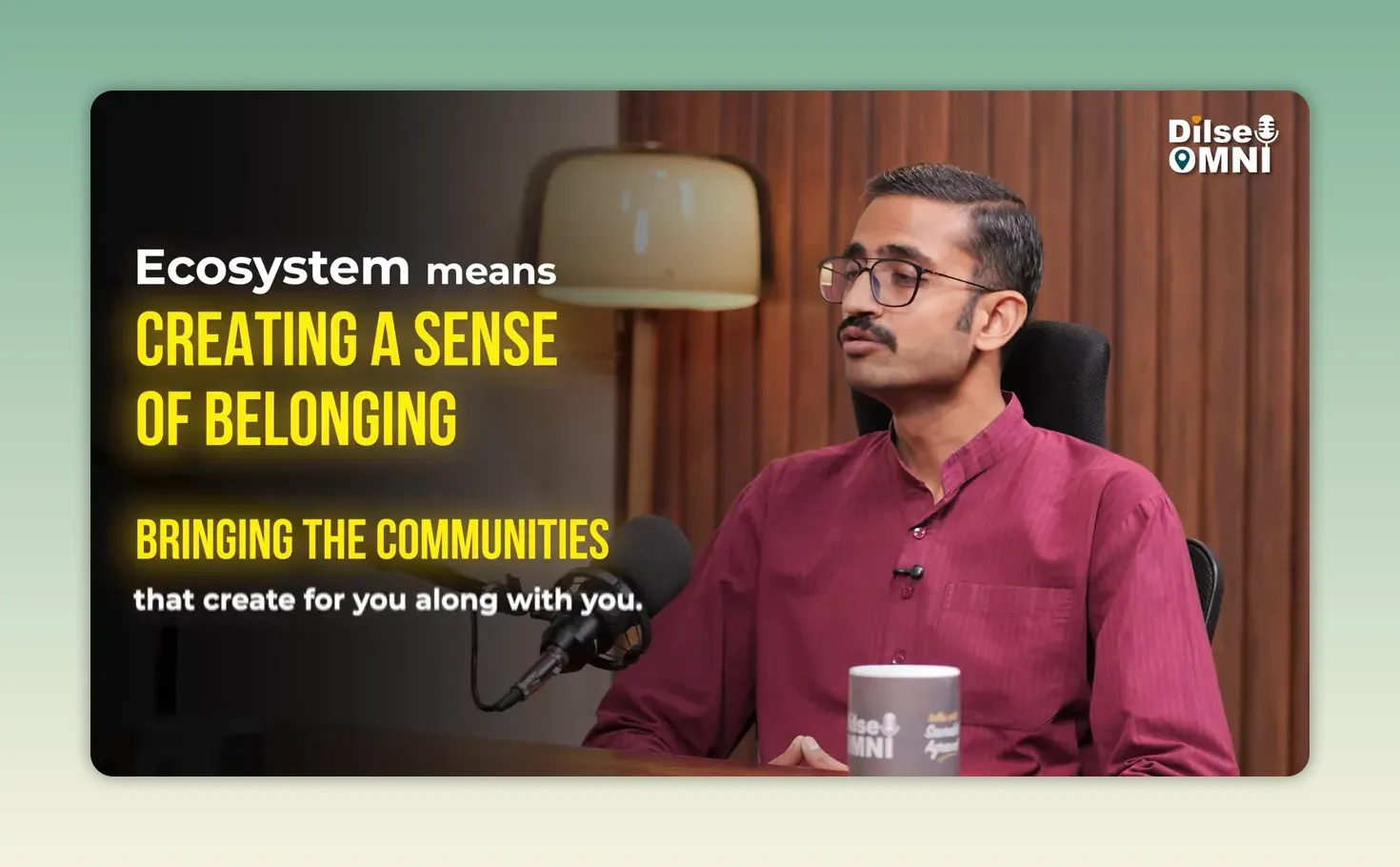
An ecosystem is not just a collection of sales channels. It creates belonging and carries the people who build alongside the brand.
For Nitin, ecosystem does not mean adding more channels to a sales spreadsheet. It means:
Creating a genuine sense of belonging
Building communities around a shared interest or culture
Working with makers rather than treating them as invisible suppliers
Giving customers a reason to ask for the brand by name
Connecting purpose with a viable business model
I found this particularly relevant to the omnichannel challenge. Our Omnichannel Guide explores the operating systems behind omnichannel growth, and this conversation added an important human layer: channels work better when people feel emotionally connected to what the brand represents.
The Fifth P of Business: Purpose
We all know the four Ps of marketing: Product, Price, Place and Promotion. Nitin adds a fifth P that changes the lens entirely: Purpose.
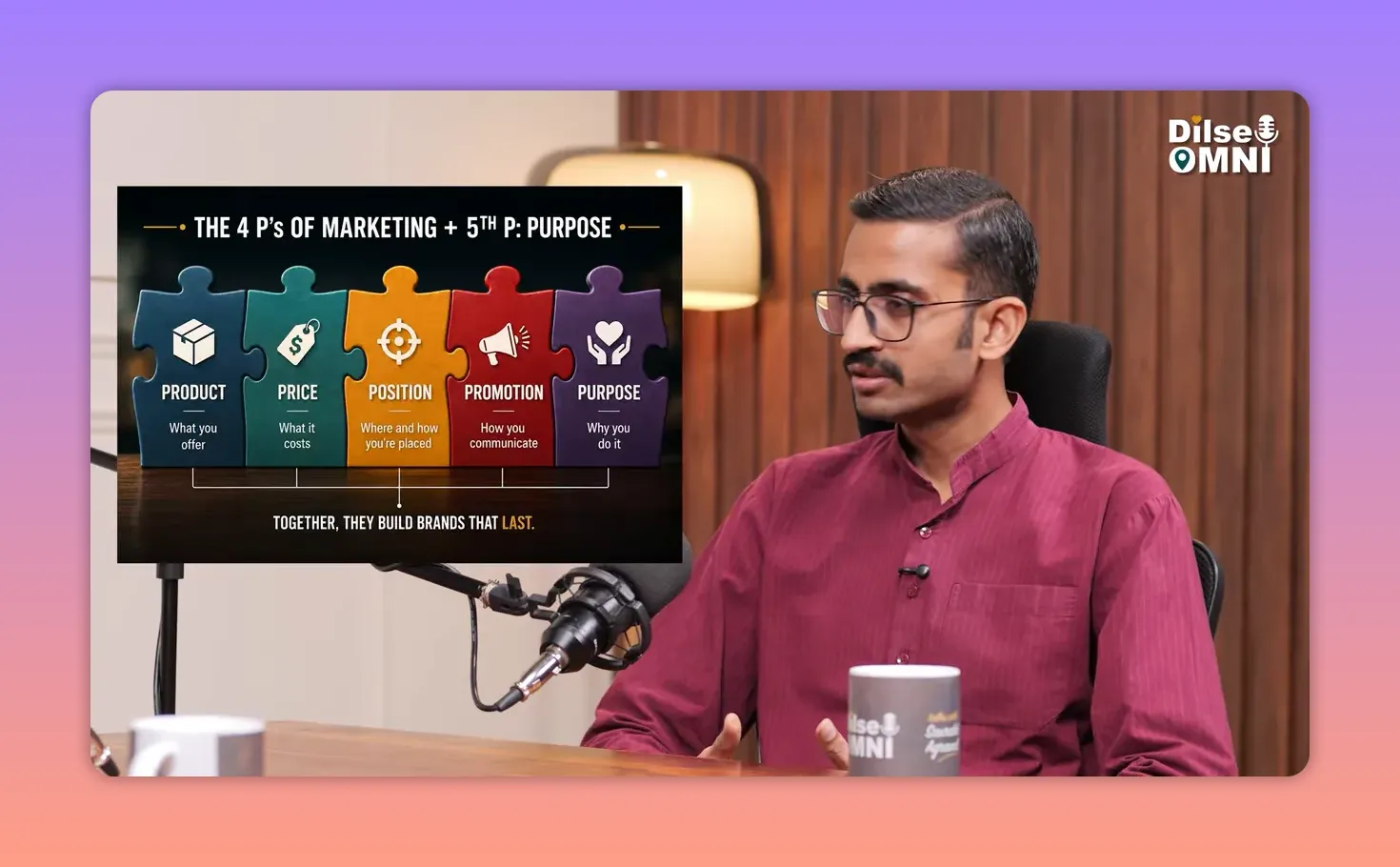
Purpose gives the four traditional marketing levers a reason to work together over the long term.
Purpose is not a decorative line on an About page. It affects the choices a company makes. It shapes who creates the product, how the company tells its story, which communities it serves and what kind of value it hopes to create.
“This single word can change your perspective on everything.”
Nitin used an interesting contrast. A highly educated professional may have access to theory, tools and information. Today, knowledge itself is increasingly easy to access. Yet a street vendor who deeply understands a specific local niche may have more stable recurring income. Why? Because the vendor knows the customer, the context, the rhythm of demand and the value exchange.
It is a reminder that business is not won only through credentials or information. It is won through relevance. The brands that last are those that understand who they serve and why they deserve to exist.
Purpose also makes a brand more resilient when channel economics change. If a business depends only on paid acquisition, it becomes fragile. If it builds community, trust, distinct IP and maker participation, it creates more reasons for people to return.
What an Omnichannel Gift-Tech Platform Really Means
When I asked Nitin to elaborate on the phrase “omnichannel gift-tech platform,” he started from the operational reality of IndiGifts.
In the early stage, a company may manufacture everything in-house. That can provide control, but it can also restrict scale and creative diversity. Nitin’s approach was to decentralize creation. Instead of producing everything internally, the idea is to identify clusters, work with vendors, support self-help groups, collaborate with people already working on indigenous products and help them upgrade their capabilities.
This changes the role of the business. It is no longer just a seller of finished goods. It becomes an enabler for makers, creators and local production networks.
On the selling side, the challenge is different. Gifting is highly time-sensitive. Emotion exists, but it has to be triggered at the right moment. A birthday, festival, achievement, relationship milestone or corporate occasion cannot be served by a generic product catalogue alone.
That is why product, price, place and promotion still matter. If the right product is available in the right place at the right time, it can create a powerful moment. Quick commerce can solve some availability needs, though Nitin candidly noted that early-stage channels often use sellers as the first test cases. The experiments are real, and sometimes the cost of learning is high.
The larger opportunity is to make distribution digital in the broader sense of the word. Not just digital as a website or an app, but digital as a connected system where physical experiences and digital experiences enhance each other.
Phygital Is the Convergence, Not Just More Channels
Omnichannel means selling through multiple channels. Phygital goes a step further. It is where the physical and digital worlds genuinely merge into one experience.
A physical store creates sensory discovery, human interaction and tactile confidence. E-commerce offers convenience, choice and transaction speed. The phygital model connects them.
Consider digital try-ons and magic mirrors. In a store, a person can be scanned and see cosmetics or clothing represented digitally on an avatar almost instantly. This is not technology for the sake of novelty. It is an example of how physical space can become more useful through digital intelligence.
For gifting, imagine the implications. A product can be personalized around the recipient. A store interaction can continue on a screen. A digital message can enrich a physical gift. A brand can combine local cultural details with technology to create something that feels made for one person rather than delivered to everyone.
This connects closely with a theme we have explored in how brands can move from clicks to footfall. The goal is not to force customers from one channel into another. It is to remove friction while preserving the emotional strength of each channel.
The Five-Step Communication Framework for Commerce
Nitin offered a practical framework that can be applied to any consumer experience, not only gifting. It is a simple five-step communication loop.
The 5-Step Communication Loop
Initiator: The person, founder, brand or business that starts the communication.
Message: What is being expressed through a product, service, story or experience.
Medium: The channel through which the message travels.
Receiver: The customer, consumer or client receiving the message.
Feedback: The response that tells the business whether the message landed as intended.
This may sound fundamental, but it is easy for businesses to neglect the final step. A company can design a beautiful product and run a polished campaign, but unless it understands how the intended recipient experienced it, the loop remains incomplete.
Traditional media moved from billboards, letters, newsletters and radio to television, websites, apps and mobile screens. Now the medium itself is evolving. It is becoming more immersive, interactive and dynamic.
Transmedia, AI and the Personal Future of Gifting
The next shift Nitin described is transmedia. In this world, technology does not merely broadcast a brand message. It adapts, interacts and becomes more personal.
Ray-Ban Meta glasses are an early signal of this direction. The information one person sees through a device may differ from what another person sees, shaped by personality, searches, behaviour and AI-driven relevance. Dynamic advertising already exists, but the more interesting question is whether an experience can interact meaningfully with an individual.
AR, VR and XR can make this possible. Technology can create digital avatars, immersive product interactions and alternate representations that behave on a user’s behalf. Nitin spoke about a future where brands might build a digital version of a founder, leader or mascot that can reach people through their preferred interface, whether a screen or an avatar-like presence.
The hardware still has limitations. But the strategic question for brands is already here: can technology make the interaction regional, personal, customized and uniquely relevant?
“Digital is powered by technology, but to make it relevant, can you make it regional, personal and customized?”
That question is crucial for the gifting economy. The future is unlikely to be won by the largest catalogue alone. It will be won by businesses that can combine culture, creativity and technology without losing emotional authenticity.
At its best, gift-tech can help a physical gift carry a deeper story. It can connect a creator to a customer, make personalization more scalable and let Indian cultural expression travel through modern commerce. That is the promise of the Orange Economy: not creativity sitting separately from business, but creativity becoming a powerful engine of business itself.
The Real Takeaway: Build What People Can Belong To
My biggest learning from Nitin Jain was that omnichannel strategy is not a channel checklist. It is a decision to build a connected experience around a strong purpose.
Yes, businesses must master marketplaces, social media, physical retail, quick commerce and their own digital platforms. But the long-term advantage comes from something harder to copy:
A distinct point of view
Owned IP and cultural relevance
Participation from makers and creators
Personal experiences rather than generic transactions
A feedback loop that keeps improving the experience
A community that feels it belongs to the journey
The next generation of gifting will not be defined by a product alone. It will be defined by how intelligently a brand helps one person express something meaningful to another.
I am Saurabh Agrawal and we come with a new episode on Dilse omni talks every fortnight and cover different aspect of omnichannel with amazing speakers.