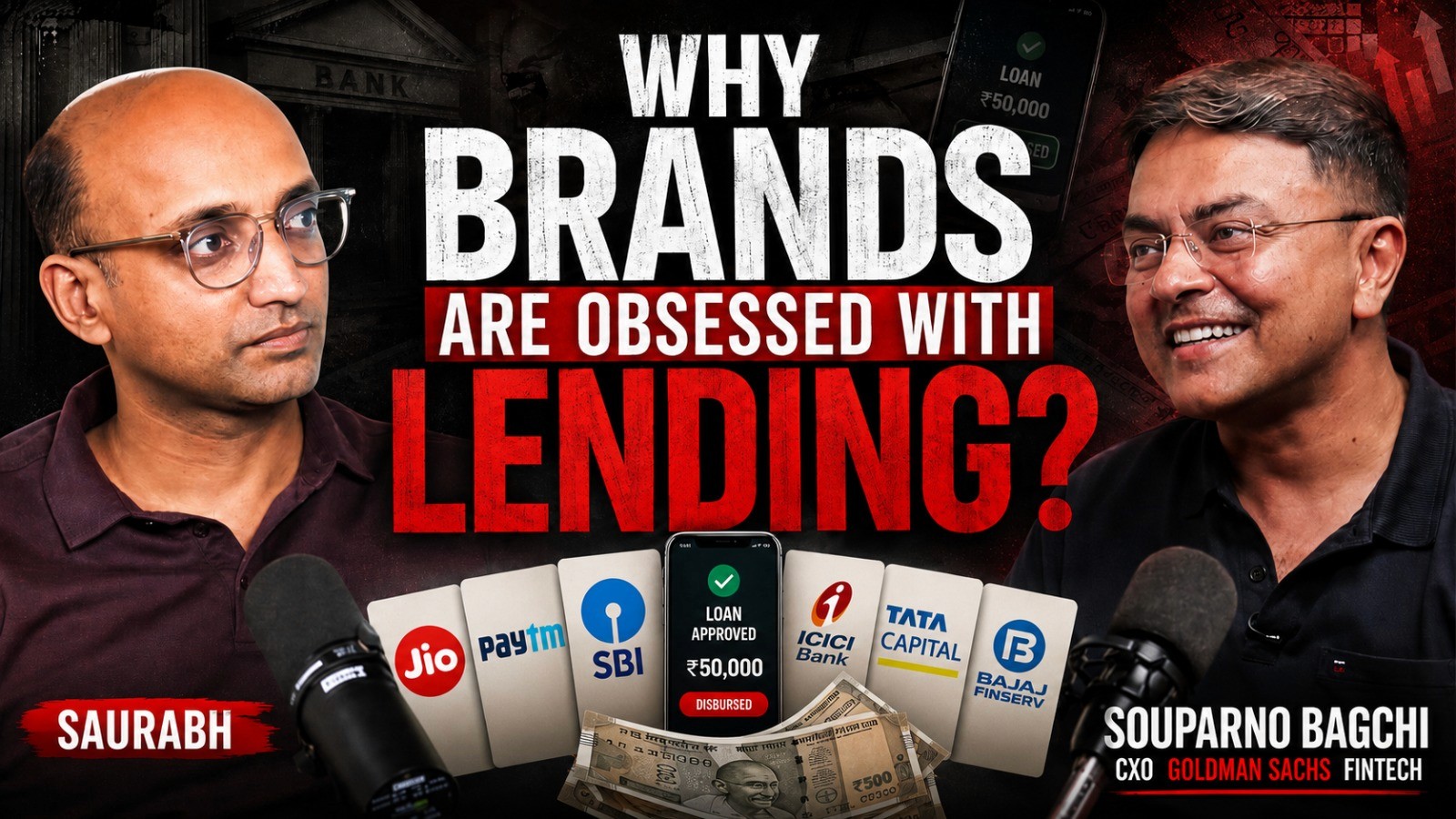
I have been thinking about a very simple question for some time: why does it feel like everybody wants to lend money to us?
From banks and NBFCs to e-commerce platforms, payment apps, and data companies, the push into financial services is impossible to miss. I receive calls, messages, and offers for loans all the time. The larger question is not merely why lending is booming. It is whether the institution providing credit actually understands the customer at the other end.
To unpack this, I spoke with Souparno Bagchi on Dilse Omni Talks. Souparno is a financial services and technology leader who has spent nearly nine years at TCS, over six years at Goldman Sachs, time in consulting, and then crossed into the startup world to build and scale micro-lending businesses. An ISB alumnus and teacher, and the son of a banker with 32 years in the profession, he brings a rare perspective on Indian banking from both inside the institution and at the edge of financial inclusion.
His work today sits at the intersection of AI, risk, and the credit divide: who gets access to capital in India, and who still does not. This conversation became a masterclass in understanding lending not simply as a financial product, but as a high-stakes customer experience.
Table of Contents
Why Lending Has Become Everyone’s Obsession
The Strange Economics of Lending: Profit Now, Loss Later
Not Every Loan Is About Consumption
Why E-commerce and Data Companies Want to Become FinTechs
Banks Are Not Going Away, But Their Role Must Change
The Fundamental Shift: From Product-Centric to Customer-Centric Banking
Who Will Own the Customer?
Why Lending Has Become Everyone’s Obsession
Souparno’s starting point was direct. Lending is among the oldest businesses in the world, and fundamentally, it is a business of making money. But it has become especially important in India because finance sits behind almost every unit of work and every transaction.
A purchase, a medical emergency, a home repair, a small business requirement, or an aspirational lifestyle purchase can all create a need for finance. That need may be met through savings, but often it is met through borrowing.
“Every logical unit of work and business transaction has a financial need involved.” Souparno Bagchi
India is not a single, uniform market. It is a continental economy with enormous differences across income levels, geographies, aspirations, financial behaviour, and access to formal credit. That complexity makes lending both difficult and attractive.
There are banks, thousands of registered NBFCs, microfinance institutions, digital lenders, regional players, and hyperlocal models. Souparno pointed out that India has more than 9,000 registered NBFCs, though a smaller group of roughly 450 are material mid-tier players by asset size. Even then, that is an enormous ecosystem.
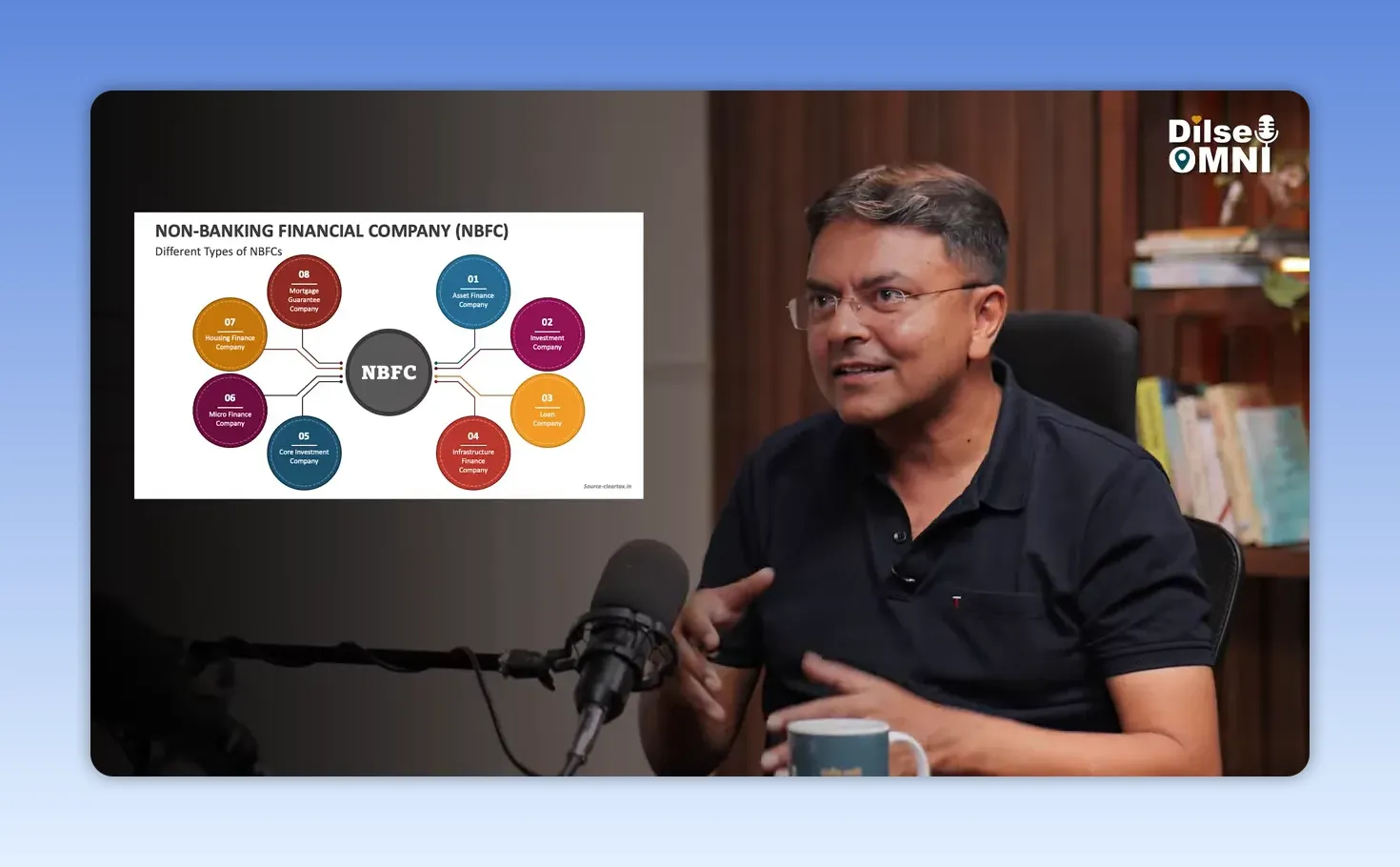
India's lending market is not one category. It is an ecosystem of banks, NBFCs, microfinance institutions, and digital lenders.
This fragmentation is not necessarily a bad thing. It reflects the fact that customers have very different borrowing needs, and lenders have to build different underwriting models for different cohorts, asset classes, regions, and purposes of credit.
The Strange Economics of Lending: Profit Now, Loss Later
The most powerful insight from Souparno was about the core economics of lending. It looks profitable at the time of disbursal because a lender records future repayments as receivables. But the actual risk emerges later.
“In lending, profits are in the present and losses are in the future.” Souparno Bagchi
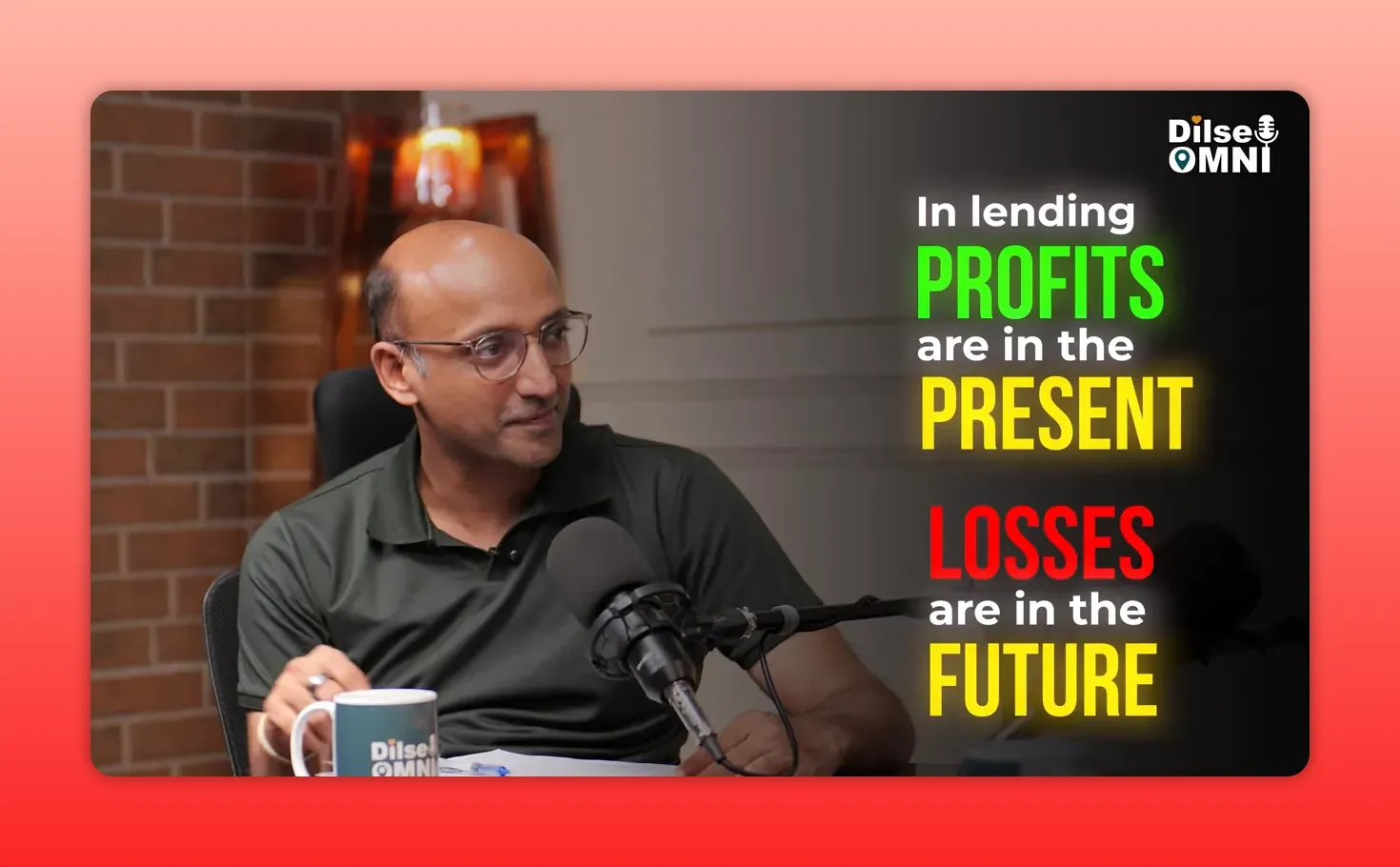
The central discipline of lending is simple to state and difficult to execute: revenue appears early, but repayment risk unfolds later.
This makes lending an adverse-ratio business. A lender may earn only a few rupees for every ₹100 lent. But one customer default can wipe out the profit earned from many successful borrowers. Souparno gave a useful illustration: if the lender makes ₹3 for every ₹100 lent, one default can erase the profit from 30 or 40 customers.
That is why underwriting is not a backend function. It is the heart of the lending business. The lender must assess whether a person is likely to repay, even when the full answer is uncertain today.
In a way, lending reverses the normal customer dynamic.
“Lending is one business where you possibly evaluate the customer more than the customer evaluates you.” Souparno Bagchi
Of course, the customer is also evaluating the lender. But while the lender is asking, “Will this person repay?”, the borrower is typically asking three far more immediate questions.
The Three Questions Every Borrower Asks
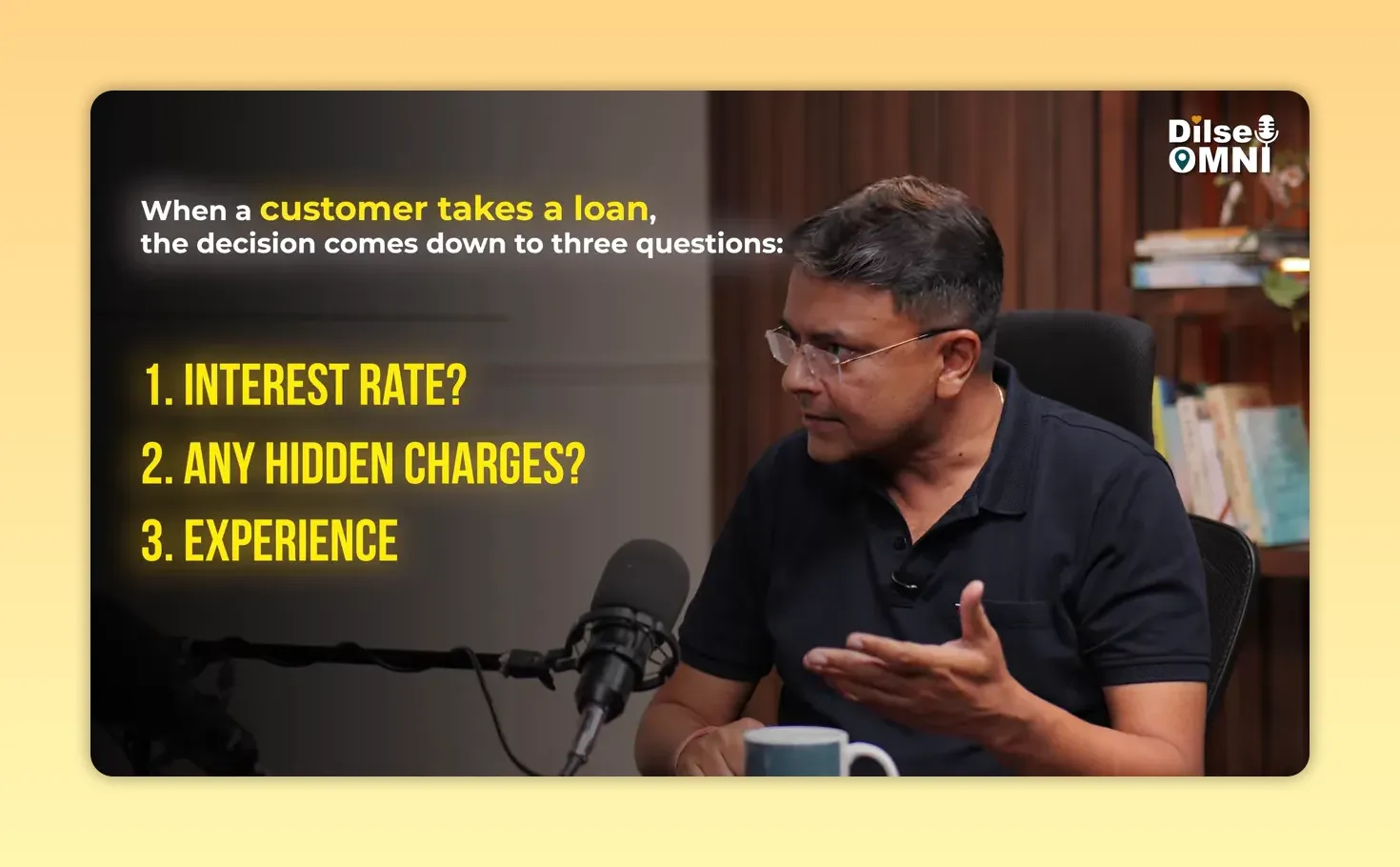
For a borrower, the decision begins with price, transparency, and the quality of the repayment experience.
What is the interest rate? The price must feel fair and aligned with what was promised.
Are there hidden charges? Full transparency matters, especially when people borrow under pressure.
What will the experience be like? Repayment, servicing, foreclosure, and issue resolution must be smooth.
These are hygiene factors, but hygiene factors are decisive in financial services. A lender may have a great acquisition funnel, but if repayment is opaque or foreclosure is painful, trust evaporates.
Not Every Loan Is About Consumption
One of the most important distinctions in our conversation was between discretionary and non-discretionary borrowing. It is easy to assume that digital loans are largely funding lifestyle choices. The reality is often much more urgent.
Souparno shared that a large majority of app-based borrowers, in his experience, take credit for non-discretionary needs. These are situations where the customer needs money now because there is no practical alternative.
Consider a household with a monthly income around ₹17,000. A medical bill of ₹5,000, ₹8,000, or ₹10,000 can require immediate action. Health insurance coverage is improving, but it is not yet universal or sufficient for every situation. A new child in the family can bring medical expenses of ₹25,000 to ₹30,000, even in a Tier 2 city. That can exceed a month’s income.
For such households, borrowing is not about buying the next iPhone. It is about managing a real and immediate financial gap.
This is why financial inclusion cannot be discussed only in the language of product penetration. It must be discussed in terms of the context of need, speed of access, fairness of pricing, and dignity of the customer journey.
Why E-commerce and Data Companies Want to Become FinTechs
There is a popular observation in startup circles: in India, a company begins as a startup, and if it survives long enough, it starts looking like a fintech.
The reason is first-principles logic. Whenever a company owns a customer transaction, it sees a financial need. E-commerce firms see the moment of purchase. Payments companies see transaction behaviour. Marketplaces see demand. Platforms can reduce friction by embedding finance directly at the point where the need occurs.
This is where embedded finance and what Souparno calls BNPL 2.0 come in. The idea is not merely to offer credit. It is to prevent a customer journey from breaking at the payment moment.
A customer is making a purchase and sees options to pay in three, six, or twelve instalments. The transaction can continue without the customer having to leave the checkout flow, separately apply for a loan, and return later.
A Simple Framework for Embedded Finance
I came away with a practical framework for leaders evaluating whether credit belongs in their customer journey:
Need: Is there a real financial gap at the moment of transaction?
Context: Is the need urgent, essential, or convenience-driven?
Friction: Does financing reduce effort without confusing the customer?
Trust: Are rates, terms, and repayment obligations transparent?
Risk: Can the partner or lender underwrite responsibly?
The opportunity is significant because spending patterns have changed. Earlier, many purchases were event-led. New clothes were bought for birthdays, Diwali, or other major occasions. Today, consumption is much more frequent, immediate, and just-in-time.
The mismatch is obvious: people may spend several times through the month, but income still arrives largely as a monthly salary. Embedded finance tries to bridge that timing mismatch.
For more operating insight into creating consistent journeys across channels, the Omnichannel Guide by DAiOM offers useful lessons from more than 50 brands.
Banks Are Not Going Away, But Their Role Must Change
As fintechs, aggregators, UPI apps, and platforms increasingly own everyday customer touchpoints, it is natural to ask whether banks will lose relevance.
Souparno’s answer was clear: do not write off banks. Banks will remain. But they must evolve and reimagine the role they play.
A home loan is a 15 or 20-year relationship. In that context, customers value fair pricing, institutional reputation, and the confidence that a floating interest rate will be treated fairly over time. A credit card is different. It is not only about trust. It is about experience, aspirational value, reward points, loyalty, and whether the promise is consistently delivered.
Different financial products carry different emotional expectations. The mistake is assuming that one distribution model, one offer, or one campaign can cover them all.
The Fundamental Shift: From Product-Centric to Customer-Centric Banking
The deeper issue is not banks versus fintechs. It is product-centric thinking versus customer-centric thinking.
Banking was once a deeply relationship-based business. The branch manager, the physical branch, and face-to-face interaction created familiarity. Digital transformation expanded reach, but many institutions made one critical mistake: they treated digital primarily as a distribution channel.
For a while, digital reach itself created growth. But once the relevant customer cohorts have been reached, the real contest becomes experience.
“We have not still graduated from a product-centric view to a customer-centric view. That is the fundamental problem.” Souparno Bagchi
It is a sharp diagnosis. A bank trying to make fixed deposits look more exciting is still asking a product question. A customer-centric bank asks: what does this person need right now, what is their financial context, and how can we serve them simply and meaningfully?
The gap is visible in everyday experiences. A customer may open an FD digitally because it is convenient, only to receive a call asking why the branch was not involved for a referral code. Another may hold a premium credit card and still get repeated sales calls for another card from the same bank. Someone may already have health insurance from an institution and get calls offering health insurance again.
The message that reaches the customer is brutal: my financial institution does not know me, forget about understanding me.
Who Will Own the Customer?
The winner in future banking will not simply be the organisation with the most products, the lowest acquisition cost, or the widest digital distribution. It will be the institution that earns trust at moments of real financial need.
That requires responsible underwriting, transparent pricing, relevant communication, seamless servicing, and a genuine view of the customer across products and channels. It also requires banks and fintechs to recognise that UPI, aggregators, and embedded finance platforms are reshaping where customer relationships are formed.
Financial services have always been about money. But increasingly, they are about experience, context, and trust. The question is not whether banks or fintechs will own the future. The question is who will understand the customer well enough to deserve it.
For more conversations at the intersection of customer experience, financial services, and omnichannel growth, explore the full conversation on fintech versus banks and browse all Dilse Omni Talks episodes.
I am Saurabh Agrawal and we come with a new episode on Dilse omni talks every fortnight and cover different aspect of omnichannel with amazing speakers.