I sat down with Aastha Almast, Co-founder of New Shop, expecting a sharp conversation on retail, convenience, and entrepreneurship. What I got felt more like a masterclass in reinvention.
Aastha’s journey does not fit neatly into any standard founder template. She has been a child actress, worked in finance and stock markets, studied economics, moved into luxury retail, built startups, exited them, and then chose to build in one of the most grounded sectors in India: convenience retail.
That is exactly what makes her story powerful. It reminds us that the most interesting founders are often shaped by very different worlds before they find their true calling.
“I can be anyone who I want to be. I just did not know who I wanted to be.”
That one line stayed with me throughout our conversation. It captures not confusion, but possibility. And if you listen carefully to Aastha’s life, every stage added a layer to the founder she eventually became.
Table of Contents
Retail was not accidental. It was deeply personal.
Being bright is helpful. Knowing yourself is harder.
The child actress phase was more important than it sounds
Corporate life did not distract her. It sharpened her.
The luxury lesson: aspiration matters, but impact matters more
How New Shop was really born
What New Shop reveals about modern convenience retail
Convenience stores are no longer small retail stories
The real moat is not just stores. It is understanding Bharat.
Vision is not motivational fluff if you practice it seriously
Her advice for young professionals is actually advice for all of us
My final takeaway from Aastha’s story
Retail was not accidental. It was deeply personal.
One of the first things that struck me was how naturally retail sits inside Aastha’s story. From the outside, the move may look surprising. From her perspective, it was almost inevitable.
Her maternal side has been full of retailers. Her mother ran a well-known children’s clothing export business. She grew up seeing what business really looks like behind the scenes: long hours, discipline, persistence, and a deep relationship with customers and product.
So when some people think of convenience retail as ordinary, Aastha does not. She sees it as a living, breathing engine of aspiration.
She also comes from a remarkably diverse family background, with exposure to different communities, beliefs, and ways of living. That broad lens matters. It teaches you early that there is never just one way to build a life.
Her grandmother seems to have played a defining role in that mindset. A pre-independence era gynecologist running her own hospital, she embodied ambition before that word was fashionable. She raised Aastha with a simple but radical belief: if you want something large enough, why should it be impossible?
“Why can’t you become the Prime Minister of India if you want to be?”
That is not just encouragement. That is identity formation.
Being bright is helpful. Knowing yourself is harder.
Like many academically strong students in India, Aastha initially followed the paths that society respects most. First medicine, then engineering, then a more formal academic track.
But there is a difference between being capable of something and being called to it.
She wanted to become a doctor until reality interrupted the idea. A moment as simple as fainting at the sight of an injection made her realize she did not have the emotional wiring for that profession. Later, computer science also did not feel like home.
That is a lesson many people learn too late. Aptitude without alignment creates friction. Over time, that friction becomes fatigue.
Economics pulled her in because she wanted to understand how the world works. That curiosity became a recurring theme in our conversation. She was not chasing labels. She was chasing understanding.
The child actress phase was more important than it sounds
Aastha started working at eight. Her father was a film producer, and both he and his business partner saw early potential in her public presence. She entered the world of performance young and got paid for it too.
Many people dismiss such phases as random detours. I do not think this one was a detour at all.
Public speaking, presence, audience intuition, confidence under pressure, the ability to express emotion and hold attention, these are all founder skills too. They just arrive packaged differently.
That creative instinct also showed up in school. In class 12, she directed a play that was far ahead of its time. Inspired in structure by Dil Chahta Hai, she created a women-centric version that explored ambition, bonding, social roles, and the gap between what women want and what society often permits.
She called it Dil Chata Tha.
What she described was fascinating. One woman in the story was highly ambitious and eventually became a housewife. Another dynamic inverted traditional expectations, including the idea of a house husband. Today, that might sound mainstream. Back then, it was not.
And because it was ahead of its time, it was mocked.
“I was ridiculed.”
That part of the conversation stayed with me because many founders go through the same pattern in business. The market often laughs at what it is not yet ready to understand.
Sometimes being early looks exactly like being wrong.
Corporate life did not distract her. It sharpened her.
After economics, Aastha worked in finance, including stints at S&P and Bank of America. These years gave her structure, analytical rigor, and exposure to scale.
One project in particular became a turning point. She worked on luxury brands, acquisitions, and the broader global retail landscape. That experience reconnected her to something old inside her: the memory of her mother’s fashion business and her own pull toward retail.
That pushed her to study fashion and luxury brand management. In fact, she did not just study one MBA path. She pursued another specialized management degree and earned scholarships for both.
That detail says a lot. Reinvention is easy to romanticize, but in reality it usually demands serious work, not just bold statements.
The luxury lesson: aspiration matters, but impact matters more
Aastha landed what many would call a dream role in luxury. But she came to an honest conclusion: luxury allows you to influence a very small set of people.
There is nothing wrong with that business model. But for her, it was not enough.
Because of her family background, especially the social-service orientation she had seen in medicine, she wanted to build something with broader consequences. Not just premium experiences for a few, but opportunity and access for many.
That distinction is crucial.
It is one thing to build something admired. It is another to build something widely useful.
How New Shop was really born
After meeting her co-founders, building startups, and exiting them, Aastha had a moment of clarity in 2017 and 2018. Sitting in a Mumbai local train, she knew what she wanted to do.
She wanted to influence the Indian retail ecosystem, democratize entrepreneurship, and make it possible for more people to participate in growth.
That became New Shop.
If I had to summarize her founding intent in one sentence, it would be this:
Build convenience retail not just as a store network, but as a platform for entrepreneurship.
A framework I took away from Aastha’s journey
As I reflected on our conversation, I realized her career follows a pattern that is useful for any founder or young professional. I would describe it like this:
Exposure: Be open to many worlds early.
Experimentation: Try roles that test your instincts.
Elimination: Learn what is not you, and let it go.
Compounding: Carry forward the skills from every phase.
Calling: Build where your strengths and conviction finally align.
This is what made her unconventional path work. It was not randomness. It was compounding.
What New Shop reveals about modern convenience retail
One of the most fun parts of the conversation came when I asked Aastha about product trends inside New Shop.
The top categories, according to her, are:
Paan
Energy drinks
Snacks
But the real insight came from basket analysis.
The product combination that surprised the team most was Gold Flake cigarettes plus KitKat.
At first glance, it feels odd. But once they looked deeper, the pattern made sense. Sometimes a father buying tobacco is accompanied by a child who picks up a confectionery item at the counter. In other cases, women customers buying cigarettes may also want something sweet immediately after.
This is what good retail teams do differently. They do not stop at the data point. They investigate the behavior behind it.
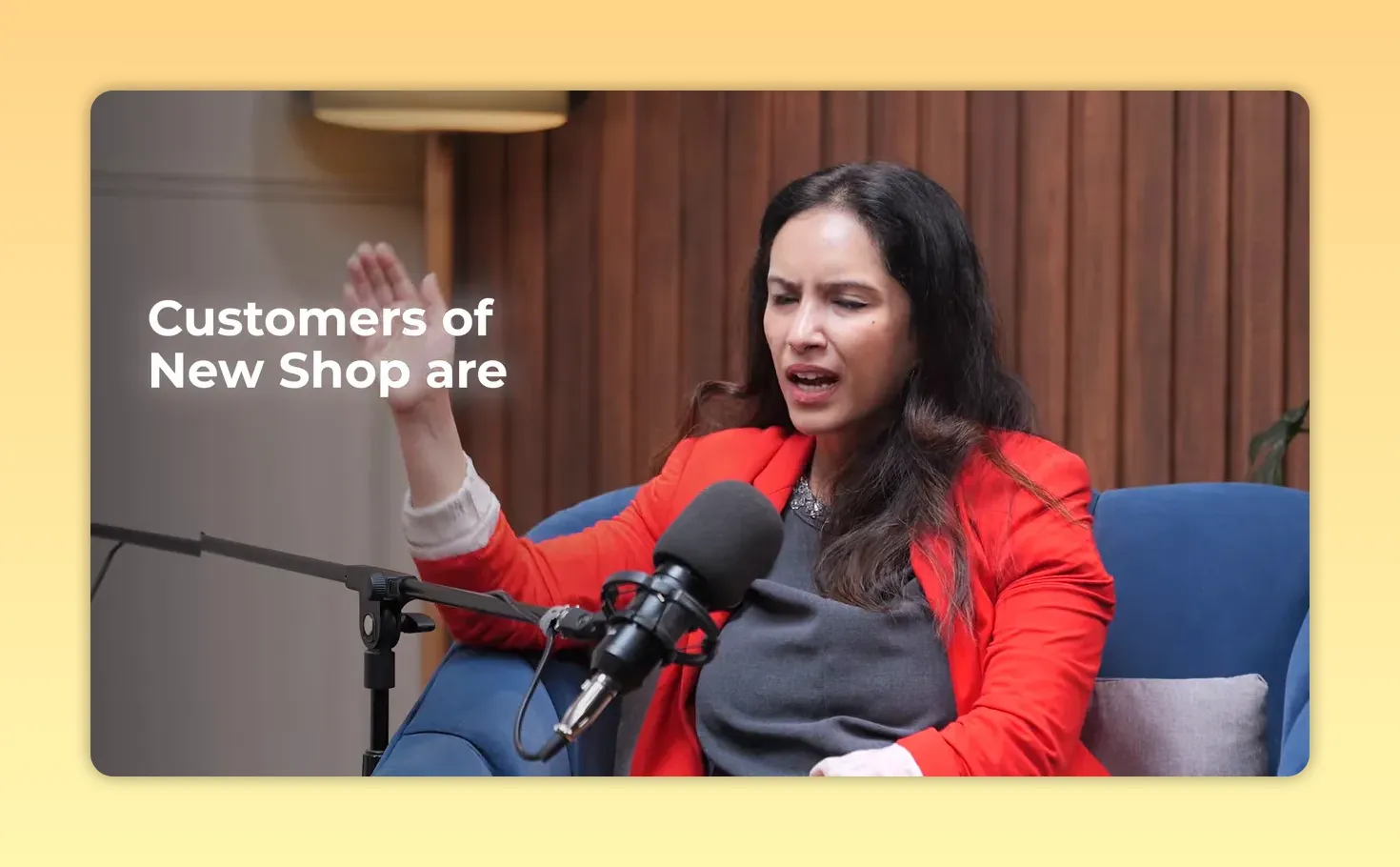
The customer insight is sharp and simple: New Shop largely serves a young, under-35 audience.
Aastha also pointed out that a large part of New Shop’s customers are under 35. That alone tells you a lot about demand patterns, merchandising, store design, and future consumption.
Convenience stores are no longer small retail stories
I found Aastha especially compelling when she spoke about global convenience retail. She is a close observer of the category and studies international chains seriously.
She admires 7-Eleven for one reason above all: legacy with relevance. A brand that has stayed important across decades has done something very few businesses manage to do.
She also brought in a wider perspective by highlighting major Canadian chains and the innovation coming out of Korea.
But her most important point was strategic.
Convenience stores are increasingly replacing quick service restaurants in many contexts.
Why? Because density wins. You can only have so many QSR outlets in a geography. You can have many more convenience stores. And as these stores improve fresh food and beverages, they do not just complement foodservice. They begin to compete with it directly.
At New Shop, around 40 percent of sales come from fresh food and beverages. That is not a side note. That is a signal.
It suggests that convenience retail is becoming an experience and immediate consumption format, not merely a refill channel.
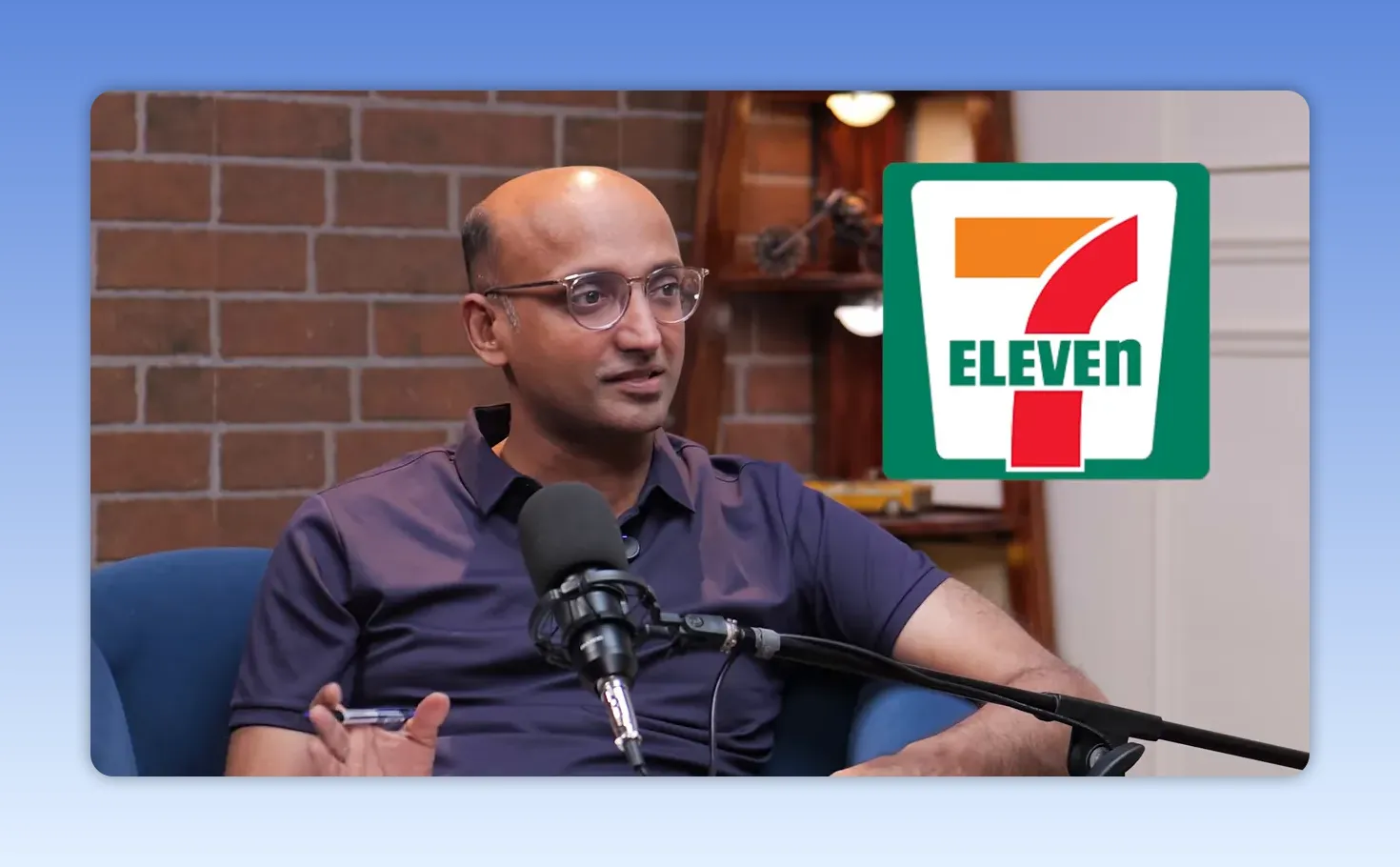
The global benchmark matters, but the local execution model is where the real advantage gets built.
The real moat is not just stores. It is understanding Bharat.
When I asked Aastha about New Shop’s secret sauce, her answer was not technology alone, and not branding alone.
It was understanding.
Understanding Bharat. Understanding franchise owners. Understanding their aspirations, needs, and lived realities.
That answer felt deeply important because so many business models in India fail when they try to impose a polished top-down structure on messy real-world operating contexts.
Aastha’s approach appears different. Founder vision meets grassroots empathy.
And this is where New Shop becomes more than a convenience chain.
The New Shop entrepreneurship flywheel
What impressed me most was the internal culture she described. New Shop has an employee-to-entrepreneurship pathway. Store managers can become store owners if they meet certain performance parameters. Even managers working under franchise owners can eventually become franchise owners themselves.
That creates a powerful flywheel:
Operate well
Earn trust
Build capability
Graduate into ownership
Inspire the next layer
This is one of those ideas that sounds simple until you realize how transformative it can be.
It changes a job into a ladder.
It changes retail from employment into aspiration.
It changes the founder’s mission from expansion into empowerment.
“Even a store manager can dream.”
Vision is not motivational fluff if you practice it seriously
Another memorable part of our discussion was around visioning.
Aastha shared that when she turned 30, she wrote a letter to her future 40-year-old self describing the life she wanted. By the time she reached 40, she found that she had built what she had once written down.
Now she is writing to her future 50-year-old self.
I liked this not because it sounds poetic, but because it is disciplined imagination. A founder needs that. A leader needs that. Anyone building through uncertainty needs that.

The right vision question does not ask only about scale. It asks what kind of future you want to create.
When I asked her what vision she is painting for New Shop by 2030, her answer was immediate and clear.
Empower 10,000 entrepreneurs by 2030.
That is a mission statement with real shape to it. Not vanity. Not abstract inspiration. A measurable social and business ambition wrapped together.
Her advice for young professionals is actually advice for all of us
Toward the end, Aastha made a broader point that I think deserves more attention. Retail in India is going to be huge. As GDP per capita rises and disposable incomes grow, retail will expand rapidly across formats, experiences, and operating models.
She believes modern trade is one of the biggest revolutions our generation will witness. I agree.
What also stood out was her belief that retail remains deeply human. Technology, AI, automation, analytics, all of these will matter. But retail still depends on people, experiences, trust, training, operations, and physical behavior.
So if someone is looking for a meaningful career, retail is not narrow at all. It spans:
Store operations
Technology
Supply chain
Category management
Consumer experience
Training and people development
Entrepreneurship and franchise building
“I love retail.”
By the time we closed the conversation, that line did not feel like a preference. It felt like a philosophy.
My final takeaway from Aastha’s story
If I had to reduce this entire conversation into one truth, it would be this: non-linear careers are not liabilities when you are paying attention. They are assets.
Aastha’s path across acting, economics, finance, luxury, startups, and convenience retail was not scattered. It was layered. Each stage taught her something about people, aspiration, systems, storytelling, and scale.
That is why she could eventually build with such conviction.
And perhaps that is the deeper founder lesson here. Sometimes the founder nobody expected is exactly the founder the market needed.
I am Saurabh Agrawal and we come with a new episode on Dilse omni talks every fortnight and cover different aspect of omnichannel with amazing speakers.
This article was created from the video The Founder Nobody Expected: From Child Star to CEO