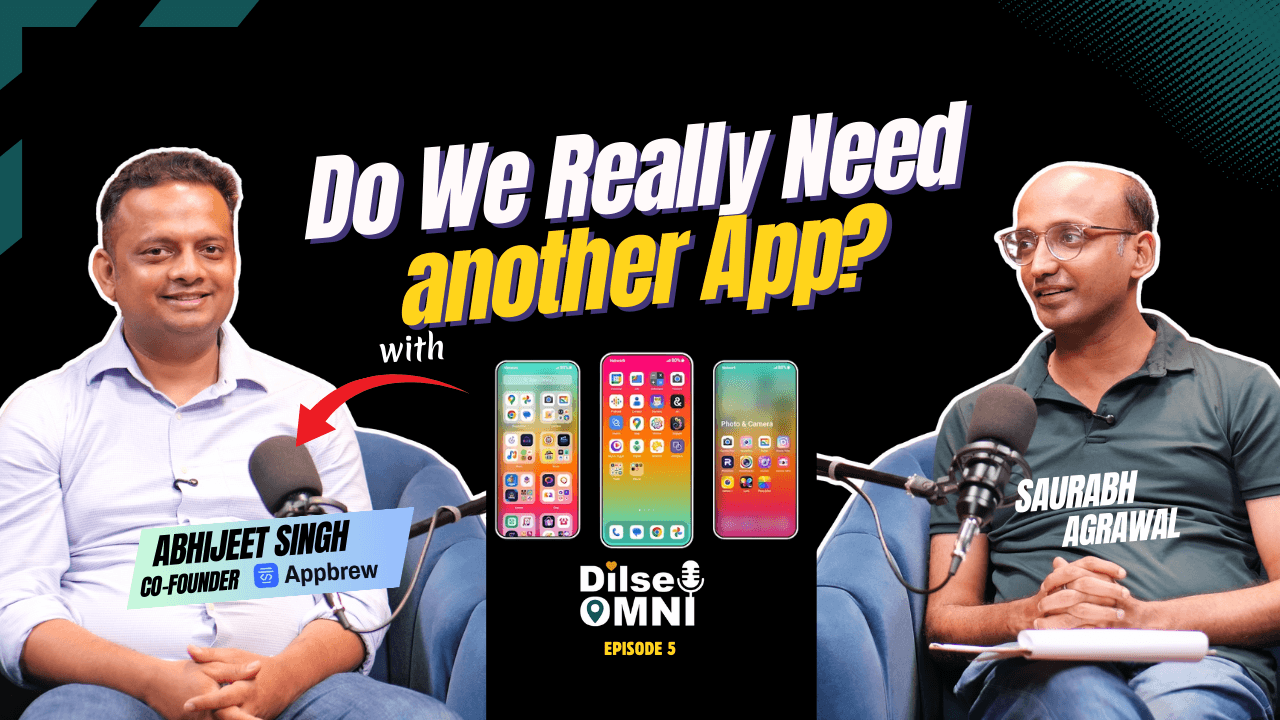
Why Does This Episode Matter?
Why Does This Episode Matter?
This episode gives founders and operators a practical framework to decide whether an app is a real growth lever or just an expensive distraction, using real numbers, not generic playbooks.
Through examples across D2C, fashion, personal care and omnichannel brands, it explains how apps can drive higher conversion, AOV and retention when launched at the right stage.
It also breaks down the core KPIs that matter, app share of D2C, session-to-purchase, LTV and retention—helping teams make clearer marketing, product and growth decisions.
This episode gives founders and operators a practical framework to decide whether an app is a real growth lever or just an expensive distraction, using real numbers, not generic playbooks.
Through examples across D2C, fashion, personal care and omnichannel brands, it explains how apps can drive higher conversion, AOV and retention when launched at the right stage.
It also breaks down the core KPIs that matter, app share of D2C, session-to-purchase, LTV and retention—helping teams make clearer marketing, product and growth decisions.
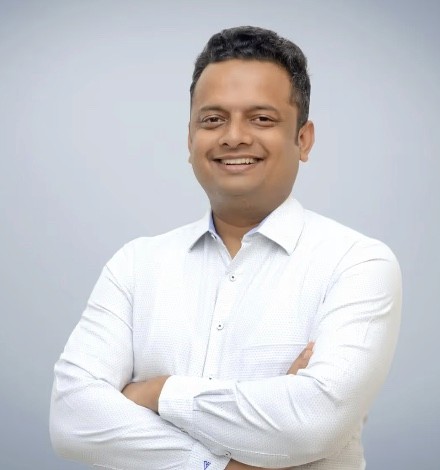
Abhijeet Singh
Co-Founder & CEO of Appbrew
Topic discussed
Topic discussed
In this episode of Dilse Omni Podcast, Saurabh and Abhijeet unpack when brands should actually invest in a mobile app, and why it’s not the right move for every category on day one. They dig into the key KPIs that define app success—like app share of D2C revenue, conversion rate and AOV uplift vs web, LTV, and retention—and how to read these numbers in context.
The conversation also covers how apps fit alongside websites and marketplaces in an omnichannel journey, and why native apps often become the most efficient channel once repeat purchase kicks in.
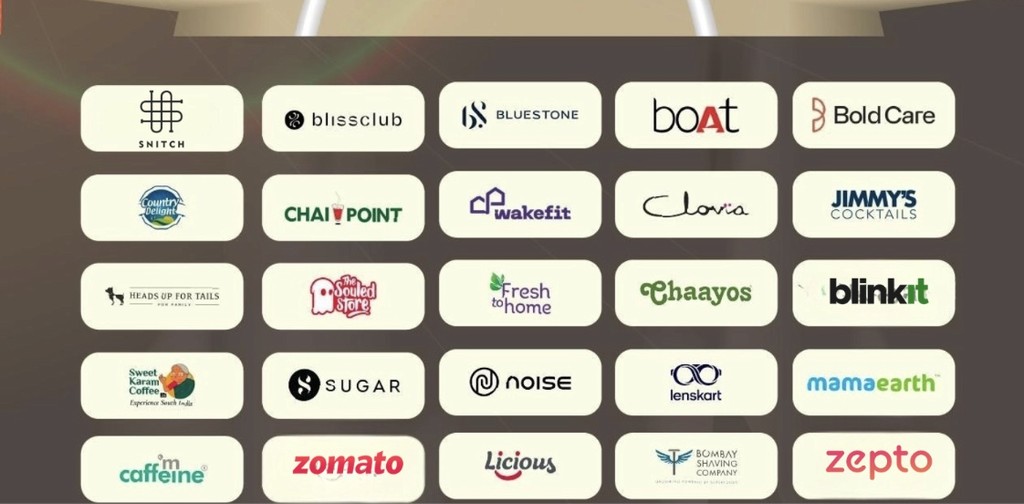
Drawing on Appbrew’s work with brands like Snitch and leading skincare players, they break down what goes into building app experiences that don’t just get installs, but actually retain users and drive repeat purchases at scale.
In this episode of Dilse Omni Podcast, Saurabh and Abhijeet unpack when brands should actually invest in a mobile app, and why it’s not the right move for every category on day one. They dig into the key KPIs that define app success—like app share of D2C revenue, conversion rate and AOV uplift vs web, LTV, and retention—and how to read these numbers in context.
The conversation also covers how apps fit alongside websites and marketplaces in an omnichannel journey, and why native apps often become the most efficient channel once repeat purchase kicks in.
Drawing on Appbrew’s work with brands like Snitch and leading skincare players, they break down what goes into building app experiences that don’t just get installs, but actually retain users and drive repeat purchases at scale.
In this episode of Dilse Omni Podcast, Saurabh and Abhijeet unpack when brands should actually invest in a mobile app, and why it’s not the right move for every category on day one. They dig into the key KPIs that define app success—like app share of D2C revenue, conversion rate and AOV uplift vs web, LTV, and retention—and how to read these numbers in context.
The conversation also covers how apps fit alongside websites and marketplaces in an omnichannel journey, and why native apps often become the most efficient channel once repeat purchase kicks in.
Drawing on Appbrew’s work with brands like Snitch and leading skincare players, they break down what goes into building app experiences that don’t just get installs, but actually retain users and drive repeat purchases at scale.
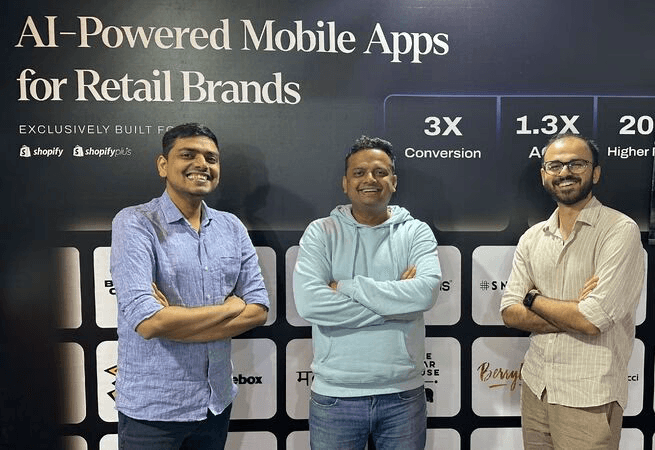
When brands should launch an app
Most brands don’t need an app on day one, but once there’s repeat purchase behavior and a meaningful D2C base, a well-built app can become the most profitable, high-intent channel in the entire stack.
The episode makes it very clear that the question is not “app or no app?” but “when, why, and how do you build an app that actually moves revenue, retention, and brand love?”
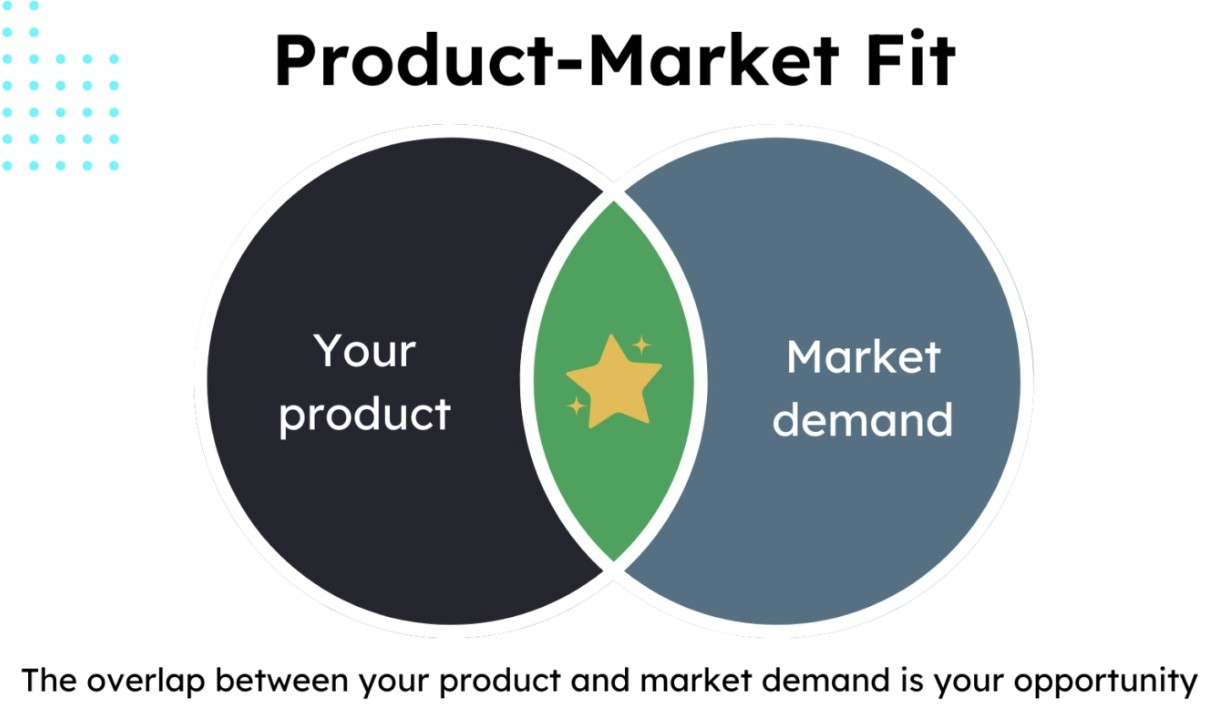
The podcast frames apps as a channel you graduate into, not a starting point. Early-stage brands should first validate the product–market fit and build a stable D2C flow via website and marketplaces before thinking of an app. Once repeat purchase kicks in and a brand wants deeper relationships, owning an app becomes a 10x lever instead of a vanity project.
When brands should launch an app
Most brands don’t need an app on day one, but once there’s repeat purchase behavior and a meaningful D2C base, a well-built app can become the most profitable, high-intent channel in the entire stack.
The episode makes it very clear that the question is not “app or no app?” but “when, why, and how do you build an app that actually moves revenue, retention, and brand love?”
The podcast frames apps as a channel you graduate into, not a starting point. Early-stage brands should first validate the product–market fit and build a stable D2C flow via website and marketplaces before thinking of an app. Once repeat purchase kicks in and a brand wants deeper relationships, owning an app becomes a 10x lever instead of a vanity project.
When brands should launch an app
Most brands don’t need an app on day one, but once there’s repeat purchase behavior and a meaningful D2C base, a well-built app can become the most profitable, high-intent channel in the entire stack.
The episode makes it very clear that the question is not “app or no app?” but “when, why, and how do you build an app that actually moves revenue, retention, and brand love?”
The podcast frames apps as a channel you graduate into, not a starting point. Early-stage brands should first validate the product–market fit and build a stable D2C flow via website and marketplaces before thinking of an app. Once repeat purchase kicks in and a brand wants deeper relationships, owning an app becomes a 10x lever instead of a vanity project.
Which categories must have an app, and who should wait?
Which categories must have an app, and who should wait?
Abhijeet calls out categories where apps almost become non‑negotiable:
Fashion: Apps often become the main channel within 1–2 months because of high browsing frequency and impulse behavior.
Personal care/beauty: Routine‑driven, high‑repeat categories (like minimalist‑style skincare) see strong adoption once the app experience is done right.
Large catalogs (FMCG, marketplaces, etc.): The more SKU depth and repeat buying, the more an app pays off through better discovery, retention, and data.
For ultra‑niche or very low‑repeat categories, the bar is higher: an app only makes sense if the marketing team believes in it, is ready to push it, and can curate it as a real channel, not a parked asset.
Abhijeet calls out categories where apps almost become non‑negotiable:
Fashion: Apps often become the main channel within 1–2 months because of high browsing frequency and impulse behavior.
Personal care/beauty: Routine‑driven, high‑repeat categories (like minimalist‑style skincare) see strong adoption once the app experience is done right.
Large catalogs (FMCG, marketplaces, etc.): The more SKU depth and repeat buying, the more an app pays off through better discovery, retention, and data.
For ultra‑niche or very low‑repeat categories, the bar is higher: an app only makes sense if the marketing team believes in it, is ready to push it, and can curate it as a real channel, not a parked asset.
Apps vs websites in omnichannel journeys
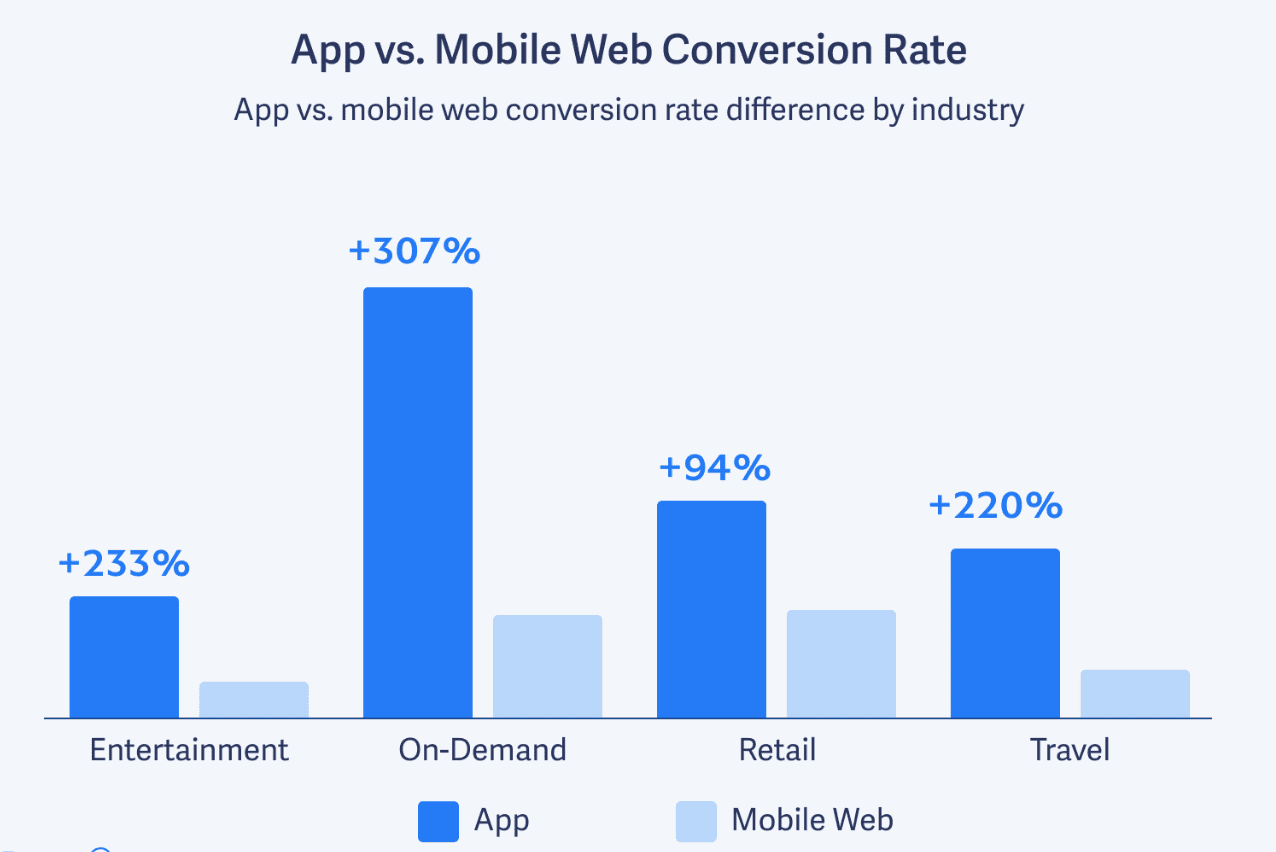
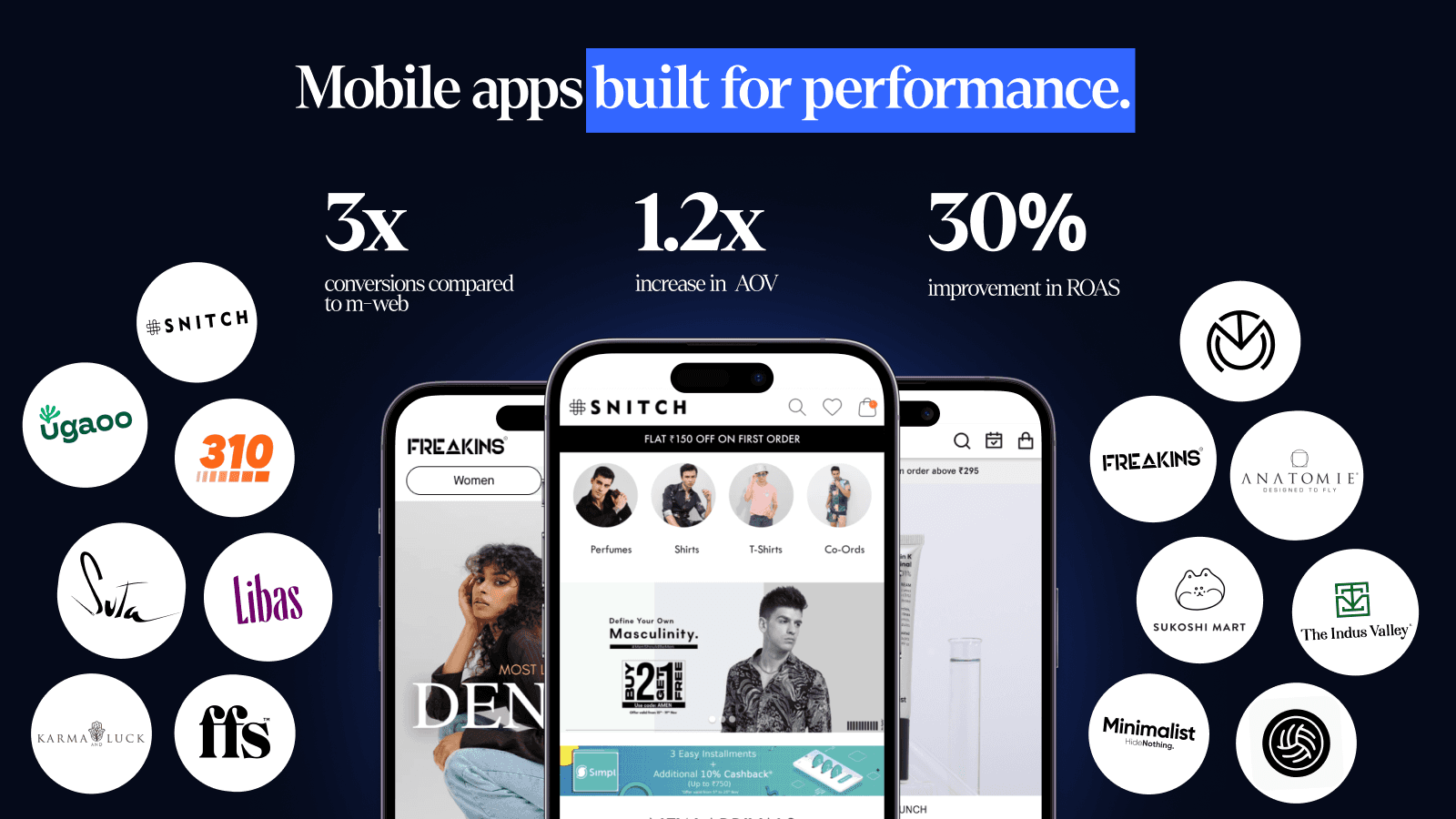
Abhijeet draws a simple contrast: 90% of e‑commerce happens on mobile devices, but the quality of that experience is radically different on native app vs mobile web. Median app conversion rates are around 3x of web, and AOV on app is typically 25%+ higher, largely because app flows are faster, more personalized, and designed for repeat users rather than one‑time visitors.
He also explains the “identified user” advantage:
On web, a small fraction of visitors log in; many check out as guests, making it hard to track and retarget beyond paid media.
On apps, around 30% of users log in, and an active app user can pass 150+ behavioral events per month vs 15–20 on web, giving brands rich, user‑level data to drive journeys, cohorts, and campaigns.
This is why a good app feels like an exclusive brand outlet in the customer’s pocket: it’s always present, not subject to Meta/Google “tax” every time you want to talk to your own customer, and it compounds value as more behavior data flows in.
Apps vs websites in omnichannel journeys
Apps vs websites in omnichannel journeys
Abhijeet draws a simple contrast: 90% of e‑commerce happens on mobile devices, but the quality of that experience is radically different on native app vs mobile web. Median app conversion rates are around 3x of web, and AOV on app is typically 25%+ higher, largely because app flows are faster, more personalized, and designed for repeat users rather than one‑time visitors.
He also explains the “identified user” advantage:
On web, a small fraction of visitors log in; many check out as guests, making it hard to track and retarget beyond paid media.
On apps, around 30% of users log in, and an active app user can pass 150+ behavioral events per month vs 15–20 on web, giving brands rich, user‑level data to drive journeys, cohorts, and campaigns.
This is why a good app feels like an exclusive brand outlet in the customer’s pocket: it’s always present, not subject to Meta/Google “tax” every time you want to talk to your own customer, and it compounds value as more behavior data flows in.
KPIs that define app success
KPIs that define app success
The podcast is very clear that installs are a vanity metric; real success is measured on business outcomes. Abhijeet and Saurabh anchor on a handful of core KPIs:
The podcast is very clear that installs are a vanity metric; real success is measured on business outcomes. Abhijeet and Saurabh anchor on a handful of core KPIs:
App share of D2C sales
As an organic baseline, 20–25% of D2C revenue from the app is healthy; with conscious pushing, they’ve seen brands reach 50–60% of D2C sales via app.
Conversion rate delta (app vs web)
The app should outperform web on session‑to‑purchase; median 3x uplift is cited as a realistic benchmark when the app is done well.
Average Order Value (AOV) uplift
Apps should deliver higher AOV through better merchandising, personalized bundles, and cross‑sell; 1.2–1.3x AOV vs web is common in case studies.
Lifetime value (LTV) and retention
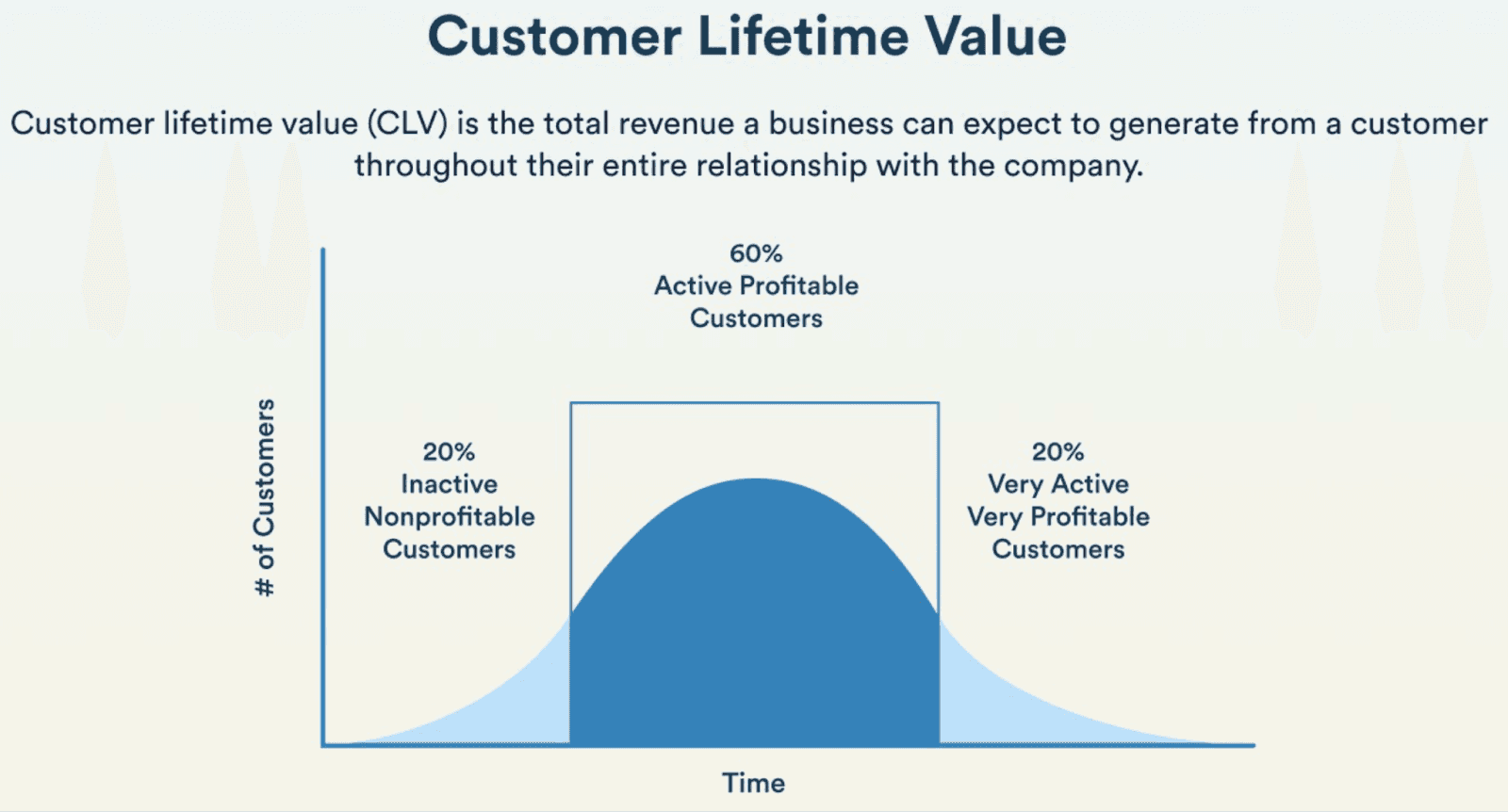
In the episode they talk about app customers showing much higher LTV—often several times web customers—because frequency and ticket size both improve.
Day‑30 retention of app users can be 10–20x that of web visitors; one example mentioned is web at about 0.3% vs app at ~7% on day 30.
Ad efficiency / CAC
As app contribution grows, brands reduce reliance on paid retargeting because push, in‑app journeys, and CRM handle a lot of repeat activations.
Saurabh also adds two important input metrics people ignore: app‑store listing conversion (view‑to‑install) and push notification reachability, both of which have massive downstream impact on ROI but are entirely in the brand’s control.
Appbrew’s work with leading D2C brands
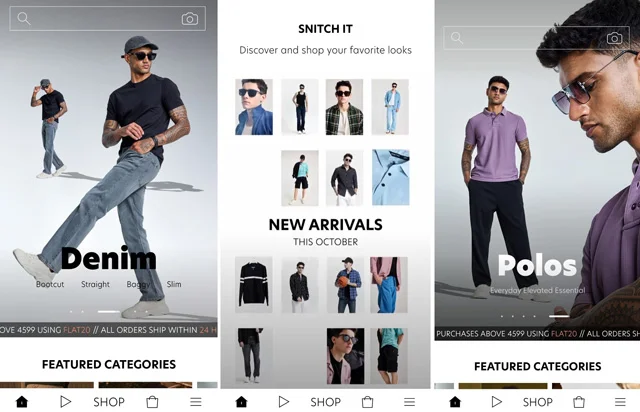
A big chunk of the conversation is anchored in Appbrew’s actual builds for high‑growth D2C brands. Snitch is the flagship story: they already had an app from another provider, but after an Appbrew‑led audit and rebuild, app contribution doubled within about 15 days and conversion rates jumped roughly a third on top of already strong app numbers.
Within a month of the relaunch, around 60% of their D2C business was coming from the mobile app, with 2.5x conversion vs earlier baselines and about 1.3x AOV uplift.
Appbrew’s work with leading D2C brands
A big chunk of the conversation is anchored in Appbrew’s actual builds for high‑growth D2C brands. Snitch is the flagship story: they already had an app from another provider, but after an Appbrew‑led audit and rebuild, app contribution doubled within about 15 days and conversion rates jumped roughly a third on top of already strong app numbers.
Within a month of the relaunch, around 60% of their D2C business was coming from the mobile app, with 2.5x conversion vs earlier baselines and about 1.3x AOV uplift.
Appbrew’s work with leading D2C brands
A big chunk of the conversation is anchored in Appbrew’s actual builds for high‑growth D2C brands. Snitch is the flagship story: they already had an app from another provider, but after an Appbrew‑led audit and rebuild, app contribution doubled within about 15 days and conversion rates jumped roughly a third on top of already strong app numbers.
Within a month of the relaunch, around 60% of their D2C business was coming from the mobile app, with 2.5x conversion vs earlier baselines and about 1.3x AOV uplift.
Similar patterns show up in other categories:
Skincare brands using Appbrew report ~3x higher app conversion vs web, ~40% D2C contribution from the app, and ~20–25% higher AOV from better personalization and routines.
Appbrew’s stack typically includes native analytics, CRM and Meta/Google integrations, loyalty, social login, and campaign‑specific landing pages so marketing teams can ship concepts fast without dev bottlenecks.
Under the hood, Abhijeet talks about two layers: an infra layer (fast, reliable commerce plumbing) and an intelligence layer (events, segmentation, AI, and recommendations) that turns the app into a performance engine, not just a catalog.
Similar patterns show up in other categories:
Skincare brands using Appbrew report ~3x higher app conversion vs web, ~40% D2C contribution from the app, and ~20–25% higher AOV from better personalization and routines.
Appbrew’s stack typically includes native analytics, CRM and Meta/Google integrations, loyalty, social login, and campaign‑specific landing pages so marketing teams can ship concepts fast without dev bottlenecks.
Under the hood, Abhijeet talks about two layers: an infra layer (fast, reliable commerce plumbing) and an intelligence layer (events, segmentation, AI, and recommendations) that turns the app into a performance engine, not just a catalog.
The biggest takeaway from this episode?
The biggest takeaway from this episode?
Apps make sense for brands with repeat customers and a strong D2C base.
Apps make sense for brands with repeat customers and a strong D2C base.
Measure success by revenue, conversion, AOV, and retention—not installs.
Measure success by revenue, conversion, AOV, and retention—not installs.
ROI comes from using apps as relationship channels, not mini websites.
ROI comes from using apps as relationship channels, not mini websites.
This is just the beginning. If you’re ready to understand how AI and Omnichannel thinking work together, and want to build a loyalty program for your brand, feel free to reach out at <saurabh@daiom.in>.
This is just the beginning. If you’re ready to understand how AI and Omnichannel thinking work together, and want to build a loyalty program for your brand, feel free to reach out at <saurabh@daiom.in>.
Talks with Saurabh Agrawal
Talks with Saurabh Agrawal

Talks with Saurabh Agrawal
Latest Episodes
Decoding Agri Business Playbook - KisaanSay Founder
In the latest episode of Dilse Omni Talks, Nitin Puri, Founder of KisaanSay, talks about his belief that Farmers are not just producers. They are business owners who deserve a larger share of the value they create.

Is Agentic the future of Marketing
Discover how Netcore COO Siddharth Gopalakrishnan explains Agentic Marketing, AI-powered customer engagement, retention, omnichannel strategy, and the future of Martech.

EP18: Growth Playbook by Sanjeev Bikhchandani
There are very few people who have genuinely shaped the way India works, loves, and learns — all from one desk, one insight, and one stubborn belief that the internet would change everything before most people even knew what a server was. Sanjeev Bikhchandani is one of those people.
EP17: Building Omni Consumer Brands
India's retail market is a $1 trillion opportunity today and is projected to touch $2 trillion by 2030. The brands that will capture that growth are not the ones spending the most on Meta or building the fanciest app.

EP16: Scaling India's Convenience Retail
India has 1.4 billion people, a retail market projected to grow from $1.05 trillion to $1.9 trillion, and barely 1,000 organised convenience stores. The United States has 300,000. Korea has two lakh. Thailand has 7-Eleven on every corner. The gap is staggering, and it represents one of the biggest untapped opportunities in Indian retail.

EP15: Building a D2C Publishing Business
The real thesis behind ZebraLearn is that a book is not the end of a learning journey. It is a milestone within one. And the platform's job is to be present for the entire journey — from discovery to purchase, from reading to application, from one book to the next. That is what makes it a platform, not a publisher.

EP14: Scaling Omnichannel Fast Fashion Brand
Most fashion brands start with a mood board. NEWME started with a data pipeline. In a candid conversation on DilSe Omni, Sumit Jasoria, co-founder and CEO of NEWME, which is a brand that didn't exist three years ago, is now one of India's fastest-growing Gen Z fashion labels, jumping from ₹3.4 crore in FY23 to ₹180 crore in FY25. A 52x revenue jump. In under three years.

EP13: Do Kids Need Their Own Personal Care?
This podcast explores why children need dedicated personal care products instead of using baby or adult formulations, highlighting the emerging gap in India’s beauty and skincare market. Through insights shared by Aishvarya Murali, founder of Tuco Kids, the discussion covers category creation, evolving parenting awareness, product design for kids, and the unique challenge of balancing parental trust with children’s product experience.
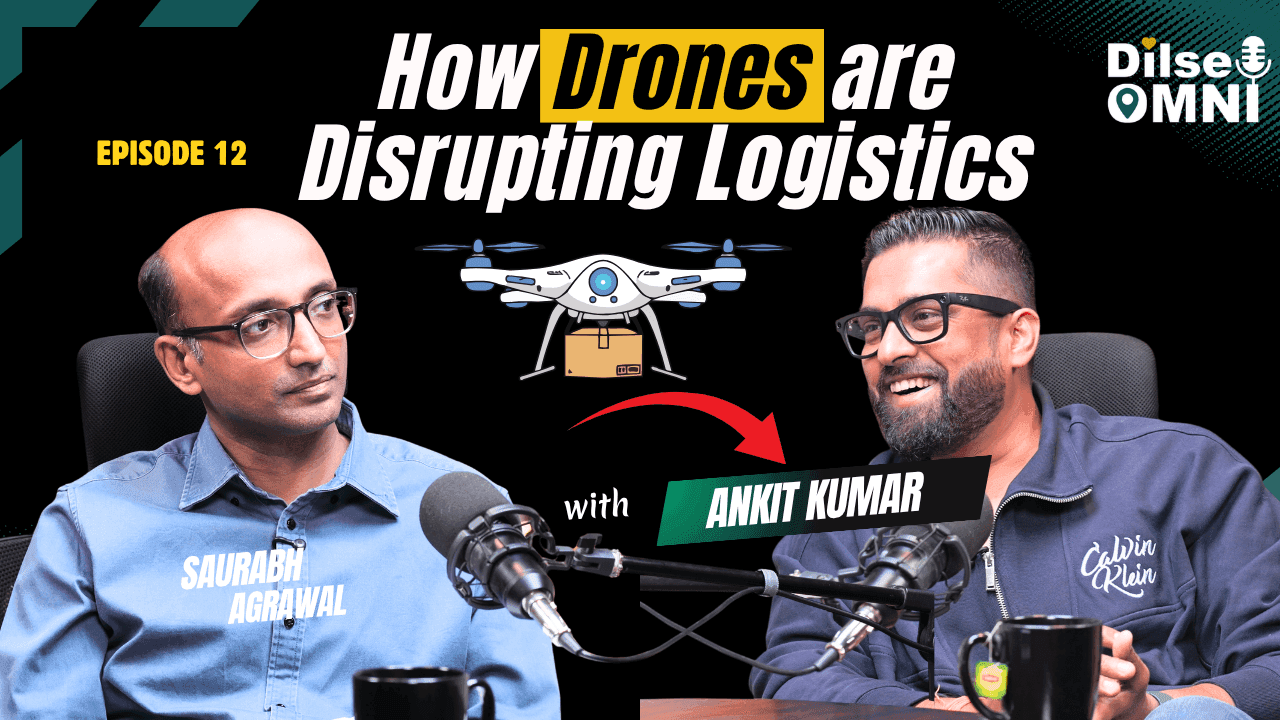
How are Drones Disrupting the Logistics | Ankit Kumar X Saurabh Agrawal | Dilse Omni Talks: E12
In this episode, Ankit, who is leading Skye Air Mobility tells about the transform logistics with efficient, reliable, and sustainable drone delivery networks.
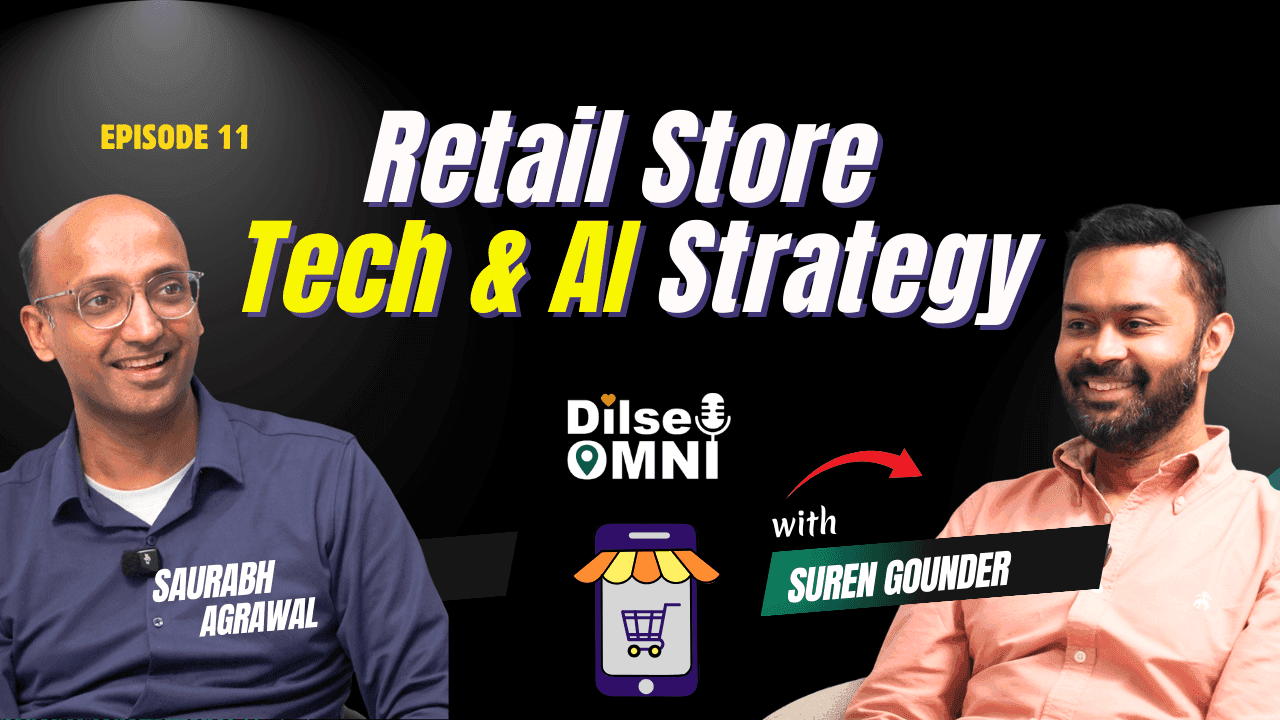
Retail Store Tech & AI Strategy | Suren Gounder X Saurabh Agrawal | Dilse Omni Talks: EP11
In this episode, Suren breaks down how offline stores are evolving from gut-feel operations into data-driven businesses — and why the brands that embrace store tech today will be impossible to catch tomorrow.
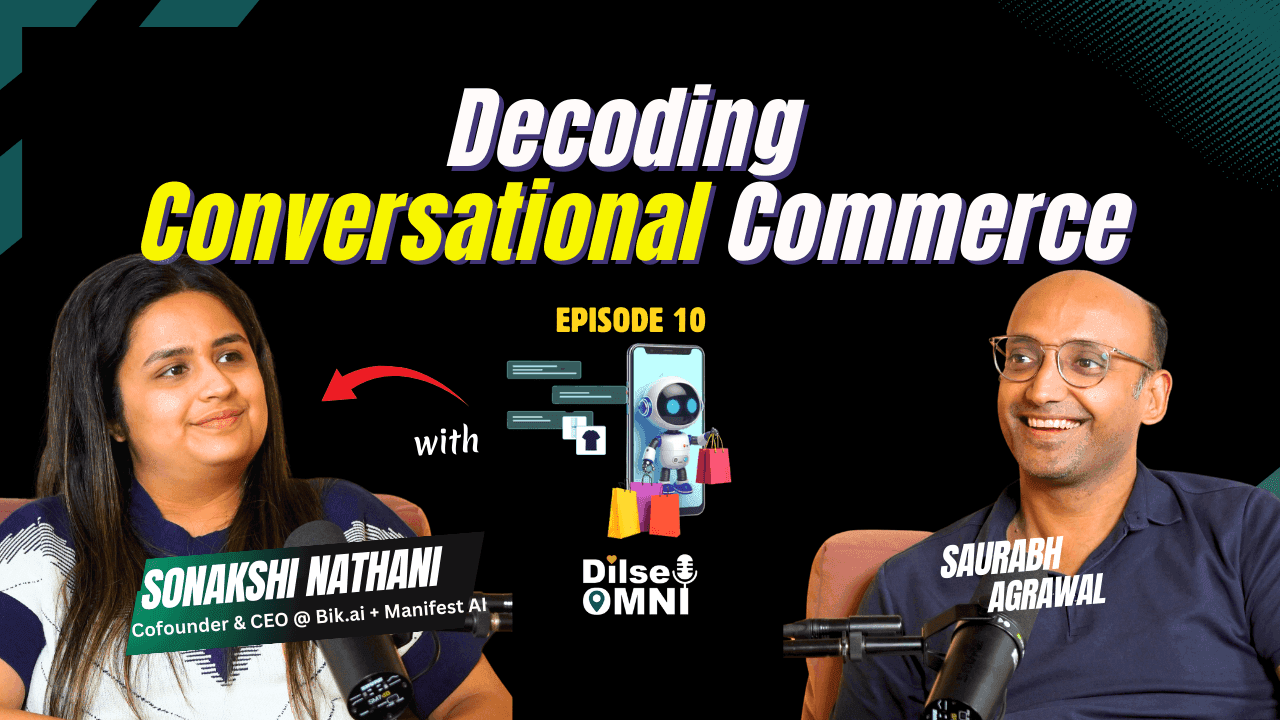
Decoding Conversational Commerce
Sonakshi Nathani — YC and Sequoia-backed founder who scaled Manifest AI to $4.5M ARR in two years without marketing spend — joins Saurabh to decode how AI chatbots are reshaping modern commerce.
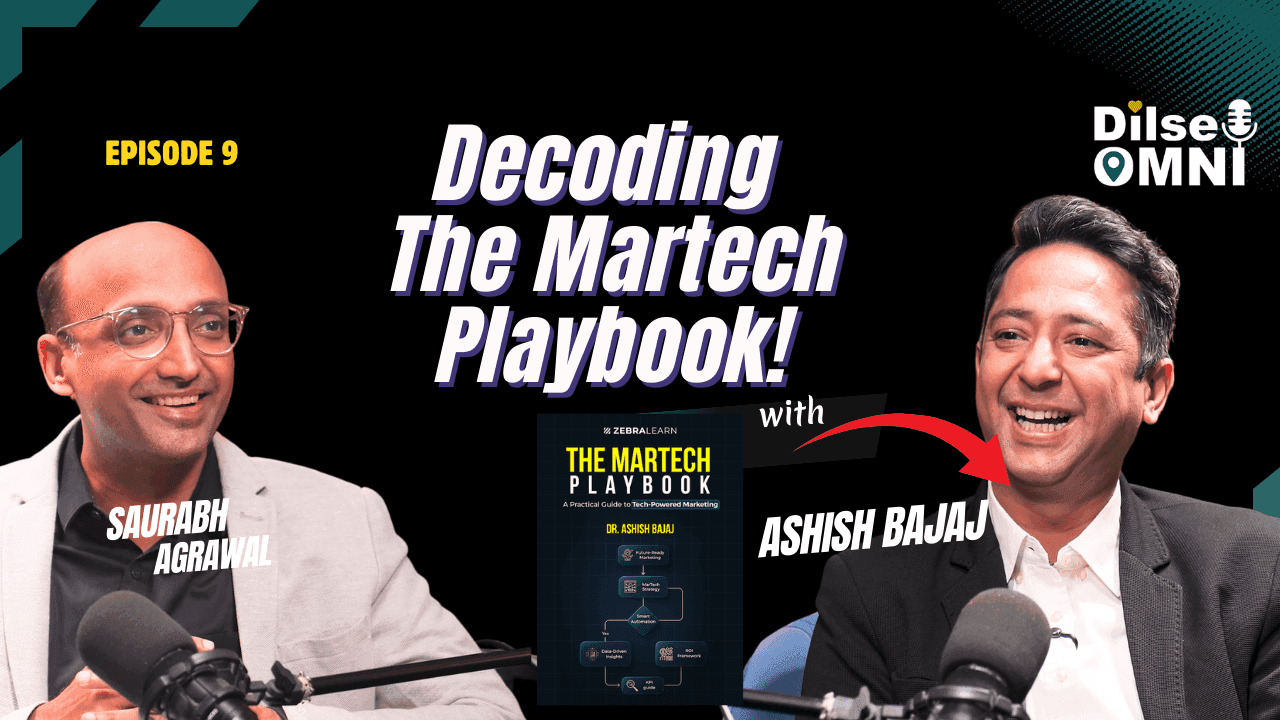
Decoding Martech Playbook | Dr. Ashish Bajaj X Saurabh Agrawal | Dilse Omni Talks: EP9
This episode breaks down why Martech is no longer optional but essential for brands that want to move from fragmented campaigns to connected, data-driven growth.
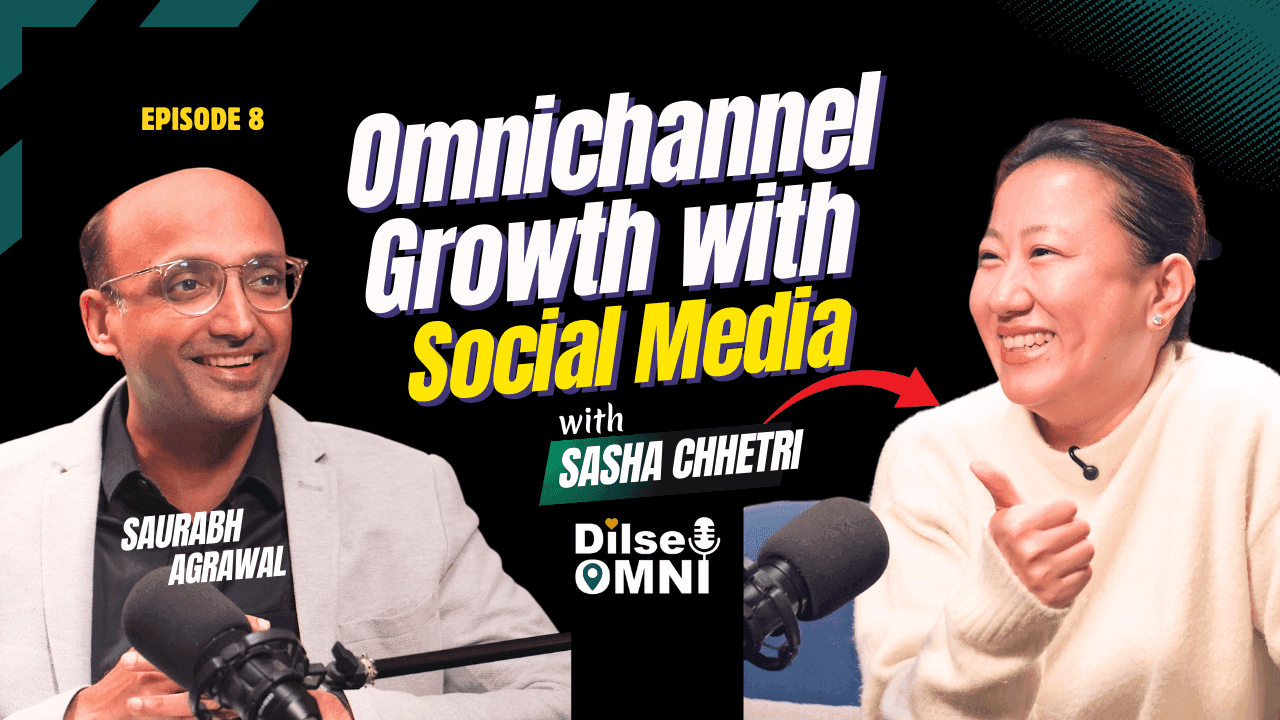
Omnichannel Growth with Social Media | Sasha Chhetri X Saurabh Agrawal | Dilse Omni Talks: EP8
Saurabh sits down with Sasha, to unpack how social media actually drives real business outcomes when you stop chasing vanity metrics and start designing for omnichannel growth.
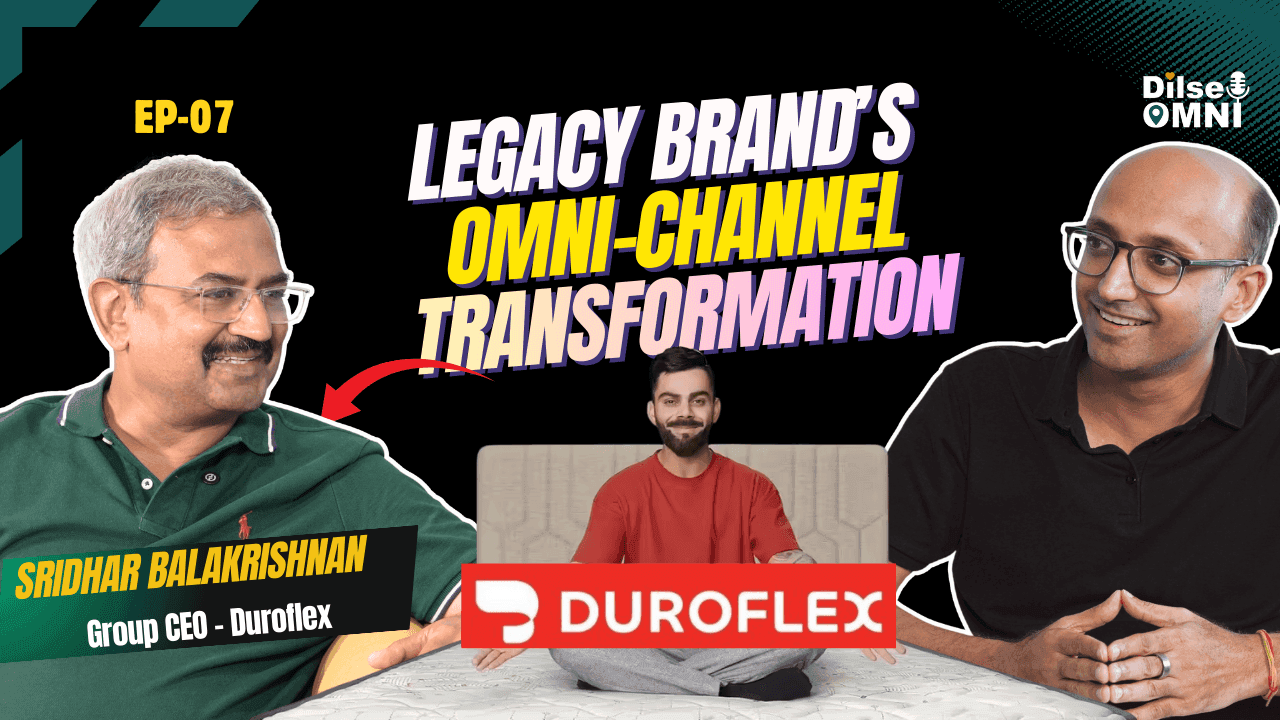
Legacy Brand's Omnichannel Transformation | Sridhar Balakrishnan X Saurabh Agrawal | DilSe Omni Talks: EP7
Saurabh sits down with Sridhar, Group CEO - Duroflex, to understand how a legacy brands can build omnichannel with patience and purpose.
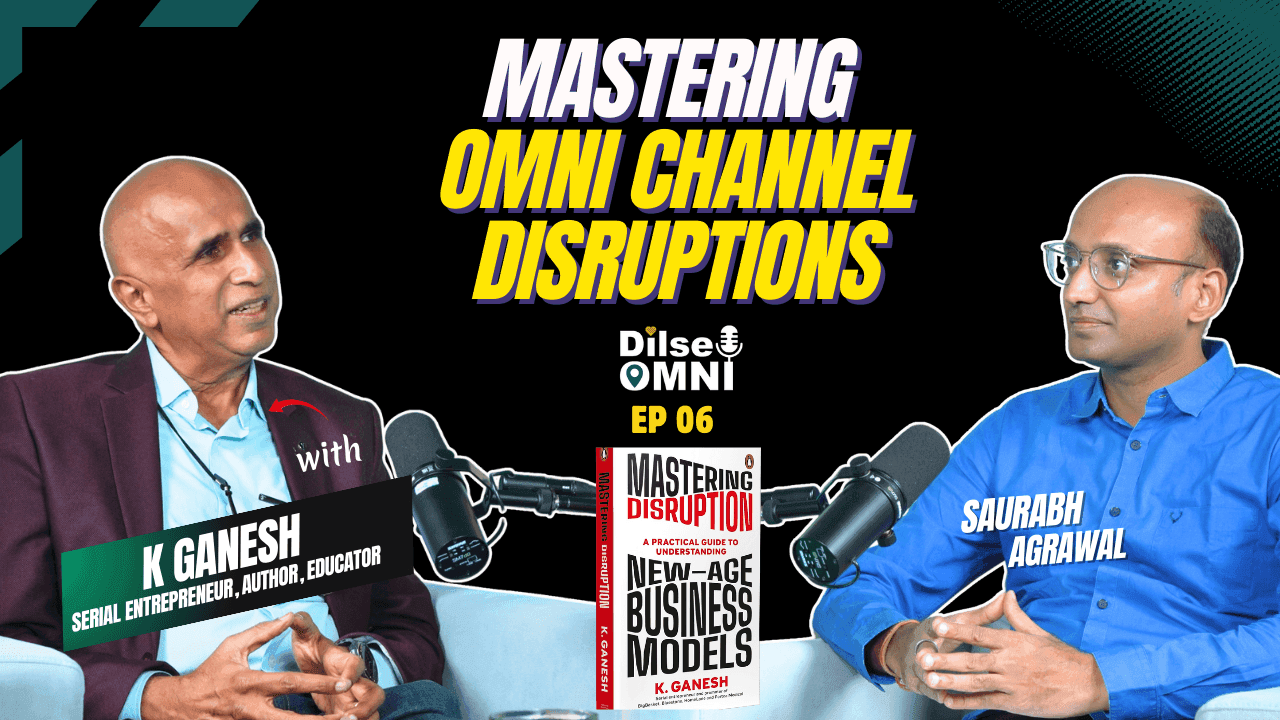
Mastering Omnichannel Disruptions | K Ganesh X Saurabh Agrawal | DilSe Omni Talks: EP6
Saurabh sits down with K Ganesh, a serial entrepreneur, author, and one of India’s most respected startup builders, to unpack what really drives sustainable growth in modern businesses.
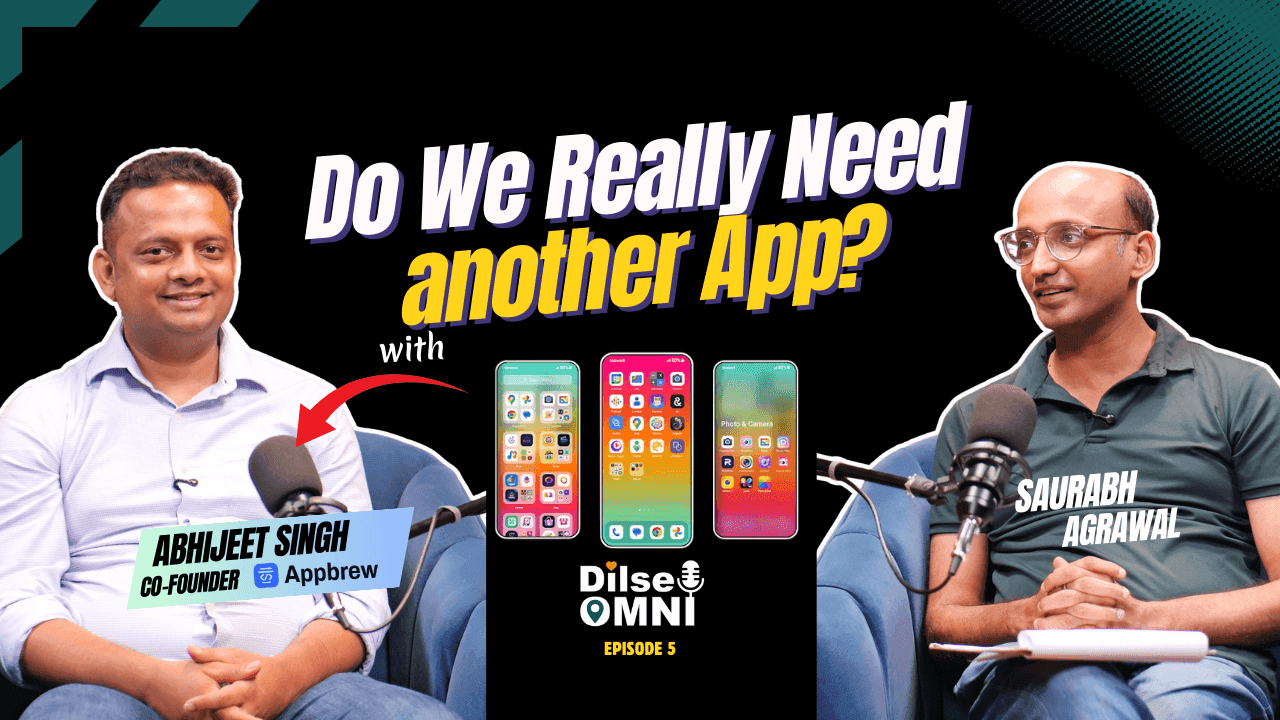
App Strategy for Omnichannel Brands | Abhijeet Singh X Saurabh Agrawal | DilSe Omni Talks: EP5
Saurabh and Abhijeet unpack when brands should actually invest in a mobile app, and why it’s not the right move for every category on day one.
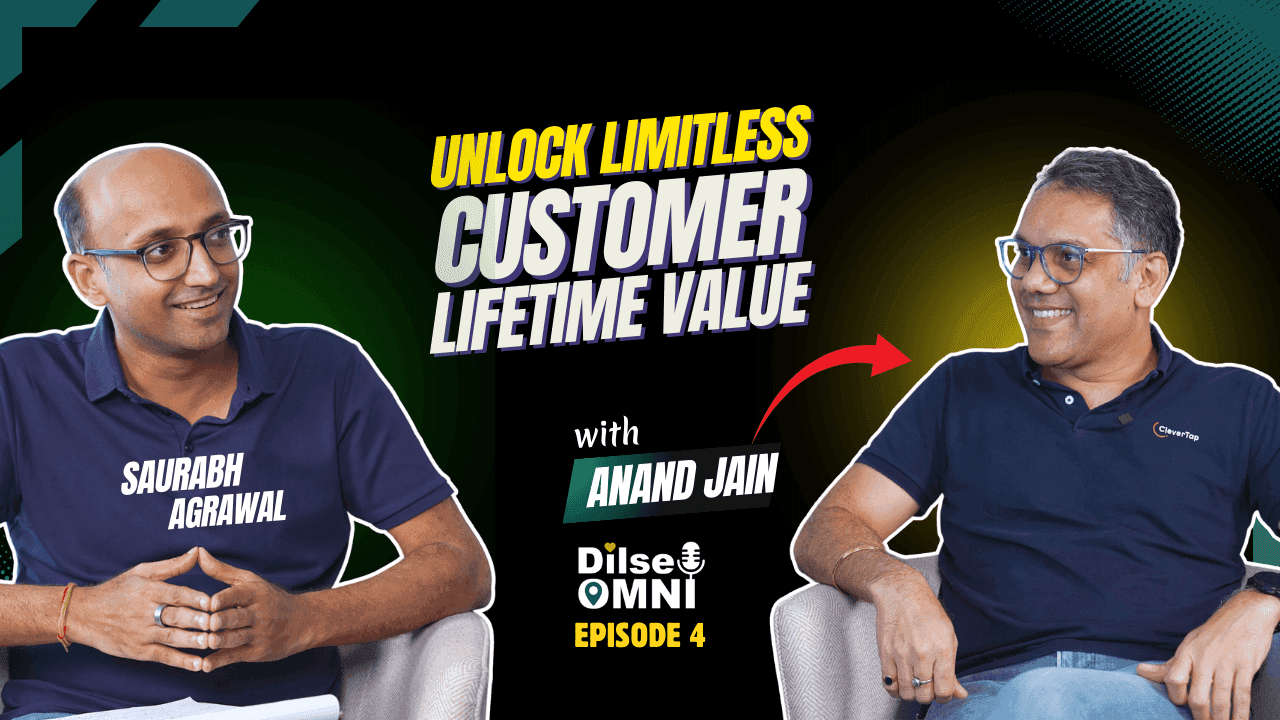
Unlock Limitless Customer Lifetime Value | Anand Jain X Saurabh Agrawal | DilSe Omni Talks: EP4
Saurabh and Anand talk about resilience, first-principles thinking, and how AI-driven personalization is reshaping retention.
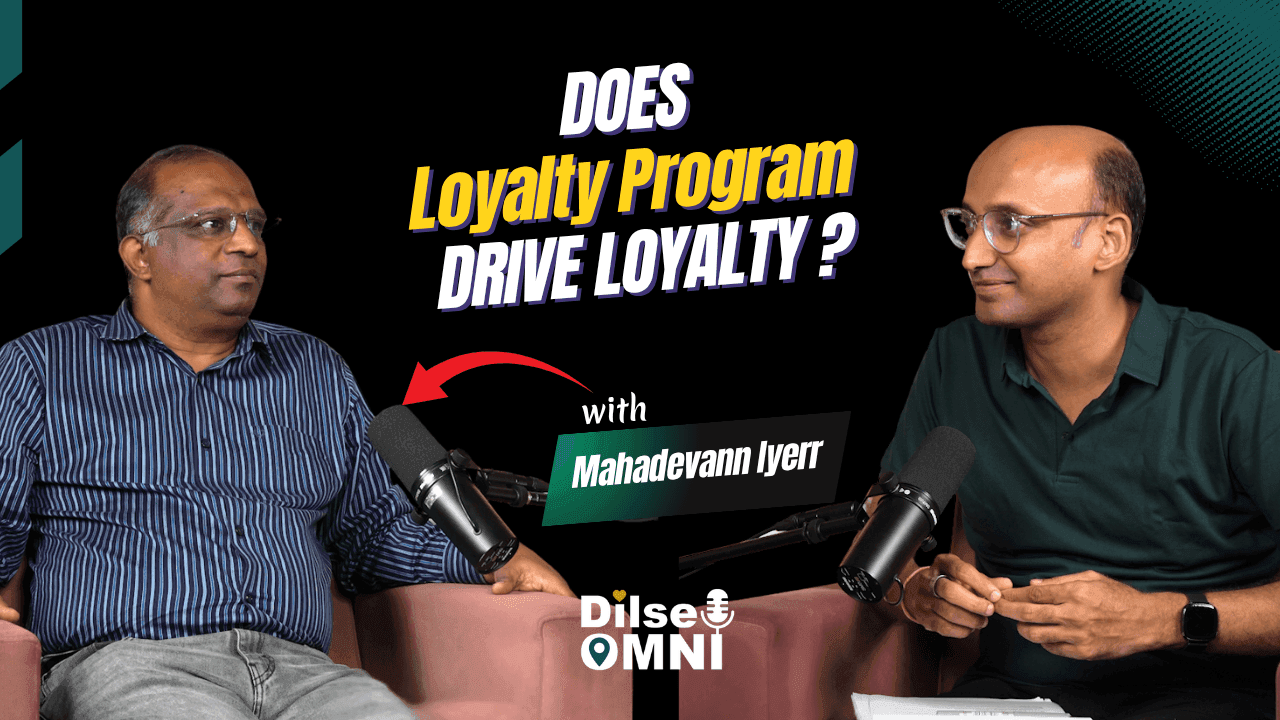
Does Loyalty Program really drives Loyalty | Mahadevann Iyerr x Saurabh Agrawal | DilSe Omni Talks: EP3
Saurabh and Maha talk about how loyalty programs don't create loyalty. Experience creates loyalty. Programs amplify it.
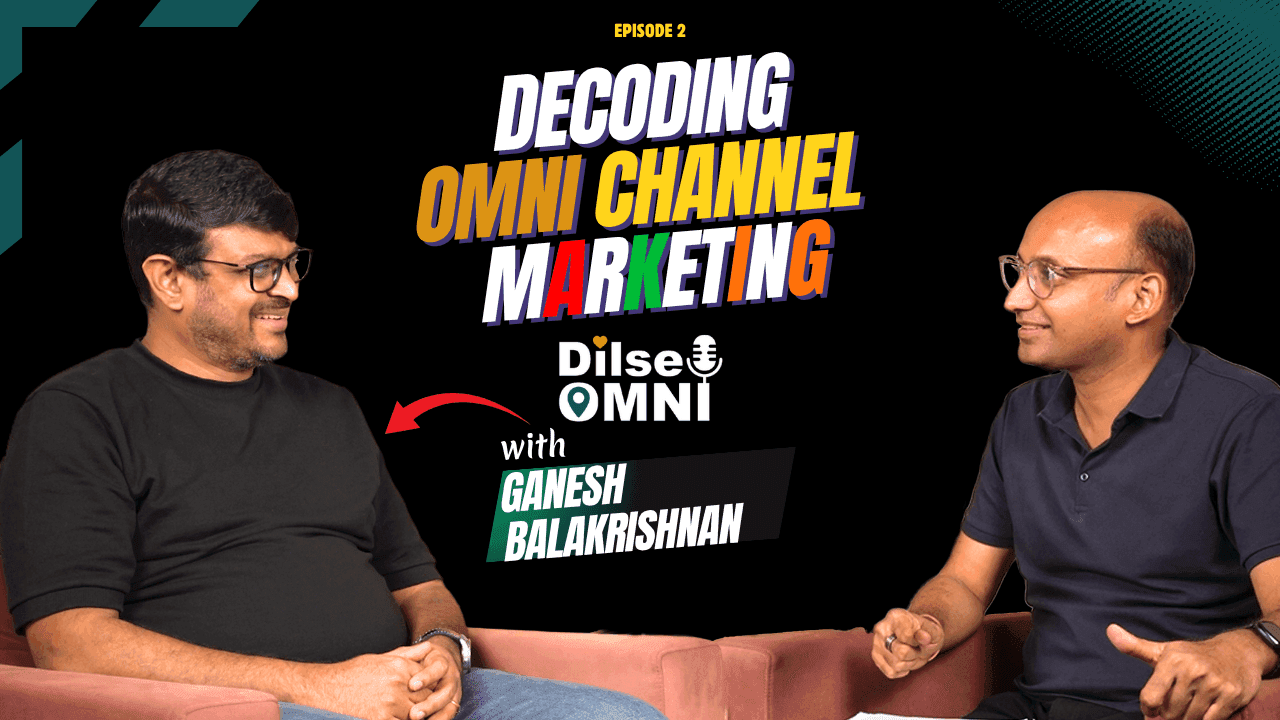
Decoding Omnichannel Marketing | Ganesh Balakrishnan x Saurabh Agrawal | DilSe Omni Talks: EP2
Saurabh and Ganesh decode modern marketing – blending data, retention, and omnichannel strategy to build human, memorable brand experiences.
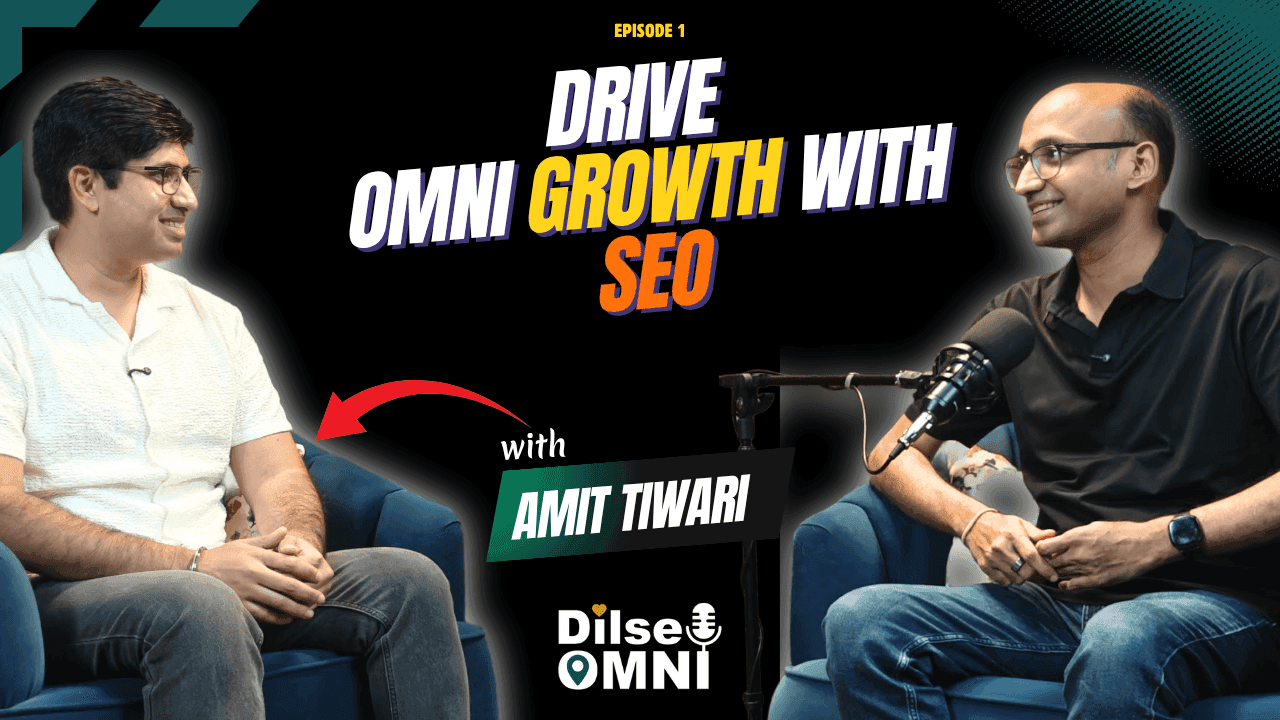
Top 5 SEO Strategies for Omni Success with AI | Amit Tiwari x Saurabh Agrawal | DilSe Omni Talks: EP1
Discover how AI, data, and Omnichannel thinking are redefining SEO as the heartbeat of modern brands—online, offline, and everywhere in between.
Latest Episodes
Decoding Agri Business Playbook - KisaanSay Founder
In the latest episode of Dilse Omni Talks, Nitin Puri, Founder of KisaanSay, talks about his belief that Farmers are not just producers. They are business owners who deserve a larger share of the value they create.
Is Agentic the future of Marketing
Discover how Netcore COO Siddharth Gopalakrishnan explains Agentic Marketing, AI-powered customer engagement, retention, omnichannel strategy, and the future of Martech.
EP18: Growth Playbook by Sanjeev Bikhchandani
There are very few people who have genuinely shaped the way India works, loves, and learns — all from one desk, one insight, and one stubborn belief that the internet would change everything before most people even knew what a server was. Sanjeev Bikhchandani is one of those people.
EP17: Building Omni Consumer Brands
India's retail market is a $1 trillion opportunity today and is projected to touch $2 trillion by 2030. The brands that will capture that growth are not the ones spending the most on Meta or building the fanciest app.
EP16: Scaling India's Convenience Retail
India has 1.4 billion people, a retail market projected to grow from $1.05 trillion to $1.9 trillion, and barely 1,000 organised convenience stores. The United States has 300,000. Korea has two lakh. Thailand has 7-Eleven on every corner. The gap is staggering, and it represents one of the biggest untapped opportunities in Indian retail.
EP15: Building a D2C Publishing Business
The real thesis behind ZebraLearn is that a book is not the end of a learning journey. It is a milestone within one. And the platform's job is to be present for the entire journey — from discovery to purchase, from reading to application, from one book to the next. That is what makes it a platform, not a publisher.
EP14: Scaling Omnichannel Fast Fashion Brand
Most fashion brands start with a mood board. NEWME started with a data pipeline. In a candid conversation on DilSe Omni, Sumit Jasoria, co-founder and CEO of NEWME, which is a brand that didn't exist three years ago, is now one of India's fastest-growing Gen Z fashion labels, jumping from ₹3.4 crore in FY23 to ₹180 crore in FY25. A 52x revenue jump. In under three years.
EP13: Do Kids Need Their Own Personal Care?
This podcast explores why children need dedicated personal care products instead of using baby or adult formulations, highlighting the emerging gap in India’s beauty and skincare market. Through insights shared by Aishvarya Murali, founder of Tuco Kids, the discussion covers category creation, evolving parenting awareness, product design for kids, and the unique challenge of balancing parental trust with children’s product experience.
How are Drones Disrupting the Logistics | Ankit Kumar X Saurabh Agrawal | Dilse Omni Talks: E12
In this episode, Ankit, who is leading Skye Air Mobility tells about the transform logistics with efficient, reliable, and sustainable drone delivery networks.
Retail Store Tech & AI Strategy | Suren Gounder X Saurabh Agrawal | Dilse Omni Talks: EP11
In this episode, Suren breaks down how offline stores are evolving from gut-feel operations into data-driven businesses — and why the brands that embrace store tech today will be impossible to catch tomorrow.
Decoding Conversational Commerce
Sonakshi Nathani — YC and Sequoia-backed founder who scaled Manifest AI to $4.5M ARR in two years without marketing spend — joins Saurabh to decode how AI chatbots are reshaping modern commerce.
Decoding Martech Playbook | Dr. Ashish Bajaj X Saurabh Agrawal | Dilse Omni Talks: EP9
This episode breaks down why Martech is no longer optional but essential for brands that want to move from fragmented campaigns to connected, data-driven growth.
Omnichannel Growth with Social Media | Sasha Chhetri X Saurabh Agrawal | Dilse Omni Talks: EP8
Saurabh sits down with Sasha, to unpack how social media actually drives real business outcomes when you stop chasing vanity metrics and start designing for omnichannel growth.
Legacy Brand's Omnichannel Transformation | Sridhar Balakrishnan X Saurabh Agrawal | DilSe Omni Talks: EP7
Saurabh sits down with Sridhar, Group CEO - Duroflex, to understand how a legacy brands can build omnichannel with patience and purpose.
Mastering Omnichannel Disruptions | K Ganesh X Saurabh Agrawal | DilSe Omni Talks: EP6
Saurabh sits down with K Ganesh, a serial entrepreneur, author, and one of India’s most respected startup builders, to unpack what really drives sustainable growth in modern businesses.
App Strategy for Omnichannel Brands | Abhijeet Singh X Saurabh Agrawal | DilSe Omni Talks: EP5
Saurabh and Abhijeet unpack when brands should actually invest in a mobile app, and why it’s not the right move for every category on day one.
Unlock Limitless Customer Lifetime Value | Anand Jain X Saurabh Agrawal | DilSe Omni Talks: EP4
Saurabh and Anand talk about resilience, first-principles thinking, and how AI-driven personalization is reshaping retention.
Does Loyalty Program really drives Loyalty | Mahadevann Iyerr x Saurabh Agrawal | DilSe Omni Talks: EP3
Saurabh and Maha talk about how loyalty programs don't create loyalty. Experience creates loyalty. Programs amplify it.
Decoding Omnichannel Marketing | Ganesh Balakrishnan x Saurabh Agrawal | DilSe Omni Talks: EP2
Saurabh and Ganesh decode modern marketing – blending data, retention, and omnichannel strategy to build human, memorable brand experiences.
Top 5 SEO Strategies for Omni Success with AI | Amit Tiwari x Saurabh Agrawal | DilSe Omni Talks: EP1
Discover how AI, data, and Omnichannel thinking are redefining SEO as the heartbeat of modern brands—online, offline, and everywhere in between.
Latest Episodes
Decoding Agri Business Playbook - KisaanSay Founder
In the latest episode of Dilse Omni Talks, Nitin Puri, Founder of KisaanSay, talks about his belief that Farmers are not just producers. They are business owners who deserve a larger share of the value they create.
Is Agentic the future of Marketing
Discover how Netcore COO Siddharth Gopalakrishnan explains Agentic Marketing, AI-powered customer engagement, retention, omnichannel strategy, and the future of Martech.
EP18: Growth Playbook by Sanjeev Bikhchandani
There are very few people who have genuinely shaped the way India works, loves, and learns — all from one desk, one insight, and one stubborn belief that the internet would change everything before most people even knew what a server was. Sanjeev Bikhchandani is one of those people.
EP17: Building Omni Consumer Brands
India's retail market is a $1 trillion opportunity today and is projected to touch $2 trillion by 2030. The brands that will capture that growth are not the ones spending the most on Meta or building the fanciest app.
EP16: Scaling India's Convenience Retail
India has 1.4 billion people, a retail market projected to grow from $1.05 trillion to $1.9 trillion, and barely 1,000 organised convenience stores. The United States has 300,000. Korea has two lakh. Thailand has 7-Eleven on every corner. The gap is staggering, and it represents one of the biggest untapped opportunities in Indian retail.
EP15: Building a D2C Publishing Business
The real thesis behind ZebraLearn is that a book is not the end of a learning journey. It is a milestone within one. And the platform's job is to be present for the entire journey — from discovery to purchase, from reading to application, from one book to the next. That is what makes it a platform, not a publisher.
EP14: Scaling Omnichannel Fast Fashion Brand
Most fashion brands start with a mood board. NEWME started with a data pipeline. In a candid conversation on DilSe Omni, Sumit Jasoria, co-founder and CEO of NEWME, which is a brand that didn't exist three years ago, is now one of India's fastest-growing Gen Z fashion labels, jumping from ₹3.4 crore in FY23 to ₹180 crore in FY25. A 52x revenue jump. In under three years.
EP13: Do Kids Need Their Own Personal Care?
This podcast explores why children need dedicated personal care products instead of using baby or adult formulations, highlighting the emerging gap in India’s beauty and skincare market. Through insights shared by Aishvarya Murali, founder of Tuco Kids, the discussion covers category creation, evolving parenting awareness, product design for kids, and the unique challenge of balancing parental trust with children’s product experience.
How are Drones Disrupting the Logistics | Ankit Kumar X Saurabh Agrawal | Dilse Omni Talks: E12
In this episode, Ankit, who is leading Skye Air Mobility tells about the transform logistics with efficient, reliable, and sustainable drone delivery networks.
Retail Store Tech & AI Strategy | Suren Gounder X Saurabh Agrawal | Dilse Omni Talks: EP11
In this episode, Suren breaks down how offline stores are evolving from gut-feel operations into data-driven businesses — and why the brands that embrace store tech today will be impossible to catch tomorrow.
Decoding Conversational Commerce
Sonakshi Nathani — YC and Sequoia-backed founder who scaled Manifest AI to $4.5M ARR in two years without marketing spend — joins Saurabh to decode how AI chatbots are reshaping modern commerce.
Decoding Martech Playbook | Dr. Ashish Bajaj X Saurabh Agrawal | Dilse Omni Talks: EP9
This episode breaks down why Martech is no longer optional but essential for brands that want to move from fragmented campaigns to connected, data-driven growth.
Omnichannel Growth with Social Media | Sasha Chhetri X Saurabh Agrawal | Dilse Omni Talks: EP8
Saurabh sits down with Sasha, to unpack how social media actually drives real business outcomes when you stop chasing vanity metrics and start designing for omnichannel growth.
Legacy Brand's Omnichannel Transformation | Sridhar Balakrishnan X Saurabh Agrawal | DilSe Omni Talks: EP7
Saurabh sits down with Sridhar, Group CEO - Duroflex, to understand how a legacy brands can build omnichannel with patience and purpose.
Mastering Omnichannel Disruptions | K Ganesh X Saurabh Agrawal | DilSe Omni Talks: EP6
Saurabh sits down with K Ganesh, a serial entrepreneur, author, and one of India’s most respected startup builders, to unpack what really drives sustainable growth in modern businesses.
App Strategy for Omnichannel Brands | Abhijeet Singh X Saurabh Agrawal | DilSe Omni Talks: EP5
Saurabh and Abhijeet unpack when brands should actually invest in a mobile app, and why it’s not the right move for every category on day one.
Unlock Limitless Customer Lifetime Value | Anand Jain X Saurabh Agrawal | DilSe Omni Talks: EP4
Saurabh and Anand talk about resilience, first-principles thinking, and how AI-driven personalization is reshaping retention.
Does Loyalty Program really drives Loyalty | Mahadevann Iyerr x Saurabh Agrawal | DilSe Omni Talks: EP3
Saurabh and Maha talk about how loyalty programs don't create loyalty. Experience creates loyalty. Programs amplify it.
Decoding Omnichannel Marketing | Ganesh Balakrishnan x Saurabh Agrawal | DilSe Omni Talks: EP2
Saurabh and Ganesh decode modern marketing – blending data, retention, and omnichannel strategy to build human, memorable brand experiences.
Top 5 SEO Strategies for Omni Success with AI | Amit Tiwari x Saurabh Agrawal | DilSe Omni Talks: EP1
Discover how AI, data, and Omnichannel thinking are redefining SEO as the heartbeat of modern brands—online, offline, and everywhere in between.
Subscribe on your favourite platform




Subscribe on your favourite platform



Subscribe on your favourite platform
Subscribe for
insider insights
Get monthly newsletter right in your inbox
Subscribe
for insider insights
Get monthly newsletter right in your inbox