Why Does This Episode Matter?
Why Does This Episode Matter?
Scaling offline stores sounds simple until you are actually doing it, and suddenly 100 stores feel harder to manage than 10 ever did. Traffic patterns differ, staff performance varies, conversion drops in ways you cannot explain, and the data you need to fix it simply does not exist.
Suren has been in the middle of that chaos with some of India's leading retail brands, and he has built the playbook to navigate it. In this conversation, he breaks down how tech, especially visual AI and in-store analytics can give brands the visibility and control they need to scale fast without losing quality. Whether you are opening your 5th store or your 500th, the frameworks in this episode will change how you think about offline retail.
Scaling offline stores sounds simple until you are actually doing it, and suddenly 100 stores feel harder to manage than 10 ever did. Traffic patterns differ, staff performance varies, conversion drops in ways you cannot explain, and the data you need to fix it simply does not exist.
Suren has been in the middle of that chaos with some of India's leading retail brands, and he has built the playbook to navigate it. In this conversation, he breaks down how tech, especially visual AI and in-store analytics can give brands the visibility and control they need to scale fast without losing quality. Whether you are opening your 5th store or your 500th, the frameworks in this episode will change how you think about offline retail.

Suren Gounder
Founder @TangoEye
Topic discussed
Topic discussed
India is the world's third largest retail market and over 90% of purchases still happen inside physical stores. Yet most conversations about retail tech completely ignore offline. The focus is always on e-commerce: online funnels, digital ads, app UX. But the real action, the real transactions, have always been happening offline. That gap is exactly what Suren, founder of Tango Eye, set out to fix.
Many omnichannel brands have successfully scaled their store networks, and Suren has been at the heart of building that playbook, quietly becoming the secret sauce behind how brands hyperscale from 10 stores to 500. He came from Wall Street, moved back to India in 2017, and noticed something that most people were missing, visual AI was exploding, but nobody was applying it to physical retail. With approx 15 million offline retail outlets in India alone, he saw a massive underserved problem and went after it.
What exactly is Tango Eye?
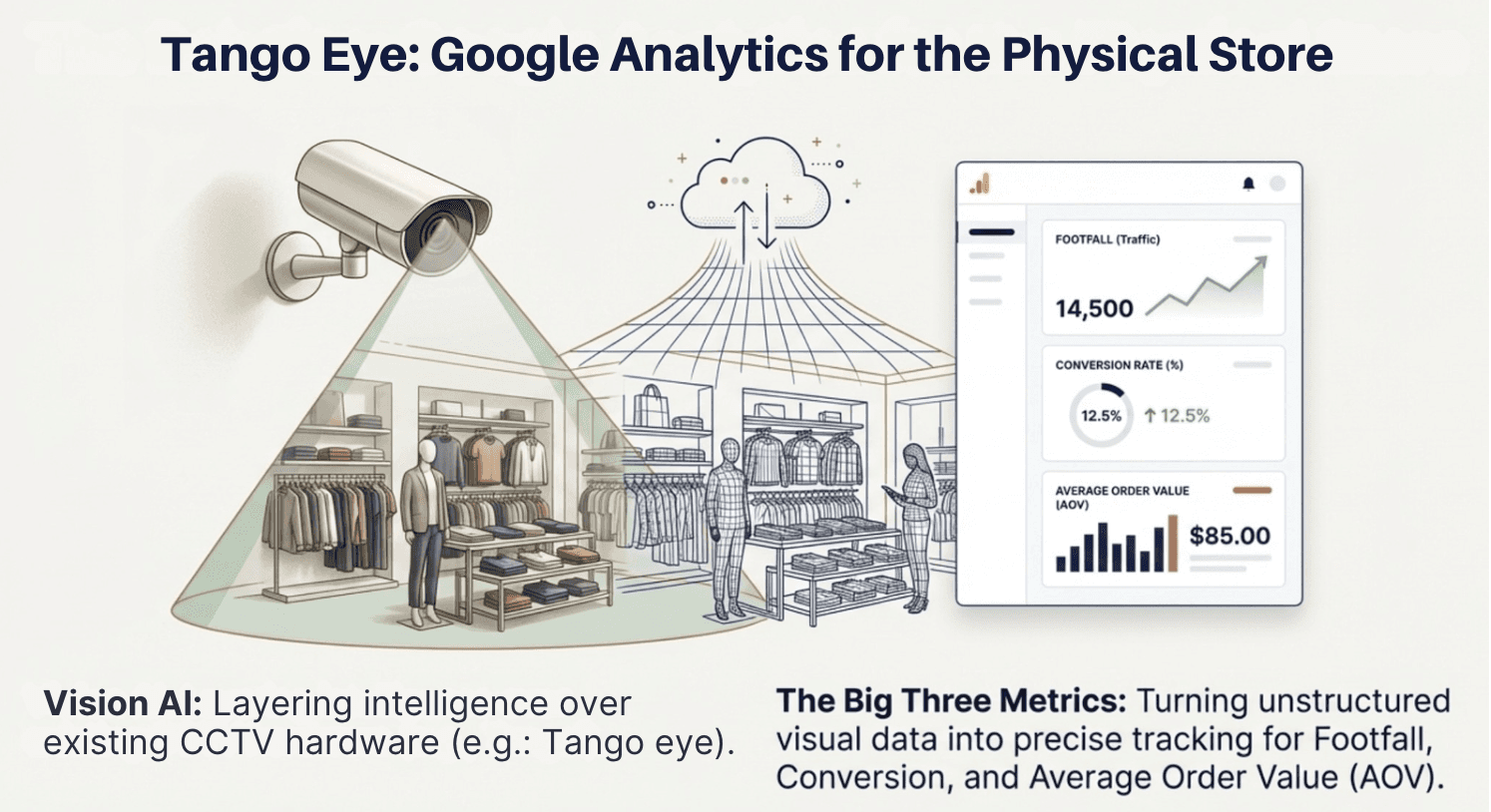
The simplest way to describe Tango Eye is that it's Google Analytics for your physical store. It plugs into your existing CCTV cameras, no new hardware needed, and runs an intelligence layer on top that tells you what's actually happening inside your store.
India is the world's third largest retail market and over 90% of purchases still happen inside physical stores. Yet most conversations about retail tech completely ignore offline. The focus is always on e-commerce: online funnels, digital ads, app UX. But the real action, the real transactions, have always been happening offline. That gap is exactly what Suren, founder of Tango Eye, set out to fix.
Many omnichannel brands have successfully scaled their store networks, and Suren has been at the heart of building that playbook, quietly becoming the secret sauce behind how brands hyperscale from 10 stores to 500. He came from Wall Street, moved back to India in 2017, and noticed something that most people were missing, visual AI was exploding, but nobody was applying it to physical retail. With approx 15 million offline retail outlets in India alone, he saw a massive underserved problem and went after it.
What exactly is Tango Eye?
The simplest way to describe Tango Eye is that it's Google Analytics for your physical store. It plugs into your existing CCTV cameras, no new hardware needed, and runs an intelligence layer on top that tells you what's actually happening inside your store.
Stores consistently under-report their own footfall. Why? Because when the security guard is counting, they're working backwards from the conversion number they already achieved. So the count always conveniently matches. You're not optimizing for potential, you're just justifying outcomes.
Tango Eye's system strips that all away and gives you real numbers. And then it goes further.
Tango Eye currently operates across 10,000+ stores, 50–60 brands, and multiple countries including India, Singapore, and the UAE.
Stores consistently under-report their own footfall. Why? Because when the security guard is counting, they're working backwards from the conversion number they already achieved. So the count always conveniently matches. You're not optimizing for potential, you're just justifying outcomes.
Tango Eye's system strips that all away and gives you real numbers. And then it goes further.
Tango Eye currently operates across 10,000+ stores, 50–60 brands, and multiple countries including India, Singapore, and the UAE.
What Does the Offline Conversion Funnel Really Look Like?
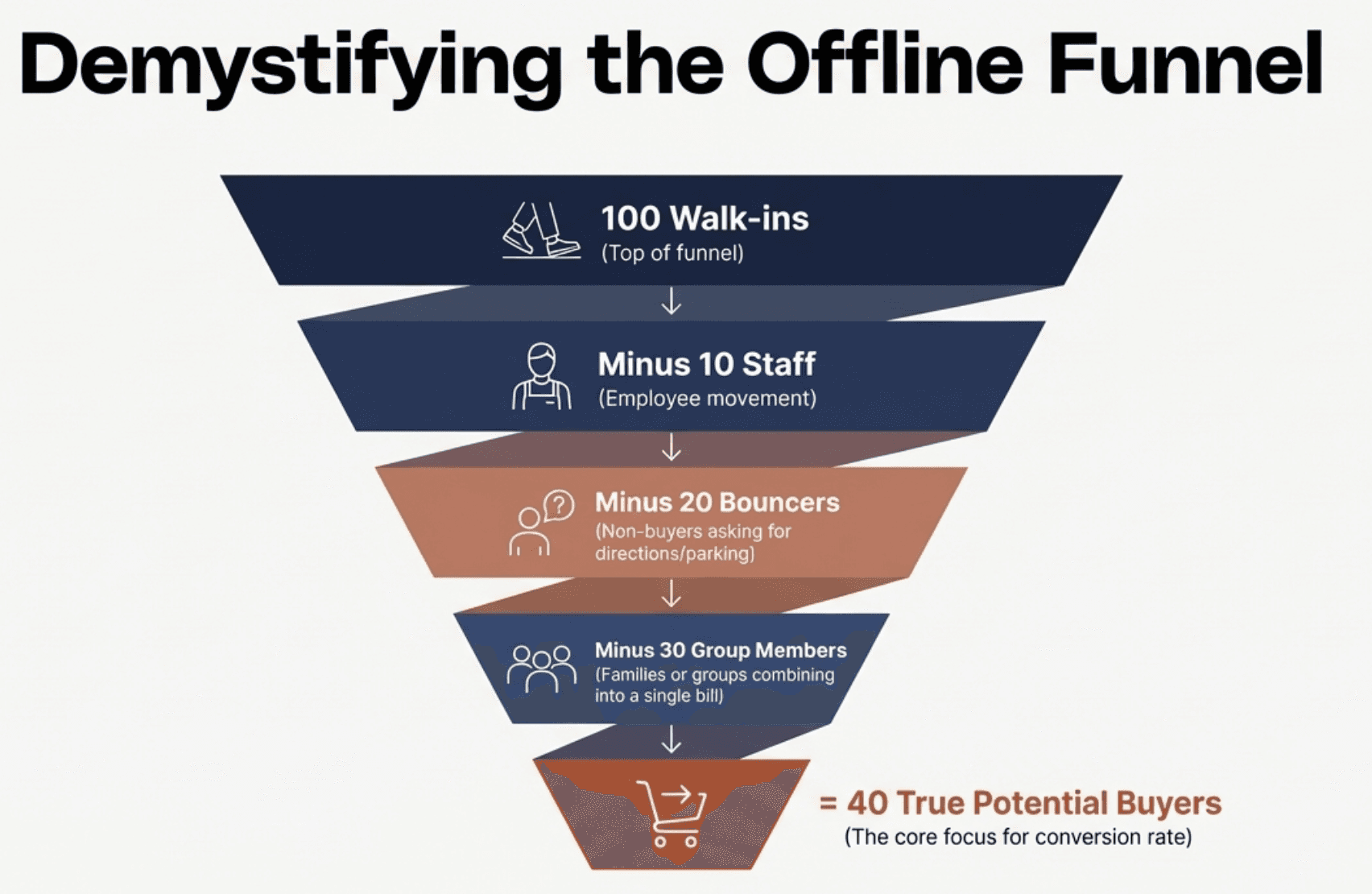
Think of footfall like website visits. Out of 100 people who walk in:
10 are staff, remove them.
20 are "bouncers", people asking where the restroom is, not potential buyers.
You're left with 70. But families walk in together and share one bill, so your true individual potential buyers might be closer to 40.
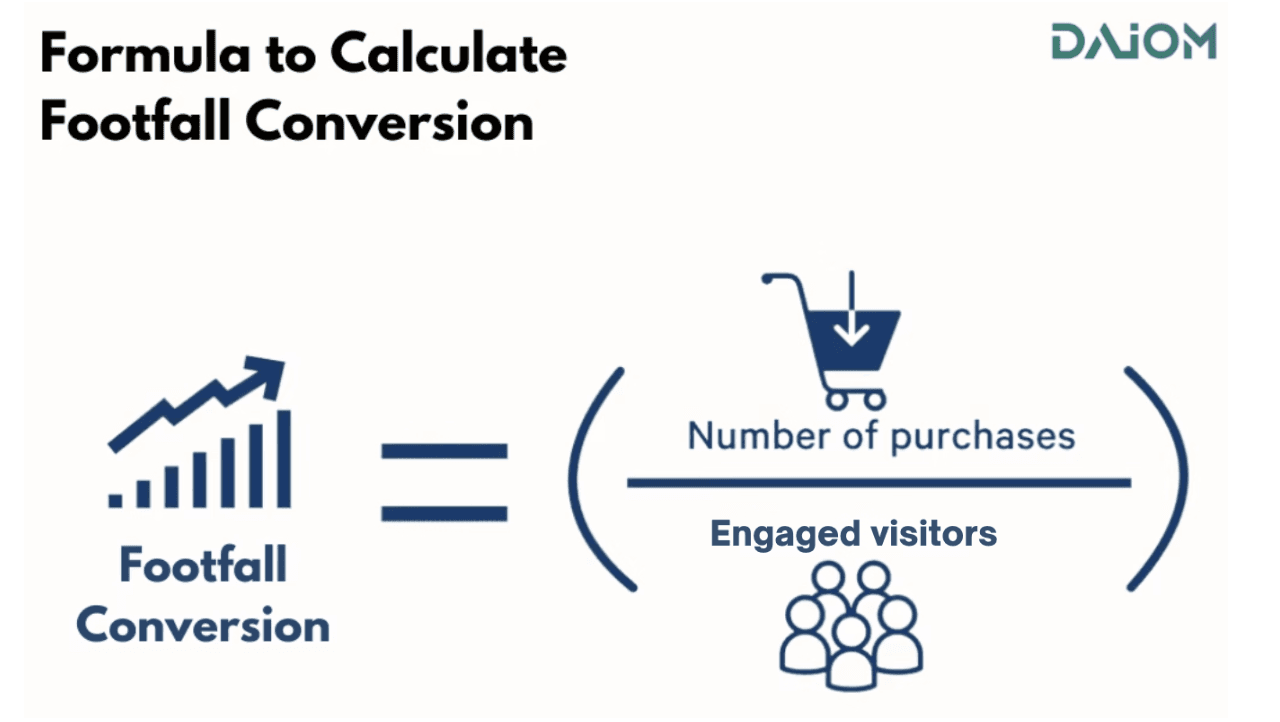
Now you have 40 genuine prospects. What happens to them inside the store, which aisle they visit, how long they spend, whether a staff member approaches them, that's your conversion funnel. And that's where Tango Eye lives.
One brand Suren mentioned tracks it even deeper. A Gen Z fast fashion brand, measures store-to-trial-room conversion first, then trial-room-to-purchase. If people are trying stuff but not buying, that's a product problem. If they're not even making it to the trial room, that's a store experience problem. Very different fixes for very different issues.
What Does the Offline Conversion Funnel Really Look Like?
Think of footfall like website visits. Out of 100 people who walk in:
10 are staff, remove them.
20 are "bouncers", people asking where the restroom is, not potential buyers.
You're left with 70. But families walk in together and share one bill, so your true individual potential buyers might be closer to 40.
Now you have 40 genuine prospects. What happens to them inside the store, which aisle they visit, how long they spend, whether a staff member approaches them, that's your conversion funnel. And that's where Tango Eye lives.
One brand Suren mentioned tracks it even deeper. A Gen Z fast fashion brand, measures store-to-trial-room conversion first, then trial-room-to-purchase. If people are trying stuff but not buying, that's a product problem. If they're not even making it to the trial room, that's a store experience problem. Very different fixes for very different issues.
What Does the Offline Conversion Funnel Really Look Like?
Think of footfall like website visits. Out of 100 people who walk in:
10 are staff, remove them.
20 are "bouncers", people asking where the restroom is, not potential buyers.
You're left with 70. But families walk in together and share one bill, so your true individual potential buyers might be closer to 40.
Now you have 40 genuine prospects. What happens to them inside the store, which aisle they visit, how long they spend, whether a staff member approaches them, that's your conversion funnel. And that's where Tango Eye lives.
One brand Suren mentioned tracks it even deeper. A Gen Z fast fashion brand, measures store-to-trial-room conversion first, then trial-room-to-purchase. If people are trying stuff but not buying, that's a product problem. If they're not even making it to the trial room, that's a store experience problem. Very different fixes for very different issues.
Why Do Most Brands Get Store Operations Completely Wrong?
When we talk about tech in an offline store, it breaks down into two clear sets —
Operational Tech that powers the business behind the scenes, and
Customer Tech that shapes the experience on the floor.
Why Do Most Brands Get Store Operations Completely Wrong?
When we talk about tech in an offline store, it breaks down into two clear sets —
Operational Tech that powers the business behind the scenes, and
Customer Tech that shapes the experience on the floor.
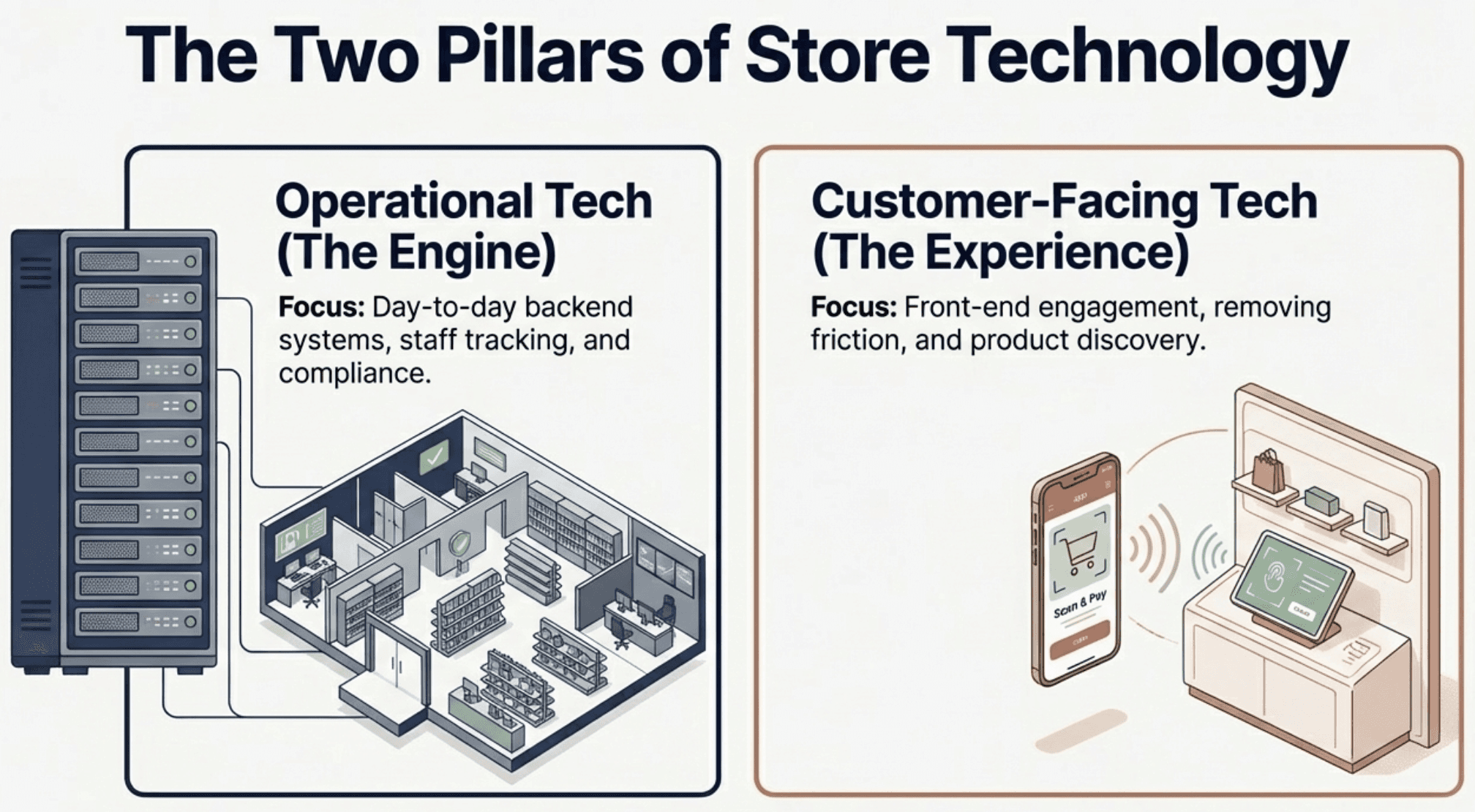
Before the fancy customer-facing tech, there's a whole layer of basic operational tech that most people underestimate. Suren breaks it into the basics every modern retailer should have: POS (billing), CRM, inventory management, CCTV…and then the more impactful modern tools that most brands still haven't fully leveraged.
1. Staff attendance and monitoring: Saurabh mentions that one brand had a conversion problem in the evenings. After they tracked the data, they got to know that the last two hours were covered by one person, during the highest footfall window on weekends. That's a scheduling problem.
2. Process checklists. Hundreds of daily tasks like from store opening procedures to cash management to pricing cards being displayed correctly. When brands are small, founders handle this personally. As they scale, consistency disappears unless it's systematized.
3. Footfall + demographics. One brand was trying to scale its kids' collection. Some stores sold it well, others didn't. Was it a merchandising problem or a traffic problem? By overlaying kids' demographic data on footfall, they identified which stores actually had families walking in, and doubled down on kids' inventory there.
Before the fancy customer-facing tech, there's a whole layer of basic operational tech that most people underestimate. Suren breaks it into the basics every modern retailer should have: POS (billing), CRM, inventory management, CCTV…and then the more impactful modern tools that most brands still haven't fully leveraged.
1. Staff attendance and monitoring: Saurabh mentions that one brand had a conversion problem in the evenings. After they tracked the data, they got to know that the last two hours were covered by one person, during the highest footfall window on weekends. That's a scheduling problem.
2. Process checklists. Hundreds of daily tasks like from store opening procedures to cash management to pricing cards being displayed correctly. When brands are small, founders handle this personally. As they scale, consistency disappears unless it's systematized.
3. Footfall + demographics. One brand was trying to scale its kids' collection. Some stores sold it well, others didn't. Was it a merchandising problem or a traffic problem? By overlaying kids' demographic data on footfall, they identified which stores actually had families walking in, and doubled down on kids' inventory there.
What Customer-Facing Tech Is Actually Worth Investing In?
This is where it gets interesting for shoppers.
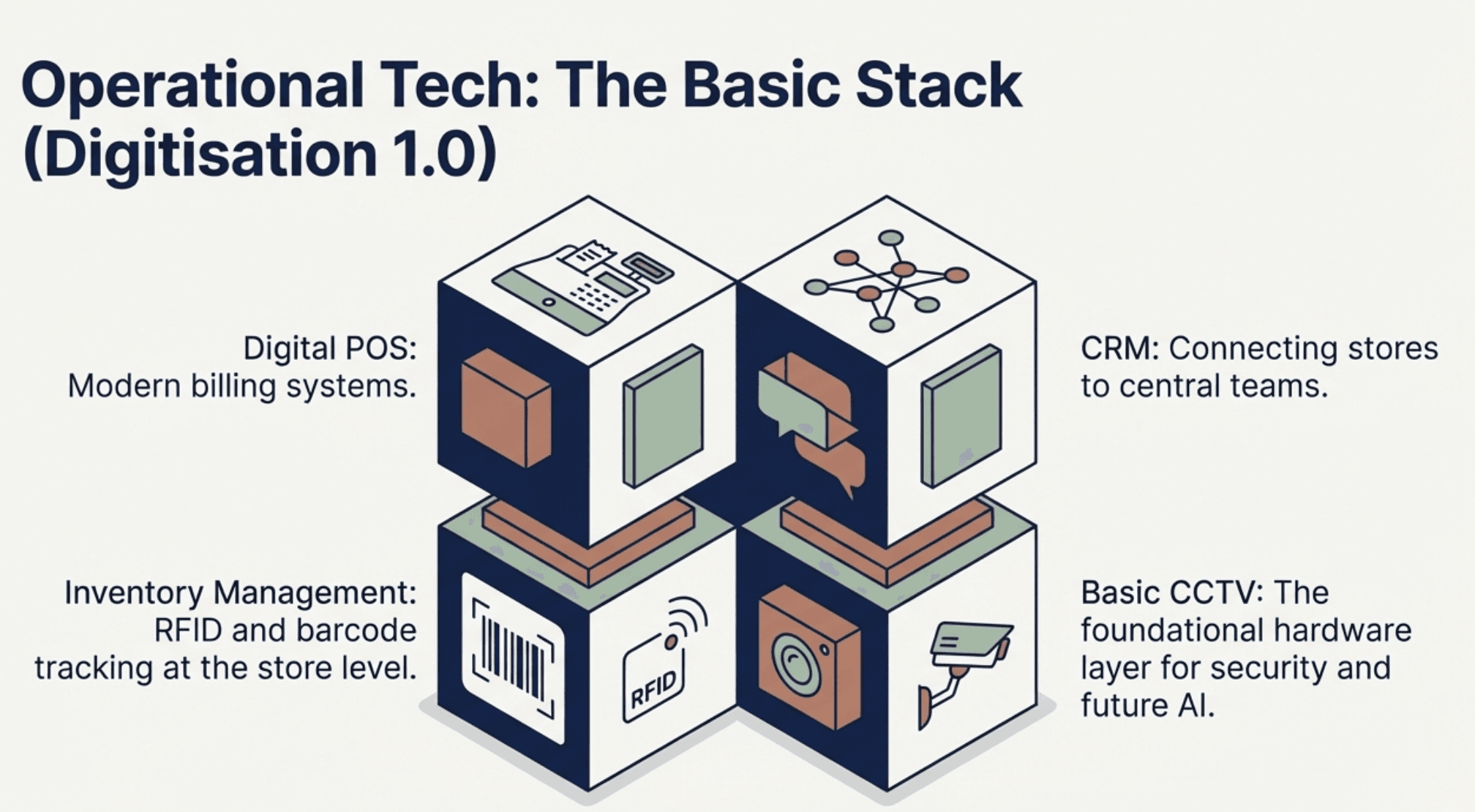
Virtual try-on is evolving fast. Lens and eyewear brands have been doing it for years. And now, The Pant Project built something that not only shows you how a product looks but helps you figure out sizing and fit.
Endless aisle: a QR code or a screen in-store that lets you browse the full catalogue, not just what's physically on the shelf. Decathlon does this well. If your size or color isn't available, scan it, order it, get it delivered. You don't lose the sale or the customer.
What Customer-Facing Tech Is Actually Worth Investing In?
This is where it gets interesting for shoppers.
Virtual try-on is evolving fast. Lens and eyewear brands have been doing it for years. And now, The Pant Project built something that not only shows you how a product looks but helps you figure out sizing and fit.
Endless aisle: a QR code or a screen in-store that lets you browse the full catalogue, not just what's physically on the shelf. Decathlon does this well. If your size or color isn't available, scan it, order it, get it delivered. You don't lose the sale or the customer.
What Customer-Facing Tech Is Actually Worth Investing In?
This is where it gets interesting for shoppers.
Virtual try-on is evolving fast. Lens and eyewear brands have been doing it for years. And now, The Pant Project built something that not only shows you how a product looks but helps you figure out sizing and fit.
Endless aisle: a QR code or a screen in-store that lets you browse the full catalogue, not just what's physically on the shelf. Decathlon does this well. If your size or color isn't available, scan it, order it, get it delivered. You don't lose the sale or the customer.
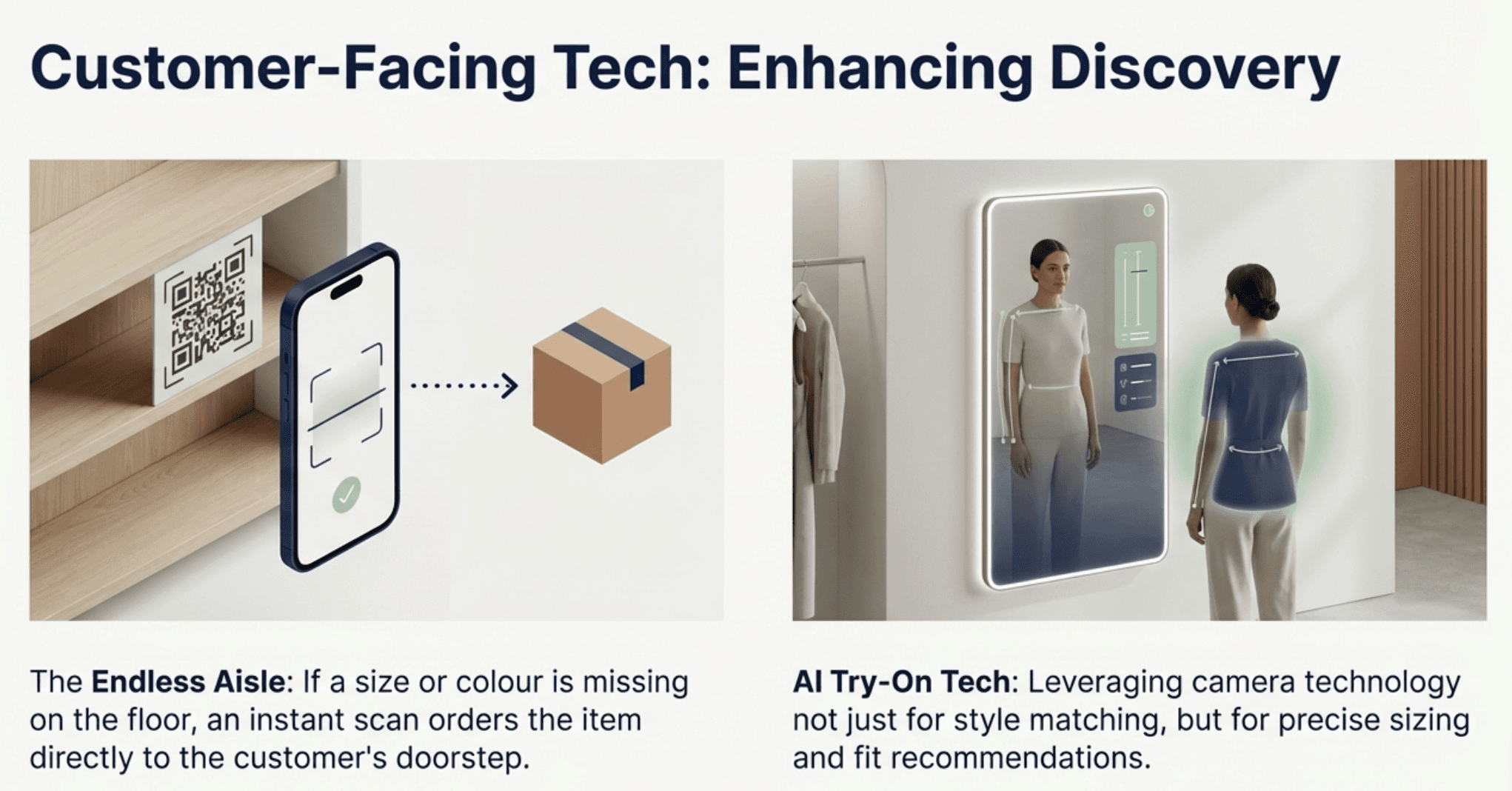
Appointment booking works brilliantly for high-touch categories such as Jewelry, eyewear, wedding wear. If you're going in to pick a lehenga or a sherwani for your wedding, you want a specialist. You want the store manager to know you're coming. Appointment systems make that happen and signal high-intent customers in advance.
Self-checkout is growing, especially in large format retail. Decathlon, Uniqlo, they've redesigned the staff role entirely. Staff aren't there to guide you through the store anymore. They're there to solve problems when something goes wrong. One person can manage multiple checkout points. Efficient for the brand, faster for the customer.
Appointment booking works brilliantly for high-touch categories such as Jewelry, eyewear, wedding wear. If you're going in to pick a lehenga or a sherwani for your wedding, you want a specialist. You want the store manager to know you're coming. Appointment systems make that happen and signal high-intent customers in advance.
Self-checkout is growing, especially in large format retail. Decathlon, Uniqlo, they've redesigned the staff role entirely. Staff aren't there to guide you through the store anymore. They're there to solve problems when something goes wrong. One person can manage multiple checkout points. Efficient for the brand, faster for the customer.
Appointment booking works brilliantly for high-touch categories such as Jewelry, eyewear, wedding wear. If you're going in to pick a lehenga or a sherwani for your wedding, you want a specialist. You want the store manager to know you're coming. Appointment systems make that happen and signal high-intent customers in advance.
Self-checkout is growing, especially in large format retail. Decathlon, Uniqlo, they've redesigned the staff role entirely. Staff aren't there to guide you through the store anymore. They're there to solve problems when something goes wrong. One person can manage multiple checkout points. Efficient for the brand, faster for the customer.
What's the Biggest Mistake Brands Make with All This Tech?
What's the Biggest Mistake Brands Make with All This Tech?
Suren shared that brands spend months comparing, piloting, and trying tech. Then they compile it all into a presentation that nobody acts on.
The brands getting the most out of operational and store tech are the ones treating the data as a daily operational input, not a quarterly report.
Where Is AI Taking Store Tech Next?
We're moving from AI as a data collector to AI as a decision-maker.
How many staff should this store have on Saturday evening?
What products should go in the front aisle for the next two weeks?
Where should the new collection launch first, based on customer demographics by location?
These decisions are now being assisted by AI, and the gap between brands that use this well and those that don't is going to widen fast.
One thing which is clear from this episode of Dilse Omni Talks is: the offline store isn't dying but it's getting smarter. And the brands that treat their physical stores with the same analytical rigor they apply to their websites will have a serious edge.
Suren shared that brands spend months comparing, piloting, and trying tech. Then they compile it all into a presentation that nobody acts on.
The brands getting the most out of operational and store tech are the ones treating the data as a daily operational input, not a quarterly report.
Where Is AI Taking Store Tech Next?
We're moving from AI as a data collector to AI as a decision-maker.
How many staff should this store have on Saturday evening?
What products should go in the front aisle for the next two weeks?
Where should the new collection launch first, based on customer demographics by location?
These decisions are now being assisted by AI, and the gap between brands that use this well and those that don't is going to widen fast.
One thing which is clear from this episode of Dilse Omni Talks is: the offline store isn't dying but it's getting smarter. And the brands that treat their physical stores with the same analytical rigor they apply to their websites will have a serious edge.
Suren shared that brands spend months comparing, piloting, and trying tech. Then they compile it all into a presentation that nobody acts on.
The brands getting the most out of operational and store tech are the ones treating the data as a daily operational input, not a quarterly report.
Where Is AI Taking Store Tech Next?
We're moving from AI as a data collector to AI as a decision-maker.
How many staff should this store have on Saturday evening?
What products should go in the front aisle for the next two weeks?
Where should the new collection launch first, based on customer demographics by location?
These decisions are now being assisted by AI, and the gap between brands that use this well and those that don't is going to widen fast.
One thing which is clear from this episode of Dilse Omni Talks is: the offline store isn't dying but it's getting smarter. And the brands that treat their physical stores with the same analytical rigor they apply to their websites will have a serious edge.

The biggest takeaway from this episode?
The biggest takeaway from this episode?
Offline retail is not dying — it is just finally getting the analytics layer it always deserved.
Offline retail is not dying — it is just finally getting the analytics layer it always deserved.
Most store problems are scheduling, merchandising, or compliance problems in disguise — not marketing problems.
Most store problems are scheduling, merchandising, or compliance problems in disguise — not marketing problems.
The brands scaling from 10 stores to 500 are not spending more — they are simply seeing more clearly than everyone else.
The brands scaling from 10 stores to 500 are not spending more — they are simply seeing more clearly than everyone else.
https://yt.openinapp.co/storetech_suren_dilseomni
This is just the beginning. If you’re ready to understand how AI and Omnichannel thinking work together, and hear real stories from people building the future
This is just the beginning. If you’re ready to understand how AI and Omnichannel thinking work together, and hear real stories from people building the future

Talks with Saurabh Agrawal
Talks with Saurabh Agrawal

Talks with Saurabh Agrawal
Latest Episodes

EP18: Growth Playbook by Sanjeev Bikhchandani
There are very few people who have genuinely shaped the way India works, loves, and learns — all from one desk, one insight, and one stubborn belief that the internet would change everything before most people even knew what a server was. Sanjeev Bikhchandani is one of those people.
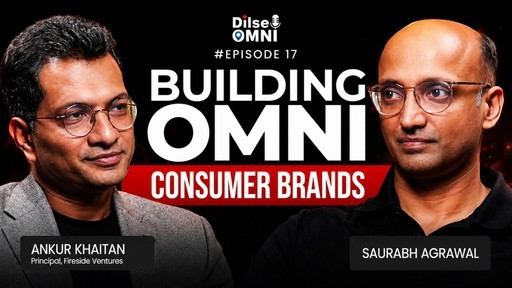
EP17: Building Omni Consumer Brands
India's retail market is a $1 trillion opportunity today and is projected to touch $2 trillion by 2030. The brands that will capture that growth are not the ones spending the most on Meta or building the fanciest app.

EP16: Scaling India's Convenience Retail
India has 1.4 billion people, a retail market projected to grow from $1.05 trillion to $1.9 trillion, and barely 1,000 organised convenience stores. The United States has 300,000. Korea has two lakh. Thailand has 7-Eleven on every corner. The gap is staggering, and it represents one of the biggest untapped opportunities in Indian retail.

EP15: Building a D2C Publishing Business
The real thesis behind ZebraLearn is that a book is not the end of a learning journey. It is a milestone within one. And the platform's job is to be present for the entire journey — from discovery to purchase, from reading to application, from one book to the next. That is what makes it a platform, not a publisher.

EP14: Scaling Omnichannel Fast Fashion Brand
Most fashion brands start with a mood board. NEWME started with a data pipeline. In a candid conversation on DilSe Omni, Sumit Jasoria, co-founder and CEO of NEWME, which is a brand that didn't exist three years ago, is now one of India's fastest-growing Gen Z fashion labels, jumping from ₹3.4 crore in FY23 to ₹180 crore in FY25. A 52x revenue jump. In under three years.

EP13: Do Kids Need Their Own Personal Care?
This podcast explores why children need dedicated personal care products instead of using baby or adult formulations, highlighting the emerging gap in India’s beauty and skincare market. Through insights shared by Aishvarya Murali, founder of Tuco Kids, the discussion covers category creation, evolving parenting awareness, product design for kids, and the unique challenge of balancing parental trust with children’s product experience.
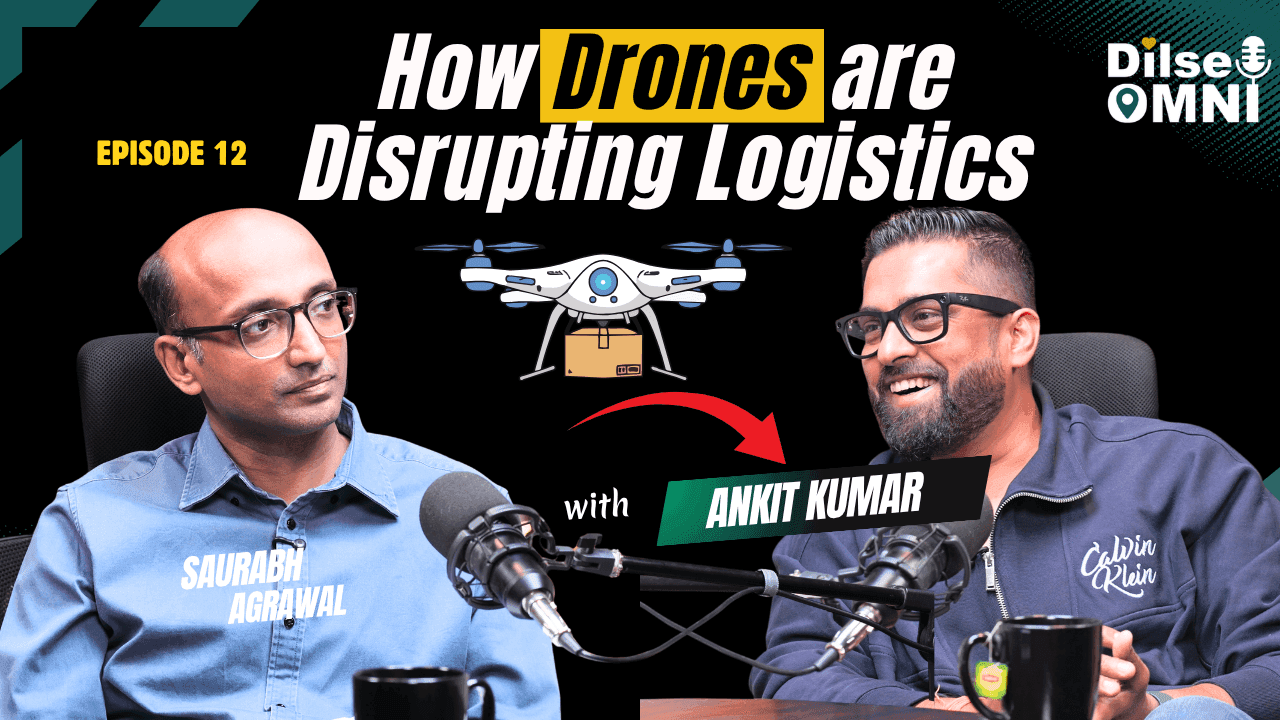
How are Drones Disrupting the Logistics | Ankit Kumar X Saurabh Agrawal | Dilse Omni Talks: E12
In this episode, Ankit, who is leading Skye Air Mobility tells about the transform logistics with efficient, reliable, and sustainable drone delivery networks.
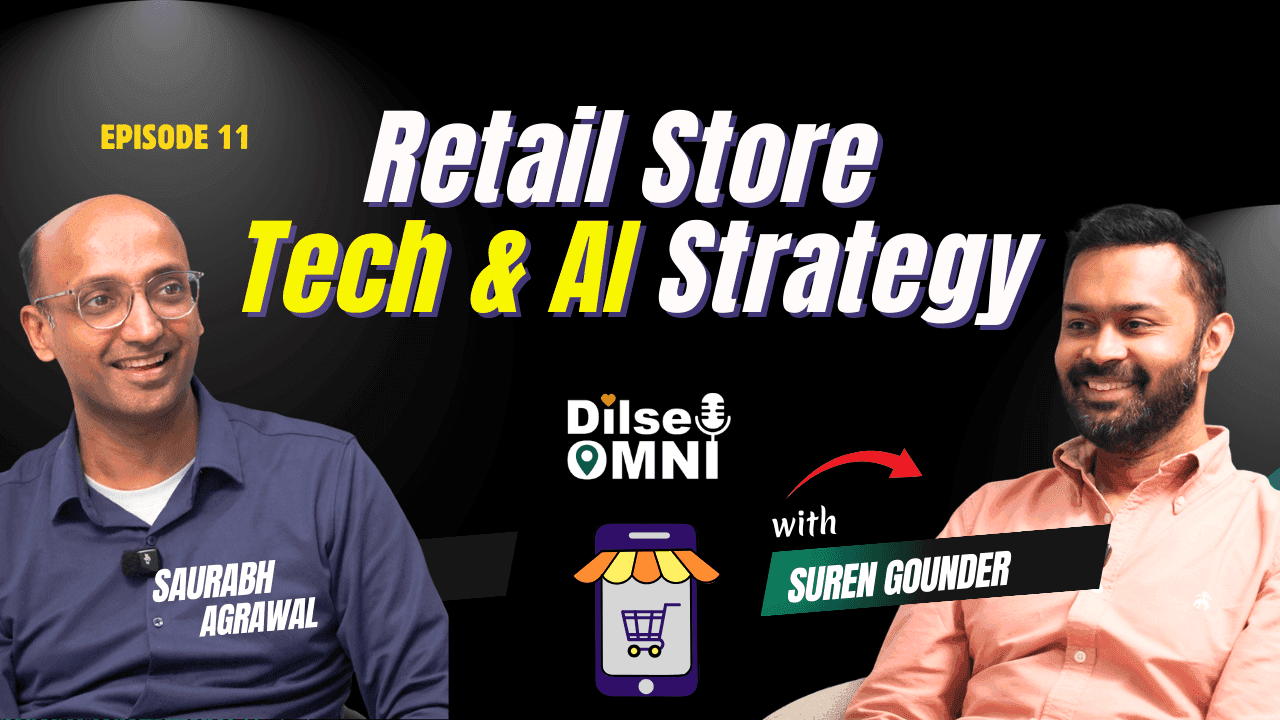
Retail Store Tech & AI Strategy | Suren Gounder X Saurabh Agrawal | Dilse Omni Talks: EP11
In this episode, Suren breaks down how offline stores are evolving from gut-feel operations into data-driven businesses — and why the brands that embrace store tech today will be impossible to catch tomorrow.
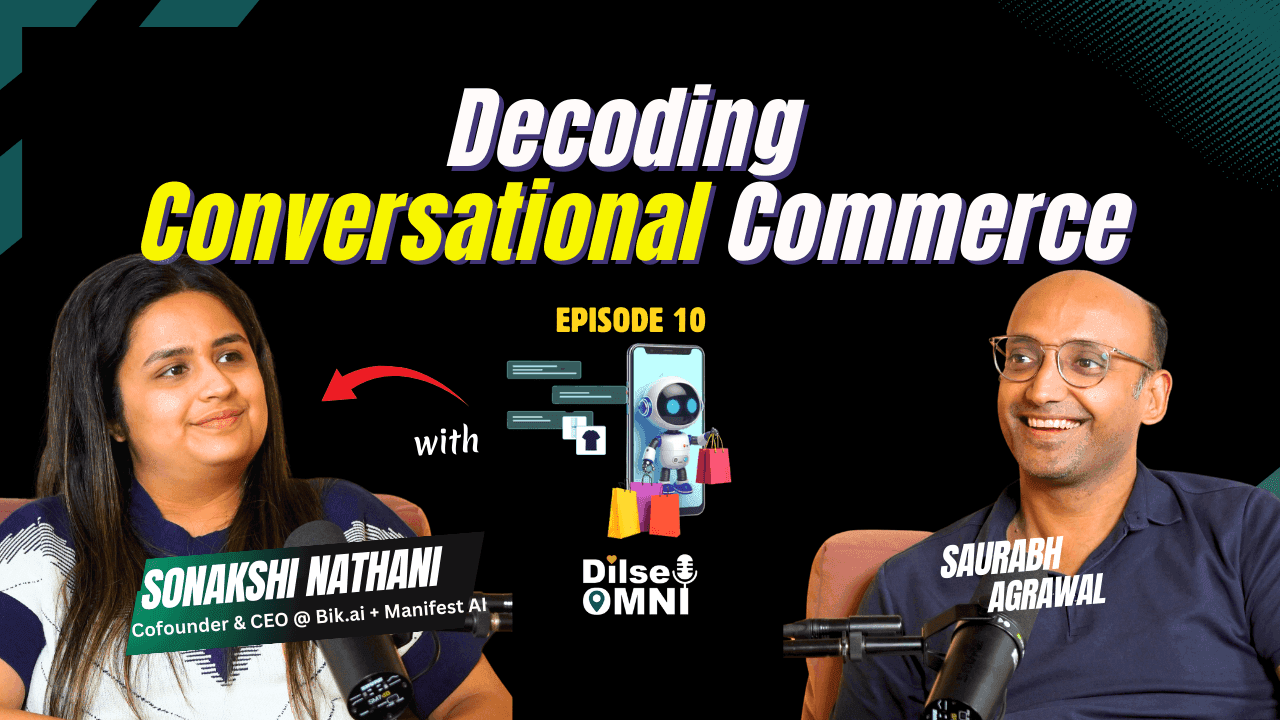
Decoding Conversational Commerce
Sonakshi Nathani — YC and Sequoia-backed founder who scaled Manifest AI to $4.5M ARR in two years without marketing spend — joins Saurabh to decode how AI chatbots are reshaping modern commerce.
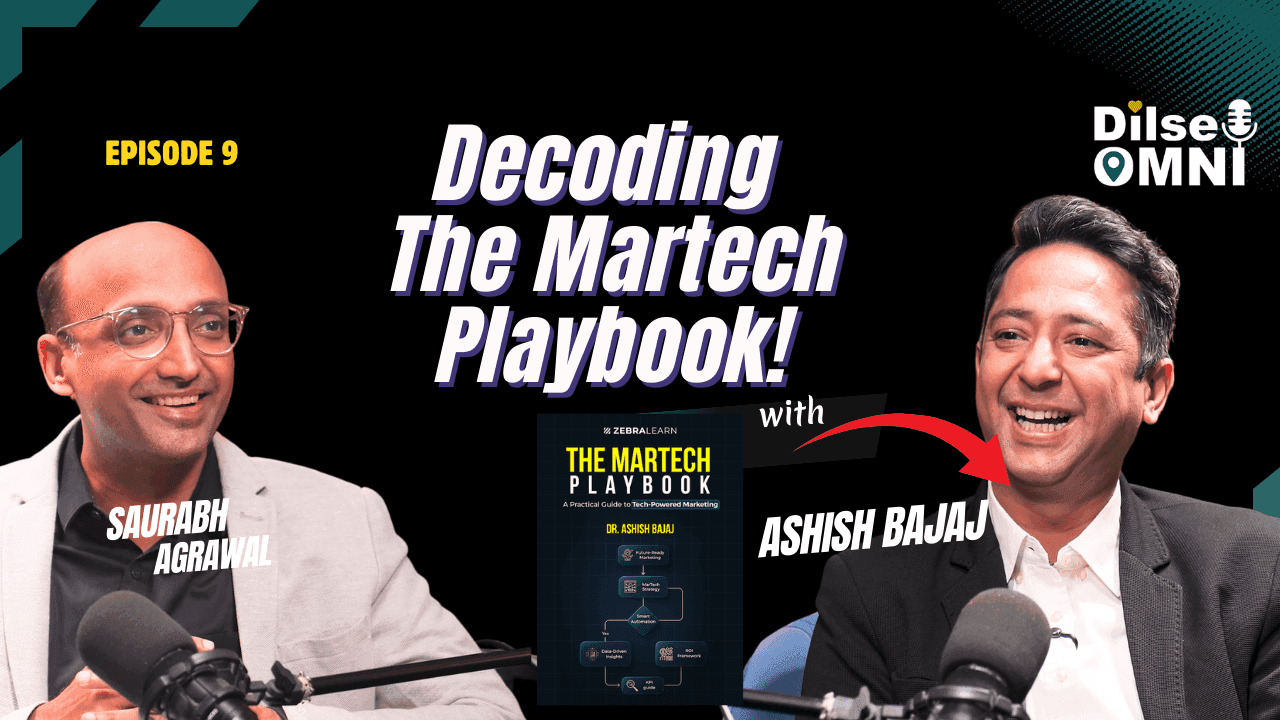
Decoding Martech Playbook | Dr. Ashish Bajaj X Saurabh Agrawal | Dilse Omni Talks: EP9
This episode breaks down why Martech is no longer optional but essential for brands that want to move from fragmented campaigns to connected, data-driven growth.
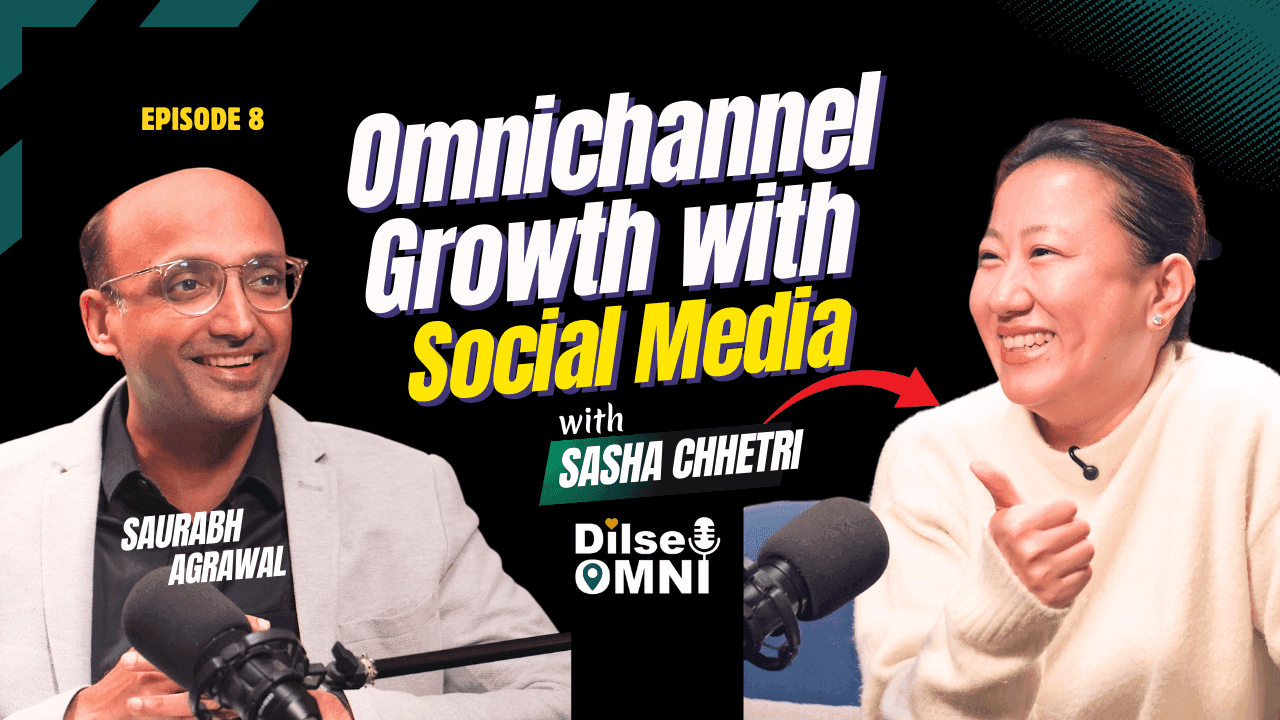
Omnichannel Growth with Social Media | Sasha Chhetri X Saurabh Agrawal | Dilse Omni Talks: EP8
Saurabh sits down with Sasha, to unpack how social media actually drives real business outcomes when you stop chasing vanity metrics and start designing for omnichannel growth.
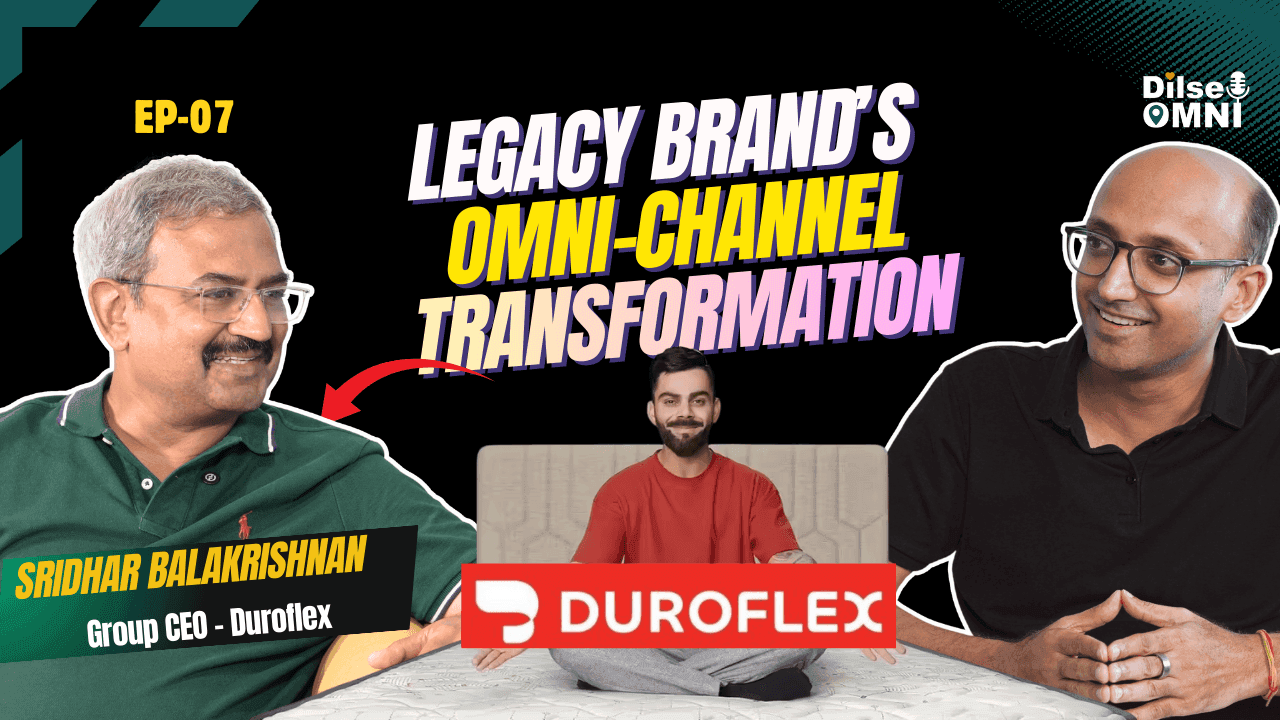
Legacy Brand's Omnichannel Transformation | Sridhar Balakrishnan X Saurabh Agrawal | DilSe Omni Talks: EP7
Saurabh sits down with Sridhar, Group CEO - Duroflex, to understand how a legacy brands can build omnichannel with patience and purpose.
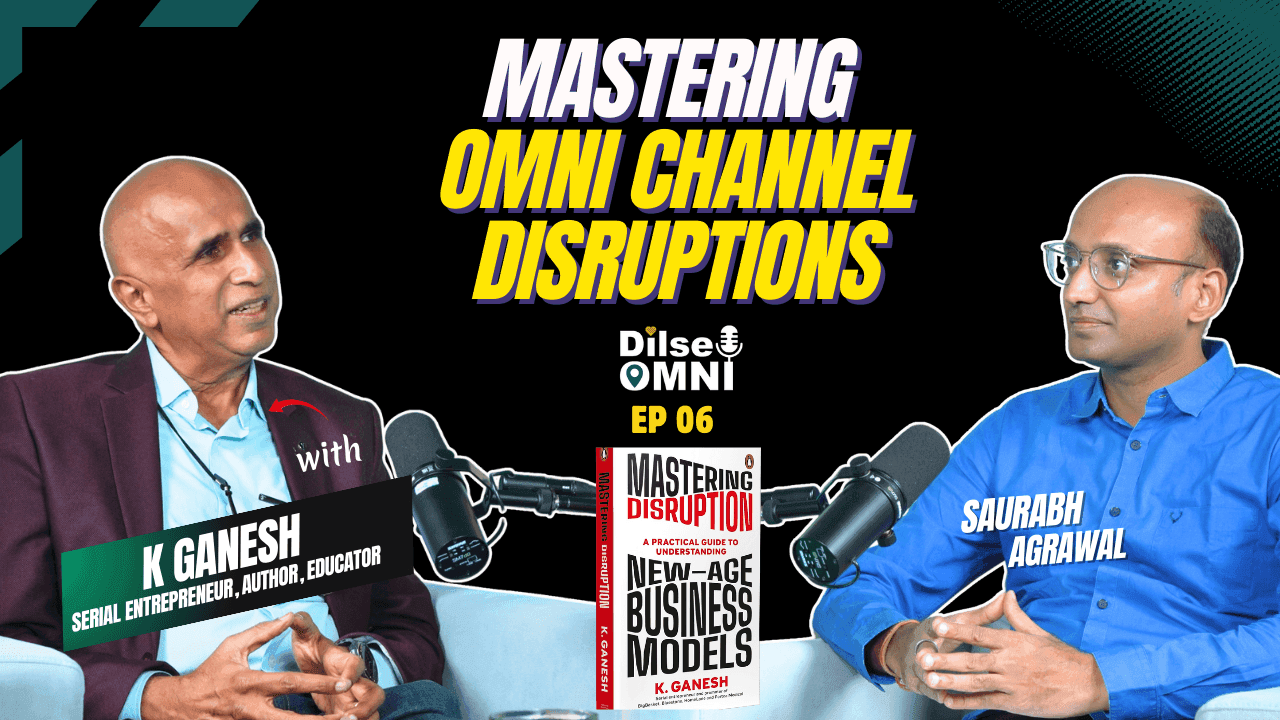
Mastering Omnichannel Disruptions | K Ganesh X Saurabh Agrawal | DilSe Omni Talks: EP6
Saurabh sits down with K Ganesh, a serial entrepreneur, author, and one of India’s most respected startup builders, to unpack what really drives sustainable growth in modern businesses.
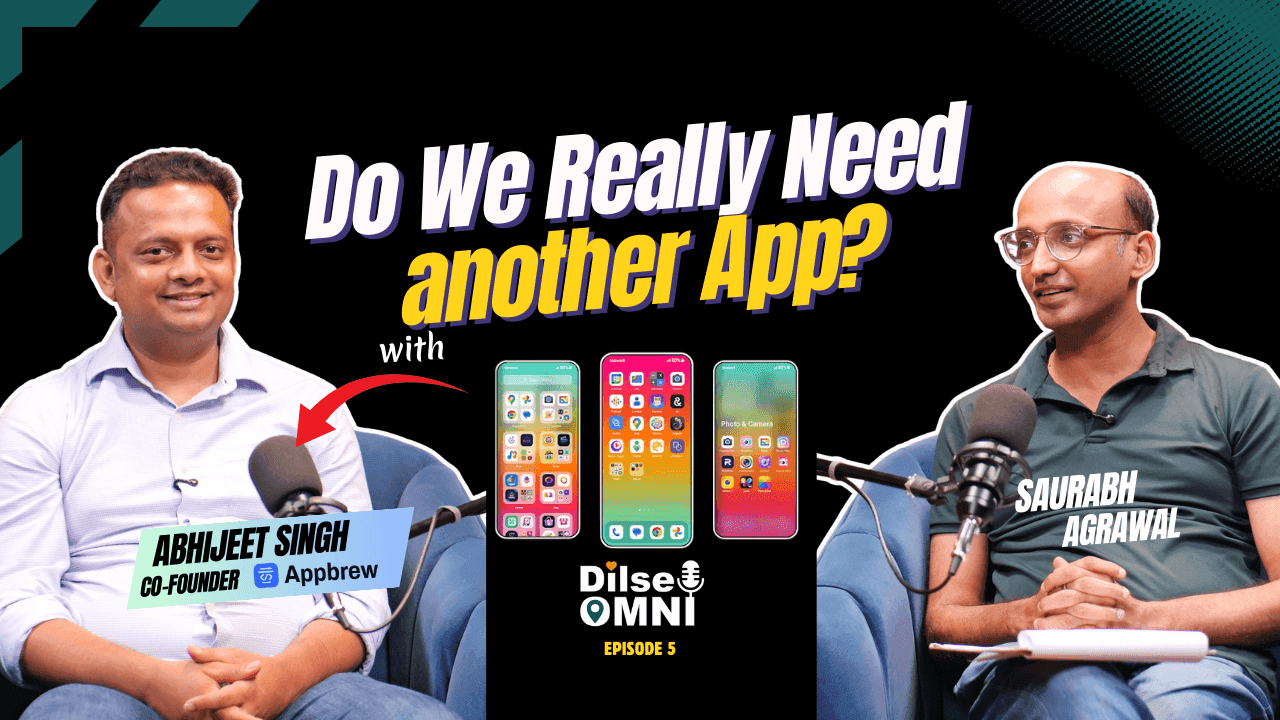
App Strategy for Omnichannel Brands | Abhijeet Singh X Saurabh Agrawal | DilSe Omni Talks: EP5
Saurabh and Abhijeet unpack when brands should actually invest in a mobile app, and why it’s not the right move for every category on day one.
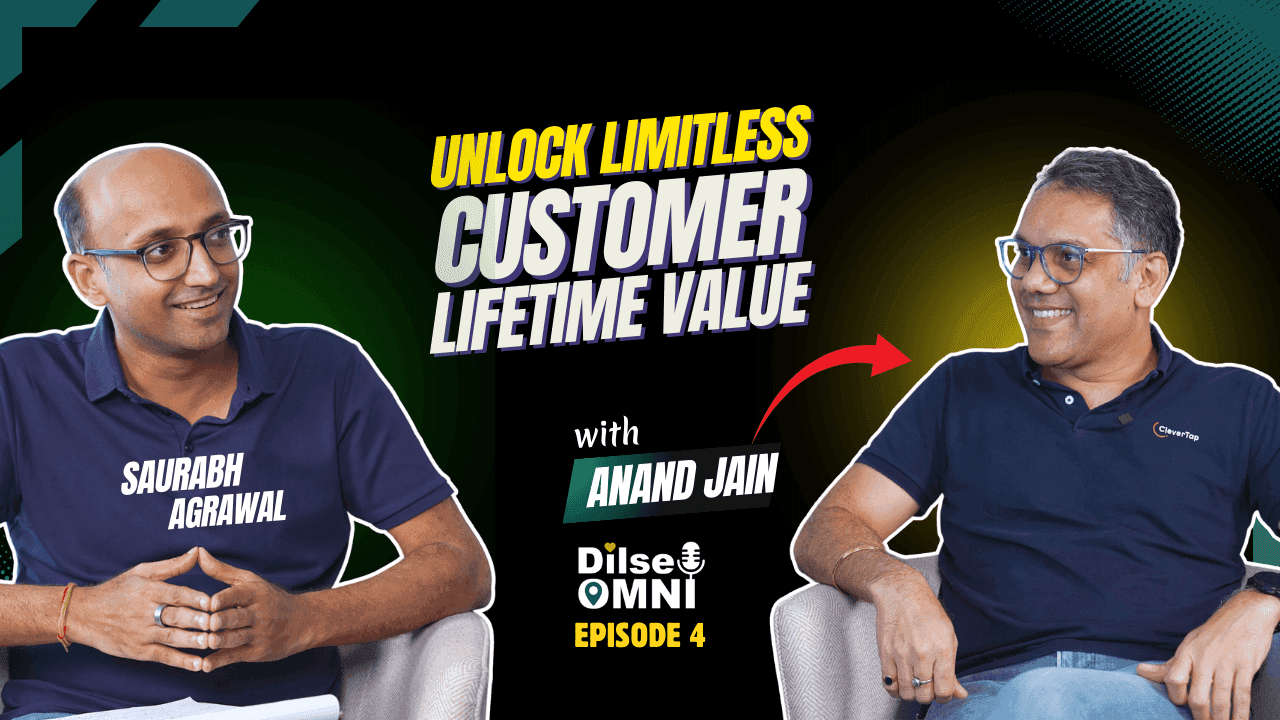
Unlock Limitless Customer Lifetime Value | Anand Jain X Saurabh Agrawal | DilSe Omni Talks: EP4
Saurabh and Anand talk about resilience, first-principles thinking, and how AI-driven personalization is reshaping retention.
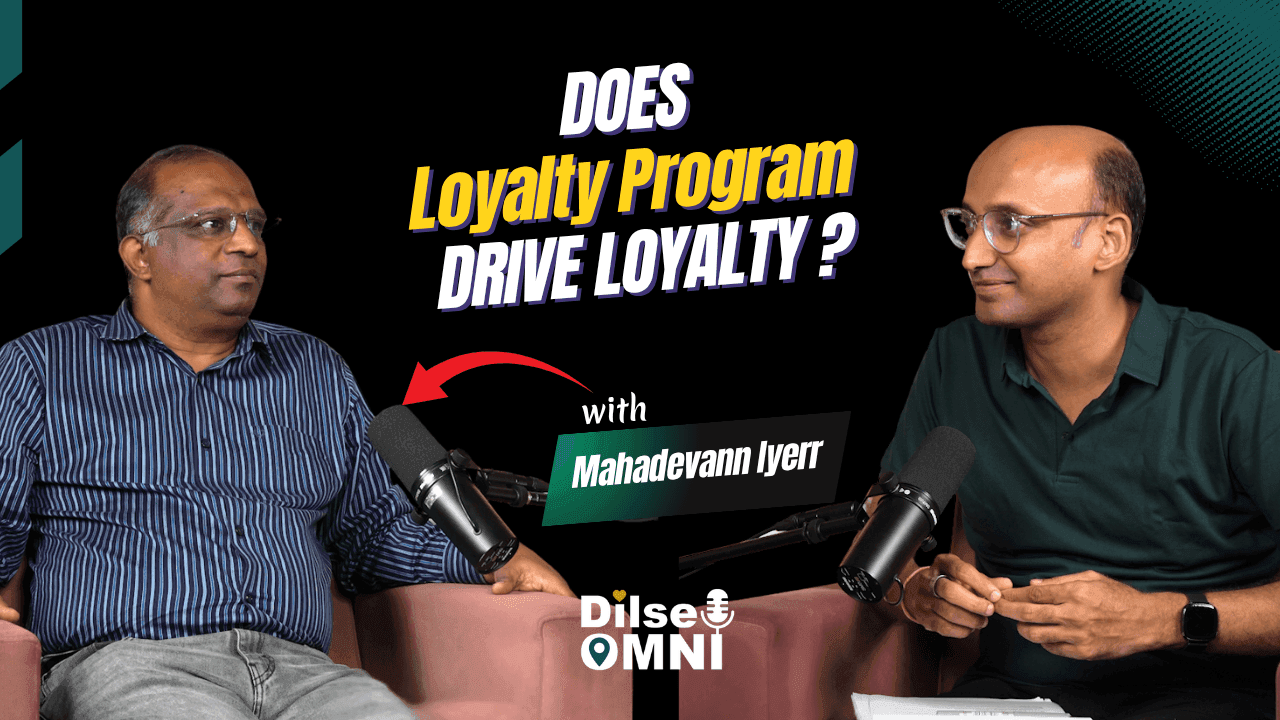
Does Loyalty Program really drives Loyalty | Mahadevann Iyerr x Saurabh Agrawal | DilSe Omni Talks: EP3
Saurabh and Maha talk about how loyalty programs don't create loyalty. Experience creates loyalty. Programs amplify it.
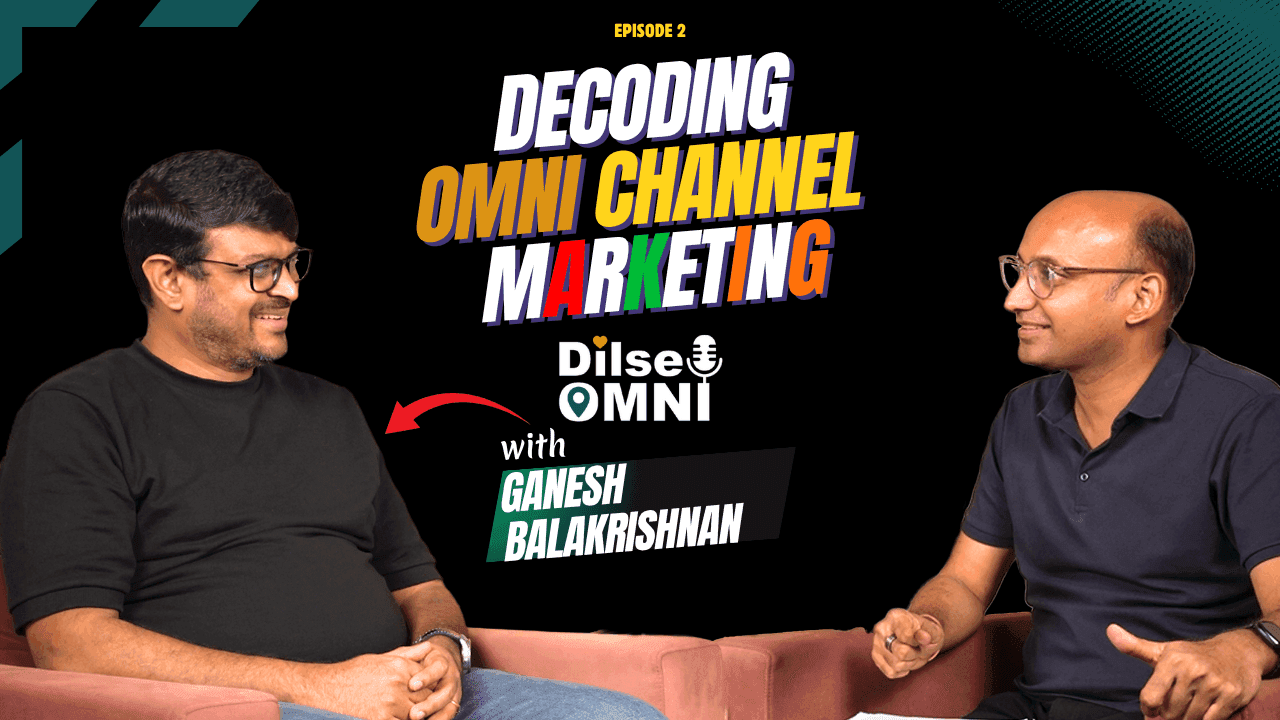
Decoding Omnichannel Marketing | Ganesh Balakrishnan x Saurabh Agrawal | DilSe Omni Talks: EP2
Saurabh and Ganesh decode modern marketing – blending data, retention, and omnichannel strategy to build human, memorable brand experiences.
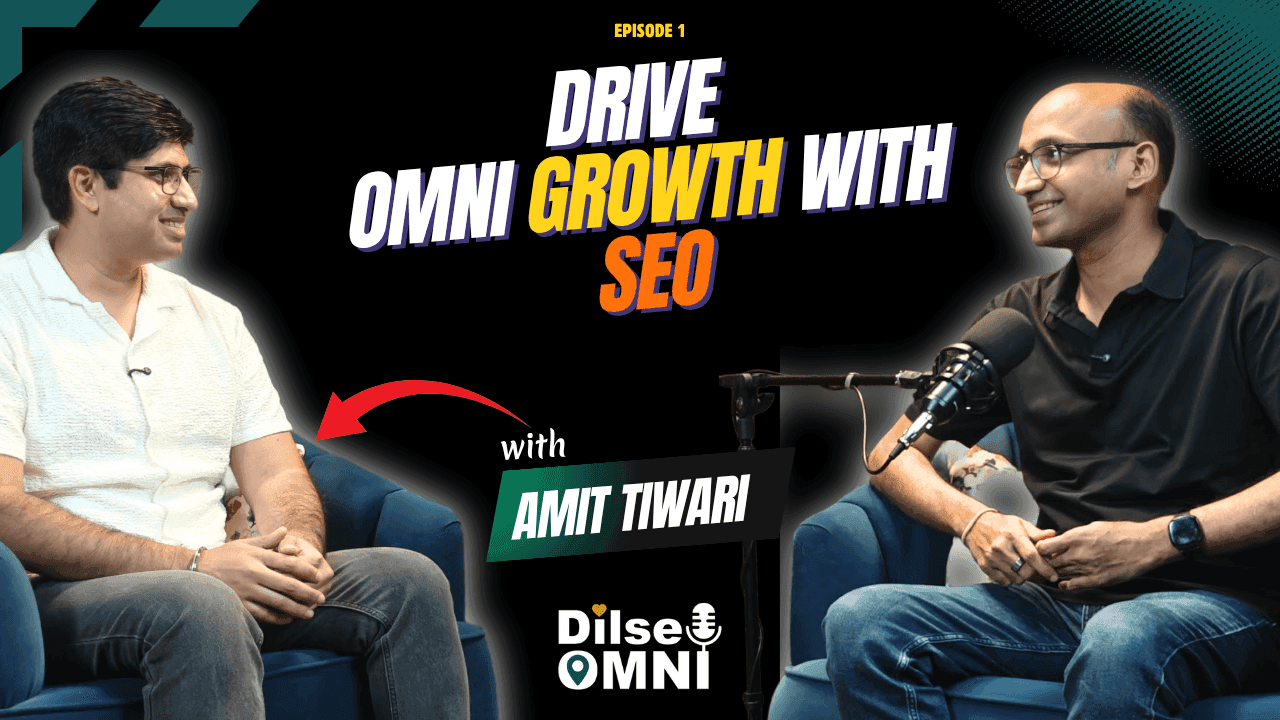
Top 5 SEO Strategies for Omni Success with AI | Amit Tiwari x Saurabh Agrawal | DilSe Omni Talks: EP1
Discover how AI, data, and Omnichannel thinking are redefining SEO as the heartbeat of modern brands—online, offline, and everywhere in between.
Latest Episodes
EP18: Growth Playbook by Sanjeev Bikhchandani
There are very few people who have genuinely shaped the way India works, loves, and learns — all from one desk, one insight, and one stubborn belief that the internet would change everything before most people even knew what a server was. Sanjeev Bikhchandani is one of those people.
EP17: Building Omni Consumer Brands
India's retail market is a $1 trillion opportunity today and is projected to touch $2 trillion by 2030. The brands that will capture that growth are not the ones spending the most on Meta or building the fanciest app.
EP16: Scaling India's Convenience Retail
India has 1.4 billion people, a retail market projected to grow from $1.05 trillion to $1.9 trillion, and barely 1,000 organised convenience stores. The United States has 300,000. Korea has two lakh. Thailand has 7-Eleven on every corner. The gap is staggering, and it represents one of the biggest untapped opportunities in Indian retail.
EP15: Building a D2C Publishing Business
The real thesis behind ZebraLearn is that a book is not the end of a learning journey. It is a milestone within one. And the platform's job is to be present for the entire journey — from discovery to purchase, from reading to application, from one book to the next. That is what makes it a platform, not a publisher.
EP14: Scaling Omnichannel Fast Fashion Brand
Most fashion brands start with a mood board. NEWME started with a data pipeline. In a candid conversation on DilSe Omni, Sumit Jasoria, co-founder and CEO of NEWME, which is a brand that didn't exist three years ago, is now one of India's fastest-growing Gen Z fashion labels, jumping from ₹3.4 crore in FY23 to ₹180 crore in FY25. A 52x revenue jump. In under three years.
EP13: Do Kids Need Their Own Personal Care?
This podcast explores why children need dedicated personal care products instead of using baby or adult formulations, highlighting the emerging gap in India’s beauty and skincare market. Through insights shared by Aishvarya Murali, founder of Tuco Kids, the discussion covers category creation, evolving parenting awareness, product design for kids, and the unique challenge of balancing parental trust with children’s product experience.
How are Drones Disrupting the Logistics | Ankit Kumar X Saurabh Agrawal | Dilse Omni Talks: E12
In this episode, Ankit, who is leading Skye Air Mobility tells about the transform logistics with efficient, reliable, and sustainable drone delivery networks.
Retail Store Tech & AI Strategy | Suren Gounder X Saurabh Agrawal | Dilse Omni Talks: EP11
In this episode, Suren breaks down how offline stores are evolving from gut-feel operations into data-driven businesses — and why the brands that embrace store tech today will be impossible to catch tomorrow.
Decoding Conversational Commerce
Sonakshi Nathani — YC and Sequoia-backed founder who scaled Manifest AI to $4.5M ARR in two years without marketing spend — joins Saurabh to decode how AI chatbots are reshaping modern commerce.
Decoding Martech Playbook | Dr. Ashish Bajaj X Saurabh Agrawal | Dilse Omni Talks: EP9
This episode breaks down why Martech is no longer optional but essential for brands that want to move from fragmented campaigns to connected, data-driven growth.
Omnichannel Growth with Social Media | Sasha Chhetri X Saurabh Agrawal | Dilse Omni Talks: EP8
Saurabh sits down with Sasha, to unpack how social media actually drives real business outcomes when you stop chasing vanity metrics and start designing for omnichannel growth.
Legacy Brand's Omnichannel Transformation | Sridhar Balakrishnan X Saurabh Agrawal | DilSe Omni Talks: EP7
Saurabh sits down with Sridhar, Group CEO - Duroflex, to understand how a legacy brands can build omnichannel with patience and purpose.
Mastering Omnichannel Disruptions | K Ganesh X Saurabh Agrawal | DilSe Omni Talks: EP6
Saurabh sits down with K Ganesh, a serial entrepreneur, author, and one of India’s most respected startup builders, to unpack what really drives sustainable growth in modern businesses.
App Strategy for Omnichannel Brands | Abhijeet Singh X Saurabh Agrawal | DilSe Omni Talks: EP5
Saurabh and Abhijeet unpack when brands should actually invest in a mobile app, and why it’s not the right move for every category on day one.
Unlock Limitless Customer Lifetime Value | Anand Jain X Saurabh Agrawal | DilSe Omni Talks: EP4
Saurabh and Anand talk about resilience, first-principles thinking, and how AI-driven personalization is reshaping retention.
Does Loyalty Program really drives Loyalty | Mahadevann Iyerr x Saurabh Agrawal | DilSe Omni Talks: EP3
Saurabh and Maha talk about how loyalty programs don't create loyalty. Experience creates loyalty. Programs amplify it.
Decoding Omnichannel Marketing | Ganesh Balakrishnan x Saurabh Agrawal | DilSe Omni Talks: EP2
Saurabh and Ganesh decode modern marketing – blending data, retention, and omnichannel strategy to build human, memorable brand experiences.
Top 5 SEO Strategies for Omni Success with AI | Amit Tiwari x Saurabh Agrawal | DilSe Omni Talks: EP1
Discover how AI, data, and Omnichannel thinking are redefining SEO as the heartbeat of modern brands—online, offline, and everywhere in between.
Latest Episodes
EP18: Growth Playbook by Sanjeev Bikhchandani
There are very few people who have genuinely shaped the way India works, loves, and learns — all from one desk, one insight, and one stubborn belief that the internet would change everything before most people even knew what a server was. Sanjeev Bikhchandani is one of those people.
EP17: Building Omni Consumer Brands
India's retail market is a $1 trillion opportunity today and is projected to touch $2 trillion by 2030. The brands that will capture that growth are not the ones spending the most on Meta or building the fanciest app.
EP16: Scaling India's Convenience Retail
India has 1.4 billion people, a retail market projected to grow from $1.05 trillion to $1.9 trillion, and barely 1,000 organised convenience stores. The United States has 300,000. Korea has two lakh. Thailand has 7-Eleven on every corner. The gap is staggering, and it represents one of the biggest untapped opportunities in Indian retail.
EP15: Building a D2C Publishing Business
The real thesis behind ZebraLearn is that a book is not the end of a learning journey. It is a milestone within one. And the platform's job is to be present for the entire journey — from discovery to purchase, from reading to application, from one book to the next. That is what makes it a platform, not a publisher.
EP14: Scaling Omnichannel Fast Fashion Brand
Most fashion brands start with a mood board. NEWME started with a data pipeline. In a candid conversation on DilSe Omni, Sumit Jasoria, co-founder and CEO of NEWME, which is a brand that didn't exist three years ago, is now one of India's fastest-growing Gen Z fashion labels, jumping from ₹3.4 crore in FY23 to ₹180 crore in FY25. A 52x revenue jump. In under three years.
EP13: Do Kids Need Their Own Personal Care?
This podcast explores why children need dedicated personal care products instead of using baby or adult formulations, highlighting the emerging gap in India’s beauty and skincare market. Through insights shared by Aishvarya Murali, founder of Tuco Kids, the discussion covers category creation, evolving parenting awareness, product design for kids, and the unique challenge of balancing parental trust with children’s product experience.
How are Drones Disrupting the Logistics | Ankit Kumar X Saurabh Agrawal | Dilse Omni Talks: E12
In this episode, Ankit, who is leading Skye Air Mobility tells about the transform logistics with efficient, reliable, and sustainable drone delivery networks.
Retail Store Tech & AI Strategy | Suren Gounder X Saurabh Agrawal | Dilse Omni Talks: EP11
In this episode, Suren breaks down how offline stores are evolving from gut-feel operations into data-driven businesses — and why the brands that embrace store tech today will be impossible to catch tomorrow.
Decoding Conversational Commerce
Sonakshi Nathani — YC and Sequoia-backed founder who scaled Manifest AI to $4.5M ARR in two years without marketing spend — joins Saurabh to decode how AI chatbots are reshaping modern commerce.
Decoding Martech Playbook | Dr. Ashish Bajaj X Saurabh Agrawal | Dilse Omni Talks: EP9
This episode breaks down why Martech is no longer optional but essential for brands that want to move from fragmented campaigns to connected, data-driven growth.
Omnichannel Growth with Social Media | Sasha Chhetri X Saurabh Agrawal | Dilse Omni Talks: EP8
Saurabh sits down with Sasha, to unpack how social media actually drives real business outcomes when you stop chasing vanity metrics and start designing for omnichannel growth.
Legacy Brand's Omnichannel Transformation | Sridhar Balakrishnan X Saurabh Agrawal | DilSe Omni Talks: EP7
Saurabh sits down with Sridhar, Group CEO - Duroflex, to understand how a legacy brands can build omnichannel with patience and purpose.
Mastering Omnichannel Disruptions | K Ganesh X Saurabh Agrawal | DilSe Omni Talks: EP6
Saurabh sits down with K Ganesh, a serial entrepreneur, author, and one of India’s most respected startup builders, to unpack what really drives sustainable growth in modern businesses.
App Strategy for Omnichannel Brands | Abhijeet Singh X Saurabh Agrawal | DilSe Omni Talks: EP5
Saurabh and Abhijeet unpack when brands should actually invest in a mobile app, and why it’s not the right move for every category on day one.
Unlock Limitless Customer Lifetime Value | Anand Jain X Saurabh Agrawal | DilSe Omni Talks: EP4
Saurabh and Anand talk about resilience, first-principles thinking, and how AI-driven personalization is reshaping retention.
Does Loyalty Program really drives Loyalty | Mahadevann Iyerr x Saurabh Agrawal | DilSe Omni Talks: EP3
Saurabh and Maha talk about how loyalty programs don't create loyalty. Experience creates loyalty. Programs amplify it.
Decoding Omnichannel Marketing | Ganesh Balakrishnan x Saurabh Agrawal | DilSe Omni Talks: EP2
Saurabh and Ganesh decode modern marketing – blending data, retention, and omnichannel strategy to build human, memorable brand experiences.
Top 5 SEO Strategies for Omni Success with AI | Amit Tiwari x Saurabh Agrawal | DilSe Omni Talks: EP1
Discover how AI, data, and Omnichannel thinking are redefining SEO as the heartbeat of modern brands—online, offline, and everywhere in between.
Subscribe on your favourite platform




Subscribe on your favourite platform



Subscribe on your favourite platform
Subscribe for
insider insights
Get monthly newsletter right in your inbox
Subscribe
for insider insights
Get monthly newsletter right in your inbox