Omnichannel has become one of the most overused words in commerce. Every brand wants to be omnichannel. Mattress brands, furniture brands, eyewear companies, jewellery labels, and D2C startups are all opening stores while building websites and apps.
But having a website plus a few stores is not omnichannel. It is simply being present in more than one channel.
The real question is whether those channels work together as one business, one customer journey, and one brand experience.
About the Guest: K. Ganesh is a seasoned serial entrepreneur and promoter of several successful startups through his venture factory, Growth Story. He is widely recognized for his ability to scale businesses in the edtech, grocery, and healthcare sectors. His entrepreneurial journey includes building category-defining businesses such as BigBasket, Bluestone, TutorVista, and Portea Medical.
In my conversation with Ganesh, one thing became very clear. The future of commerce is not online versus offline. It is about designing a business where technology, data, operations, service, marketing, and physical experience reinforce one another.
Table of Contents
The Online Versus Offline Trap
The Lenskart Lesson: Stores Can Accelerate Digital Commerce
The Three Pillars of a Real Omnichannel Experience
Discovery Happens Online, Trust Often Builds Offline
Customer Identity Is the Foundation
The Unified Data Backend: The Real Omnichannel Moat
A Practical Omnichannel Framework for Brands
Omnichannel Is an Operating Model, Not a Channel Strategy
The Online Versus Offline Trap
The biggest mistake brands make is treating online and offline as two separate businesses.
One team owns the website. Another team owns stores. One team measures digital acquisition. Another measures retail sales. Each has different targets, separate inventory, separate customer data, and often separate incentives.
That is not omnichannel. That is channel conflict waiting to happen.
As Ganesh put it, “If you do not bring the supplier, sales, and manufacturing together, the economics does not work.”
For a D2C business especially, the economics must connect across the full chain. Product design, sourcing, manufacturing, customer acquisition, fulfilment, retail experience, repeat purchase, returns, and service cannot operate as isolated functions.
A customer does not care how a company has divided its teams internally. They may discover a product on Instagram, browse the catalogue on an app, visit a store to try it, order later from a laptop, and seek support through a call centre. To that customer, it is one brand.
This is why I believe omnichannel is no longer optional for many categories. You cannot survive merely by having a website, and equally, you cannot survive merely by having stores. The winning brands are building connected experiences across every meaningful touchpoint.
The Lenskart Lesson: Stores Can Accelerate Digital Commerce
Lenskart is one of the strongest examples of a company that did not remain limited by its starting format. It began as an online-first business, but eyewear is not an easy category to sell entirely online.
People need eye tests. Prescription requirements vary from person to person. Frame width, lens type, face shape, comfort, style, and power all matter. Buying spectacles is personal. Two people are unlikely to need exactly the same product configuration.
That is where stores became a major growth accelerator.
Lenskart did not simply open stores as another distribution channel. It brought the technology and operational capabilities developed for digital commerce into physical retail. An order placed in a store could still flow through a technology-led process, rather than becoming disconnected from the rest of the business.
The company’s strength came from bringing together four capabilities:
Technology: Digital systems to guide ordering, personalization, store operations, and customer experience.
Analytics: Data-driven decisions on store locations, product assortment, and demand patterns.
Distribution: The ability to deliver products efficiently across markets and channels.
Manufacturing: Control over product creation and a highly automated lens manufacturing capability.
This is a powerful lesson for founders. A physical store is not automatically an omnichannel strategy. The store has to be connected to the operating system of the company.
Ganesh highlighted that Lenskart’s retail teams use technology to place orders, much like an online purchase. That changes the role of a store. It is not only a place to transact. It becomes a place to discover, test, consult, build trust, and convert.
“Omnichannel is not just about selling online,” I said during our discussion. It has to bring all the elements together into a complete experience.

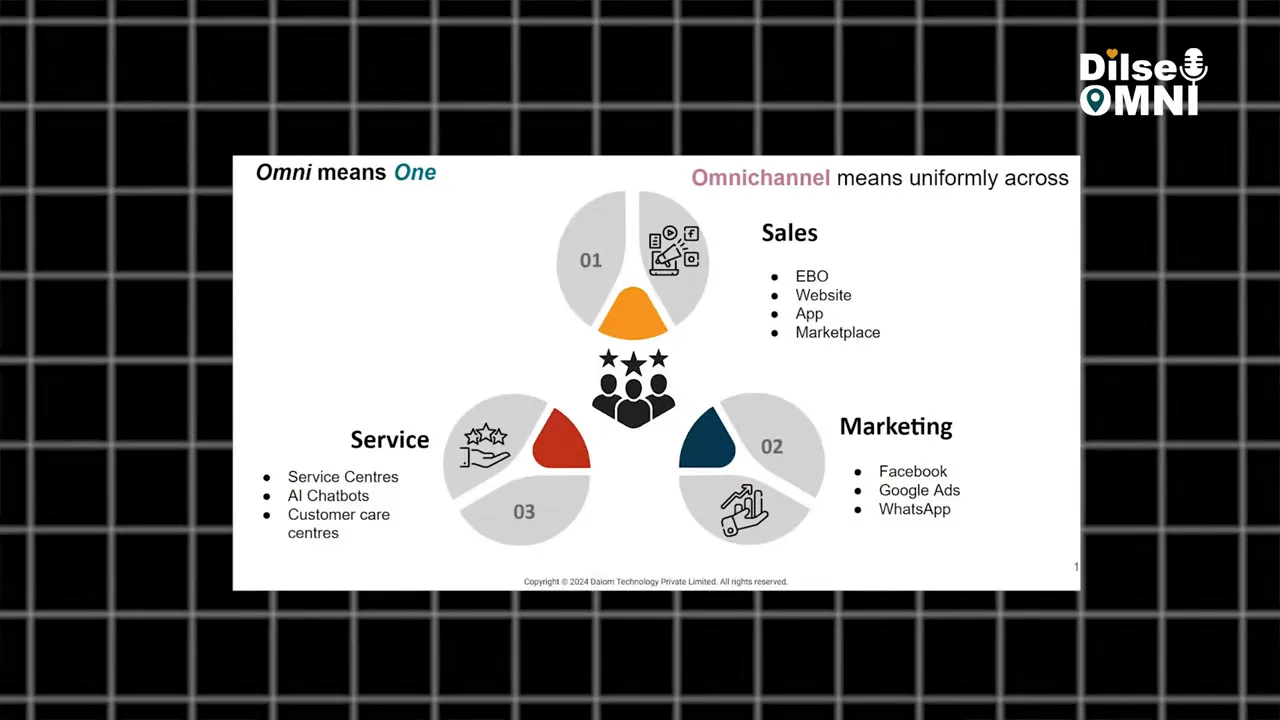
A connected customer journey requires sales, service, and marketing to operate as one system.
The Three Pillars of a Real Omnichannel Experience
I use a simple framework when thinking about omnichannel: sales, service, and marketing.
A brand becomes truly omnichannel only when all three are connected.
1. Sales: Make Every Buying Route Available
Sales is the most visible layer. A customer may buy from a website, app, brand-owned store, marketplace, partner outlet, or experience centre. All these routes can serve different customer needs.
In categories such as jewellery, customers often start by researching online but complete the purchase offline. They want to compare designs digitally, understand price ranges, shortlist products, and then physically inspect the item before committing.
That means a store should not carry only its limited in-store inventory as the full catalogue. A retail associate should be able to show the customer the broader digital range and connect them to products beyond that store.
Bluestone demonstrates this well. A customer can browse online, visit a store, see selected products physically, and still access the complete range through the store’s digital interface. The offline experience adds confidence without restricting selection.
2. Service: Remove the Breakages
Service is where most omnichannel models break.
If a customer purchases online, can they visit a store for a return, exchange, repair, or consultation? If they buy in a store, can they get support digitally later? Can a service request move smoothly across channels?
These moments determine whether the brand feels seamless or fragmented.
Customers do not distinguish between an online return and an offline return. They only know that they bought from the brand and need help. A strong omnichannel business makes that service journey simple.
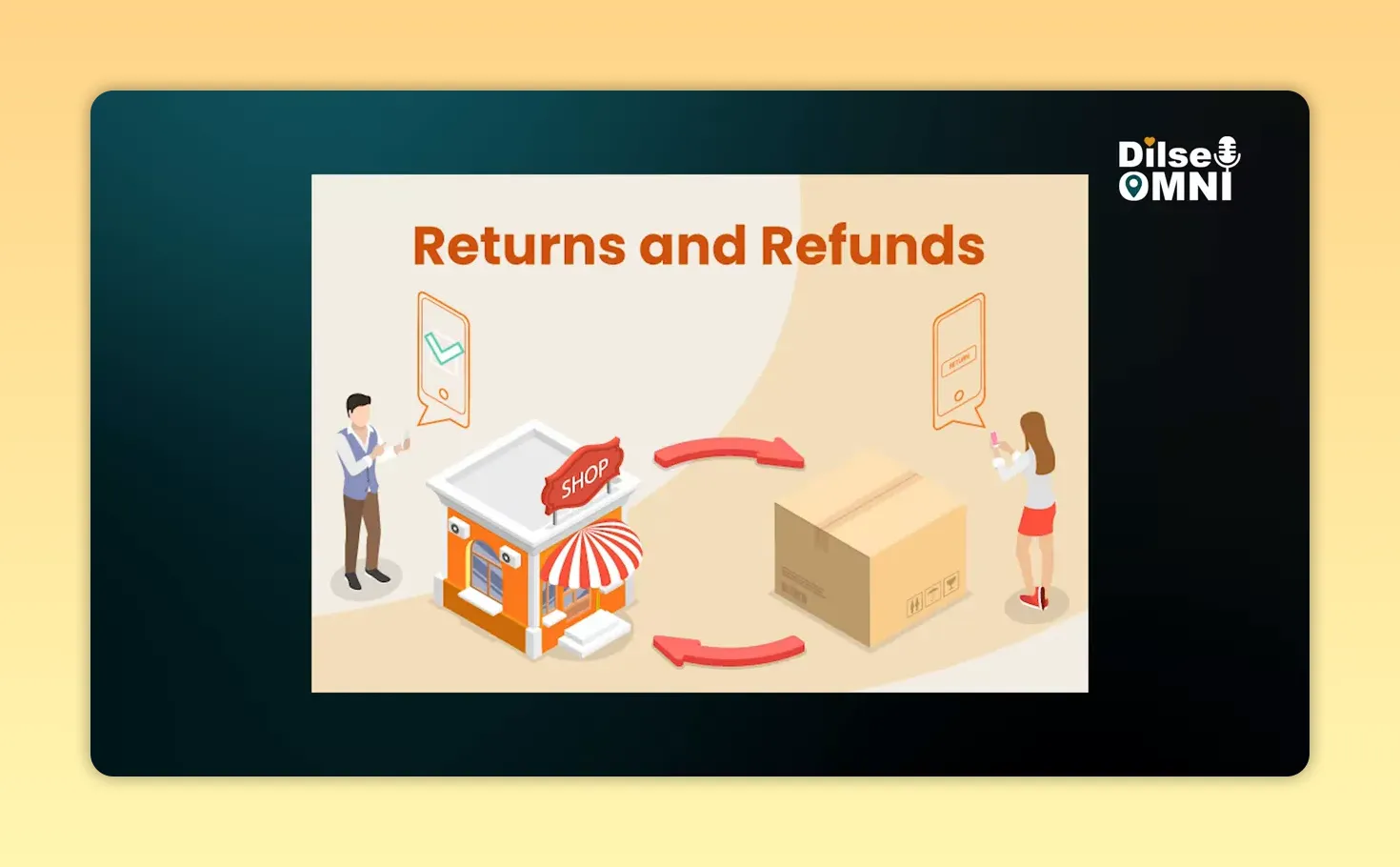
Returns and refunds reveal whether channels are genuinely connected or merely operating side by side.
3. Marketing: Build One Brand Across Touchpoints
Marketing is often left out of omnichannel conversations, but it is equally important. Brand awareness is not created only through digital advertisements or only through retail visibility. It is created when every exposure compounds.
A customer may first see a digital campaign, search for the brand online, come across a nearby store location, receive a relevant message on the app, and finally walk into the store. The journey may appear fragmented inside the organisation, but it should feel coherent to the customer.
This is where integrated marketing drives brand awareness more effectively. Every touchpoint should carry a consistent promise, visual identity, product story, and experience.
The broader BigBasket lesson is important here. When a business becomes part of a customer’s regular life, brand awareness is built not only through advertising but also through repeated, reliable interactions. Each experience contributes to memory, trust, and preference. The campaign is not only the advertisement. The campaign is the complete experience customers repeatedly associate with the brand.
For omnichannel brands, that means marketing cannot stop after generating a lead. It must connect into the store, the app, the service desk, the delivery moment, and the repeat purchase loop.
Discovery Happens Online, Trust Often Builds Offline
One of the most useful insights from our conversation is that online and offline play different roles in the journey.
Research and discovery increasingly begin online. Before visiting a physical store, people search for brands, compare products, look at prices, browse reviews, and check which stores are nearby.
Ganesh shared an important observation from research: a significant share of sales may originate online through discovery, even when the final transaction happens offline.
“The first port of call is online,” Ganesh said. “But trust, trial, conversion happens offline.”
This is particularly true in high-consideration categories such as jewellery, eyewear, furniture, mattresses, and premium fashion. The digital channel creates intent. The physical channel reduces uncertainty.
Brands should therefore stop arguing about which channel deserves credit for a sale. The better question is: what combination of touchpoints helped the customer move confidently from interest to purchase?
Customer Identity Is the Foundation
A seamless journey depends on recognizing the same customer everywhere.
Suppose someone browses jewellery designs on an app, returns through the website on another device, and then visits a store. If the store associate has no idea what that person explored, the customer has to start again from zero.
That is friction.
In a well-designed omnichannel journey, the customer is tagged uniquely. Their browsing history, preferences, shortlisted products, engagement, and previous interactions are available wherever they choose to continue the journey.
At Bluestone, the store can recognize what a customer has been looking at digitally. The associate can continue the conversation rather than restart it. The in-store team can show relevant inventory on an iPad, including products not physically available at that location.
This is what makes the experience feel intelligent and personal.
Apps play a particularly important role because customers are more likely to log in there than on a website. Login creates a stronger identity layer. It enables better personalization, richer product exploration, visual content, and the ability to re-engage customers later.
An app is not just a sales channel. It can be an identity engine and a retention engine.
The Unified Data Backend: The Real Omnichannel Moat
Behind every smooth customer experience is a unified data layer.
The most common omnichannel failure happens when an offline company adds a website but retains separate data systems. The same problem occurs when a digital-first company opens stores but does not integrate its backend.
Without unified data, the business cannot see the complete picture:
Which products are performing across online and offline channels?
What designs are moving in different localities?
Which inventory should be stocked in Koramangala versus Indiranagar?
What should be replenished, moved, or promoted?
Which customer interactions are leading to conversion?
Where are customers dropping off in the journey?
Ganesh’s point was simple and fundamental: “The data layer has to be unique. The customer layer has to be unique.”
When one backend supports the website, app, stores, manufacturing, inventory, and service teams, the company can operate with a single view of demand. That improves inventory planning, product relevance, personalization, and operational efficiency.
It also helps avoid the false distinction between online and offline performance. Demand is demand. The task is to understand how and where customers want to fulfil it.
A Practical Omnichannel Framework for Brands
Here is the masterclass framework I took away from this discussion with Ganesh.
Start with the customer journey: Map discovery, research, trial, transaction, fulfilment, service, and repeat purchase.
Define the role of each channel: Online may drive discovery and convenience. Stores may drive trust, trial, and consultation. Both should support conversion.
Build one customer identity: Make it possible to recognize the same person across app, web, store, support, and marketing interactions.
Unify the backend: Connect inventory, order management, customer data, service records, and demand signals.
Align teams and incentives: Do not make digital and retail teams compete for the same customer.
Use marketing as a bridge: Ensure campaigns, store experience, app communication, and service all tell one consistent brand story.
Measure the whole journey: Attribute success to the combined journey, not only the last click or last store visit.
Omnichannel Is an Operating Model, Not a Channel Strategy
The most enduring lesson is that omnichannel is not a marketing label. It is an operating model.
It asks whether a company can combine customer insight, technology, physical presence, supply chain, manufacturing, service, and brand communication into one connected system.
Lenskart shows how stores can strengthen an online-first business. Bluestone shows how digital discovery and physical trust can work together in a high-consideration category. The BigBasket journey reminds entrepreneurs that sustained brand awareness comes from being useful, reliable, and consistently present in the customer’s life.
The brands that will win are not the ones with the most channels. They will be the ones that create the fewest breakages between channels.
Customers do not think in channels. They think in experiences.
I am Saurabh Agrawal and we come with a new episode on Dilse Omni Talks every fortnight and cover different aspect of omnichannel with amazing speakers.