Marketing has not changed at its core. Consumers have.
That was my biggest takeaway from my conversation with Sridhar Balakrishnan, Group CEO of Duroflex and Sleepyhead. Sridhar has led brand building and business transformation across FMCG, consumer brands, retail, and omnichannel businesses. His perspective is particularly valuable because he has experienced both worlds: mass-market FMCG and high-involvement consumer purchases such as mattresses.
Our discussion became a masterclass in the shift from mass communication to personal relevance. We spoke about consumer data, social media discovery, WhatsApp, retention marketing, marketing technology, and why Virat Kohli is much more than a familiar face in a Duroflex campaign.
Table of Contents
The Fundamental Has Not Changed: Consumer Centricity
From Mass Marketing to a Cohort of One
Why Virat Kohli Is a Natural Duroflex Brand Fit
The Consumer Is Now on the Phone
Social Media Is Now a Discovery and Search Engine
WhatsApp Has Become a Serious Marketing Channel
Retention Marketing Is a Martech Problem and a Human Problem
The Real Future of Marketing: Understand Better, Not Just Reach More
The Fundamental Has Not Changed: Consumer Centricity
When I asked Sridhar how marketing has evolved at Duroflex, he started with an important distinction. The tools have changed dramatically, but the central principle remains exactly the same: understand the consumer.
“Consumer centricity is at the heart of any consumer business.”
Whether a company operates in FMCG, D2C, retail, or an omnichannel model, the brand has to begin with the consumer’s needs. The difference lies in the depth at which it can now understand those needs and respond to them.
In traditional FMCG, brands may serve enormous populations with products that have broad and frequent usage. India has a population of more than 140 crore people, and some FMCG brands operate at penetration levels of 80% or 90%. At that scale, it is difficult to tailor every message or offering to every individual.
A mattress business is different. It is a high-value, high-involvement purchase that people make only once in several years. The decision is more deliberate. A consumer may think about comfort, sleep quality, family requirements, health, room size, budget, and lifestyle before making a choice.
That changes the marketing task. Instead of merely achieving reach, the brand has an opportunity to understand an individual much more deeply and make its value proposition sharper.
From Mass Marketing to a Cohort of One
The real evolution in omnichannel marketing is not that brands have abandoned mass media. It is that they can now add layers of relevance to it.
Mass media continues to matter because it creates awareness, reach, and trust at scale. But that broad message can now be supported by a far more personalised experience across digital channels, retail interactions, social platforms, and direct communication.
Sridhar’s point was simple: capturing a name and mobile number is not enough. A brand needs to responsibly understand the larger context of the consumer, including family needs and lifestyle signals. The better the understanding, the better the ability to recommend relevant products and communication.
The Duroflex Personalisation Framework
I would summarise Sridhar’s approach to modern consumer marketing through this practical four-step framework:
Stage | What the brand needs to do | Why it matters |
|---|---|---|
1. Capture | Collect meaningful consumer information beyond basic contact details. | Creates a richer picture of individual and family needs. |
2. Understand | Identify lifestyle, purchase context, preferences, and likely needs. | Turns raw data into useful consumer insight. |
3. Tailor | Match products, value propositions, and communication to the consumer. | Makes engagement more relevant and useful. |
4. Engage | Connect across the channels where consumers actually spend time. | Builds a consistent omnichannel customer experience. |
This is the shift from broadcasting a single message to serving a cohort of one. Technology makes it possible, but consumer empathy is what makes it meaningful.
“The more minute you know about a consumer, it really helps you target your product and value proposition in a sharper manner.”
For brands, the lesson is not to collect data for its own sake. The objective should be to reduce irrelevance and make the consumer’s journey easier, more useful, and more personal.
Why Virat Kohli Is a Natural Duroflex Brand Fit
One of the most interesting parts of our conversation was the Duroflex association with Virat Kohli. Celebrity partnerships are often evaluated only through reach, recall, and visibility. But Sridhar’s thinking goes deeper.
Virat Kohli is a strong fit because he represents fitness, discipline, high performance, and a serious commitment to health. Those associations matter naturally for a brand working in the sleep and wellness category.
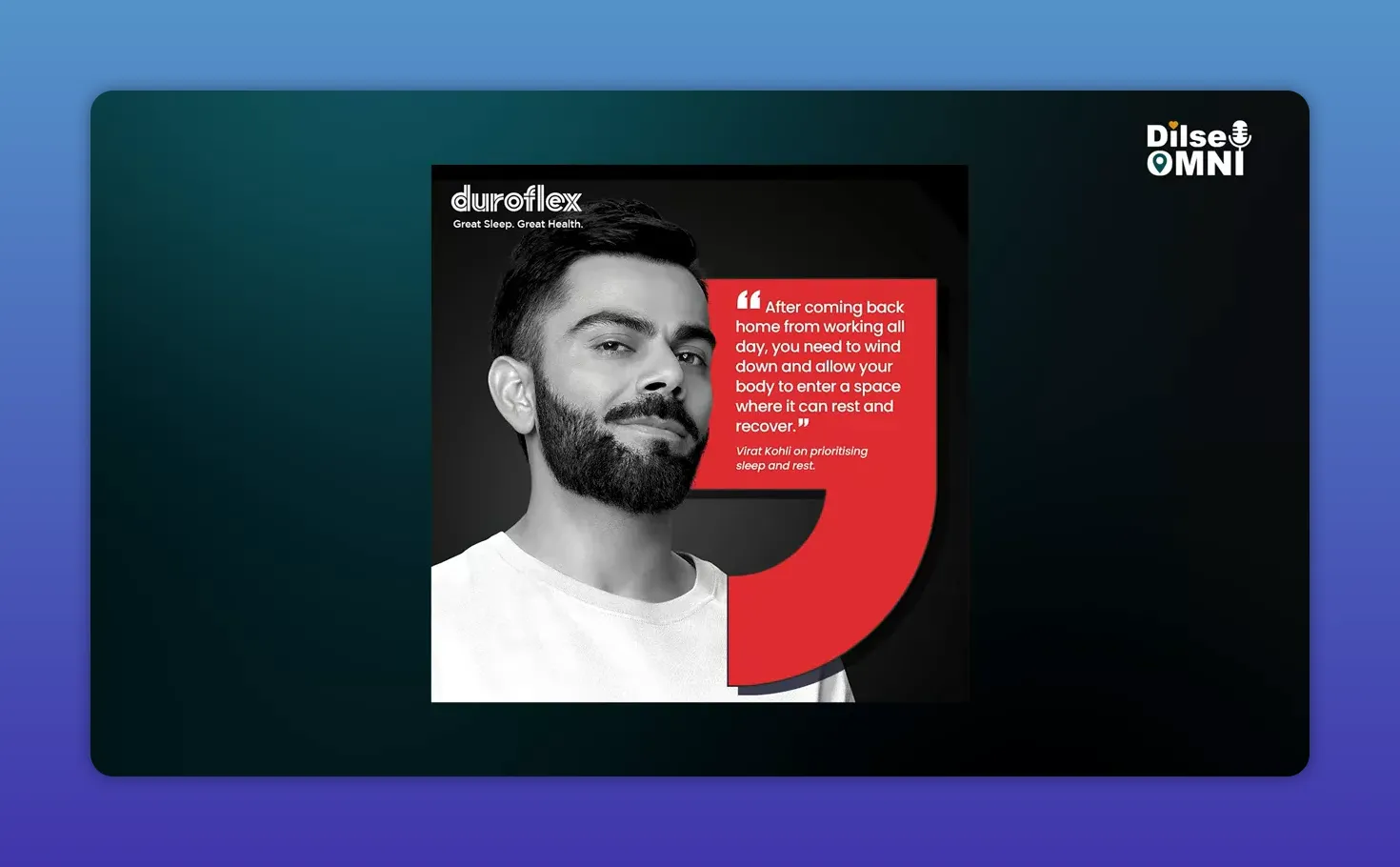
The Virat Kohli association connects Duroflex with a larger conversation around fitness, recovery, and better sleep.
The association is also grounded in product use. Sridhar shared that Virat uses Duroflex mattresses while travelling. That moves the relationship beyond a conventional endorsement into something more credible: a connection between the ambassador’s lifestyle and the product’s role in it.
Fitness is not merely an athletic aspiration anymore. For many people, it is a personal standard and a lifestyle choice. Virat has helped bring health and fitness consciousness into mainstream culture, not just for elite athletes but for everyday consumers as well.
That is why the right brand ambassador is not simply someone famous. The person must stand for something that strengthens the brand’s own promise.
A Better Way to Evaluate Celebrity Partnerships
Value fit: Does the personality embody what the brand stands for?
Category fit: Is there a natural connection between the person’s life and the product?
Credibility: Does the association feel authentic rather than purely transactional?
Reach: Can the partnership build awareness at meaningful scale?
Duroflex has clearly used the Virat Kohli association to bring together all four elements.
The Consumer Is Now on the Phone
The channels through which brands reach people have changed because consumer attention has moved. A decade or two ago, a larger share of attention was concentrated around television and print. Today, the mobile phone is at the centre of everyday life.
Consumers move continuously between Instagram, Facebook, YouTube, WhatsApp, search, brand sites, marketplaces, and physical stores. Marketing therefore cannot be built around a single channel. It has to be designed around the consumer’s real behaviour.
Sridhar made a telling observation: phone engagement has become almost like a dopamine fix. The time consumers spend with these platforms is extraordinary, and that changes the way brands need to earn attention.
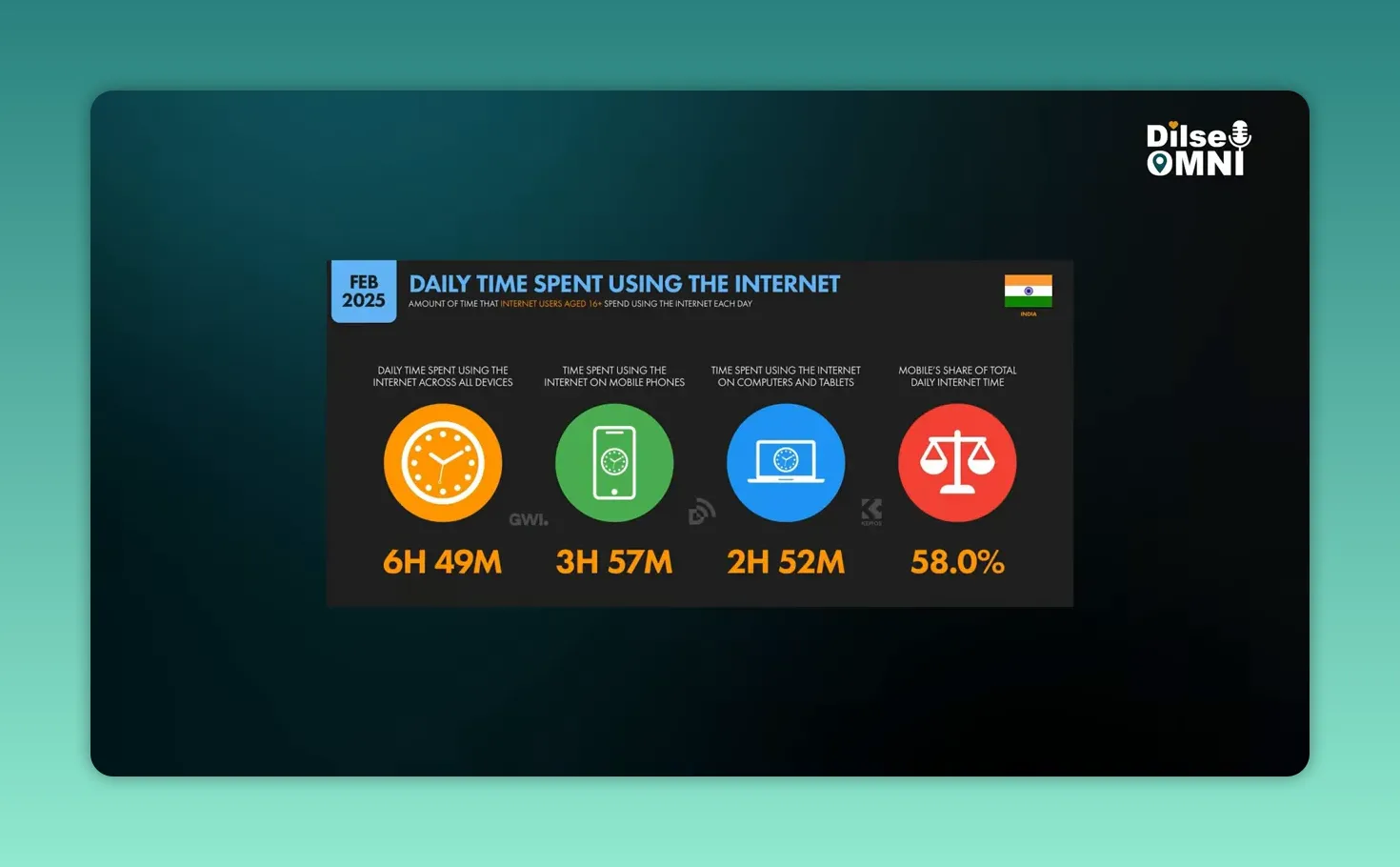
Consumer attention has moved to connected screens, making digital touchpoints central to the purchase journey.
We discussed a striking data point: the average Indian spends around six and a half hours online daily, including roughly two and a half hours on social media, with WhatsApp considered separately from social media in this context.
That does not mean every moment is a marketing opportunity. It means brands need to understand the nature of each platform. People do not use YouTube, Instagram, WhatsApp, and retail stores in the same way. Each channel serves a different purpose in discovery, consideration, conversation, or purchase.
Social Media Is Now a Discovery and Search Engine
One of the biggest mistakes brands can make is treating social media as a place for passive entertainment alone. Consumers now use these platforms to seek information, compare choices, discover products, find expertise, and make meaningful decisions.
I shared a research point during our conversation: of the billions of searches happening each day, Google remains the largest destination, but Instagram has emerged as a major search platform too. People are not only scrolling. They are actively looking.
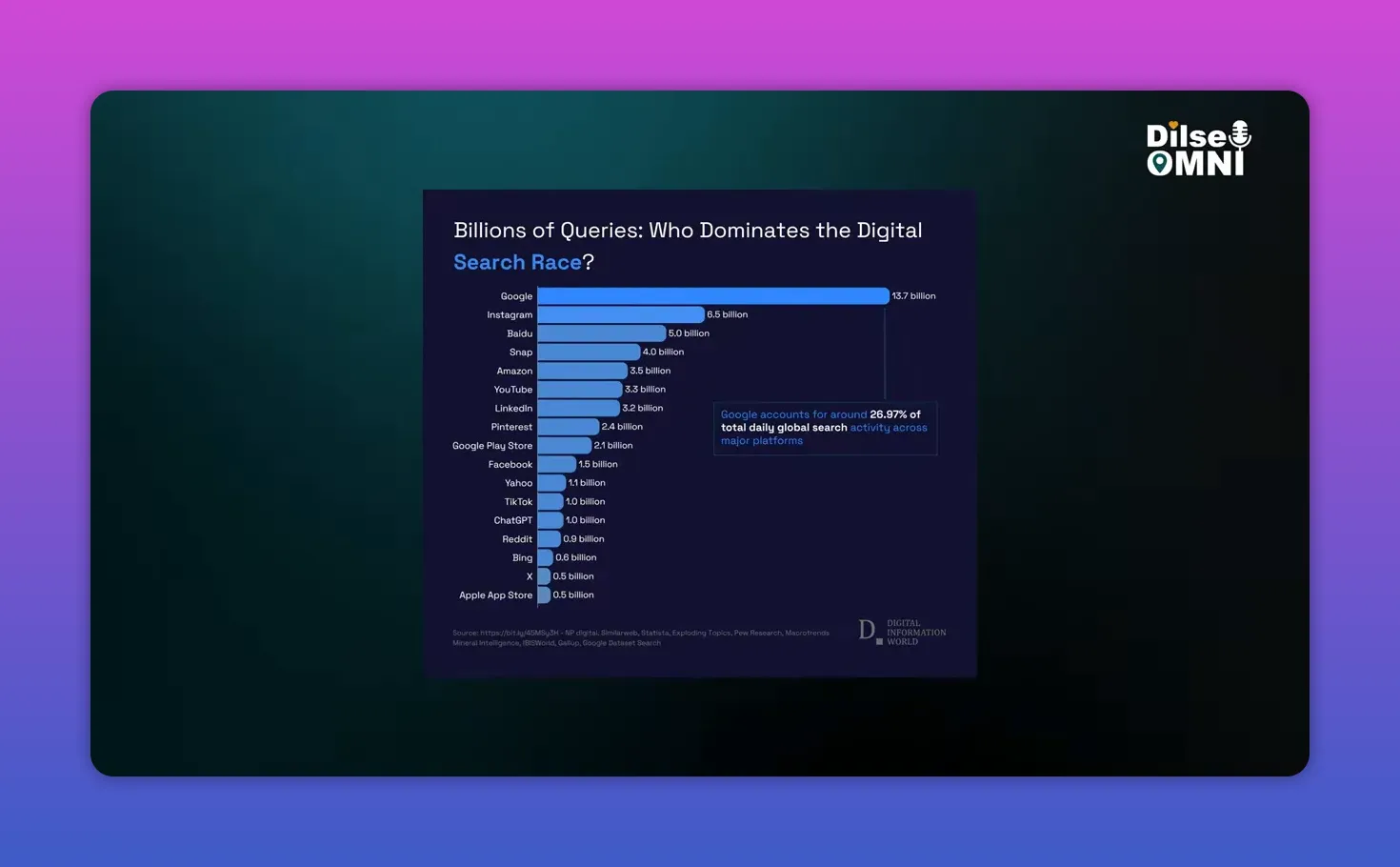
Search behaviour is no longer limited to one destination, and brands need to be discoverable where intent appears.
Sridhar illustrated this shift through everyday examples. His wife uses Instagram as a source of information on recipes, relevant brands, and products. Pinterest became useful while planning a home and exploring design ideas. Even a running coach was discovered through Instagram.
These examples reveal the modern path to purchase. A consumer may first discover a product idea through social content, validate it through search or reviews, speak to a brand on WhatsApp, experience it in a store, and complete the purchase elsewhere. The journey is not linear, and it is not owned by one channel.
For omnichannel leaders, this creates a clear mandate: make the brand useful and discoverable at every point where consumer curiosity emerges.
WhatsApp Has Become a Serious Marketing Channel
WhatsApp did not exist as a marketing channel in the way it does today. Initially, it was largely a communication tool. Now, it has become an important platform for direct consumer engagement because it sits close to the consumer’s daily behaviour.
That shift should not be interpreted as permission to send more messages. The opportunity is to create timely, useful, and relevant communication. A WhatsApp conversation can help a consumer resolve a question, receive more relevant information, continue a purchase journey, or stay connected after a purchase.
The broader lesson is that channel evolution is driven by consumer adoption. Brands must keep asking: where is attention moving, what is the consumer trying to accomplish there, and how can we add value without becoming noise?
Retention Marketing Is a Martech Problem and a Human Problem
Retention marketing sits at the intersection of data, technology, and relevance. Sridhar explained that meaningful one-to-one engagement is enabled by marketing technology, but it begins with the quality of consumer understanding.
Martech can help capture information, organise profiles, segment consumers, tailor communications, and align products to different needs. These capabilities were not available in the same way a decade ago, especially for consumer businesses seeking to operate at scale.
“It is not just capturing a name and mobile number.”
That statement is worth remembering. A database is not a customer strategy. The value comes from knowing enough to make the next interaction better. If a brand understands the consumer’s context, it can speak more intelligently. If it does not, personalisation becomes superficial.
For Duroflex and other high-consideration categories, the opportunity is significant. Consumers do not make these purchases every month. So every interaction must contribute to trust, confidence, and relevance.
The Real Future of Marketing: Understand Better, Not Just Reach More
Mass reach will remain important. Brand ambassadors will remain powerful. Social media, WhatsApp, retail, websites, and other platforms will continue to evolve. But Sridhar’s core message is more enduring than any platform trend.
The future of marketing is not simply about reaching more people. It is about understanding each consumer better, then using technology and omnichannel engagement to serve them in a more relevant way.
That requires discipline across the entire organisation:
Keep consumer centricity at the centre.
Use data to learn, not merely to collect.
Build brand partnerships around authentic fit.
Treat social platforms as discovery and decision spaces.
Use WhatsApp and direct channels with relevance and respect.
Connect every touchpoint into one coherent consumer experience.
That is how a modern consumer brand moves from mass marketing to meaningful marketing.
I am Saurabh Agrawal and we come with a new episode on Dilse omni talks every fortnight and cover different aspect of omnichannel with amazing speakers.