In this episode of DilSe Omni, Ankur Khaitan, Principal at Fireside Ventures, shares how India's leading venture capital firms evaluate consumer brands, why omnichannel has become non-negotiable, and what founders must do to build iconic businesses in the next decade.
When I sat down with Ankur, the conversation quickly moved beyond the usual online versus offline debate. The real issue is not whether a brand should go offline. For many categories, that question is already settled. The bigger question is whether the company can build an offline and digital business without fragmenting its operations, pricing, teams, inventory, and most importantly, its customer experience.
That is where many otherwise strong D2C brands lose money. They assume their first store is a repeatable model, that offline expansion must be slow, or that a winning online playbook can simply be carried into retail. Each assumption can become expensive at scale.
Table of Contents
The Three Omnichannel Myths Every Founder Must Unlearn
Myth One: Your First Store Is Not a Blueprint for 50 Stores
Myth Two: Offline Expansion Does Not Have to Be Linear
Myth Three: An Online Playbook Will Not Automatically Work Offline
Why Exclusive Brand Outlets Can Increase AOV
The Costliest Mistake: Managing Channels Instead of the Customer
Pricing Gaps Quietly Break Trust and Destroy Attribution
Every Category Has Its Own Repeat and Fulfilment Logic
Build an Omnichannel Brand Around One Customer
The Three Omnichannel Myths Every Founder Must Unlearn
Ankur framed the omnichannel challenge through three common myths. They sound reasonable at first, which is why they are so dangerous. But once a brand begins expanding across cities, formats, and customer segments, these assumptions break down.
What worked in the first store will work in the next 50 stores.
Offline growth has to be slow and linear.
What worked online will work offline.
Underneath all three myths is one deeper problem: founders start managing channels as separate businesses instead of managing one customer journey.
“The customer is same. We just try to manage channels.”
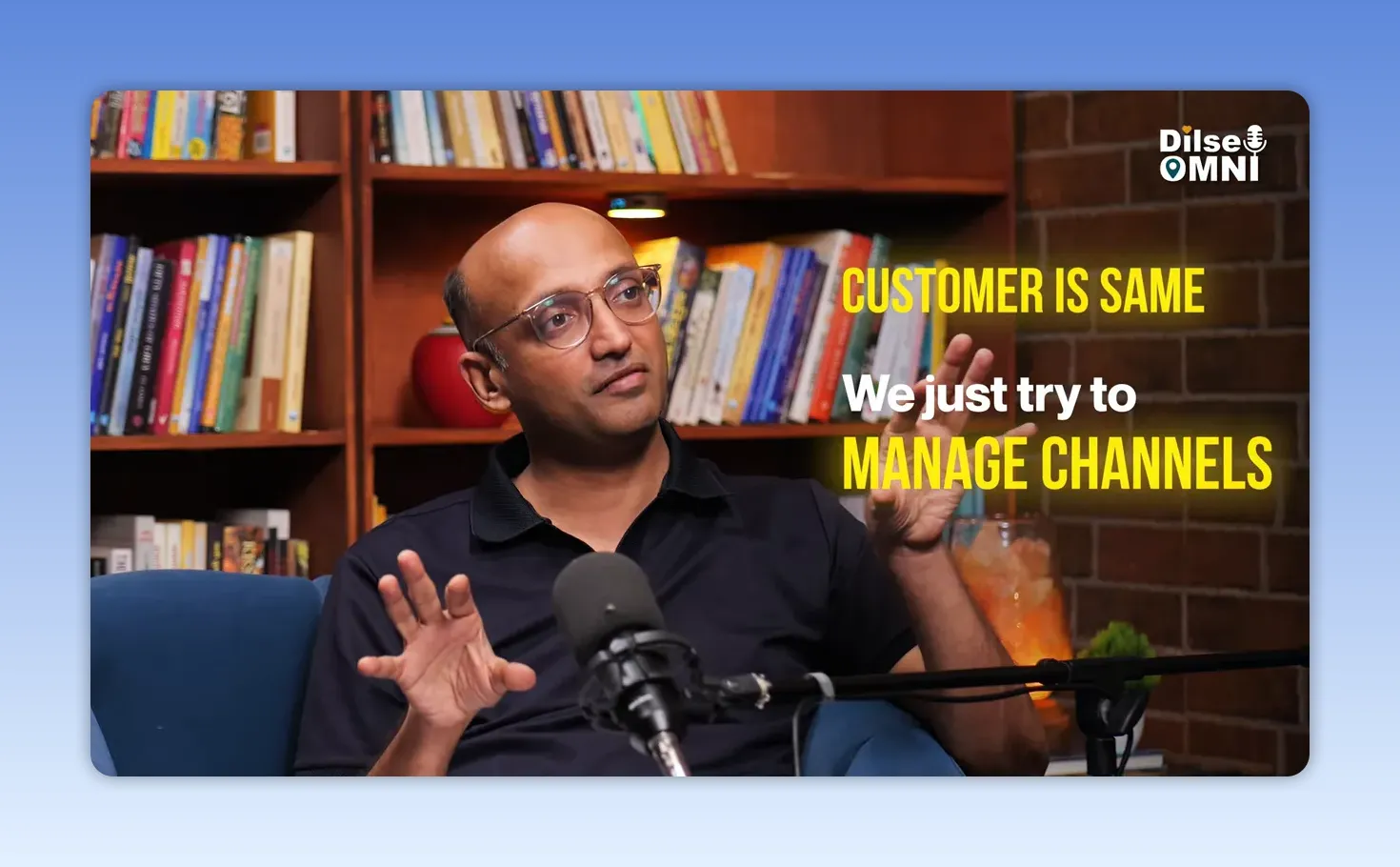
The defining omnichannel principle is simple: organise the business around the customer, not around channel silos.
Myth One: Your First Store Is Not a Blueprint for 50 Stores
A first store can work brilliantly because the founder is personally carrying the sales engine. They are on the floor, training staff informally, solving inventory issues in real time, reading customer reactions, and making sure every detail feels right. That intensity is powerful, but it is not a system.
As Ankur put it, a brand travels through a very different journey from its first store to its third, fifth, tenth, and fiftieth. A format that works in Indiranagar, Bengaluru may not work in Connaught Place, Delhi. Each city has its own shopping behaviour, local culture, customer expectations, catchment dynamics, and economic reality.
The lesson is not that localisation should become chaos. It is that offline retail is a business of detail. As store count rises, the things that the founder once managed instinctively need to become documented, measurable, and repeatable.
“Offline is about detailing.”
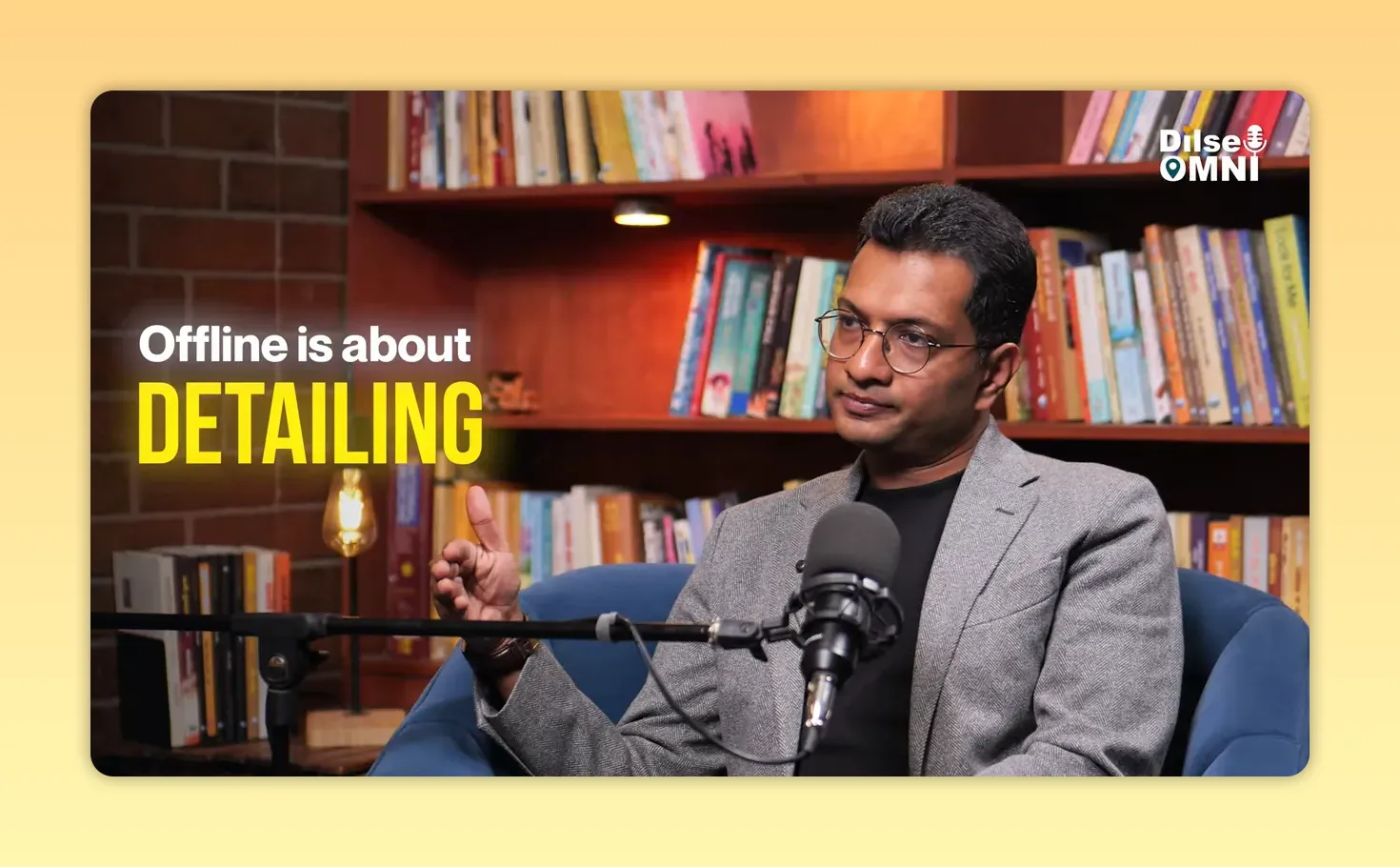
Store scale is built on operational detail, not on the energy of a successful launch.
The Store Scale Framework: Standardise What Must Repeat, Localise What Must Fit
I took away a practical framework from this part of our conversation. A brand needs to decide what is non-negotiable across every location and what must adapt to its local context.
Standardise the brand core: staff training, service behaviour, visual identity, store operations, inventory controls, customer data capture, and the minimum experience every customer should receive.
Localise the commercial expression: product mix, sizes, price ladders, merchandising priorities, local events, and store-level conversion tactics.
Build process before aggressive expansion: founder instinct has to become a playbook owned by capable teams.
Measure consistency: compare inventory availability, staff productivity, conversion, customer feedback, and brand experience across locations.
The difficult work is not opening a store. The difficult work is ensuring that store number 50 still delivers the promise that made store number one successful. That demands the right systems, the right people, and operational discipline.
Myth Two: Offline Expansion Does Not Have to Be Linear
There is another belief that holds companies back: that physical retail must be a cautious, long, one-store-at-a-time journey. Ankur challenged this clearly. Offline expansion can move fast. It simply cannot be reckless.
Today, the ecosystem is more mature. There are platforms, tools, operators, retail partners, and examples from brands that have already built meaningful offline businesses. Founders do not need to discover every operating principle from scratch.
“Offline doesn’t necessarily need to be a linear, easy-paced-out journey. It can be fast, of course not reckless, but it can be fast.”
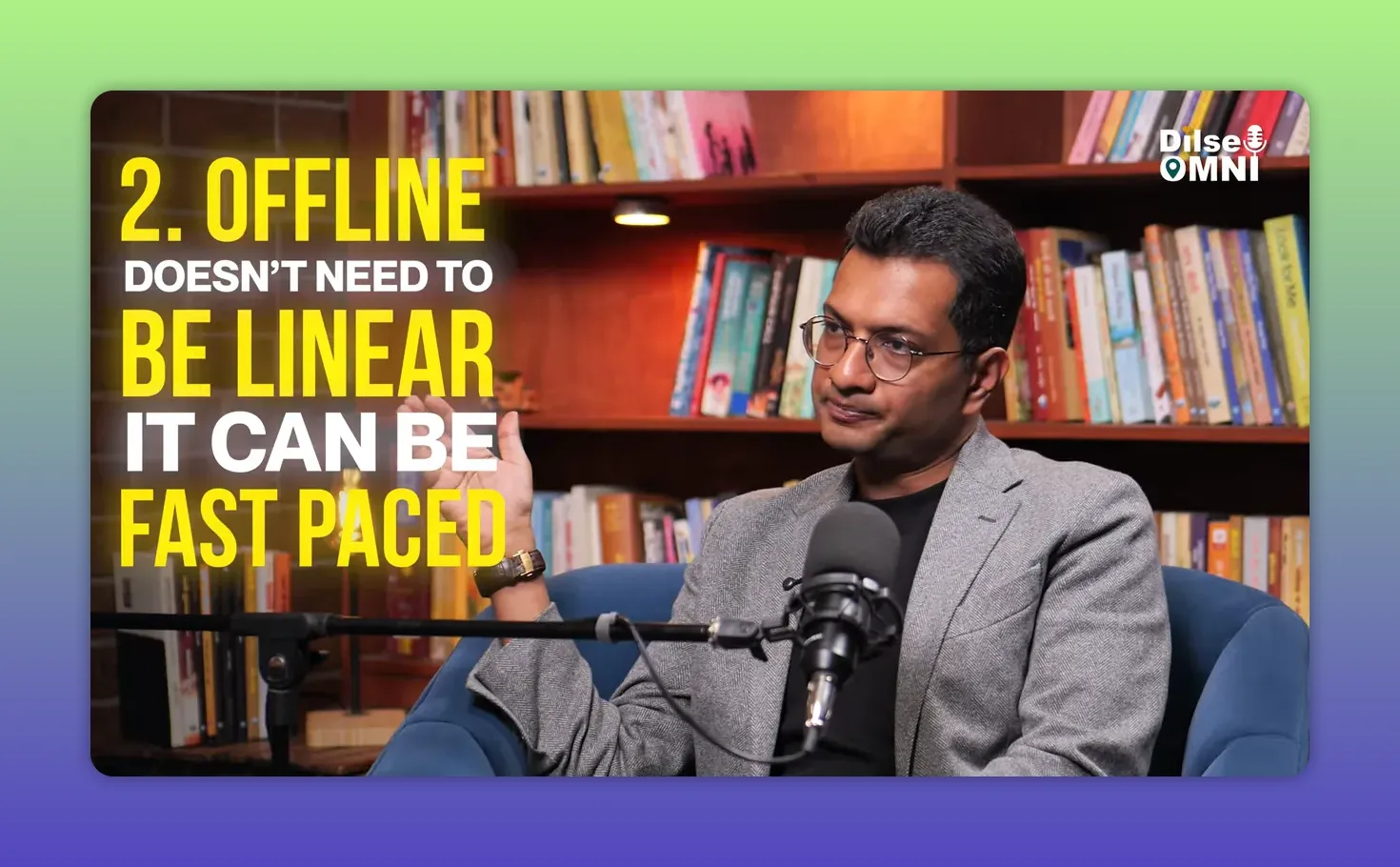
The goal is not slow retail expansion. The goal is a fast but controlled rollout built on tested operating capabilities.
The distinction matters. Fast expansion is earned through readiness, not enthusiasm. A founder should not equate caution with low store count. Instead, the business should earn the right to accelerate by proving that the fundamentals are under control.
How to Expand Offline Without Becoming Reckless
A useful way to think about offline scaling is through four readiness questions:
Is the store model truly understood? Know what drives footfall, conversion, average order value, rent viability, staff productivity, and inventory turns.
Is the operating model documented? If the store works only when the founder is present, the model is not ready to scale.
Is the supply and inventory system prepared? Stockouts, excess stock, and poor allocation get amplified rapidly when stores multiply.
Is the leadership bench ready? Retail needs people who can consistently execute across locations, not merely manage a launch.
Once these answers are strong, a brand can move with pace and confidence. The market has already created many learnings. Founders should use them.
Myth Three: An Online Playbook Will Not Automatically Work Offline
Digital commerce and physical retail serve the same person, but they do not operate in the same way. Online is built around speed of discovery, immediate conversion, performance marketing, and rapid measurement. Offline often involves a different rhythm.
A customer may enter a store once to browse, return later to evaluate, and convert only on a second visit. Repeat buying may not happen for three months. In a mall, the brand must win attention through storefront visibility, display, staff interaction, product touch and feel, and the surrounding shopping environment. That is fundamentally different from standing out on Instagram.
The product portfolio can also differ. What sells well online may not be the right assortment for a particular store or shopping environment. Offline requires the right products, at the right price points, for the audience that comes into that location.
This is where retail merchandising becomes strategic. It is not simply a matter of placing the online catalogue on shelves. The store needs a deliberate curation designed for discovery, trial, trust, and conversion.
Why Exclusive Brand Outlets Can Increase AOV
One of the positive outcomes Ankur has seen in the Fireside portfolio is that brands can achieve a significantly higher average order value, or AOV, when they enter offline through exclusive brand outlets, often called EBOs.
This is not accidental. A store allows customers to touch, test, compare, and understand products in ways that are difficult to recreate digitally. The brand can present more of its assortment, curate the merchandise for the audience, and build trust through a high-quality experience.
For categories such as sleep solutions, intimate wellness, and beauty, the difference can be meaningful. A customer may be more willing to purchase a higher-value basket after trying products and receiving guidance in person. Ankur pointed to examples including The Sleep Company, Gynoveda, and Nua, where offline order values can look very different from online.
That does not mean a physical store automatically raises AOV. It means the retail experience has the capacity to do so when the assortment, staff expertise, inventory, and customer trust all come together.
The Costliest Mistake: Managing Channels Instead of the Customer
This was perhaps the most important lesson from our discussion. I shared the example of a weddingwear brand that had a strong offline business and an offline AOV in the range of ₹30,000 to ₹40,000. When it moved online, conversion was lower. The online team then began optimising hard for the online profit and loss account.
That is understandable from a departmental perspective. But it created a reverse problem. When an online customer walked into the store, their experience no longer matched what they had encountered online. The brand had created friction by treating the same person as two different channel customers.
For high-ticket, high-touch products, that mistake can damage the entire purchase journey. If a brand is going offline to offer an experience, then it cannot maintain an online versus offline mindset.
“You cannot have an online versus offline mindset. You will actually screw the customer’s journey.”
The Unified Customer Journey Framework
For products with an AOV above roughly ₹10,000 to ₹15,000, the online channel should often do more than chase a standalone conversion. It can capture intent, collect customer information, begin the conversation, and bring the customer into an experience centre where the product can be explored properly.
That requires a unified sales approach. Instead of rewarding online and offline teams for competing against each other, the company should build incentives around customer progression and total business value.
The model has three connected jobs:
Digital captures data: identify the customer, understand interest, and preserve context from the first interaction.
Teams continue the conversation: follow up meaningfully instead of treating the customer as an anonymous lead.
Stores deliver experience: enable discovery, consultation, trial, and higher-confidence purchase decisions.
In some cases, it may even be healthier not to operate with an isolated “online head” whose mandate is only online revenue. The organisational design should support customer movement across channels, not prevent it.
Pricing Gaps Quietly Break Trust and Destroy Attribution
Pricing inconsistency is another omnichannel leak. A customer may visit a store, try on a shirt, take a photograph, and later search for the same product online. If the online price is lower, the customer has learned that the store is not the best place to buy.
The immediate consequence is margin pressure and customer distrust. The second consequence is distorted data. The eventual purchase may appear online as a new transaction, even though the store created the discovery and consideration. Without connected identity and attribution, the business cannot see the real journey.
D2C brands often know customers well on their own digital properties. But as marketplaces, retail stores, and other external channels become important, that visibility becomes harder. The brand must factor that into how it measures performance.
Pricing need not always be mechanically identical, but any difference must have a clear customer logic. A channel-specific offer, bundled service, or different assortment may be understandable. A random gap that penalises the customer for visiting the store is not.
Every Category Has Its Own Repeat and Fulfilment Logic
Omnichannel strategy is never one-size-fits-all because categories behave differently. In categories with high marketplace dependence or general trade distribution, a brand may not match the delivery speed that large platforms can provide on its own website.
Nutraceuticals are a strong example. Someone consuming magnesium for sleep or recovery is likely to reorder when their existing supply is about to run out. The decision may depend less on discovery and more on replenishment speed. Some customers may need the product in 24 hours, others may be comfortable with 36 or 72 hours.
Each channel therefore plays a different role. A brand’s own channel may create education, data ownership, and direct relationships. A marketplace may serve urgent fulfilment. A store may create confidence and product discovery. General trade may make habitual replenishment convenient.
The strategic question is not which channel gets credit. It is which channel best serves the customer’s need at that moment.
Build an Omnichannel Brand Around One Customer
The masterclass from Ankur is straightforward, but its execution is demanding. Great consumer brands do not copy and paste growth models. They build systems as they scale, move quickly without becoming careless, tailor their offline playbook, and preserve continuity across every customer touchpoint.
If there is one operating principle to carry forward, it is this: do not build an online business and an offline business that happen to share a logo. Build one brand that serves one customer across many moments, needs, and channels.
I am Saurabh Agrawal and we come with a new episode on Dilse omni talks every fortnight and cover different aspect of omnichannel with amazing speakers.