I began this conversation with a simple question for Anurag Sundarka: what exactly is ZebraLearn building? Is it an EdTech company, a publishing business, or a D2C brand?
Anurag is the Co-founder of ZebraLearn, a platform redefining business publishing in India through visually immersive, actionable books. His work sits at a fascinating intersection. ZebraLearn creates books, yes, but it is also building richer ways for professionals to discover, absorb, retrieve, and apply what they learn.
And that is the real masterclass here. The product may begin as a book, but the business is designed around the learner’s complete journey.
Table of Contents
A Book Is Not the Destination
Omnichannel Is Not More Channels. It Is One Connected Experience.
The ZebraLearn Learning Stack
From Reading to Retrieval With Zebra AI
Why Connection Changes the Value of Knowledge
The Seven-Book Signal: Understanding What a Learner Needs
The Real Lesson for D2C and Omnichannel Leaders
A Book Is Not the Destination
Traditional publishing has usually worked through a fragmented chain. A publisher works with authors, perhaps through literary agents. Retailers, marketplaces, and distributors then own much of the relationship with the eventual reader.
Anurag sees ZebraLearn differently. He calls it a two-sided platform, one that deliberately holds a relationship with both sides:
Supply side: authors, creators, brands, and experts contributing knowledge.
Learner side: readers who are trying to solve a real problem in work or life.
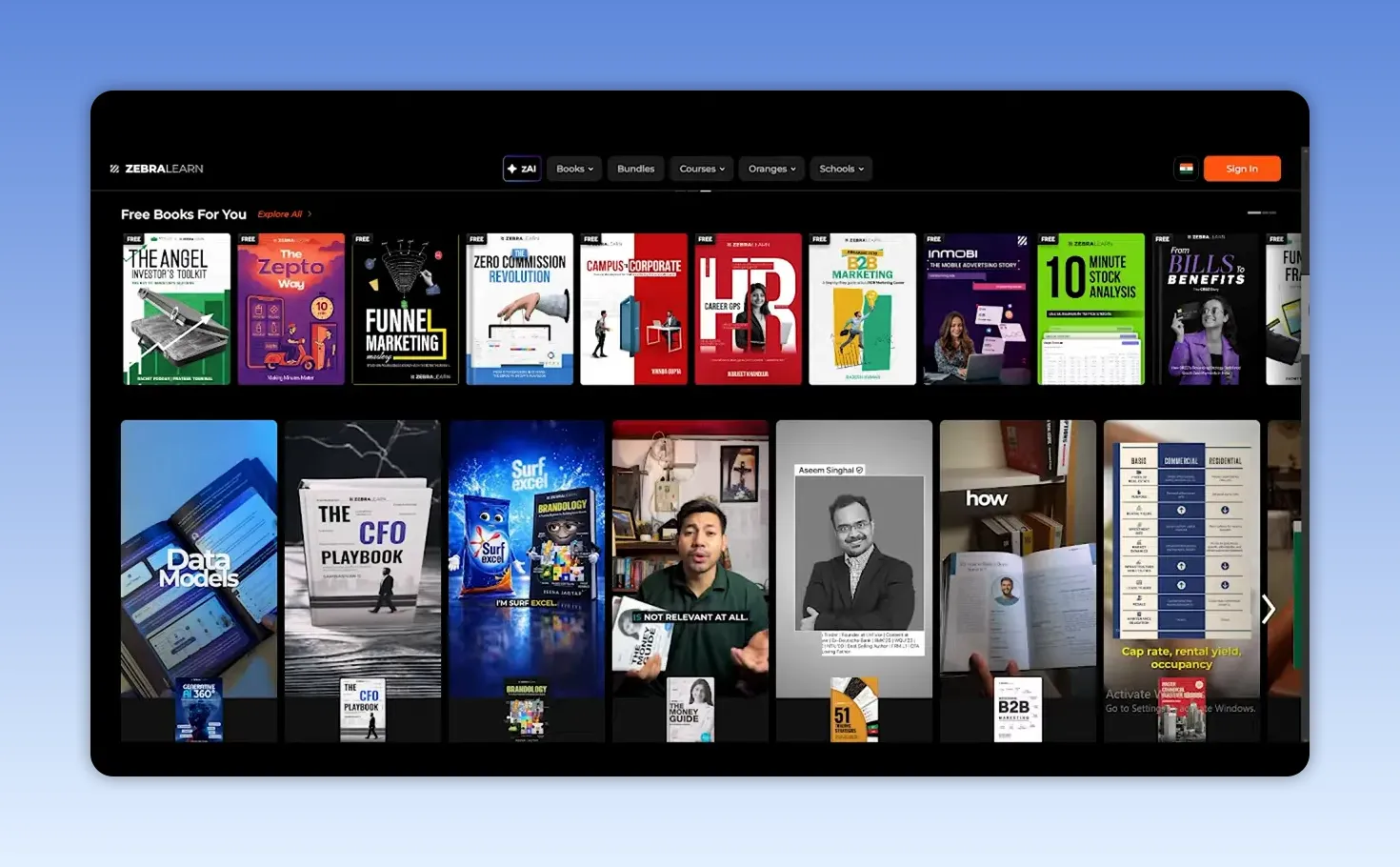
A publishing platform becomes more useful when it connects a broad catalog to a continuing learner relationship.
This distinction matters. The objective is not simply to sell a title and move on. As Anurag put it, “A book is a milestone. A book is never the end goal.”
A reader may start with one book, move to a second, take a course, join a classroom, use a tool, or seek guidance from an expert. Each is part of a longer arc. If a brand disappears immediately after shipping a book, it gives away the most valuable part of the relationship.
This is why ZebraLearn’s D2C model is not merely a distribution choice. The website is only a means. Direct to consumer, in Anurag’s definition, means knowing the person, being able to speak to them, and understanding what they are trying to solve.
Omnichannel Is Not More Channels. It Is One Connected Experience.
I often find that companies mistake multichannel for omnichannel. Put a product on a website, an app, Amazon, quick commerce, and retail shelves, and suddenly the brand declares itself omnichannel. But multiple channels do not automatically create one experience.
The conventional book ecosystem can be quite disconnected. The book is written in one place, digitised in another, sold through a separate channel, and consumed with no relationship connecting those moments.
ZebraLearn’s journey has evolved step by step. It began D2C, then expanded to marketplaces, quick commerce opportunities, and retail or multi-brand outlets. Yet the organising thought has remained stable: be present in the learner’s life, not just at one purchase event.
Even though physical copies account for roughly 90% of ZebraLearn’s sales, the company has not treated digital as a replacement for print. It has treated digital as a layer that makes the physical product more useful.
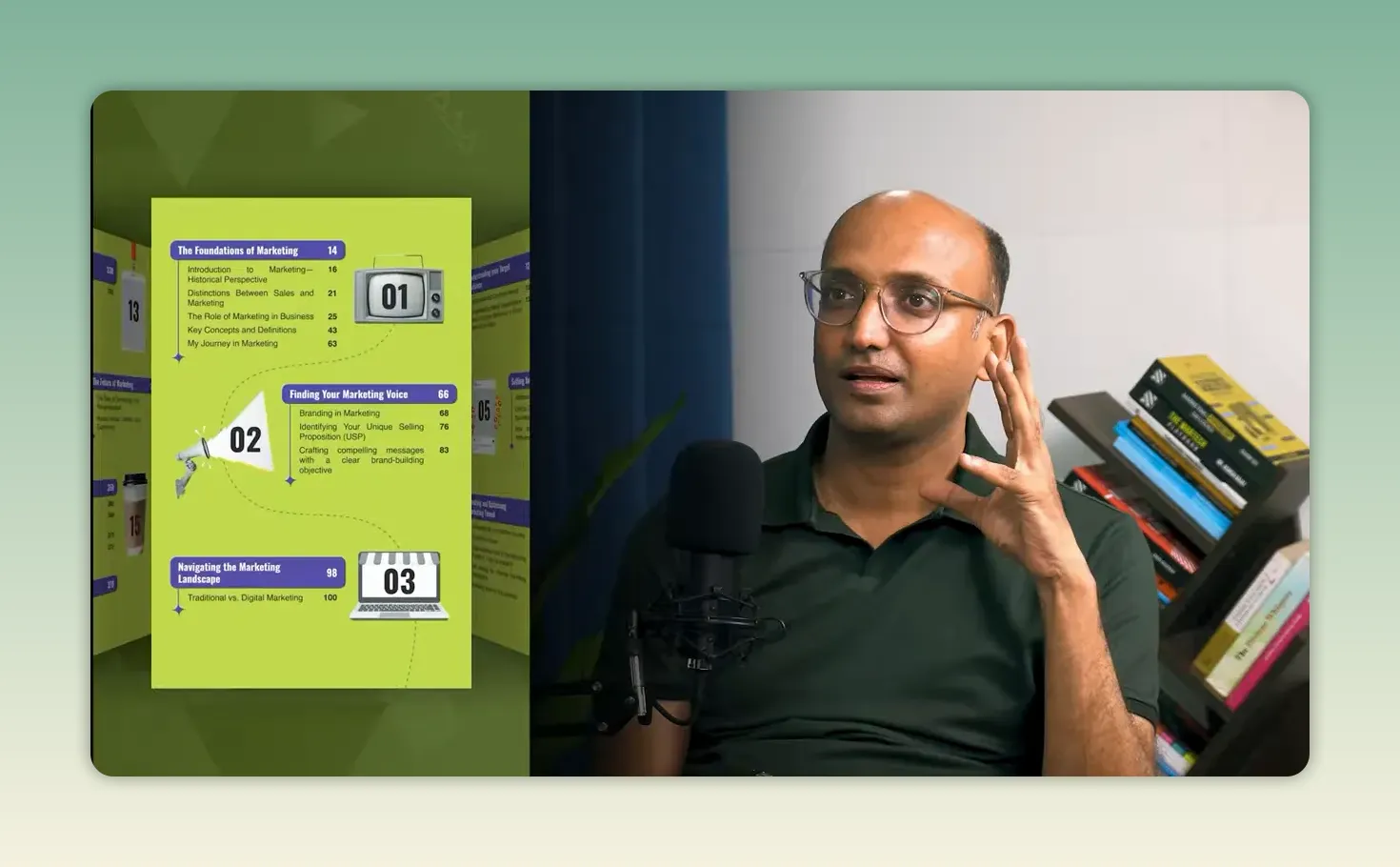
The physical book remains central, with visual design making complex business ideas easier to absorb.
“D2C is a means to that relationship.”
The ZebraLearn Learning Stack
The app is not designed as a broad customer-acquisition machine for people who have never bought from ZebraLearn. Its primary role is to deepen engagement with people already in the ecosystem.
When a person purchases a hard copy through ZebraLearn’s website, they also receive the digital version of the same book. This changes the first moment of learning. A printed book may arrive later, but the digital copy allows someone to begin immediately.
That is a small but powerful insight. Digital helps create an early hook. The physical book can then deliver the deeper, more immersive experience.

A physical book and its digital counterpart serve different moments in the same learning journey.
But ZebraLearn goes beyond an ebook. Its evolving learning stack looks like this:
Layer | What It Enables | Why It Matters |
|---|---|---|
Physical book | Deep, designed, visual reading | Supports focused learning and a tactile experience |
Digital copy | Instant access to the same content | Lets learning begin without waiting for delivery |
Audiobook | Listening to the content | Creates another way to consume the ideas |
Video book | Short chapter summaries | Helps learners save time and focus on relevant topics |
Zebra AI | Question-led retrieval from the book | Turns knowledge into something easier to revisit and use |
Meet the author | Direct author connection | Brings lived expertise closer to the learner |
For books that may run 350 to 400 pages, every chapter will not be equally relevant to every person. ZebraLearn’s video summaries, typically around 10 minutes per chapter, allow learners to scan the terrain, identify what matters, and choose where to go deeper.
The logic is refreshingly practical: do not force everyone to consume every page in the same way. Help them find the part that solves the problem they have right now.
From Reading to Retrieval With Zebra AI
One of the most useful parts of this model is what happens after someone has read a book. Most of us have had this experience: we remember that a useful idea existed somewhere in a book, but cannot retrieve it when the actual problem appears.
Zebra AI is designed for this retrieval problem. It works in a simple, conversational way. A learner can describe a challenge and ask what the book’s content suggests. The goal is not to make the book feel more complicated. It is to make its knowledge easier to access when it is needed.
In this sense, the product is not just content. It becomes a practical knowledge companion.
Then comes the last and most human layer: the author. Anurag’s point here stayed with me. Authors are often far more approachable than people assume. If someone sends an author a thoughtful message saying they read the book and are facing a particular challenge, that author may happily offer insight simply because the work matters deeply to them.
“At the end of it, there is a problem in the learner’s life that needs to be solved.”
A book, a video, AI-enabled retrieval, and a conversation with an author can all work together. That is what a connected learning experience looks like.
Why Connection Changes the Value of Knowledge
Anurag shared a story about K. Ganesh, author of Mastering Disruption, a book on new-age business models. Ganesh examined where the next major ecommerce opportunities in India might emerge after large horizontal platforms. He identified jewellery and grocery, then helped create, fund, incubate, and build the teams behind companies such as BlueStone and BigBasket.
That is a powerful body of lived experience. But a great book alone does not guarantee that its ideas are connected to every other relevant source of learning.
I had my own experience while preparing for this discussion. After finding Anurag’s book on how to write and sell a book, I ordered both the digital and physical versions. The digital version made it possible to begin at once. The physical edition could take over when I wanted to sit with the material more deeply.
That is the difference between disconnected content and an intentional customer experience. In the disconnected version, a person finds a book, separately discovers a podcast, searches for the author elsewhere, and does all the stitching alone. In the connected version, the learning system does more of that work.
The Seven-Book Signal: Understanding What a Learner Needs
When we moved to marketing and sales, Anurag made another sharp distinction. A business does not need to know every vague interest a customer has. It needs to understand what problem is urgent now.
He referenced a compelling idea: the first seven books a person touches in a library can be a strong indicator of the problems currently active in their life. Not necessarily every book they finish. The first books they reach for.
This is a much richer signal than a casual scroll through short-form content. Someone may consume several reels because they are in a random mood. A book is different. It requires money, time, and effort. The choice to buy or engage with one usually carries more intention.
Consider the books I mentioned during our conversation: Russell Brunson’s marketing books, Alex Schultz’s Click Here, material on asking better questions, going viral, and customer centricity. Together, those choices form a profile. They suggest someone thinking about B2B marketing, growth, content, customer understanding, and podcasting.
A Simple Intent Framework for Omnichannel Brands
Here is the framework I took away from Anurag’s thinking:
Observe meaningful choices: Look at high-intent actions, such as the books people buy or explore.
Identify the current problem: Do not stop at broad interests. Ask what pain point is most pressing now.
Find similar learner cohorts: People with overlapping choices often share similar use cases.
Design the next helpful step: Offer a relevant book, format, video, tool, or human connection.
Support completion: Recognise that many people begin learning journeys but do not finish them.
Anurag’s commercial point is equally important. If 20,000 people engage with a book, a meaningful subset may have similar needs. That creates a cohort with potentially high lifetime value. But the opportunity is not simply to push more products.
It is to help those people continue a journey that matters to them.
Many will start and stop because books demand something from us: money, time, and effort. The answer is not to reduce learning to shallow consumption. The answer is to make the path clearer, more accessible, and more relevant.
The Real Lesson for D2C and Omnichannel Leaders
The most important takeaway from ZebraLearn is not that every company should launch an app, publish audiobooks, or build an AI assistant. Those are expressions of a larger philosophy.
The philosophy is this: know the customer, understand the problem they are solving, and connect every touchpoint around that problem.
For a publishing business, that means treating a book as the opening of a relationship. For a retail brand, it may mean connecting store behaviour, marketplace purchases, digital content, service, and loyalty. For a D2C company, it means looking beyond the transaction to understand where the customer is headed next.
When brands do this well, channels stop competing with one another. The physical experience strengthens digital. Digital creates speed and continuity. Content creates relevance. Data reveals intent. And human expertise brings trust.
I am Saurabh Agrawal and we come with a new episode on Dilse omni talks every fortnight and cover different aspect of omnichannel with amazing speakers.