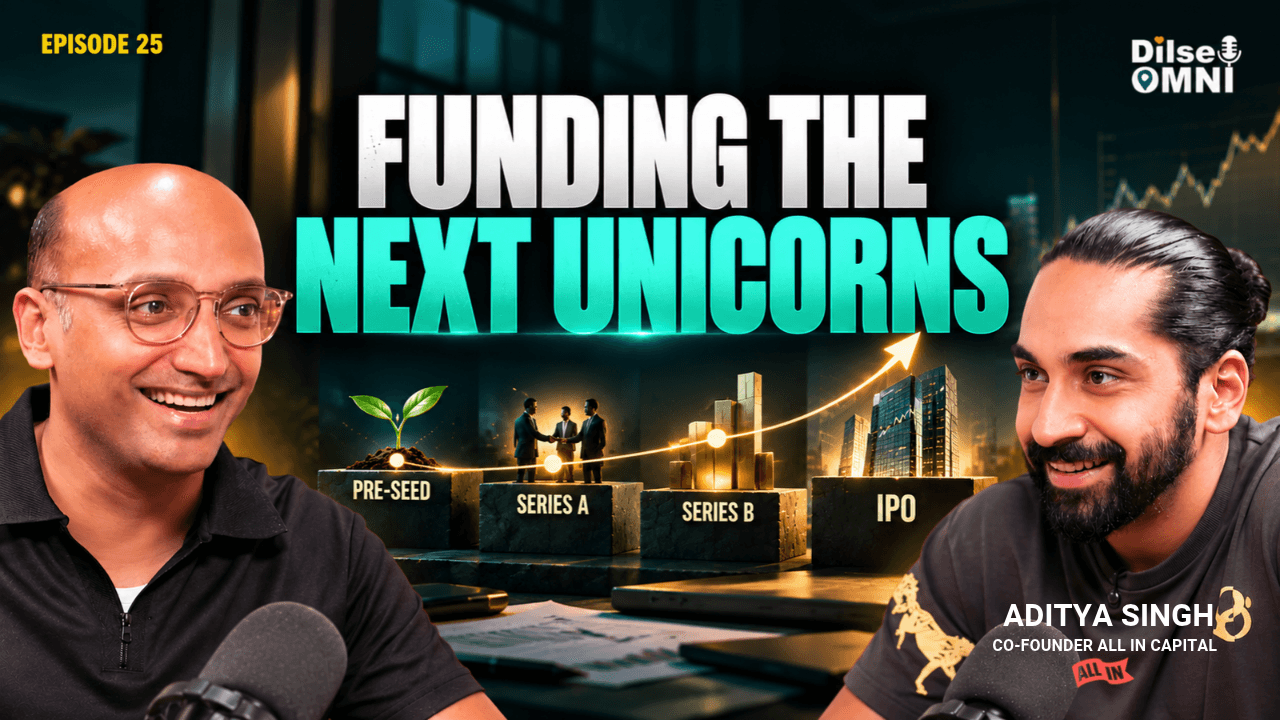
Which AI tools are actually worth paying for? That was my starting question to Amit Tiwari on Dilse Omni Talks. I wanted to know what he uses for himself, what he uses for clients, and, importantly, which subscriptions he pays for.
Amit is an SEO strategist, educator, and founder of AmitTiwari.net. He helps businesses and marketers build long-term organic growth by making complex SEO concepts practical, understandable, and data-driven. But his answer did not begin with an SEO tool. It began with a mindset.
He pays for ChatGPT, Gemini Pro, Claude, and Perplexity, and experiments with tools such as Bolt and Lovable. Not because everyone needs that many subscriptions, but because he considers himself a student.
Our conversation became a compact masterclass in how to evaluate AI: stay curious, test specific tasks, and look beyond impressive demonstrations to useful applications.
Table of Contents
Lesson 1: Your Most Important AI Skill Is Staying a Student
Lesson 2: Ask Which Task a Tool Wins, Not Which Brand Wins
Lesson 3: AI Thumbnail Editing Is About Changing Context While Preserving Identity
Lesson 4: Virtual Try-On Moves AI From Amusement to Shopping Utility
Lesson 5: Research and Presentations Deserve Their Own Tool Decision
A Practical Framework: Learn, Match, Test, Keep
My $60 Monthly Stack, and the Bigger Takeaway
Lesson 1: Your Most Important AI Skill Is Staying a Student
Amit told me that, since ninth grade, he has had a habit of studying until one in the morning. That desire to keep exploring has stayed with him. Today, the subject is often a new AI tool or capability he wants to understand firsthand.
“You get old when you stop learning.”
Amit Tiwari
That line stayed with me because it explains his approach better than any subscription list could. He is not collecting tools merely to have access. He is paying to learn what each one can and cannot do.

There is an important distinction here for marketers and business leaders. A learning stack and a daily working stack do not have to be identical. Amit’s broad experimentation serves his role as an educator and practitioner. Someone choosing tools for a narrower set of responsibilities may make different decisions.
My takeaway was not that we should all buy every subscription. It was that we should avoid forming permanent opinions about tools we have barely tested. In a fast-moving category, curiosity is part of professional discipline.
Lesson 2: Ask Which Task a Tool Wins, Not Which Brand Wins
I asked Amit to recommend something people might be overlooking, particularly from an SEO perspective. His answer was Gemini.
He felt that many people were willing to pay for ChatGPT but were not giving paid Gemini the same consideration. In his experience, Gemini had improved significantly in the two months before our conversation.

His evidence was practical: he had edited his previous seven or eight thumbnails using Gemini.
That is more useful than a general declaration that one model is “the best.” He was describing a repeated task, a tool he had used, and an output that mattered to his work.
During our discussion, Amit preferred Gemini for the image-editing tasks he described. He also acknowledged OpenAI’s Sora in the context of video capabilities. I shared my enthusiasm for Gemini’s image work and mentioned how much I liked NotebookLM.
These were our experiences at the time, not permanent rankings. The useful comparison is task against task, not logo against logo. Image editing, research, presentation creation, and video work should not automatically be treated as the same buying decision.
Lesson 3: AI Thumbnail Editing Is About Changing Context While Preserving Identity
When I asked about Nano Banana, Amit explained what had become useful to him in Gemini’s image editing: he could work with an existing photograph of himself and ask for changes while retaining his facial details.
His examples were wonderfully straightforward:
Change the T-shirt in an existing image.
Create the appearance of a mechanic.
Give the same person a doctor’s look.
Adjust the expression to make the person smile more.
The significant detail was not simply that AI could produce a different outfit. It was that Amit could reuse the same source image while keeping himself recognizable.
For a creator, that changes the starting point. Instead of needing a completely new photograph for every visual idea, an existing image can become the basis for a different thumbnail treatment.
A Simple Way to Understand His Thumbnail Workflow
I would break Amit’s example into three parts:
Start with identity: Use an existing image of the person.
Specify the change: Ask for a different outfit, role, or expression.
Check what stayed consistent: The face should still retain the recognizable details that matter.
This is a useful way to think about AI editing because it separates what should change from what should remain. In Amit’s case, the clothing or expression could change; his identity was the anchor.
It also keeps the discussion grounded. We were talking about specific image edits, not claiming that an AI tool could replace every part of thumbnail design or guarantee better performance.
Lesson 4: Virtual Try-On Moves AI From Amusement to Shopping Utility
I brought up a playful piece of content in which Amit had posed like Akshay Kumar’s Raju character. That led us to virtual try-on.
Amit recalled Google demonstrating the capability at Google I/O and the memes that followed. Beneath the entertainment, he saw a genuinely useful function: people could explore how clothing might look on their own image rather than only on a model.
“This is the right use of AI as well.”
Amit Tiwari, on virtual try-on
For me, this was where the conversation connected directly with omnichannel commerce. During my time at Lenskart, I had seen how important glasses try-on was as a feature. The ability to visualize something on yourself addresses a very different question from seeing a polished product photograph.

A product image tells you what is being sold. A personal visualization helps you explore how it might look on you.
I felt that Google making clothing and fashion try-on more accessible could have significant implications for shopping experiences, including the Shopping tab. The opportunity is not merely another way to generate an image. It is a more personal way to engage with a product.
The Product Image Plus Personal Image Workflow
Amit extended the idea with a Lenskart example. Even without a retailer’s native integration, he suggested that someone could save a product image, select their own photograph, and bring both into Gemini to explore a combined visualization.
The workflow he described was:
Choose the product image from the retailer’s website.
Select a personal photograph from your gallery.
Bring both images into Gemini to explore how the product might appear on you.
That is an interesting shift in where the experience happens. The retailer’s website can supply the product image, while a separate AI tool becomes part of the customer’s consideration journey.
I see this as a reason for omnichannel leaders to think beyond the experiences they build inside their own properties. Customers may assemble their own journey across a retailer’s site, their personal photos, and an AI interface.
Lesson 5: Research and Presentations Deserve Their Own Tool Decision
Our discussion was not limited to images. I recommended Manus, a China-based app I had found useful for deep research and creating presentations.
This was my contribution to the tool list, rather than Amit’s recommendation. That distinction matters because the conversation brought together two working perspectives, not one universally prescribed stack.
I also mentioned NotebookLM as a tool I particularly liked, although we did not explore its features in detail.
The broader lesson is that useful AI work extends beyond a chat response. Sometimes the requirement is an edited image. Sometimes it is deeper research. Sometimes it is turning material into a presentation.
Choose around the deliverable you need, rather than assuming your preferred chat tool must handle everything equally well.
A Practical Framework: Learn, Match, Test, Keep
Amit did not present a named framework. To make the lessons easier to apply, this is my synthesis of our conversation:
1. Learn: Stay Open
Explore capabilities firsthand. Amit’s willingness to test several platforms is the starting principle, not a requirement to copy his spending.
2. Match: Name the Job
Be specific about the output: a thumbnail edit, a personal product visualization, a research exercise, or a presentation.
3. Test: Use a Real Example
Evaluate the tool against work you actually do. Amit’s repeated thumbnail editing is a stronger reference point than a one-off novelty image.
4. Keep: Give Each Subscription a Reason
Decide whether a tool has a continuing role in your work or learning. A subscription should have a purpose beyond being popular.
This framework is not a formal scoring system. It is a way to turn curiosity into a clearer decision without losing the spirit of experimentation that Amit brings.
My $60 Monthly Stack, and the Bigger Takeaway
At the time of our conversation, I was paying for three tools:
ChatGPT: About $20 per month.
Gemini: About $20 per month.
Manus: About $20 per month.
That was approximately $60 a month for my stack, not a current pricing guide or a recommendation that everyone needs those same plans.
Amit’s wider collection reflected his commitment to learning across platforms. Mine reflected the combination I was using. Neither list matters as much as the thinking behind it.
I began by asking which AI tools were worth paying for. I left with a better question: What am I trying to do, and which tool has earned a place in that workflow?
For thumbnails, Amit’s answer was Gemini. For shopping, virtual try-on showed us a compelling practical application. For research and presentations, I had found value in Manus. Across all of it, the strongest lesson was to keep learning without confusing experimentation with a universal prescription.
I am Saurabh Agrawal and we come with a new episode on Dilse omni talks every fortnight and cover different aspect of omnichannel with amazing speakers.