
Talks with Saurabh Agrawal

Talks with Saurabh Agrawal
Souparno Bagchi: CXO, Fintech Strategist, Alumnus of ISB
Souparno Bagchi: CXO, Fintech Strategist, Alumnus of ISB
Souparno Bagchi: CXO, Fintech Strategist, Alumnus of ISB
Souparno Bagchi is a fintech and financial services strategist who has spent the last several years scaling micro-lending businesses from the operator's seat, after nearly two decades split across technology services, global investment banking, and consulting.
Souparno Bagchi has spent the last few years scaling micro-lending businesses from the operator's seat, after nearly two decades split across technology services, global investment banking, and consulting. He is currently working at the intersection of AI, risk, and India's credit divide, thinking through who gets access to capital in this country and who still doesn't. His frameworks, India 1-2-3, the Three Ds of demand, and the enables-versus-drives distinction between banks and fintechs, have made him a sharp, structural voice on where Indian financial services is actually headed rather than where the headlines say it's headed.

He is currently working at the intersection of AI, risk management, and India's credit divide , thinking through who gets access to capital in this country, who still does not, and what the infrastructure of financial inclusion actually needs to look like in practice rather than in policy.
He also teaches at the Indian School of Business (ISB), where he has built and run a course on social media and retention marketing analytics , a combination of finance, data, and marketing that gives him a distinctively cross-functional view of how modern businesses grow.
Souparno Bagchi has spent the last few years scaling micro-lending businesses from the operator's seat, after nearly two decades split across technology services, global investment banking, and consulting. He is currently working at the intersection of AI, risk, and India's credit divide, thinking through who gets access to capital in this country and who still doesn't. His frameworks, India 1-2-3, the Three Ds of demand, and the enables-versus-drives distinction between banks and fintechs, have made him a sharp, structural voice on where Indian financial services is actually headed rather than where the headlines say it's headed.
Background & Journey
Souparno spent nearly nine years at TCS early in his career, followed by more than six years at Goldman Sachs, and time in consulting before crossing over into the startup world to build and scale micro-lending businesses.
He is an ISB alumnus and the son of a banker who spent 32 years in the profession , which gives him a rare vantage point: he has watched Indian banking change from both sides of the counter, as someone who grew up observing it and as an operator who has tried to improve it. That combination of Wall Street rigour, startup execution, and family-level understanding of how banking touches ordinary Indian lives shapes everything he says about where Indian financial services is headed.

On Dilse Omni
Souparno Bagchi recently appeared on Dilse Omni Talks with host Saurabh Agrawal, where the conversation explored “Why everyone in India seems to want to lend you money , and what the real future of Indian fintech and banking looks like beneath the surface.”
Books written or mentioned
No specific book was cited in this episode, though Souparno's Indigo-versus-Emirates analogy and his framing of experience as "value delivered ÷ value committed", a measure he picked up from a workshop by Amin Haque, stood out as the most quotable frameworks of the conversation.

3 Key Takeaways from the Episode
● Lending is structurally an adverse-ratio business. Your profit arrives in the present as a receivable, but your losses only show up later when a borrower defaults. That time mismatch is why underwriting matters more than distribution , and why India has room for thousands of profitable NBFCs rather than one dominant lending platform.
● India has not yet shifted from product-centric to customer-centric banking. The real constraint on delivering a coherent banking experience is not capital or technology capability , it is culture. And that is a problem no regulation is forcing banks to fix, which means the opportunity is wide open for those who choose to.
● The next fintech wave is convergence, not consolidation. Most people in India today manage separate apps for payments, lending, deposits, and brokerage. The brands that win will be the ones that unify that experience around what the customer actually needs , not the ones that dominate a single vertical while ignoring the rest of the customer's financial life.

Latest Episodes

The Lead Management Playbook
Nilesh Patel, CEO of LeadSquared talks about the funnels, customer journeys and the lead management.

Decoding Personal AI Agents
On this episode of Dilse Omni Talks, Saurabh sat down with Swapnika to talk about what happens when you stop treating WhatsApp as a messaging app and start treating it as the operating system your entire business already runs on.
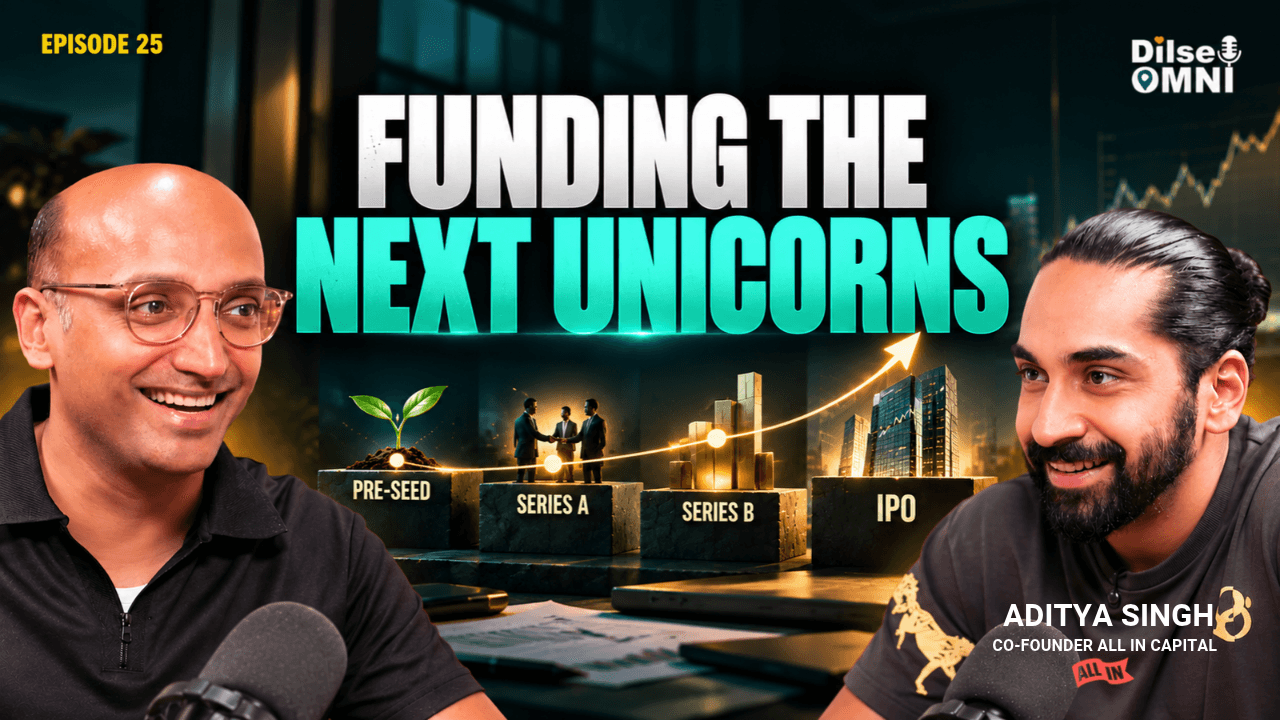
Funding The Next Unicorns
On this episode of Dilse Omni Talks, we covered how to read India's consumer market, what actually happens in a pre-seed pitch room, and why networking is the one compounding skill most founders radically underinvest in.

Future of Marketing is Conversational
Gupshup founder Beerud Sheth on why the click is dying, how conversational AI is rewriting marketing, and why context, not intelligence, is the real moat.

Growth Playbook by Sanjeev Bikhchandani
There are very few people who have genuinely shaped the way India works, loves, and learns — all from one desk, one insight, and one stubborn belief that the internet would change everything before most people even knew what a server was. Sanjeev Bikhchandani is one of those people.
View More


Latest Episodes
The Lead Management Playbook
Nilesh Patel, CEO of LeadSquared talks about the funnels, customer journeys and the lead management.
Decoding Personal AI Agents
On this episode of Dilse Omni Talks, Saurabh sat down with Swapnika to talk about what happens when you stop treating WhatsApp as a messaging app and start treating it as the operating system your entire business already runs on.
Funding The Next Unicorns
On this episode of Dilse Omni Talks, we covered how to read India's consumer market, what actually happens in a pre-seed pitch room, and why networking is the one compounding skill most founders radically underinvest in.
Future of Marketing is Conversational
Gupshup founder Beerud Sheth on why the click is dying, how conversational AI is rewriting marketing, and why context, not intelligence, is the real moat.
Growth Playbook by Sanjeev Bikhchandani
There are very few people who have genuinely shaped the way India works, loves, and learns — all from one desk, one insight, and one stubborn belief that the internet would change everything before most people even knew what a server was. Sanjeev Bikhchandani is one of those people.
View More
Subscribe on your favourite platform



Subscribe on your favourite platform



Subscribe on your favourite platform

Subscribe for
insider insights
Get monthly newsletter right in your inbox
Subscribe
for insider insights
Get monthly newsletter right in your inbox