Aastha Almast
Aastha Almast
Episode 16
Episode 16
80 min
80 min
Scaling India's Convenience Retail
Scaling India's Convenience Retail
Scaling India's Convenience Retail
Why Does This Episode Matter?
Why Does This Episode Matter?
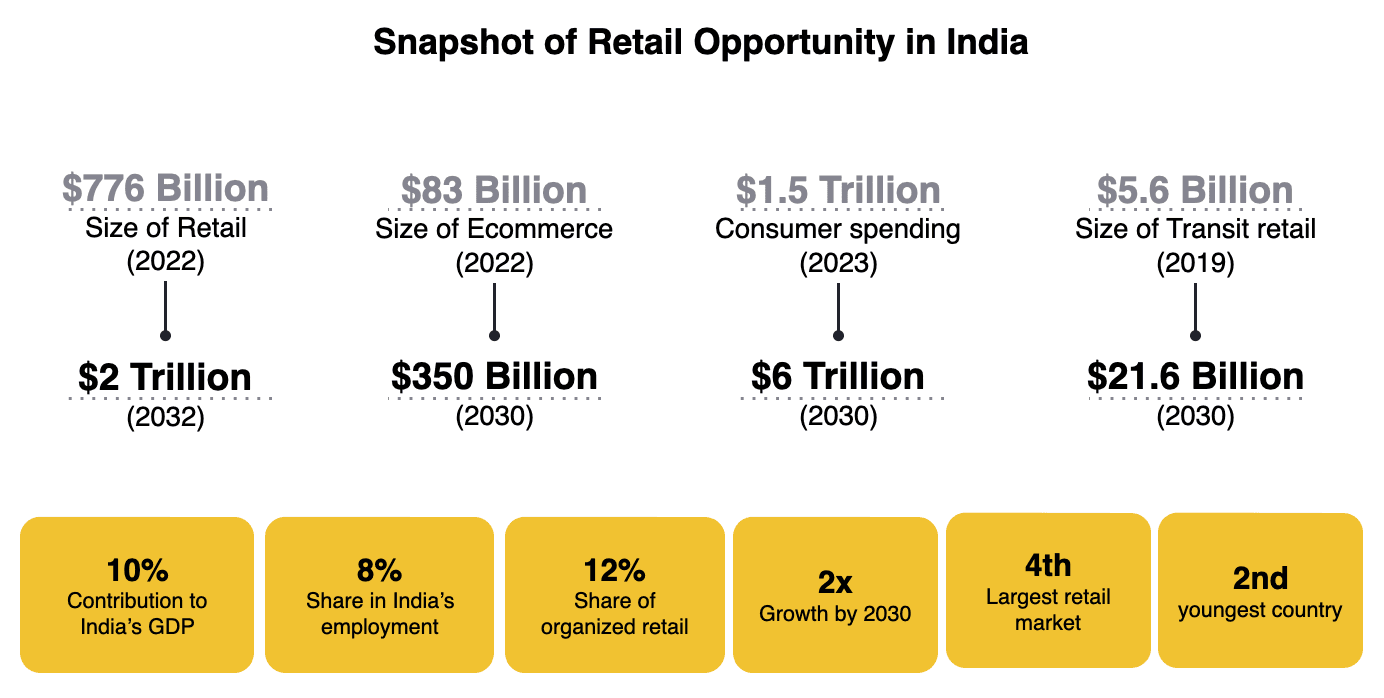
India has 1.4 billion people, a retail market projected to grow from $1.05 trillion to $1.9 trillion, and barely 1,000 organised convenience stores. The United States has 300,000.
Korea has two lakh. Thailand has 7-Eleven on every corner. The gap is staggering, and it represents one of the biggest untapped opportunities in Indian retail.
In this episode of DilSe Omni Talks, Aastha Almast, co-founder of New Shop, walks us through exactly how she identified that gap, what it took to build a tech-first convenience retail brand from scratch, and why the franchise model might be the only way to scale retail across India's beautifully chaotic diversity.
India has 1.4 billion people, a retail market projected to grow from $1.05 trillion to $1.9 trillion, and barely 1,000 organised convenience stores. The United States has 300,000.
Korea has two lakh. Thailand has 7-Eleven on every corner. The gap is staggering, and it represents one of the biggest untapped opportunities in Indian retail.
In this episode of DilSe Omni Talks, Aastha Almast, co-founder of New Shop, walks us through exactly how she identified that gap, what it took to build a tech-first convenience retail brand from scratch, and why the franchise model might be the only way to scale retail across India's beautifully chaotic diversity.
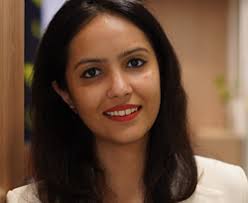
Aastha Almast
Co-Founder @New Shop
What Is New Shop, And Why Did India Need It?
What Is New Shop, And Why Did India Need It?
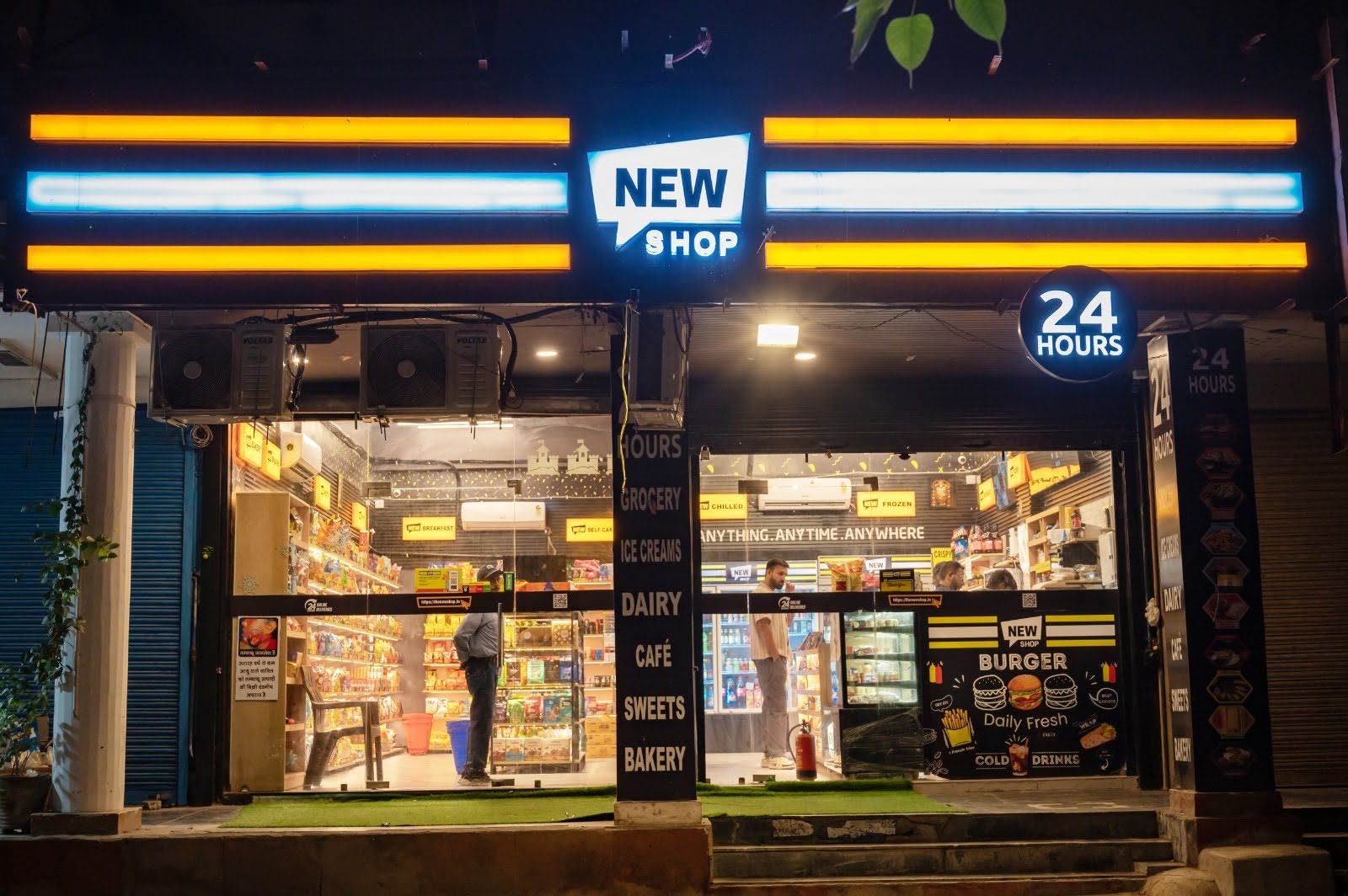
If you've ever landed at a railway station in India at midnight looking for a bottle of water, a packet of chips, and a phone charger, and found nothing but a closed kirana and a suspicious vending machine, you already understand the problem NewShop set out to solve.
Convenience retail, the 7-Eleven model, the kind of store that is always open, always stocked, and always easy to interact with has never really existed in India at scale.
And so the category just stayed empty.
Aastha and her co-founders, coming from tech, not retail, saw this not as a warning sign but as a massive opportunity. NewShop launched in 2019, became profitable within the first month of opening at Anand Vihar Railway Station, and has been growing at nearly 200% year on year for the last three years, without raising external capital for the last four.
If you've ever landed at a railway station in India at midnight looking for a bottle of water, a packet of chips, and a phone charger, and found nothing but a closed kirana and a suspicious vending machine, you already understand the problem NewShop set out to solve.
Convenience retail, the 7-Eleven model, the kind of store that is always open, always stocked, and always easy to interact with has never really existed in India at scale.
And so the category just stayed empty.
Aastha and her co-founders, coming from tech, not retail, saw this not as a warning sign but as a massive opportunity. NewShop launched in 2019, became profitable within the first month of opening at Anand Vihar Railway Station, and has been growing at nearly 200% year on year for the last three years, without raising external capital for the last four.
The Tech-First Approach
The Anand Vihar Railway Station story is one of the most compelling moments in the episode, and worth telling properly.
It was December 2019. Aastha and her two co-founders walked into a government tender presentation alongside large, established international retail companies.
They were at least 20 years younger than everyone else in the room. Not wearing suits. The smallest team there.
But when the head of IRSDC heard their pitch, he said something that stuck: every other brand had given him spreadsheets. NewShop was the only team that had built their own technology infrastructure first, and had a solution for what happens when five or six hundred people arrive at a platform simultaneously when a train departs.
They got the station. No tender required. They were profitable in month one.
That first win set the template for everything that followed.
The Tech-First Approach
The Anand Vihar Railway Station story is one of the most compelling moments in the episode, and worth telling properly.
It was December 2019. Aastha and her two co-founders walked into a government tender presentation alongside large, established international retail companies.
They were at least 20 years younger than everyone else in the room. Not wearing suits. The smallest team there.
But when the head of IRSDC heard their pitch, he said something that stuck: every other brand had given him spreadsheets. NewShop was the only team that had built their own technology infrastructure first, and had a solution for what happens when five or six hundred people arrive at a platform simultaneously when a train departs.
They got the station. No tender required. They were profitable in month one.
That first win set the template for everything that followed.
The Tech-First Approach
The Anand Vihar Railway Station story is one of the most compelling moments in the episode, and worth telling properly.
It was December 2019. Aastha and her two co-founders walked into a government tender presentation alongside large, established international retail companies.
They were at least 20 years younger than everyone else in the room. Not wearing suits. The smallest team there.
But when the head of IRSDC heard their pitch, he said something that stuck: every other brand had given him spreadsheets. NewShop was the only team that had built their own technology infrastructure first, and had a solution for what happens when five or six hundred people arrive at a platform simultaneously when a train departs.
They got the station. No tender required. They were profitable in month one.
That first win set the template for everything that followed.
Why Franchise, And Why It's the Only Model That Works in India
One of the most insightful parts of the conversation is Aastha's explanation of why New Shop chose a franchise model, and why she believes it's the only model that can truly scale retail across India.
India, she points out, is not one market. The language changes every 50 kilometres. The food changes. A headquarters team sitting in Delhi cannot predict with accuracy what a store in Pondicherry or Visakhapatnam needs.
The kirana store survived because the owner, not a store manager, was sitting there. They knew who to give credit to. They knew what their neighbourhood wanted at 11pm on a Tuesday. They had skin in the game.
New Shop took that insight and married it with technology. Their franchise owners are entrepreneurs, not employees. And the results are visible: company-operated stores carry 25% higher cost structures. Franchise-owned stores have near-zero shrinkage because the owner's own money is on the line
The vision is clear and ambitious — 10,000 entrepreneurs empowered through convenience retailing in India by 2030.
Why Franchise, And Why It's the Only Model That Works in India
One of the most insightful parts of the conversation is Aastha's explanation of why New Shop chose a franchise model, and why she believes it's the only model that can truly scale retail across India.
India, she points out, is not one market. The language changes every 50 kilometres. The food changes. A headquarters team sitting in Delhi cannot predict with accuracy what a store in Pondicherry or Visakhapatnam needs.
The kirana store survived because the owner, not a store manager, was sitting there. They knew who to give credit to. They knew what their neighbourhood wanted at 11pm on a Tuesday. They had skin in the game.
New Shop took that insight and married it with technology. Their franchise owners are entrepreneurs, not employees. And the results are visible: company-operated stores carry 25% higher cost structures. Franchise-owned stores have near-zero shrinkage because the owner's own money is on the line
The vision is clear and ambitious — 10,000 entrepreneurs empowered through convenience retailing in India by 2030.
The Omnichannel Play Underneath It All
What makes New Shop genuinely interesting from a marketing and technology perspective is the infrastructure they have built beneath the surface.
With 300+ stores, 60,000 orders per day, and 10 million active users, New Shop has built a single franchise dashboard that does something remarkable, it tells each store owner what they are about to run out of, predicts demand for the next week, and allows them to place restocking orders directly through an integrated e-commerce portal.
The supply chain is direct. The brand goes straight to a consolidated purchase order and is delivered to the store. No distributor in the middle. This gives New Shop complete visibility into what is selling, when, by which age group, and which products are most likely to be bought together.
They are now piloting an AI interface, where franchise owners can simply ask "how do I increase my sales by 20% next week?" and get category-specific recommendations based on data from nearby NewShop stores.
Retail media is another major pillar — contributing 35% of the company's profit — and they share 50% of retail media earnings with franchise partners. In practice, this means a franchise owner's retail media income can cover their rent from month one.
The Omnichannel Play Underneath It All
What makes New Shop genuinely interesting from a marketing and technology perspective is the infrastructure they have built beneath the surface.
With 300+ stores, 60,000 orders per day, and 10 million active users, New Shop has built a single franchise dashboard that does something remarkable, it tells each store owner what they are about to run out of, predicts demand for the next week, and allows them to place restocking orders directly through an integrated e-commerce portal.
The supply chain is direct. The brand goes straight to a consolidated purchase order and is delivered to the store. No distributor in the middle. This gives New Shop complete visibility into what is selling, when, by which age group, and which products are most likely to be bought together.
They are now piloting an AI interface, where franchise owners can simply ask "how do I increase my sales by 20% next week?" and get category-specific recommendations based on data from nearby NewShop stores.
Retail media is another major pillar — contributing 35% of the company's profit — and they share 50% of retail media earnings with franchise partners. In practice, this means a franchise owner's retail media income can cover their rent from month one.
The Omnichannel Play Underneath It All
What makes New Shop genuinely interesting from a marketing and technology perspective is the infrastructure they have built beneath the surface.
With 300+ stores, 60,000 orders per day, and 10 million active users, New Shop has built a single franchise dashboard that does something remarkable, it tells each store owner what they are about to run out of, predicts demand for the next week, and allows them to place restocking orders directly through an integrated e-commerce portal.
The supply chain is direct. The brand goes straight to a consolidated purchase order and is delivered to the store. No distributor in the middle. This gives New Shop complete visibility into what is selling, when, by which age group, and which products are most likely to be bought together.
They are now piloting an AI interface, where franchise owners can simply ask "how do I increase my sales by 20% next week?" and get category-specific recommendations based on data from nearby NewShop stores.
Retail media is another major pillar — contributing 35% of the company's profit — and they share 50% of retail media earnings with franchise partners. In practice, this means a franchise owner's retail media income can cover their rent from month one.
Quick Commerce — Friend or Foe?
Quick Commerce — Friend or Foe?
The question Saurabh poses directly: is quick commerce a competitor?
Aastha's answer is refreshingly clear. It depends entirely on location.
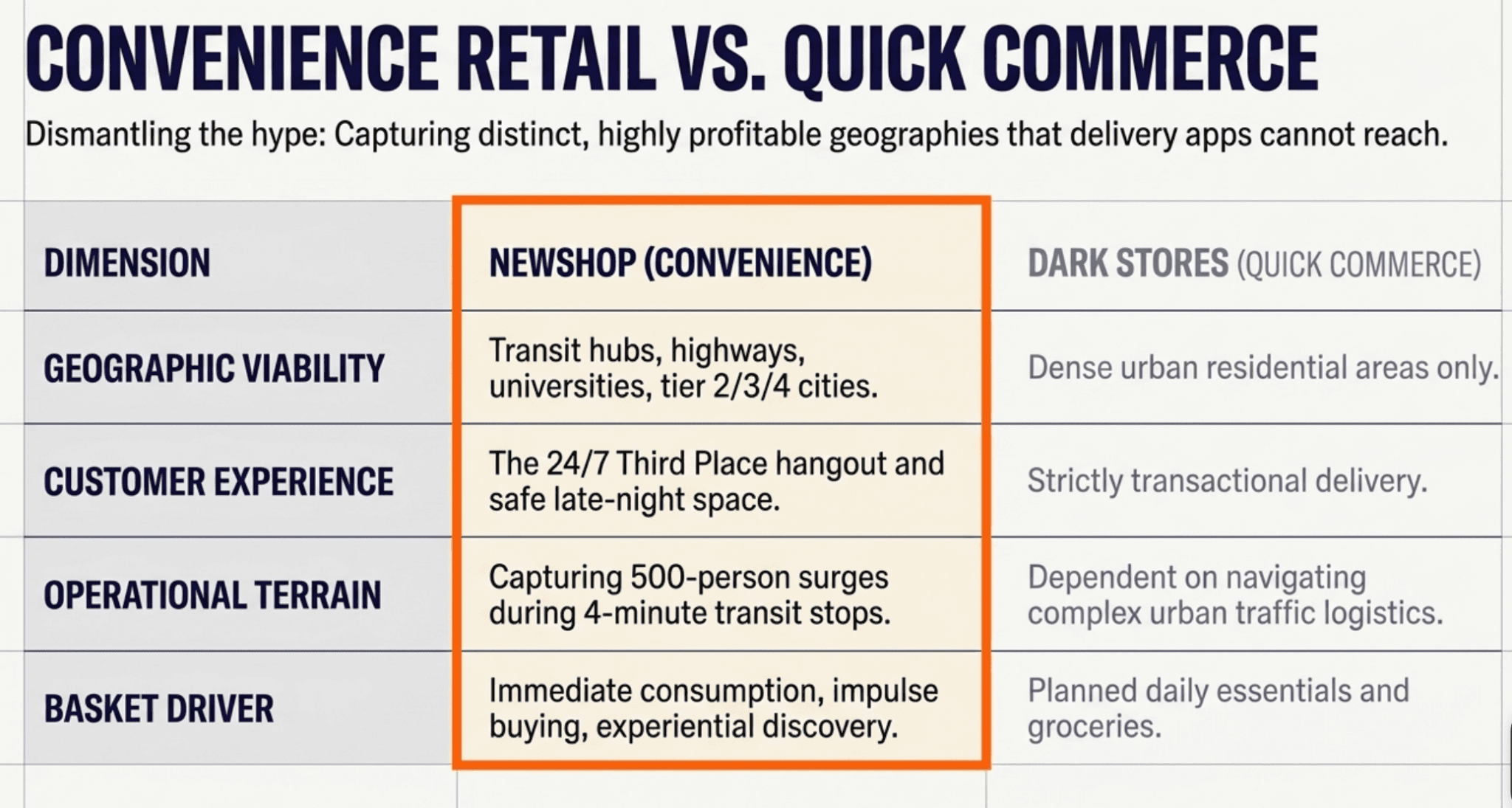
In dense urban clusters like Gurgaon, Bangalore, Mumbai, yes, quick commerce works. But at a highway, a railway station, a college campus, a tier-2 city where the population is mostly self-employed business owners who go out in the evening with their families and want somewhere to spend, quick commerce cannot serve that need.
A delivery rider cannot come to you on the highway. A school cannot have a Blinkit drop.
India's convenience retail opportunity is not threatened by quick commerce. It lives in all the places quick commerce cannot reach which, in India, is most of the country.
The question Saurabh poses directly: is quick commerce a competitor?
Aastha's answer is refreshingly clear. It depends entirely on location.
In dense urban clusters like Gurgaon, Bangalore, Mumbai, yes, quick commerce works. But at a highway, a railway station, a college campus, a tier-2 city where the population is mostly self-employed business owners who go out in the evening with their families and want somewhere to spend, quick commerce cannot serve that need.
A delivery rider cannot come to you on the highway. A school cannot have a Blinkit drop.
India's convenience retail opportunity is not threatened by quick commerce. It lives in all the places quick commerce cannot reach which, in India, is most of the country.
The biggest takeaway from this episode?
The biggest takeaway from this episode?
The gap in India's convenience retail isn't a problem — it's the opportunity.
The gap in India's convenience retail isn't a problem — it's the opportunity.
Tech is not the product — it's what makes the product scalable.
Tech is not the product — it's what makes the product scalable.
In a country this diverse, the entrepreneur-owned model will always outperform the manager-run store.
In a country this diverse, the entrepreneur-owned model will always outperform the manager-run store.
This is just the beginning. If you’re ready to understand how AI and Omnichannel thinking work together, and hear real stories from people building the future
This is just the beginning. If you’re ready to understand how AI and Omnichannel thinking work together, and hear real stories from people building the future


Talks with Saurabh Agrawal


Latest Episodes

Future of Marketing is Conversational
Gupshup founder Beerud Sheth on why the click is dying, how conversational AI is rewriting marketing, and why context, not intelligence, is the real moat.

Inside Arjun Vaidya's D2C Playbook
Arjun Vaidya on building, exiting, teaching, and investing, when to go offline, founder branding, and life as an operator turned VC.

Growth Playbook by Sanjeev Bikhchandani
There are very few people who have genuinely shaped the way India works, loves, and learns — all from one desk, one insight, and one stubborn belief that the internet would change everything before most people even knew what a server was. Sanjeev Bikhchandani is one of those people.

Scaling Omnichannel Fast Fashion Brand | Sumit Jasoria
Most fashion brands start with a mood board. NEWME started with a data pipeline. In a candid conversation on DilSe Omni, Sumit Jasoria, co-founder and CEO of NEWME, which is a brand that didn't exist three years ago, is now one of India's fastest-growing Gen Z fashion labels, jumping from ₹3.4 crore in FY23 to ₹180 crore in FY25. A 52x revenue jump. In under three years.

Is Agentic the future of Marketing? | Siddharth Gopalkrishnan
Discover how Netcore COO Siddharth Gopalakrishnan explains Agentic Marketing, AI-powered customer engagement, retention, omnichannel strategy, and the future of Martech.
View More
Latest Episodes
Future of Marketing is Conversational
Gupshup founder Beerud Sheth on why the click is dying, how conversational AI is rewriting marketing, and why context, not intelligence, is the real moat.
Inside Arjun Vaidya's D2C Playbook
Arjun Vaidya on building, exiting, teaching, and investing, when to go offline, founder branding, and life as an operator turned VC.
Growth Playbook by Sanjeev Bikhchandani
There are very few people who have genuinely shaped the way India works, loves, and learns — all from one desk, one insight, and one stubborn belief that the internet would change everything before most people even knew what a server was. Sanjeev Bikhchandani is one of those people.
Scaling Omnichannel Fast Fashion Brand | Sumit Jasoria
Most fashion brands start with a mood board. NEWME started with a data pipeline. In a candid conversation on DilSe Omni, Sumit Jasoria, co-founder and CEO of NEWME, which is a brand that didn't exist three years ago, is now one of India's fastest-growing Gen Z fashion labels, jumping from ₹3.4 crore in FY23 to ₹180 crore in FY25. A 52x revenue jump. In under three years.
Is Agentic the future of Marketing? | Siddharth Gopalkrishnan
Discover how Netcore COO Siddharth Gopalakrishnan explains Agentic Marketing, AI-powered customer engagement, retention, omnichannel strategy, and the future of Martech.
View More
Latest Episodes
Future of Marketing is Conversational
Gupshup founder Beerud Sheth on why the click is dying, how conversational AI is rewriting marketing, and why context, not intelligence, is the real moat.
Inside Arjun Vaidya's D2C Playbook
Arjun Vaidya on building, exiting, teaching, and investing, when to go offline, founder branding, and life as an operator turned VC.
Growth Playbook by Sanjeev Bikhchandani
There are very few people who have genuinely shaped the way India works, loves, and learns — all from one desk, one insight, and one stubborn belief that the internet would change everything before most people even knew what a server was. Sanjeev Bikhchandani is one of those people.
Scaling Omnichannel Fast Fashion Brand | Sumit Jasoria
Most fashion brands start with a mood board. NEWME started with a data pipeline. In a candid conversation on DilSe Omni, Sumit Jasoria, co-founder and CEO of NEWME, which is a brand that didn't exist three years ago, is now one of India's fastest-growing Gen Z fashion labels, jumping from ₹3.4 crore in FY23 to ₹180 crore in FY25. A 52x revenue jump. In under three years.
Is Agentic the future of Marketing? | Siddharth Gopalkrishnan
Discover how Netcore COO Siddharth Gopalakrishnan explains Agentic Marketing, AI-powered customer engagement, retention, omnichannel strategy, and the future of Martech.
View More
Subscribe on your favourite platform




Subscribe on your favourite platform



Subscribe on your favourite platform
Subscribe for
insider insights
Subscribe
for insider insights