
Some people talk about leads. Nilesh built the system that handles them. As co-founder of LeadSquared, he has spent over a decade helping ed-tech, BFSI and healthcare brands turn inquiries into customers, in India and the US.

Background and journey
Nilesh brings his decade long experience in sales and marketing to the team.
Before LeadSquared, Nilesh and his co-founders ran a software services company called Proteans. It built and tested software for tech companies in the US and Northern Europe, and was acquired in 2010. Staying in services didn’t satisfy the itch to build a product. As India’s digital marketing spend was taking off, he and his co-founders built LeadSquared to capture inquiries and move them down the funnel.

Early customers were ed-tech companies, including Byju’s and Vedantu.

Today, the US makes up about 25 to 30% of the business, and BFSI is another big slice. The name came from his co-founder Sudhakar: squaring your leads.
Nilesh served as Vice-President of inside sales at Symphony before he decided to start LeadSquared. Nilesh has a degree in engineering from Delhi University, and before founding Proteans spent four years in IBM with their microprocessor test tools division.
On DilSe Omni Talks
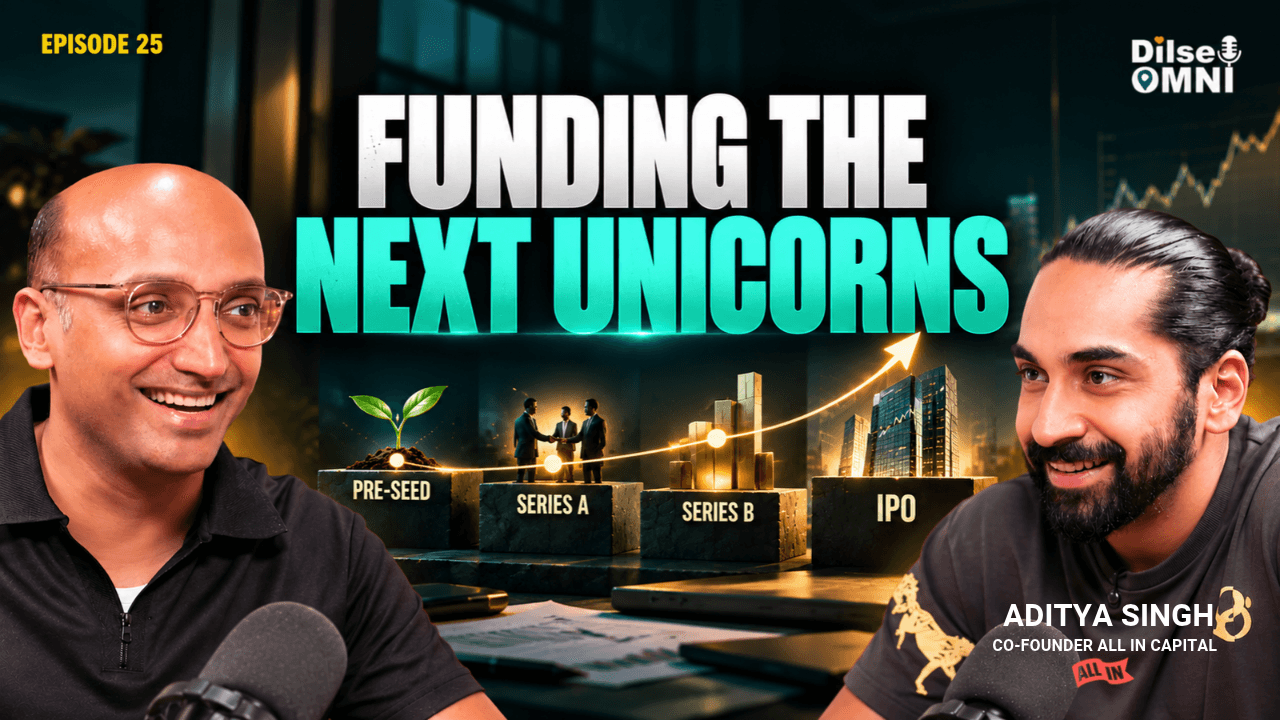
Nilesh joins Saurabh for our one-year episode to talk about how buying changed, what CRM really means and why a lead is where the work starts. He also shares what he has seen go wrong when brands set up systems.
///leave space for cover image
3 key takeaways:
Respond fast: When someone fills a form or sends an inquiry, they are interested right now. A few minutes later they may be looking at three other brands, or they may have forgotten you. Nilesh said that contacting a lead within 5 to 15 minutes, depending on the category, can make a big difference, and that LeadSquared has seen conversion rise up to three times when response time dropped by a couple of minutes.
Fix the process first: Many companies buy a new CRM and then recreate their old way of working inside it. A common example is a team that starts with a support tool, adds sales agents to it over time, and later moves to a proper sales system but keeps the support-style process. Nilesh called this the biggest mistake he sees. The tool can’t improve results if the process stays the same.
Build only what sets you apart: Not everything needs to be custom. Nilesh’s rule of thumb is to ask whether something makes you different from competitors or just makes you more efficient. If it sets you apart, like your own app or customer experience, build it. If it only improves efficiency, like the system behind your lead management, buy it. Building also means maintaining, and that cost is easy to forget.